Description
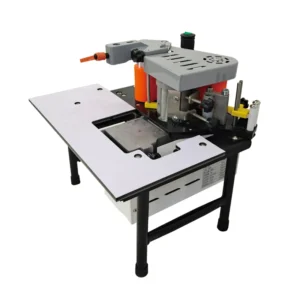
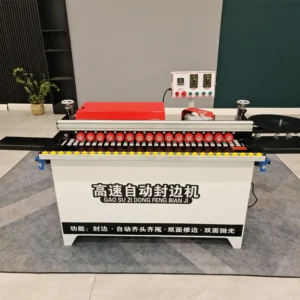
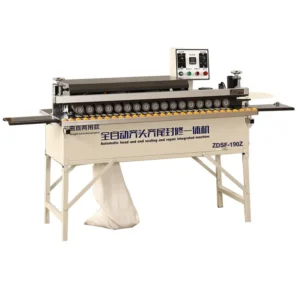
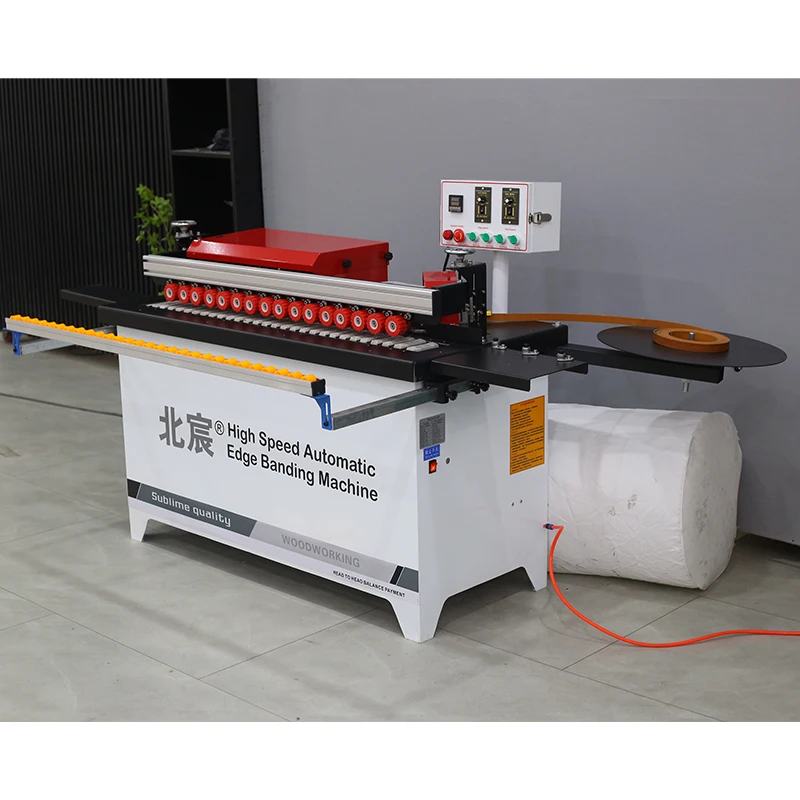
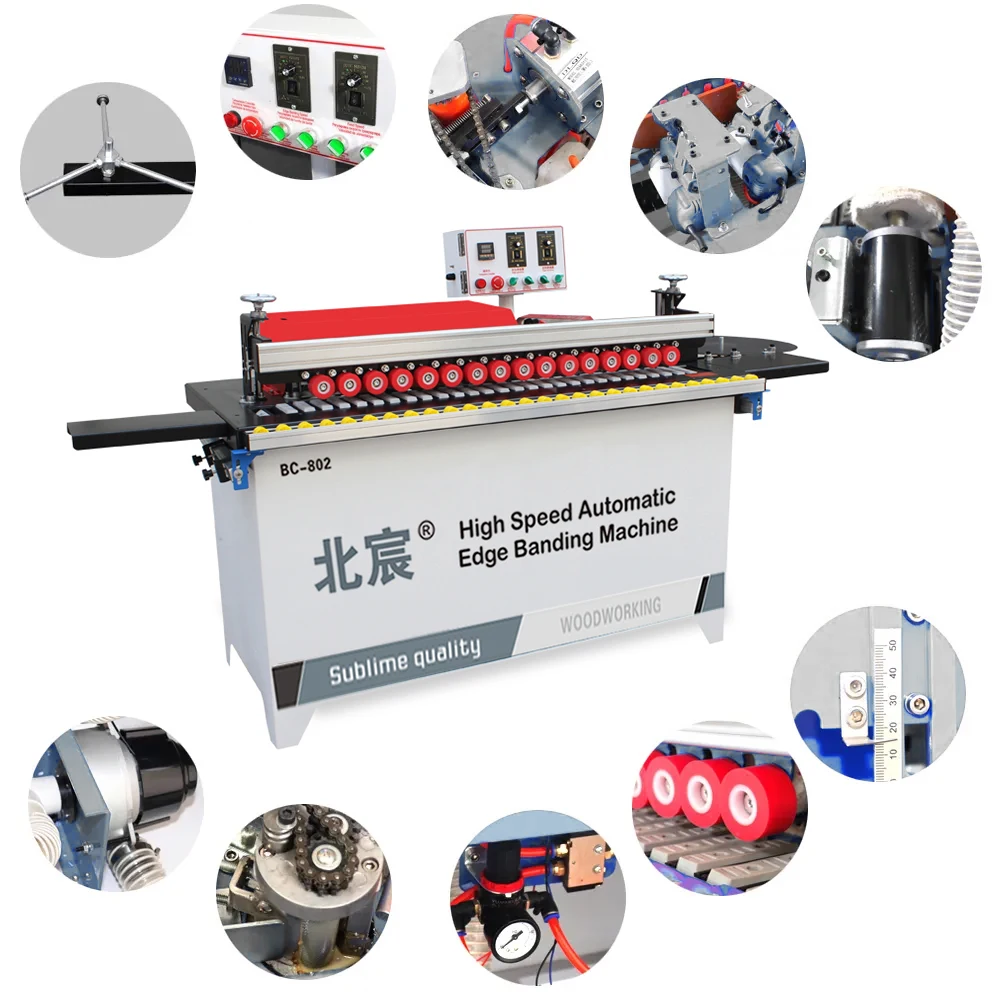
Precision-ground components — The DW802 Automatic Edge Banding Machine is built with multi-stage inspection and verified cutting mechanisms, ensuring straight-edge banding accuracy across MDF, plywood, and particleboard substrates for custom furniture production.
Technical Specifications
| Parameter | Value |
|---|---|
| Model | DW802 |
| Product Type | Automatic Edge Banding Machine |
| Total Power | 4200W |
| Voltage | 220V / 380V / Customization |
| Minimum Sheet Length | 250mm |
| Minimum Sheet Width | 100mm |
| Edge Banding Height Range | 0–50mm |
| Edge Banding Thickness Range | 0.3–3mm |
| Edge Feed Power | 140W |
| Transmission Power | 140W |
| Trimming Power | 800W × 2 |
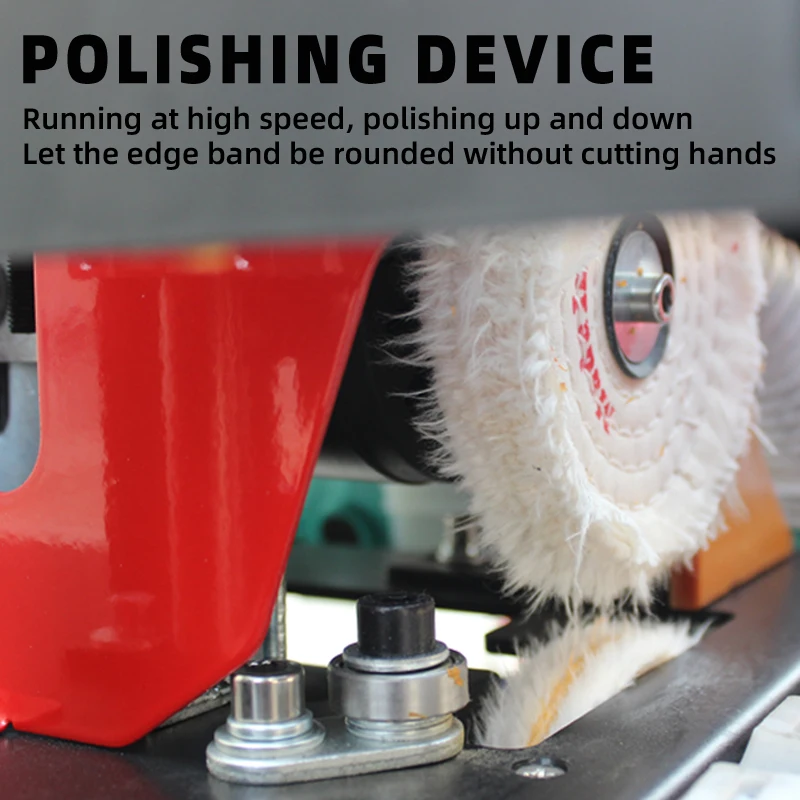
| Polishing Power | 180W × 2 |
| Vacuum Power | 1200W |
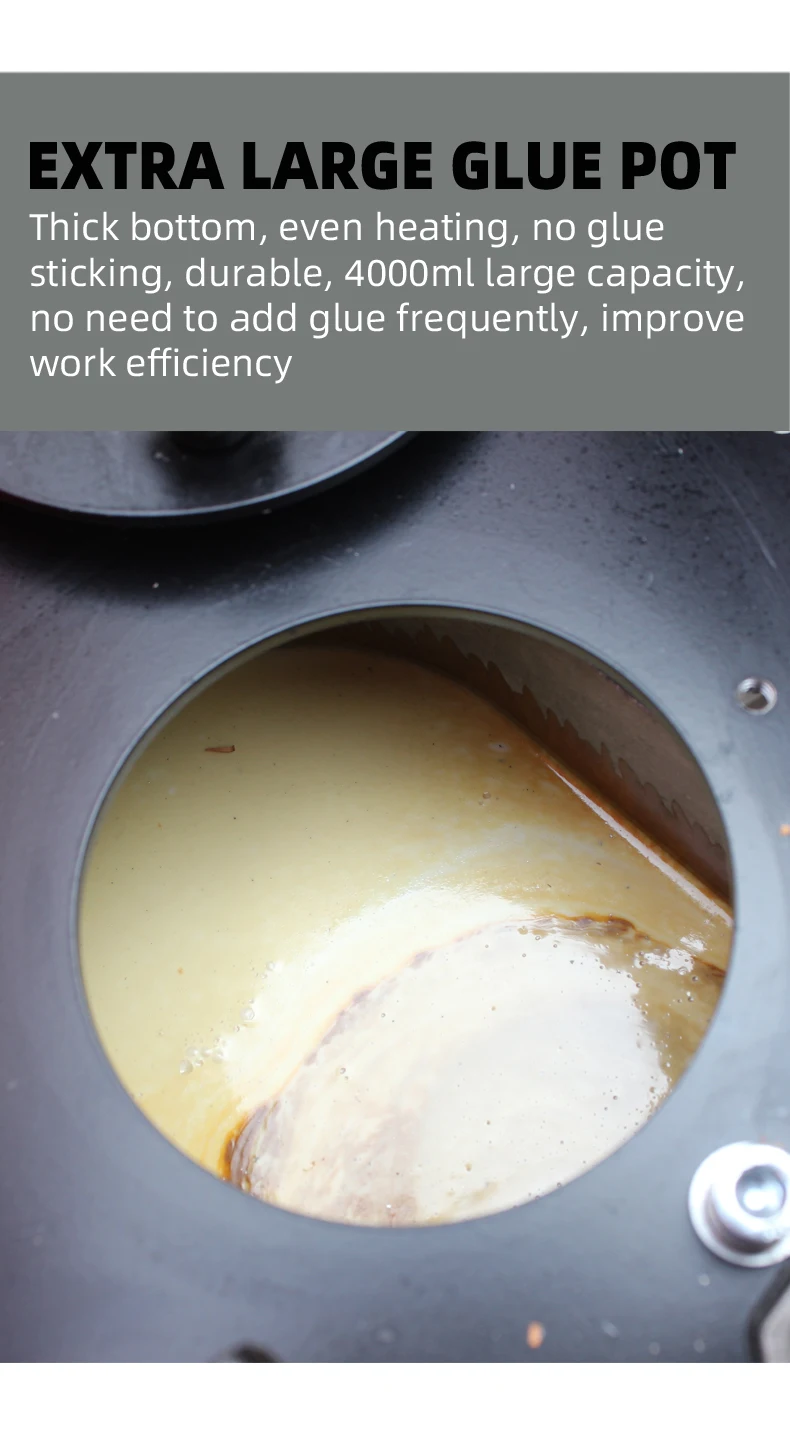
| Glue Pot Capacity | 4000ml |
| Air Source Pressure | 0.4–0.8 MPa |
| Product Dimensions (L×W×H) | 1300 × 600 × 950 mm |
| Net Weight | 135 kg |
| Control Language Options | Chinese / English (customizable to Spanish or other languages on request) |
| Plug Options | EU / USA / AU / UK |
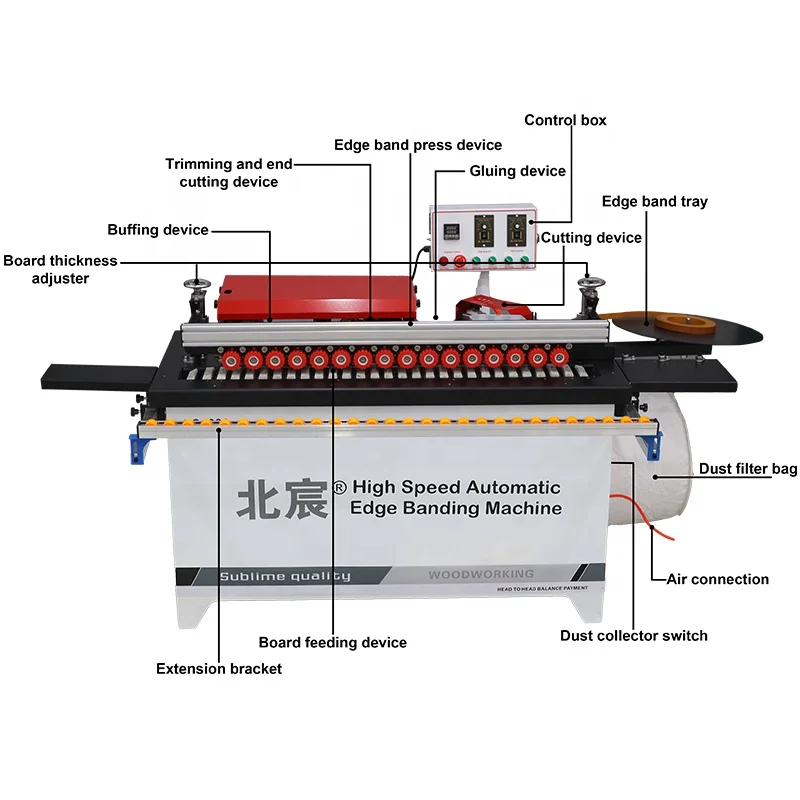
| Key Features | Edge banding, trimming, polishing, automatic head and tail cutting, vacuum system |
Application Suitability
| Application | Material or Output |
|---|---|
| Custom Furniture Production | MDF and Particleboard |
| Cabinetry and Wardrobes | Ecological Board and Plywood |
| Small to Mid-Scale Joinery | Solid Wood Board |
| Straight-Edge Panel Processing | PVC and Veneer (0.3–3 mm) |
Why the Voltage Question Should Come Before the Price
Confirming local voltage and frequency before production prevents machines from arriving unusable.
When sourcing an Automatic Edge Banding Machine manufacturer, the focus often lands on the purchase price or feed speed, but the electrical configuration is the silent gatekeeper of commissioning. I have seen workshops take delivery of equipment only to find the motor windings and control transformers were built for a 50Hz grid while their facility runs on 60Hz, leading to immediate overheating and glue pot failures [NEED_CITE: voltage and frequency standards by export market]. The DW802 is configurable from the start, ensuring the 4200W total power system matches your facility’s reality, whether that is 220V single-phase for a small shop or 380V three-phase for a continuous production line.
The Complete Product Family Hierarchy
The DW802 sits within a complete edge banding machine family, meaning a workshop can select this model or scale up within the same product line and supplier relationship. It is designed as a full-function straight-edge model for small to mid-scale cabinet and joinery workshops that require more than just basic edge application. Because it shares a common engineering DNA with our higher-tier units, operators trained on the DW802 can transition to more complex pre-milling or corner-rounding machines without relearning the fundamental control logic or maintenance protocols.
Moving Beyond Manual Sealing Limits
For joinery workshops transitioning from manual edge banding to mechanized straight-edge sealing, this unit provides the necessary throughput consistency. The integrated 1200W vacuum system captures dust and offcuts at the trimming station, a feature often missing on entry-level units, which drastically improves the working environment and the final polish quality. When a shop moves from hand-applying veneer to using the DW802, the consistency of the glue line and the trimming accuracy across a 50mm height range becomes a verifiable asset for quality control [NEED_CITE: CE machinery directive requirements for industrial equipment].
How Glue Capacity and Trimming Affect Output
The 4000ml glue pot capacity allows for continuous multi-panel runs without the thermal loss associated with frequent refilling on smaller 1000ml pots. This thermal stability is critical when running PVC edge banding, which requires a strict temperature window to ensure the adhesive penetrates the substrate pores on MDF and particleboard. Furthermore, the dual 800W trimming motors provide the torque necessary to shear the banding material cleanly at high feed rates, preventing the "chatter" marks that often require secondary manual sanding.
The Cost of Ignoring Air Pressure Specs
A common failure point in small workshops is the mismatch between the machine’s pneumatic requirements and the shop’s compressor capacity. The DW802 requires 0.4–0.8 MPa; if the pressure drops below this during the head-and-tail cutting cycle, the snipping units fail to retract fully, damaging the panel surface. Selecting a machine without verifying these pneumatic demands often results in intermittent fault codes and damaged workpieces that are only discovered during final assembly.
Why Sourcing from a Manufacturer Matters
Sourcing the DW802 directly from a manufacturing facility means the voltage, language, and specification customization are treated as standard production steps rather than expensive aftermarket modifications. The four-stage QC process includes a pre-shipment verification where the machine is tested under load with the exact voltage and frequency requested by the buyer. This is supported by an engineer-led configuration recommendation, ensuring the machine’s 140W feed power and transmission systems are correctly aligned with the buyer’s typical panel weight and thickness.
Documentation & Verification
- Factory test record on your specific PVC or veneer thickness before dispatch.
- Electrical schematic confirming voltage and plug type for your region.
- Operation and maintenance manual in the operator’s native language.
- CE declaration of conformity for customs and insurance compliance.
- Spare parts list with exploded diagrams for the DW802 stations.
Installation, Commissioning & Support
- Verify 220V/380V dedicated circuit capacity for the 4200W total load.
- Ensure air compressor delivers stable 0.4–0.8 MPa to the inlet valve.
- Level the 135 kg chassis on a solid floor to maintain trimming accuracy.
- Calibrate glue pot temperature to your specific adhesive and banding material.
- Review head-and-tail cutting sensor alignment for panels down to 250mm.
Inquiry Configuration Guide
To ensure the DW802 meets your production requirements, please provide the specific panel materials (MDF, plywood, particleboard) and the exact edge banding thickness range you intend to run. We also need to know your facility’s available floor space to determine if the 1300 × 600 mm footprint integrates with your existing workflow. Finally, specify your local voltage and the language required for the control interface so we can prepare the documentation and electrical components for a seamless commissioning.
Frequently Asked Questions
Q: Where does the DW802 sit in the edge banding machine range?
A: The DW802 is a full-function straight-edge model designed for small to mid-scale workshops. It sits above entry-level manual-feed units but below high-volume CNC-integrated lines. If your volume grows, you can scale to models with pre-milling and corner-rounding stations within our same product family, maintaining compatibility with your existing maintenance training and spare parts inventory.
Q: How is voltage confirmed before production?
A: We require a formal confirmation of your local voltage and frequency (e.g., 220V/60Hz or 380V/50Hz) before the order enters production. This ensures the motor windings, control transformers, and heating elements are correctly matched to your grid, preventing the risk of receiving a machine that cannot be powered or that operates outside its safe thermal limits.
Q: What panel materials is this model rated for?
A: The DW802 is rated for MDF, particleboard, solid wood board, ecological board, and plywood. It handles edge banding thicknesses from 0.3mm to 3mm, making it suitable for both thin PVC and wood veneer applications. The trimming and polishing stations are calibrated to provide a clean finish across these various substrate densities.
Q: Can the control panel language be customized?
A: Yes, the control panel can be customized to Spanish or other languages on request. We provide the operation and maintenance manual in the same agreed language, ensuring that your operators can understand the settings for feed speed, glue temperature, and fault diagnostics without needing a translator on the workshop floor.