Description
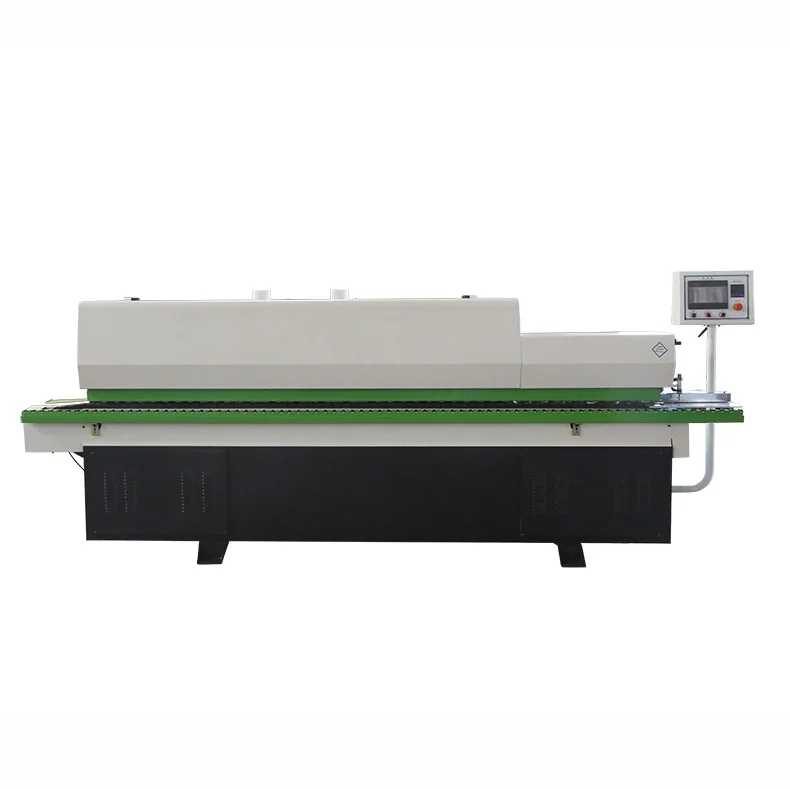
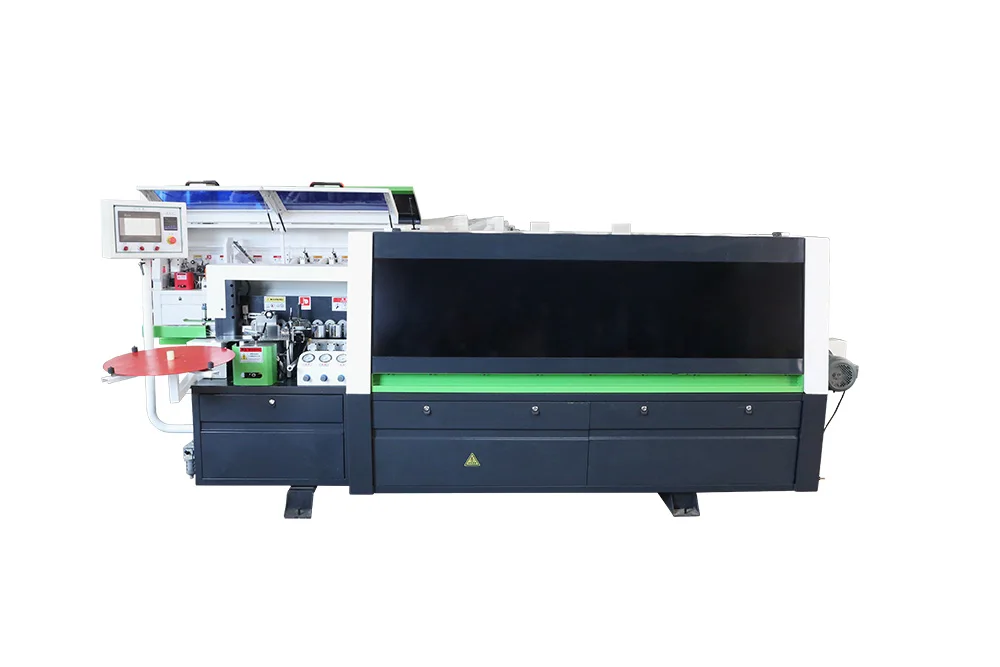
Rigid Frame Build — 14 mm high-strength steel plate with high-temperature quenching keeps the ZDS368A stable through sustained panel runs.
Technical Specifications
| Parameter | Value |
|---|---|
| Model | ZDS368A |
| Product Type | Automatic Edge Banding Machine |
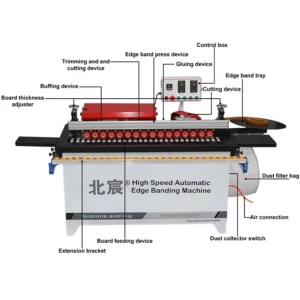
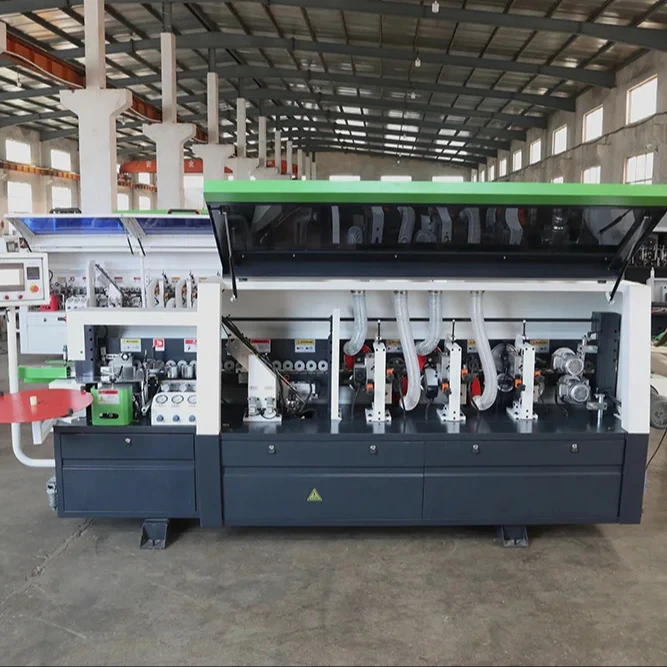
| Main Functions | Gluing, End trimming, Rough trimming, Fine trimming, Scraping, Buffing |
| Working Pressure | 0.6–0.8 MPa |
| Panel Thickness Range | 10–55 mm |
| Edge Thickness Range | 0.3–3.5 mm |
| Conveyor Belt Speed | 18 m/min |
| Min. Panel Width | 40 mm |
| Min. Panel Length | 60 mm |
| Voltage | 380V / 3-Phase |
| Rated Power | 8.5 kW |
| Net Weight | 1500 kg |
| Overall Dimensions (L×W×H) | 4200 × 1000 × 1500 mm |
| Frame Construction | 14 mm national standard high-strength steel plate, frame-type structure, high-temperature quenching |
| Conveyor Guide Rail | HT260 cast iron |
| Conveying Motor | Taiwan brand, thermal protection system |
| Head Guide Rail | Taiwan brand |
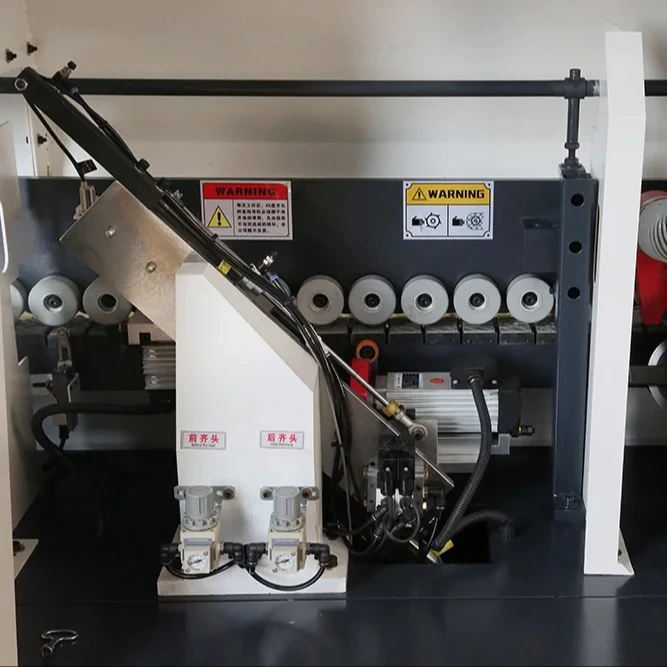
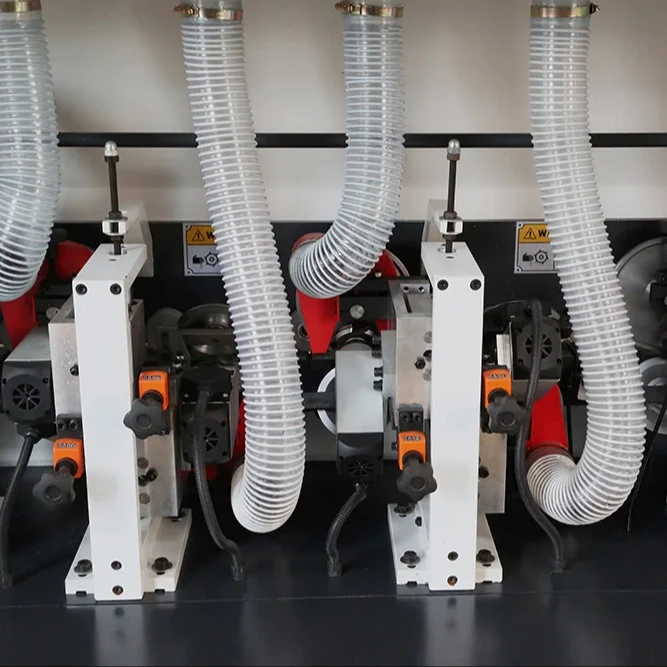
| Pneumatic Components | Festo or AirTAC cylinders, AirTAC magnetic switch |
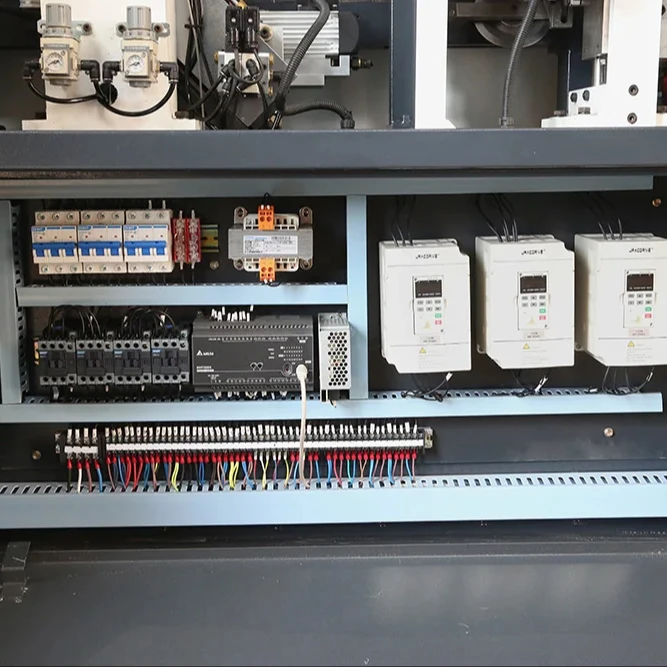
| Electrical Components | Delixi / Chint air switches and contactors, Omron travel switches |
| Warranty | 1 year |
Application Suitability
| Application | Material or Output |
|---|---|
| Custom cabinet door production | MDF and particleboard with PVC or ABS edge banding |
| Wardrobe and shelving panel edging | Plywood panels up to 55 mm thickness |
| Small-batch furniture workshop runs | Solid wood panels with veneer edge banding |
| Straight-edge panel finishing | Melamine-faced chipboard for office furniture |
Why the Voltage Question Should Come Before the Price on Any Automatic Edge Banding Machine
Every configuration must match local supply before a single bolt is tightened.
I once watched a workshop in Southeast Asia take delivery of an edge bander wired for 380V/50Hz when the local grid runs 220V/60Hz. The motors hummed, the conveyor refused to track, and the factory spent weeks sourcing step-up transformers that should never have been necessary. That kind of mismatch is preventable with a simple confirmation step that many suppliers skip [NEED_CITE: voltage and frequency standards by export market]. With the ZDS368A, voltage and frequency are locked in during the quotation stage, not discovered at the dock.
Where the ZDS368A Fits in the Catalogue Lineup
The ZDS368A occupies the mid-range position within the full Ruiqi edge bander family, covering six work stations from gluing through buffing. For workshops evaluating the complete range before committing, this model offers a balance between function coverage and floor space. Entry-level models strip back to four stations for simpler runs, while full-function pre-milling units add a front-end milling head for panels with heavy glue residue or uneven edges. Browsing the catalogue with these tiers in mind helps a buyer map each model to a specific production segment rather than guessing which machine fits which customer [NEED_CITE: edge banding machine station configuration guide].
Matching the Automatic Edge Banding Machine to Workshop Volume
A workshop running a few hundred panels per day on MDF and particleboard will find the 18 m/min conveyor speed on the ZDS368A adequate for steady output without bottlenecking upstream saws or downstream drilling stations. When daily volume climbs and feed speed becomes the constraint, the catalogue includes higher-speed models with additional trimming and scraping stations. The point is to evaluate throughput requirements at the enquiry stage so the configuration recommendation matches actual workflow, not a brochure figure.
Reading the Numbers That Matter for Panel Quality
Panel thickness range from 10 to 55 mm covers most furniture substrates, but the practical implication is how quickly you change over between a 16 mm wardrobe side panel and a 40 mm solid wood worktop. The HT260 cast iron guide rail on the conveyor resists wear under continuous panel contact, which directly affects edge alignment consistency over months of operation. At 0.6–0.8 MPa working pressure, the pneumatic cylinders from Festo or AirTAC drive trimming heads with enough force to cleanly shear ABS banding without tearing PVC films. The 8.5 kW rated power across all six stations means the machine draws moderate current, but a dedicated circuit breaker sized to the motor starting load prevents nuisance tripping during end-trimming surges.
The Cost of Ignoring Substrate When Choosing Configuration
A furniture maker once specified an entry-level edge bander for a contract involving high-density particleboard with heavy urea-formaldehyde glue content. The lighter trimming motors stalled on the denser substrate, producing ragged edges that required hand-scraping — exactly the secondary step the machine was supposed to eliminate [NEED_CITE: substrate density impact on trimming load]. With the ZDS368A, the six-station sequence handles varied substrates in a single pass, but the configuration conversation must start with what material the buyer actually processes, not what the catalogue says is possible in theory.
Why Buyers Source This Range from One Manufacturer
In-house frame fabrication with high-temperature quenching means the ZDS368A chassis is built on the same production floor as the rest of the Ruiqi line, not outsourced to a generic welder. The catalogue spans entry-level to full-function pre-milling models, so a distributor can recommend across segments without juggling multiple supplier relationships. Voltage configuration from 110V to 440V is confirmed per order, eliminating the transformer problem described earlier. Four-stage quality control with pre-shipment verification on actual panel samples ensures the machine performs against stated tolerances before crating. An engineer reviews each enquiry against workshop conditions rather than issuing a generic quotation.
Documentation & Verification
- CE declaration of conformity covering the ZDS368A electrical and mechanical safety scope
- Machine specification sheet confirming your voltage, frequency, and control language before order
- Factory test record run on your panel thickness and edge banding material before dispatch
- Electrical schematic and voltage confirmation document included in the shipping package
- ISO 9001 certificate available for compliance filing in your import market
Installation, Commissioning & Support
- Requires a level concrete floor supporting 1500 kg concentrated load across the 4200 mm frame length
- Dedicated 3-phase circuit matching confirmed voltage and frequency, with isolation switch rated above 8.5 kW
- Arrives fully assembled; only minor spare parts packed separately for transit protection
- First-run commissioning includes conveyor tracking adjustment and trimming head alignment to your edge material
- Operator training covers station sequence setup and pneumatic pressure tuning for different banding thicknesses
- Wear items list provided with recommended replacement intervals for scraper blades and buffing wheels
What to Include When Requesting a Configuration Quote
To match the ZDS368A or another model in the range to your line, share the panel substrates you process most often, the edge banding materials and thickness range, and your target daily volume. Local voltage and frequency, along with preferred control panel language, should be stated up front so the quotation reflects your actual site conditions. If you are planning a complete production cell, include upstream and downstream equipment details so feed height and throughput can be coordinated.
Frequently Asked Questions
Q: How does the ZDS368A compare to entry-level and full-function pre-milling models in the Ruiqi range?
A: The ZDS368A covers six stations from gluing to buffing, sitting between four-station entry models and pre-milling units that add a front-end milling head for high-glue substrates. Entry-level models suit workshops with lighter daily volumes, while pre-milling versions handle panels with heavy residue that would clog simpler trimming stations. The catalogue lets you compare tiers side by side before committing.
Q: What voltage and frequency configurations are available, and how is compatibility confirmed?
A: Voltage is configurable from 110V to 440V, and frequency is matched to your local grid standard. Confirmation happens during the quotation stage — you provide your site electrical specification, and the engineer issues a voltage confirmation document that travels with the machine. This prevents the common problem of equipment arriving wired for the wrong supply.
Q: What edge banding material and thickness range works best on MDF versus particleboard?
A: The ZDS368A accepts edge banding from 0.3 to 3.5 mm, covering PVC, ABS, and veneer strips. On MDF, thinner PVC films track well at standard pneumatic pressure, while particleboard with rougher edges may benefit from ABS at slightly higher thickness for better coverage. The pneumatic system adjusts trimming force accordingly across both substrates.
Q: How should a workshop plan its upgrade path as production volume grows?
A: Start by identifying the station where bottleneck first appears — usually feed speed or trimming capacity. The Ruiqi catalogue includes higher-throughput models with additional stations and faster conveyors within the same product family. Planning the upgrade path at the initial enquiry stage means your next machine integrates with existing saws and drilling equipment without reconfiguring the entire line.