Description
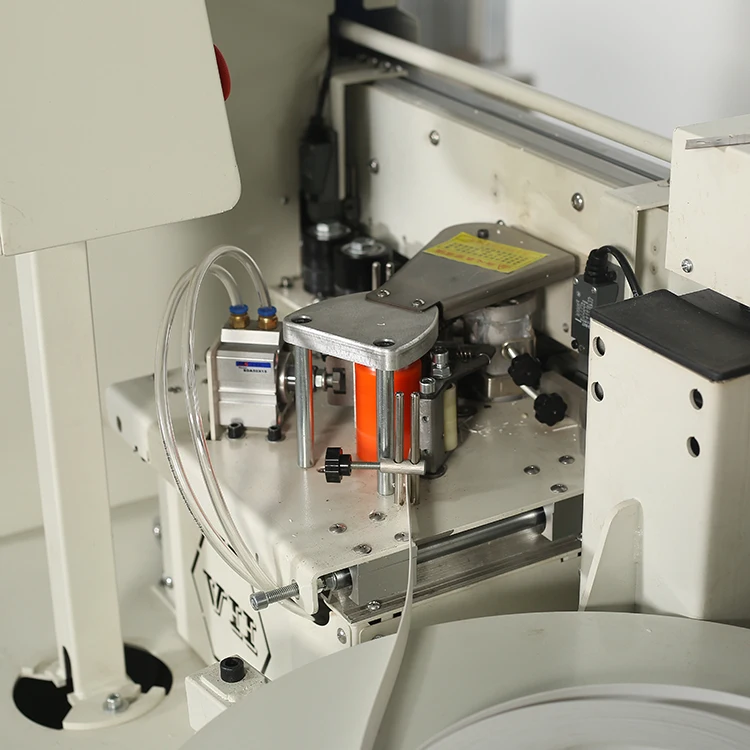
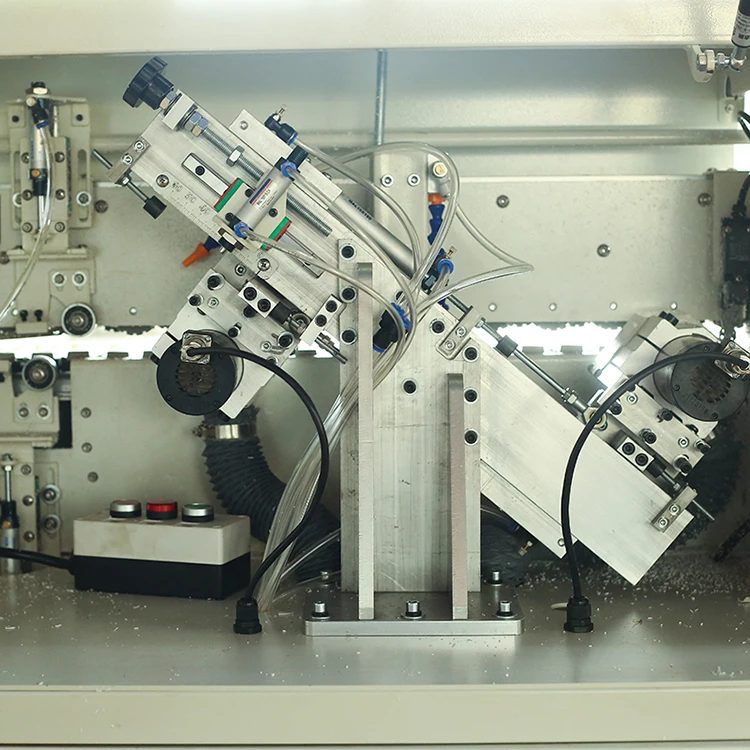
Verified Tolerance Mechanism — the ZDSF400 carries Ruiqi Wood’s patented cutting assembly held to ±0.02 mm, documented in the factory test record you receive before shipment.
Technical Specifications
| Parameter | Value |
|---|---|
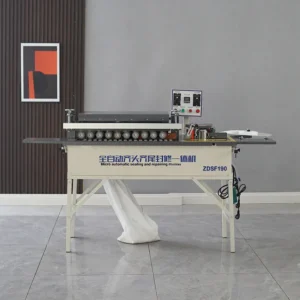
| Model | ZDSF400 |
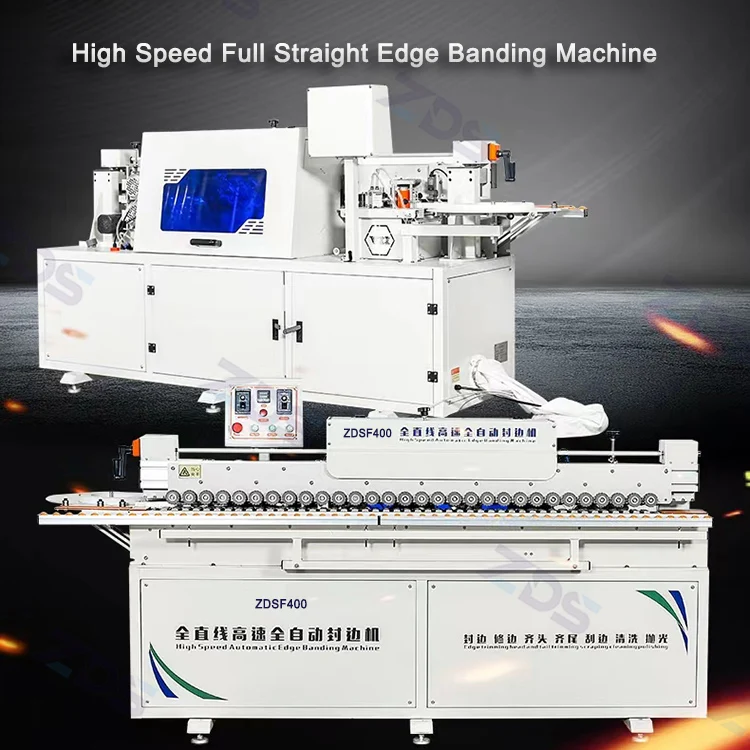
| Product Type | Automatic Edge Banding Machine |
| Function Sequence | Gluing, End Cutting, Trimming, Scraping, Polishing, Vacuuming |
| Edge Type | Straight Line |
| Rated Voltage | 220V |
| Rated Power | 3 kW |
| Rated Air Pressure | 0.4–0.6 MPa |
| Edge Strip Thickness Range | 1–3 mm |
| Panel Thickness Range | 10–55 mm |
| Feed Speed | 0–14 m/min |
| Conveyor Belt Speed | 0–14 m/min |
| Glue Pot Capacity | 1000 ml |
| Heating Power | 800 W |
| Trimming Motor Power | 800 W × 2 (24,000 rpm) |
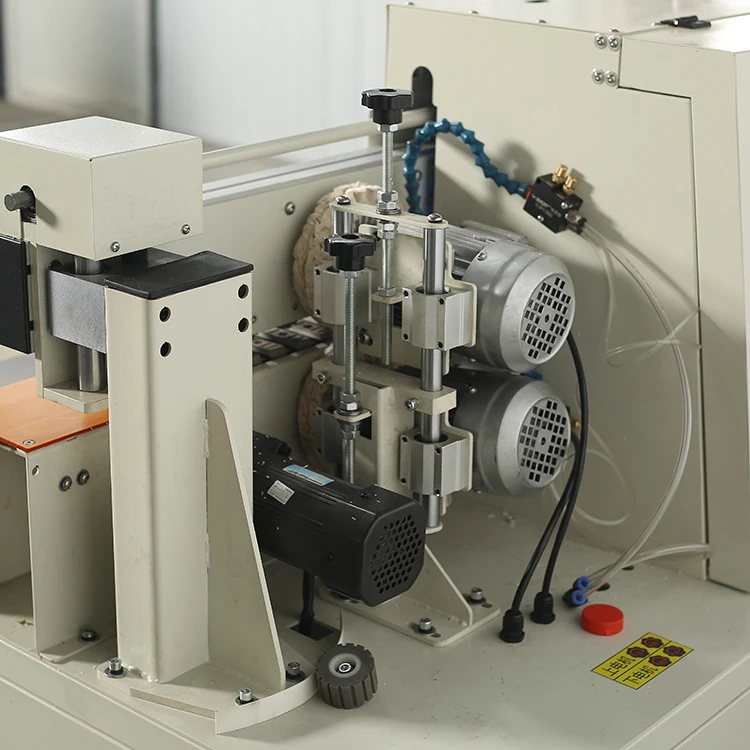
| Polishing Motor Power | 180 W × 2 (5,500 rpm) |
| Suction Power | 550 W |
| Overall Dimensions (L×W×H) | 240 × 70 × 120 cm |
| Machine Weight | 370 kg |
| Assembly State | Requires assembly (manual and video guidance provided) |
| Warranty | 1 year (factory-defect spare-part replacement) |
Application Suitability
| Application | Material or Output |
|---|---|
| Custom furniture and cabinet edge banding | MDF, particleboard, plywood, solid wood panels |
| Home decoration and on-site straight-line finishing | PVC and veneer edge strips on 10–55 mm substrates |
| Workshop and small-factory panel processing | Straight-edge components for joinery and built-in furniture |
What "Entry-Level" Really Means for Your Panel Tolerance
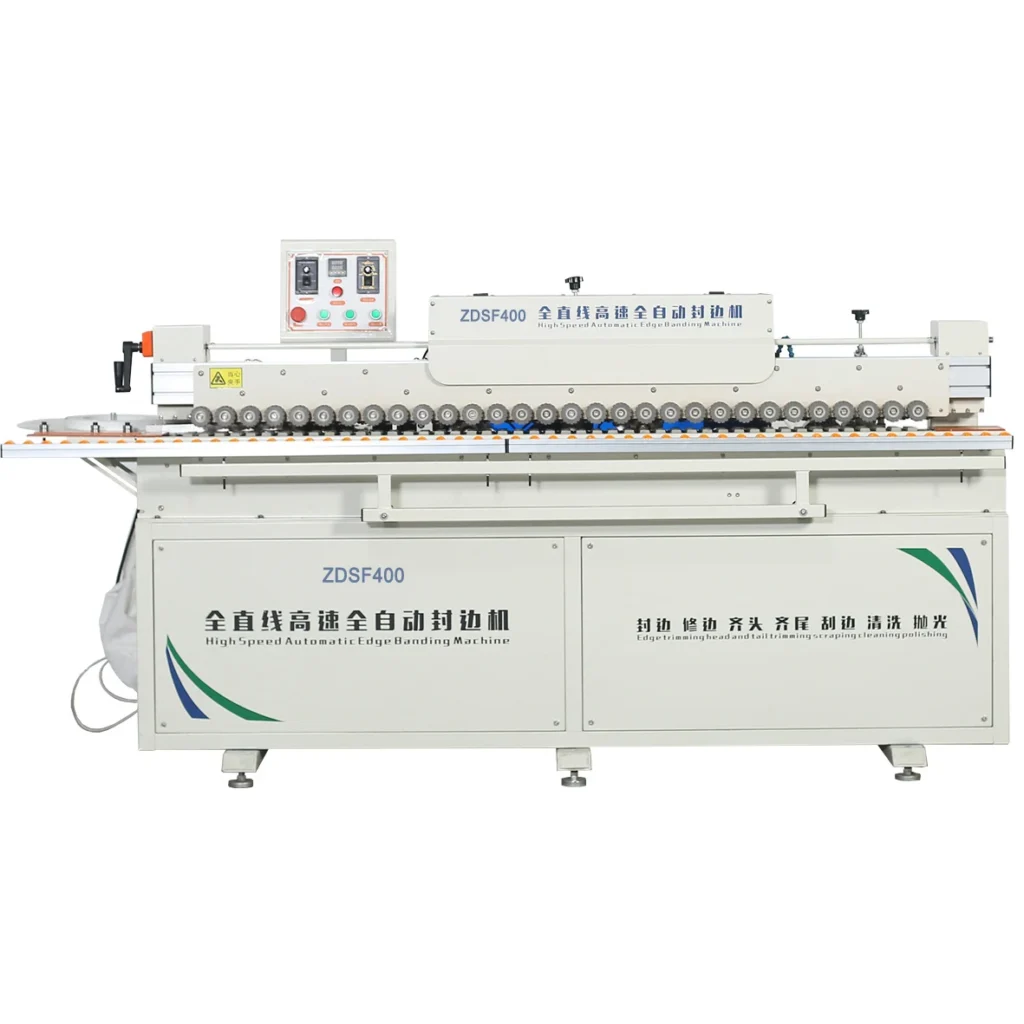
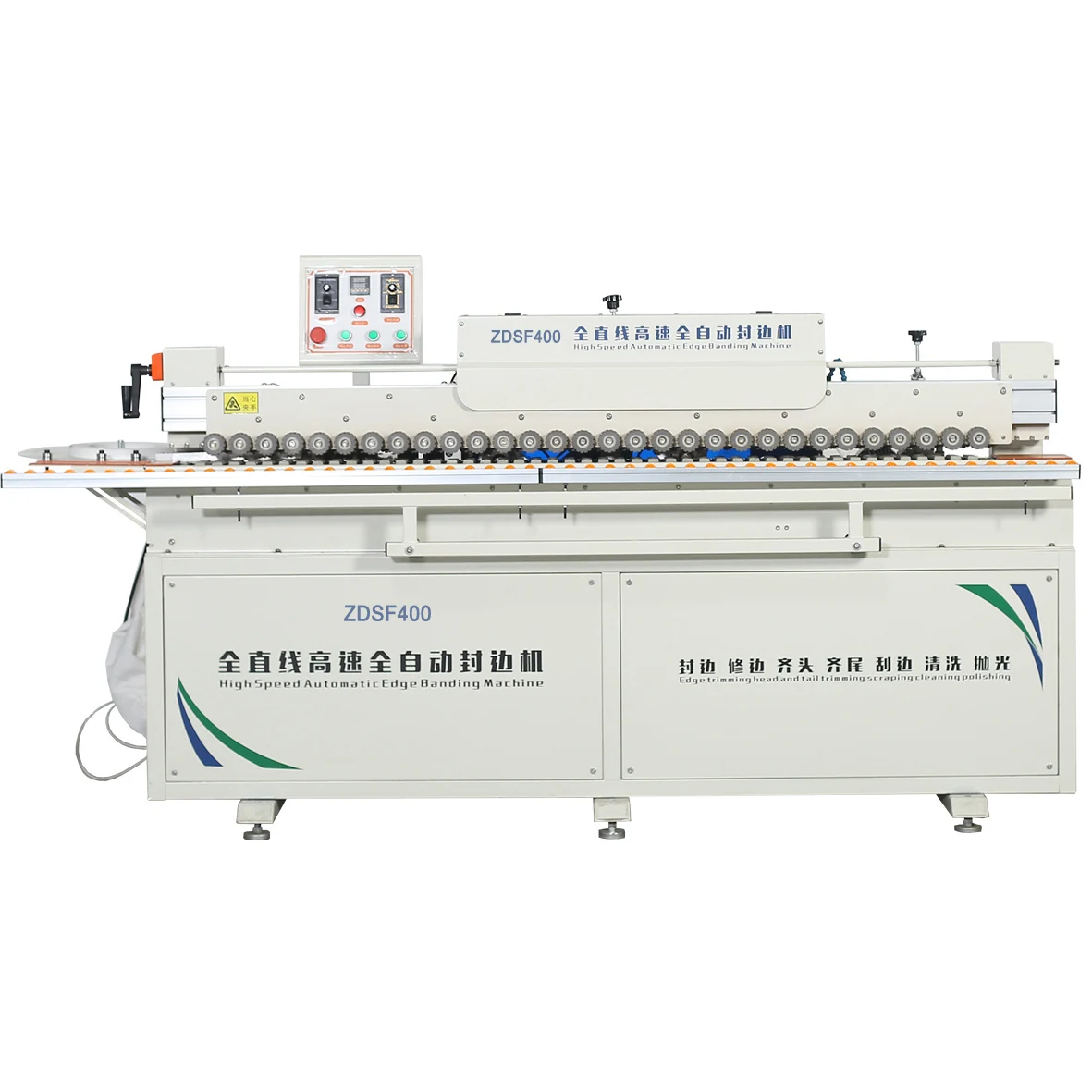
The ZDSF400 sits at the base of the Ruiqi Wood automatic edge banding machine manufacturer range — compact footprint, full function sequence, same ±0.02 mm tolerance mechanism as the larger models.
I have watched workshops buy the cheapest edge bander they could find, run MDF test pieces that looked clean, then switch to high-moisture particleboard and see glue lines open up across half the batch. The issue is rarely the glue itself; it is the trimming rigidity and feed consistency under real load. When an automatic edge banding machine for sale is quoted without the buyer asking for a test on their own substrate, the tolerance claim stays on paper and never reaches the assembly bench. [NEED_CITE: panel substrate density variation and edge adhesion performance]
Where the ZDSF400 Sits in the Full Range
The Ruiqi Wood catalogue runs from this straight-line model through pre-milling and multi-axis configurations, and the ZDSF400 is the smallest complete function sequence available. You get gluing, end cutting, rough and fine trimming, scraping, polishing, and vacuuming in one pass — the same six-stage workflow that the larger machines use, only at a lower feed speed and a narrower panel width. This matters because when a workshop is ready to scale, the next model up shares the same operator logic and spare-parts family, so your team is not learning a new interface from scratch.
Footprint and Power for a Small Workshop Floor
At 240 × 70 × 120 cm and 370 kg, the ZDSF400 fits against a wall where a full production line model would need its own bay. The 220V single-phase supply and 3 kW total draw mean most small workshops can run it from an existing circuit without a dedicated transformer — a detail that causes real delays when overlooked. [NEED_CITE: small workshop electrical capacity planning for woodworking machinery] The 800 W glue pot heater reaches working temperature within five to ten minutes, so a cabinetmaker doing short runs does not waste the first hour of the day waiting for the adhesive to stabilise.
How Feed Speed and Trimming RPM Shape the Edge You Deliver
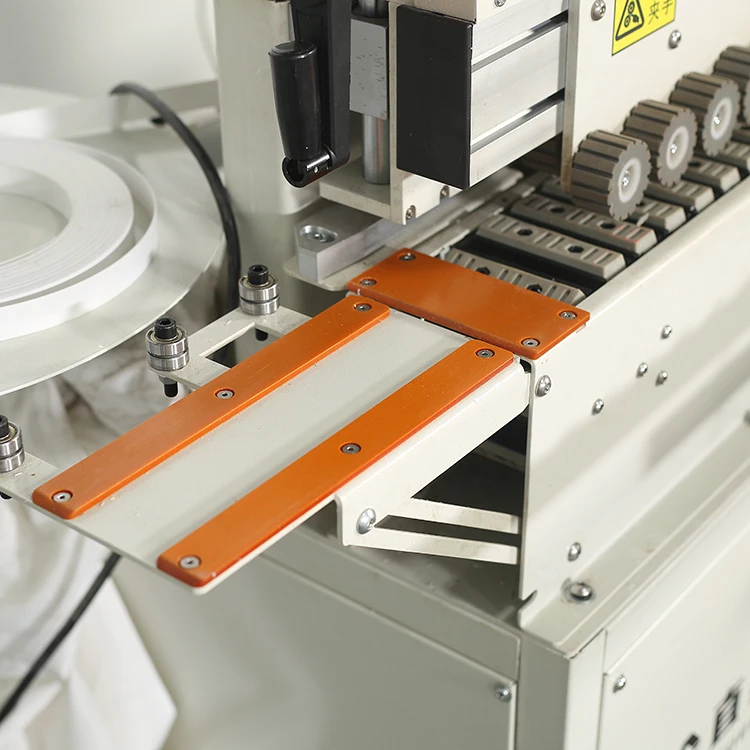
The 0–14 m/min feed speed is matched by an identical conveyor belt speed, which keeps the panel stable through each station. The two trimming motors run at 24,000 rpm, a spindle speed that handles both PVC and thin veneer strips without the chatter marks you get from slower cutters. The 10–55 mm panel thickness range covers standard 18 mm particleboard for carcass work as well as thicker solid-wood panels for table tops and bench surfaces, so a joinery shop can keep one machine set up rather than swapping between a bench-top unit and a floor model. The 550 W suction port pulls trim waste directly from the cutting zone, keeping the scraping and polishing stations free of debris that would otherwise score the finished edge.
The Cost of Skipping the Substrate Test
A buyer who specifies an edge bander on standard MDF samples and never runs their actual production particleboard will discover the problem only after the machine is bolted to the floor. Glue lines that looked invisible on the test piece turn cloudy on a porous substrate, and panels that passed the factory inspection start failing at the dowel assembly stage. The rework is not just the edge strip — it is the trimmed, bored, and hinge-cut component that now has to be scrapped. [NEED_CITE: downstream assembly failure caused by edge adhesion inconsistency]
Why Source This Model Through Ruiqi Wood
The ZDSF400 is built on the same assembly line as the higher-tier Ruiqi models, with precision-ground components and the proprietary cutting mechanism that holds ±0.02 mm tolerance — not a relabelled generic frame. Voltage, control language, and plug type are confirmed before production starts, not guessed from a catalogue default. A four-stage QC process covers incoming material, in-process machining, finished assembly, and pre-shipment verification, with the test record signed against your panel thickness. An engineer-led configuration review means you get a formal proposal within 24 hours that names every option selected, not a single-line quote. Factory visits are open so you can run the full model range side by side on your own material.
Documentation & Verification
- Machine specification sheet listing every confirmed parameter including your local voltage and frequency
- Electrical schematic with circuit diagram matched to the installed motor and heater ratings
- Factory test record on your specified panel thickness and edge strip type before dispatch
- Operation and maintenance manual written in the language your operators will actually read
- Spare parts list with part numbers cross-referenced to the trimming and polishing consumables
Installation, Commissioning & Support
- Requires on-site assembly with manual and video guidance; allow floor space around the 240 cm length for operator access
- 220V single-phase supply on a dedicated 3 kW circuit with proper earth bonding before first power-on
- Glue pot warm-up of five to ten minutes at 800 W before first panel run to stabilise adhesive viscosity
- Feed speed dialled from 0 to 14 m/min during commissioning to match your operator’s loading rhythm
- Dual trimming and dual polishing stations aligned to your 1–3 mm strip thickness during first-day setup
- 550 W suction port connected to workshop dust extraction before production runs begin
What We Need to Quote the Right Configuration
Send us the panel substrates you run most often, the edge strip materials and thicknesses, and your local voltage and frequency so the electrical package is built correctly from the start. If you are planning a phased line investment, tell us which upstream and downstream machines you already have so the ZDSF400 feed height and throughput are matched to the rest of the floor.
Frequently Asked Questions
Q: How does the ZDSF400 compare to other models in the Ruiqi Wood edge banding range?
A: The ZDSF400 is the entry point of the range, offering the same six-stage function sequence and ±0.02 mm tolerance mechanism as the larger models, with a lower maximum feed speed and a more compact footprint. It suits workshops that need full edge finishing without the throughput demands of a high-volume production line, and it shares spare parts and operator logic with the rest of the family for future upgrades.
Q: What voltage configurations are available, and how is local frequency confirmed?
A: The standard rating is 220V, but Ruiqi Wood builds each automatic edge banding machine for sale to the buyer’s confirmed voltage and frequency. Before production begins, you receive an electrical schematic showing the exact motor, heater, and control transformer ratings so there is no mismatch when the machine arrives at your workshop.
Q: What panel materials and edge strip types does this model handle?
A: The ZDSF400 processes MDF, particleboard, plywood, and solid wood panels from 10 to 55 mm thick, with PVC and veneer edge strips from 1 to 3 mm. If you work with a substrate outside these ranges or a specialty banding material, request a sample test on your own stock before the order is confirmed.
Q: How do I choose between entry-level and full-function models for my volume?
A: Match the decision to your daily panel count and substrate mix rather than a generic output claim. The ZDSF400 suits workshops running short to medium batches on standard board thicknesses. If you are running continuous shifts on mixed substrates or thicker panels, the higher-tier models in the Ruiqi Wood catalogue offer increased feed speed and additional stations.
Q: What documentation is provided with shipment, and is a factory test record included?
A: Every ZDSF400 ships with a specification sheet, electrical schematic, operation manual in your agreed language, spare parts list, packing photographs, and a factory test record run on your specified panel and strip combination. Customs documentation support is included, and the CE declaration of conformity is available for markets that require it.