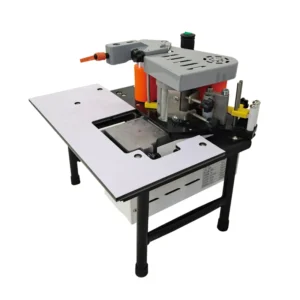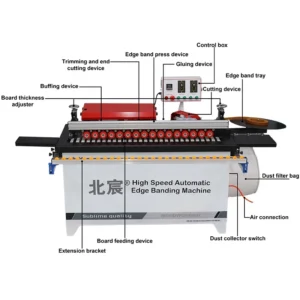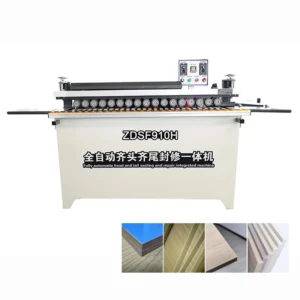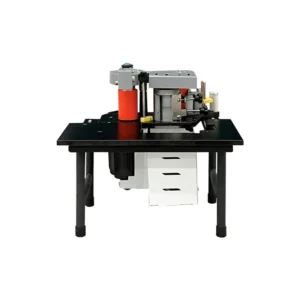
Description
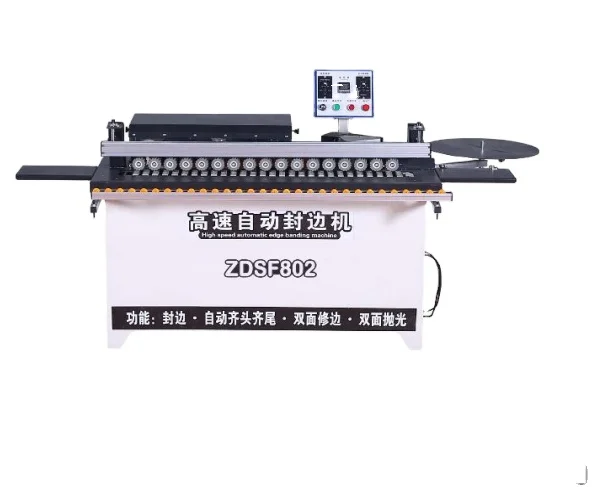
Voltage-Configurable Range — the 802 model ships with confirmed 220V single-phase wiring and a digital glue pot display matched to the buyer’s local electrical standard before assembly begins.
Technical Specifications
| Parameter | Value |
|---|---|
| Model | 802 |
| Product Type | Automatic Edge Banding Machine |
| Edge Type | Straight line |
| Rated Voltage | 220V |
| Rated Power | 4kW |
| Heating Power | 1000W |
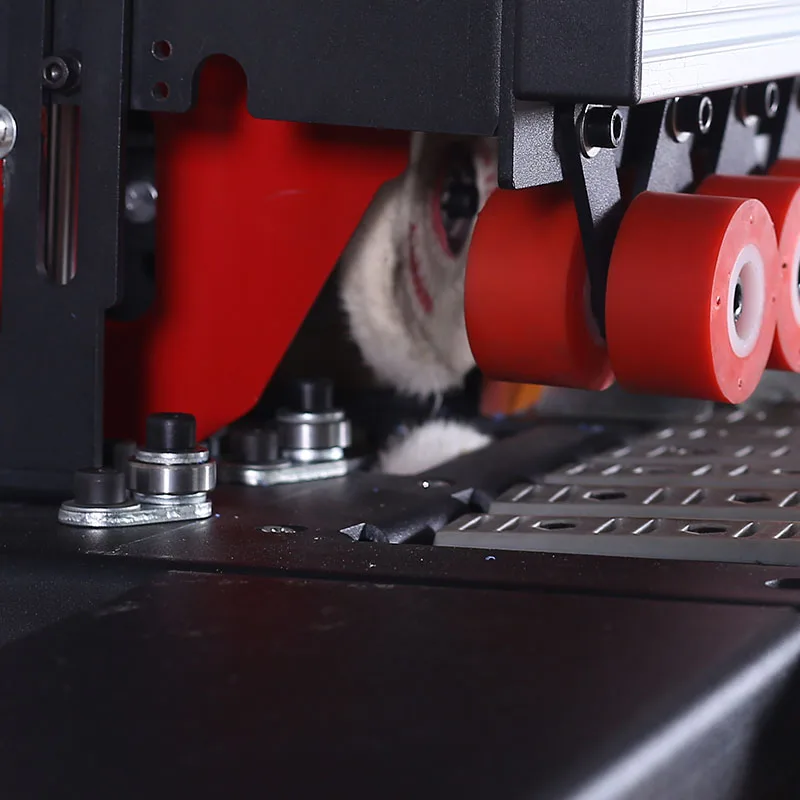
| Trimming Power | 800W × 2 |
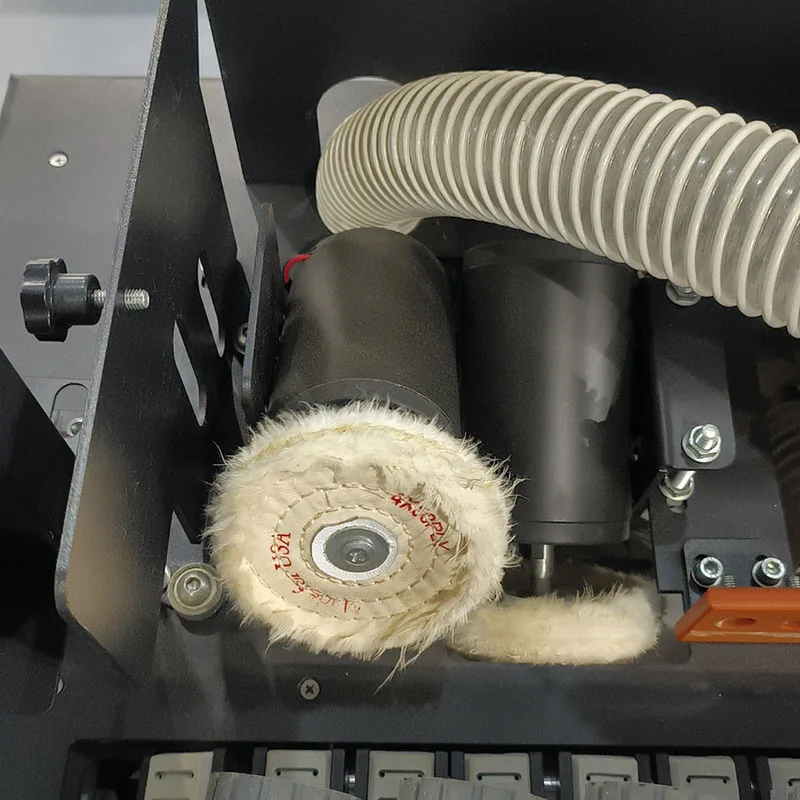
| Polishing Power | 180W × 2 |
| Suction Power | 1200W |
| Feed Speed | 0–10 m/min |
| Conveyor Belt Speed | 0–10 m/min |
| Strip Thickness Range | 0.5–2.5 mm |
| Sheet Thickness Range | 10–50 mm |
| Glue Pot Capacity | 4000 ml |
| Rated Air Pressure | 0.4–0.6 MPa |
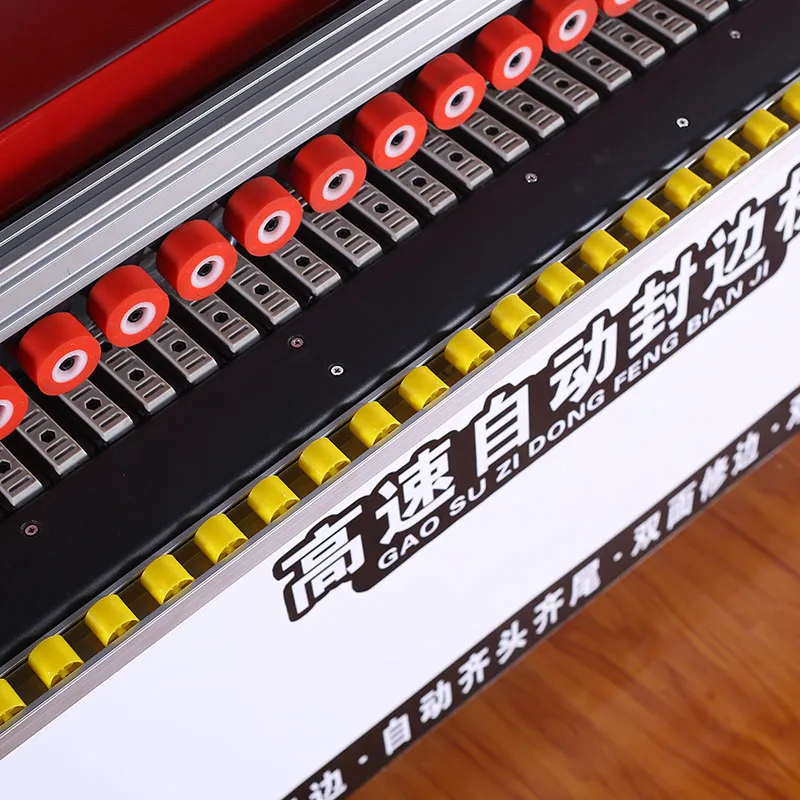
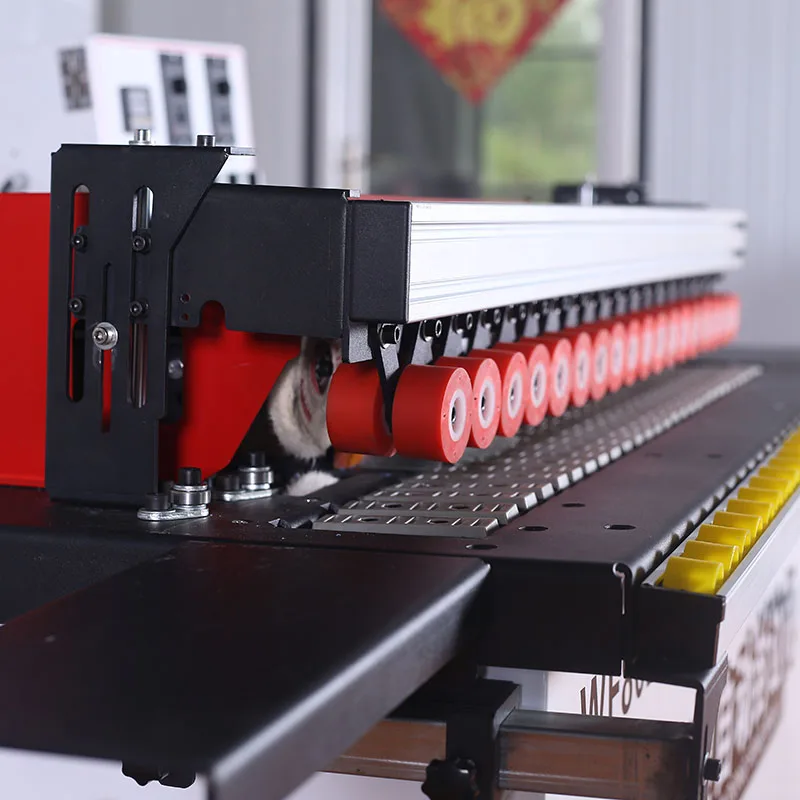
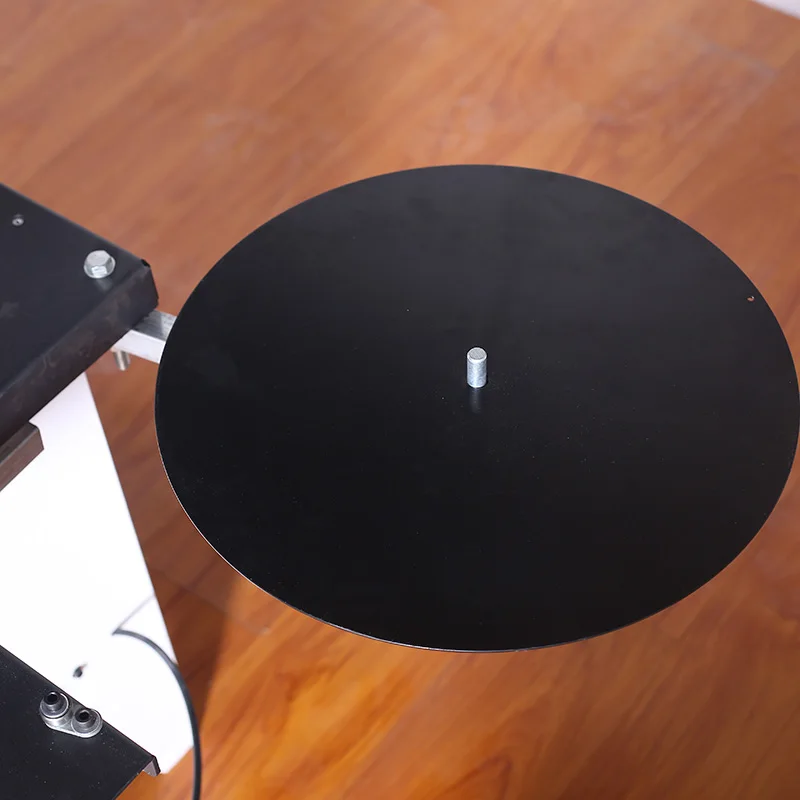
| Pressure Beam | One-piece, double rows of pressure wheels |
| Conveyor Belt Material | Silicone |
| Belt Breaking Method | Pneumatically controlled |
| Control Panel | Digital display of glue pot temperature, independent switch |
| Overall Dimensions (L×W×H) | 130 × 65 × 75 cm |
| Machine Weight | 150 kg |
Application Suitability
| Application | Material or Output |
|---|---|
| Custom furniture panel edge sealing | MDF, plywood, particleboard, solid wood panels |
| Cabinet door and carcass banding | PVC and veneer edge banding, 0.5–2.5 mm strip |
| Small joinery workshop straight-line production | Sheet stock 10–50 mm thick |
| Semi-automated edge finishing for batch runs | Flat panel components requiring trim and polish |
Why the Voltage Question Should Come Before the Price on an Automatic Edge Banding Machine for Sale
Confirming local voltage and frequency before any commercial discussion prevents a machine arriving on the shop floor that simply cannot run.
I once saw a Middle East buyer receive a fully automatic edge bander wired for a standard that did not match the local grid. The heating element could not reach operating temperature, the glue stayed viscous, and PVC strips lifted off particleboard panels within minutes. The buyer had compared quotations across three suppliers without a single one asking about the workshop’s power supply [NEED_CITE: voltage and frequency standards by export market]. When an automatic edge banding machine for sale is quoted without that conversation, the problem only surfaces after the container is unpacked and the electrician shakes his head.
Mapping Model Tiers to Workshop Volume
Every catalogue page lists machines from entry-level to full-function, but the real question is which tier actually matches the daily panel count and the operator’s skill level. The 802 sits at a point where a workshop has moved past hand-applied banding but is not yet running continuous shifts. Its 0–10 m/min feed speed and 4000 ml glue pot handle batch production of cabinet components without demanding a dedicated glue-line operator. Choosing the right tier means the machine works within its design envelope rather than being pushed into volumes it was never built for.
Reading the Catalogue Without Being Misled by Headline Numbers
A higher feed speed on paper does not automatically translate to more finished panels per hour if the trimming and polishing stations cannot keep pace. This automatic edge banding machine for sale pairs its feed conveyor with pneumatically controlled belt breaking and dual 800W trimming motors, so the end-cut and trim stages complete their work before the next panel arrives. When comparing models across a product family, look at how each station’s capacity relates to the feed rate rather than treating the speed dial as the sole performance indicator [NEED_CITE: edge banding machine throughput balance across trimming and polishing stations].
What the Specification Sheet Actually Tells You About Panel Compatibility
The 10–50 mm sheet thickness range and 0.5–2.5 mm strip thickness range define which panels and edge materials this machine can process together. A 50 mm solid wood panel needs the one-piece pressure beam and double-row pressure wheels to stay flat against the conveyor fence, otherwise the strip bonds unevenly along the edge. The silicone conveyor belt prevents surface marks on pre-finished plywood and veneered MDF, which matters when the panel goes straight from the bander to assembly without a sanding step in between. The digital glue pot temperature display lets the operator set the correct melt point for PVC on particleboard or veneer on solid wood, rather than guessing from a fixed thermostat.
The Hidden Cost of Skipping Configuration Confirmation
When a workshop buys a machine based on catalogue photos alone, the mismatches show up in production. A control panel in a language the operator cannot read means the glue temperature gets set wrong and strips peel during the first week. An air pressure supply that falls below 0.4 MPa causes the pneumatic belt breaker to hesitate, leaving ragged ends that the polishing wheels cannot clean up. These are not warranty issues — they are configuration gaps that could have been caught before the machine left the factory [NEED_CITE: common commissioning faults traced to pre-shipment specification gaps].
Why Buyers Source This Range From a Single Manufacturer
The 802 is part of a product family that spans entry-level to full-function pre-milling configurations, so a workshop can add capacity later without learning a new control layout or re-training operators. Voltage options are confirmed during the quotation stage, not discovered at the electrical panel. Every machine goes through a four-stage quality check that includes a pre-shipment test run on the buyer’s actual panel material and thickness. The engineering team provides a formal configuration proposal within 24 hours of receiving the workshop’s production requirements, and factory visits are welcomed before the order is placed.
Documentation & Verification
- CE declaration of conformity covering the 802 electrical and mechanical safety requirements
- ISO 9001 certificate for the manufacturing quality management system
- Machine specification sheet with confirmed voltage, frequency, and air pressure values
- Factory test record run on buyer-supplied panel stock and edge banding material
- Operation and maintenance manual supplied in the agreed operator language
- Electrical schematic showing the 4kW rated power circuit and 1000W heating element wiring
Installation, Commissioning & Support
- Floor space requirement based on the 130 × 65 × 75 cm footprint with operator clearance on the feed side
- Dedicated 220V circuit rated for the 4kW total load with correct breaker sizing
- KD packing state requires reassembly of the pressure beam and conveyor section on arrival
- Glue pot first heat-up cycle of 5–10 minutes monitored against the digital temperature display
- Pneumatic system commissioning verified at the 0.4–0.6 MPa operating range with the buyer’s compressor
- Silicone conveyor belt tension and tracking adjusted during initial panel runs
What We Need to Recommend the Right Configuration
Tell us the panel materials you run most often, the sheet thickness range, and the edge banding strip type and thickness. Share your workshop’s local voltage and frequency so the electrical system is built to match. If you have a target daily panel count, include that along with your available floor space and any upstream or downstream equipment the bander needs to feed into.
Frequently Asked Questions
Q: How do I know which edge bander tier fits my current workshop volume?
A: Share your typical daily panel count and the sheet materials you process. We match that against each model’s feed speed and glue pot capacity to recommend a tier that runs within its design envelope, leaving headroom for growth without oversizing the initial investment.
Q: What voltage options are available and how is compatibility confirmed?
A: The 802 is configurable for different voltage and frequency requirements. We confirm your workshop’s supply specifications during the quotation stage and build the electrical system accordingly, with the wiring verified during the pre-shipment test.
Q: Can the control panel language match my operator’s requirements?
A: Yes. The digital display and switch labels on the 802 control panel can be supplied in the operator’s working language. Specify your preference during the configuration discussion so the correct panel is installed before dispatch.
Q: Is it possible to test edge sealing quality before placing a full order?
A: We offer sample processing tests using your actual panel material and edge banding strip. You can review the trim quality, glue line appearance, and polish finish on returned samples, or visit the factory to watch the test run in person.
Q: If I start with the 802, can I move to a higher-spec model later?
A: The product family shares a common control philosophy, so operators transition between tiers without extensive retraining. When your volume grows to require pre-milling or additional trimming stations, the upgrade path stays within the same supplier ecosystem.