Description
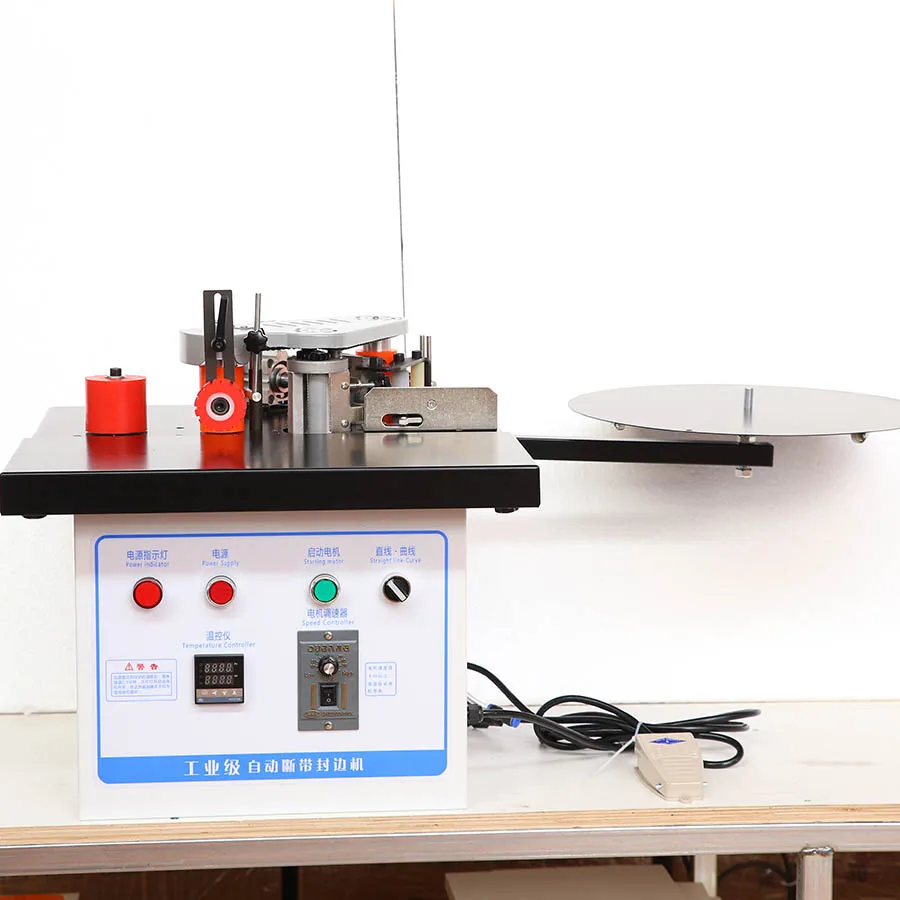
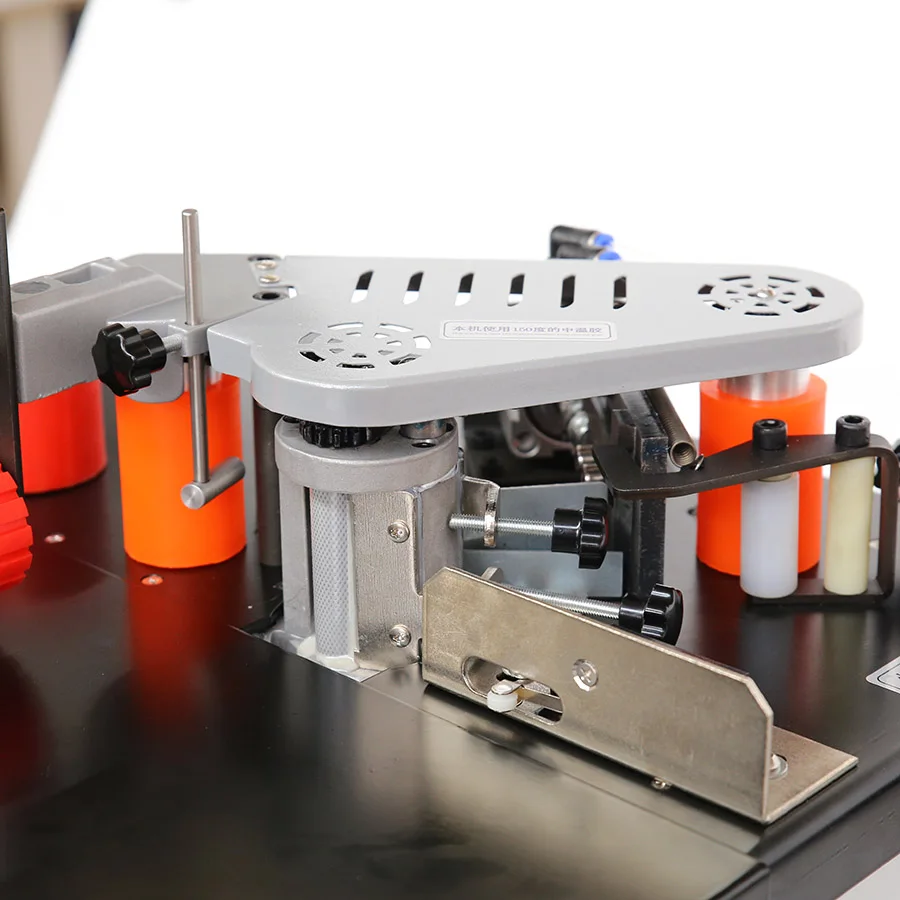
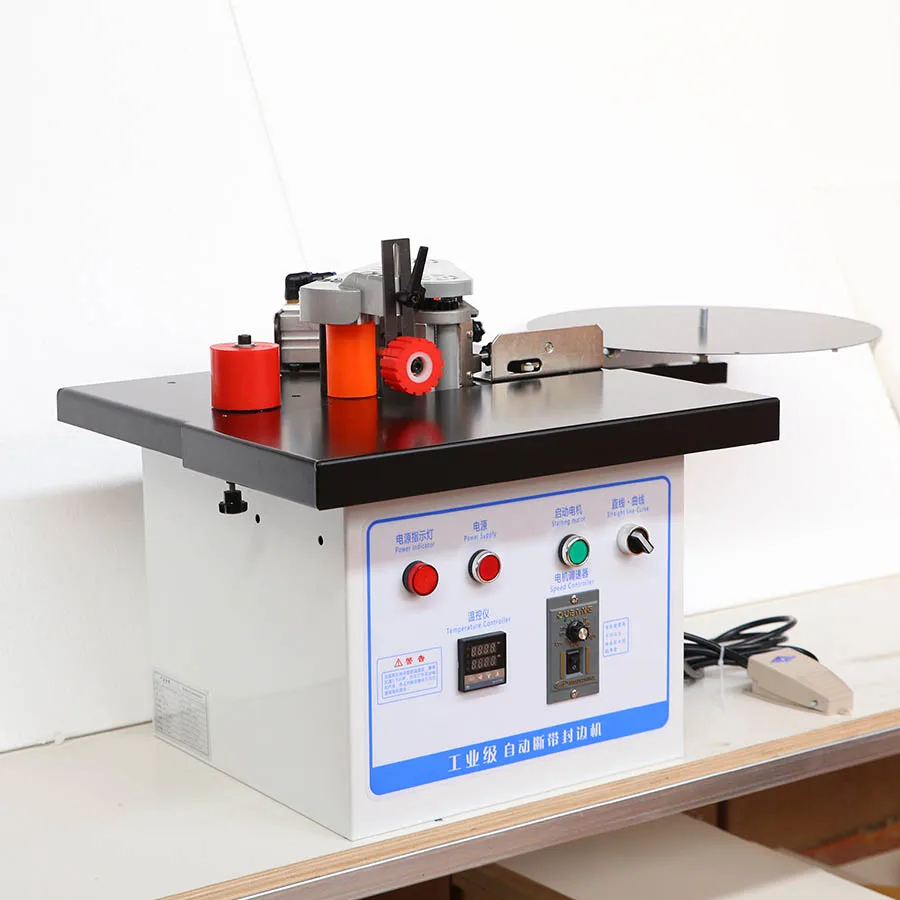
Patented Cutting Mechanisms — The ZDSF-60 uses our in-house developed double-sided gluing mechanism with coated rollers, delivering consistent adhesion on PVC and veneer strips from 0.5 to 2mm thick at the portable end of our range.
Technical Specifications
| Parameter | Value |
|---|---|
| Model | ZDSF-60 |
| Product Type | Mini Portable PVC Edge Banding Machine |
| Rated Voltage | 220V (configurable from 110V to 440V) |
| Heating Power | 800W |
| Glue Pot Capacity | 1000ml |
| Heat-up Time | 5–8 minutes |
| Edge Banding Speed | 0–6 m/min (variable, basis to be confirmed) |
| Strip Thickness Range | 0.5–2mm |
| Max Sheet Thickness | 50mm |
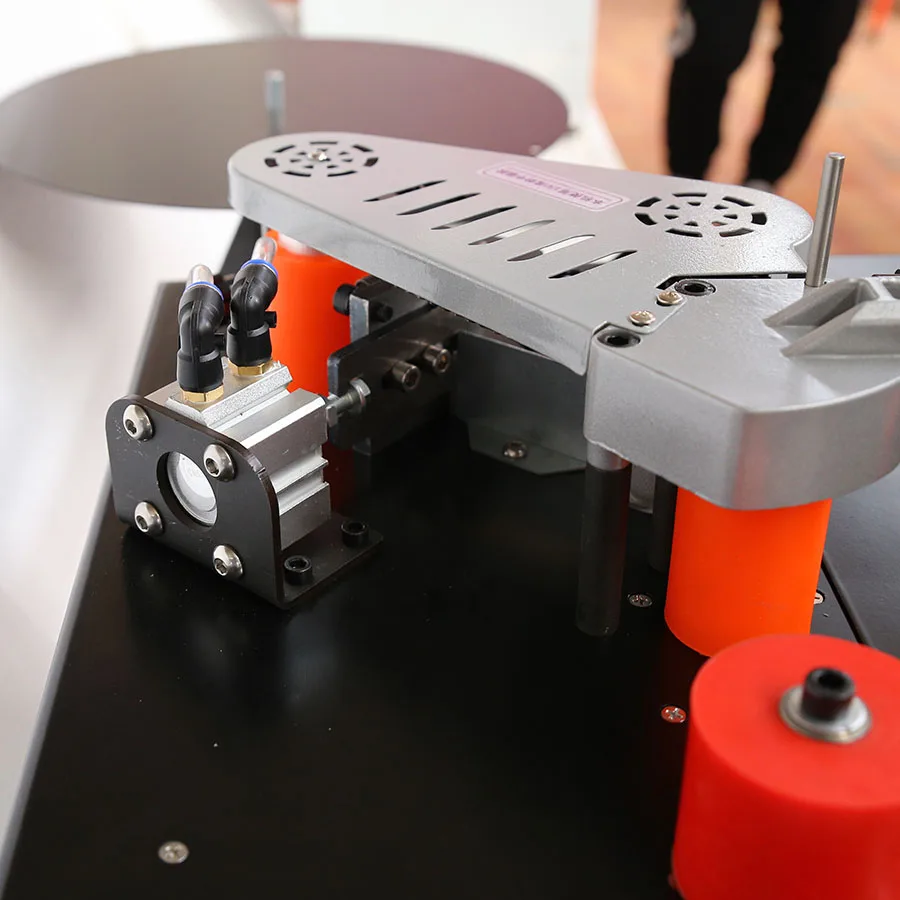
| Rated Air Pressure | 0.4–0.6 MPa |
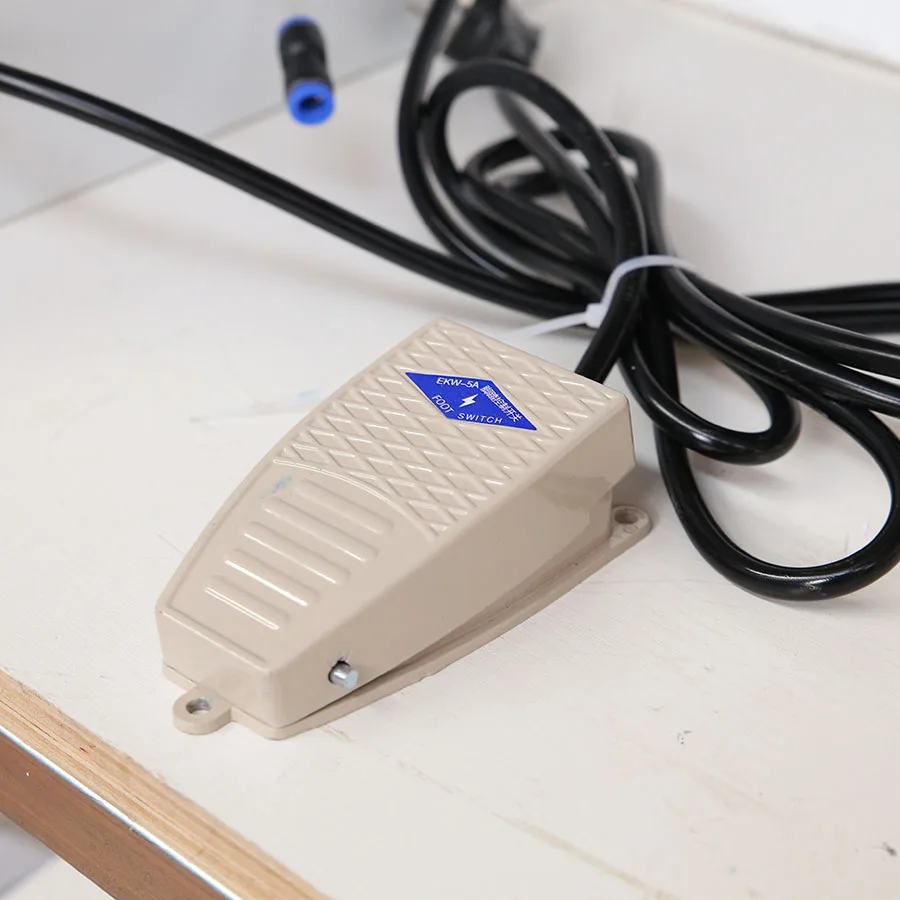
| Tape Breaking | Pneumatic, foot switch and travel switch |
| Glue Application | Double-sided with coated rollers |
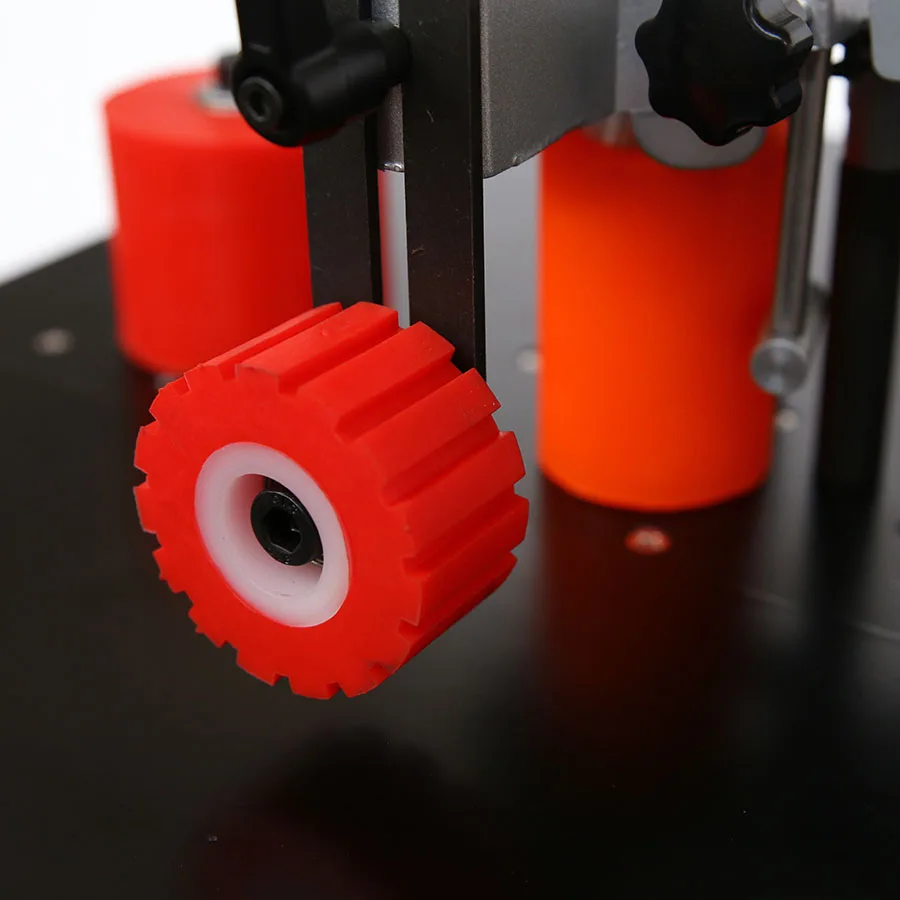
| Pressure Rollers | Adjustable rubber, matched to board thickness |
| Edge Strip Transport Bayonet | Adjustable to strip height |
| Edge Shape Capability | Straight, curved, and shaped edges |
| Overall Dimensions | 54 × 54 × 56 cm |
| Machine Weight | 26 kg |
Application Suitability
| Application | Material or Output |
|---|---|
| Small-batch cabinet edging | PVC and veneer strips on MDF and particleboard panels up to 50mm |
| On-site carpentry adjustments | Curved and shaped edge profiles on plywood and blockboard |
| Workshop prototyping and sample runs | Straight edge banding on melamine-faced board substrates |
| Custom furniture small production lots | 0.5–2mm strips on solid wood panels for bespoke joinery |
Why the Glue Temperature Question Matters Before You Order a Mini Portable Edge Banding Machine Manufacturer
Different strip materials demand different thermal profiles — and most portable units never disclose where the limit sits.
I have watched workshops run PVC through a portable edge bander without issue for weeks, then switch to melamine or thicker veneer strips only to find the glue pot cannot hold temperature long enough for a reliable bond. The 800W heating element in the ZDSF-60 reaches working temperature in 5 to 8 minutes and maintains it across a 1000ml pot, but that capacity has a ceiling. If your primary strip material is a high-melting-point melamine or you are running continuous straight edges longer than the unit was designed to sustain, adhesion failures will appear as delamination weeks after delivery. Confirming strip type and production rhythm before shipment prevents the most common portable machine complaint. [NEED_CITE: thermal requirements for PVC versus melamine edge banding adhesives]
Where the ZDSF-60 Fits in a Scaling Workshop
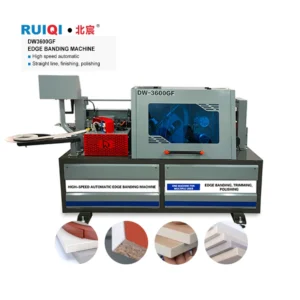
This unit occupies the entry point of our complete edge banding machine range. Small furniture workshops moving away from hand-applied iron-on banding find the ZDSF-60 eliminates the inconsistency that manual methods introduce — uneven pressure, cold glue spots, and visible seam lines. The double-sided gluing system applies adhesive to both the panel edge and the strip simultaneously, which produces a bond quality that manual application cannot match. For a custom cabinet maker handling job-site modifications or small-batch curved panels, the 26kg weight and 220V single-phase supply mean the mini portable edge banding machine manufacturer ships a unit that deploys without electrical upgrades.
Reading the Straight-Line Versus Curved-Line Distinction
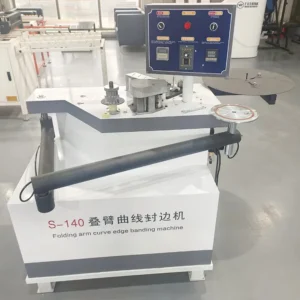
The ZDSF-60 handles three edge geometries: straight, curved, and shaped. Straight edges use the travel switch for automatic tape breaking, which removes the operator judgement that causes overhang or short-falls on longer runs. Curved work relies on the foot switch, giving the operator manual control over break timing as the strip follows a radius. Shaped edges — the profiles found on contoured cabinet doors and rounded shelving — require the operator to guide the panel by hand while the adjustable pressure rollers maintain contact. Understanding which geometry dominates your daily output determines whether this portable unit covers your volume or whether you need to evaluate a full-function automatic model with powered feed and multi-stage trimming. [NEED_CITE: edge banding machine classification by automation level]
How Heating Power and Glue Pot Size Affect Bond Integrity
The 800W heater paired with a 1000ml glue pot creates a thermal reserve that sustains adhesion across intermittent use — the typical pattern in a small workshop where panels are loaded one at a time with pauses between each. If your production rhythm involves continuous feeding for extended periods, the pot volume and recovery rate define how many linear meters you can run before temperature drops below the adhesive’s activation threshold. The double-sided coated roller system applies glue to both surfaces, which demands consistent viscosity across the entire application zone. The 0.4–0.6 MPa air pressure specification drives the pneumatic tape-breaking mechanism and must be available at the point of use; undersized compressors cause incomplete breaks and strip waste. Board thickness up to 50mm is accommodated through adjustable rubber pressure rollers and a height-adjustable transport bayonet, meaning a single setup handles most standard panel stock without tool changes.
What Happens When a Portable Machine Is Asked to Do a Production Line’s Job
Workshops that purchase a unit like the ZDSF-60 for continuous daily output often discover the limitation months later, when glue line failures appear on panels that passed visual inspection at the bench. The machine is engineered for intermittent, small-batch, and on-site work — not sustained throughput. Running it beyond that scope accelerates wear on the coated rollers and stresses the pneumatic components beyond their duty cycle. [NEED_CITE: duty cycle expectations for portable versus automatic edge banding equipment]
Why Buyers Source This Range From a Single Manufacturer
Our in-house manufacturing covers the full edge banding family, from this portable unit through pre-milling full-function models, so a workshop can scale equipment without switching suppliers or relearning control systems. Voltage customization from 110V to 440V is standard — the unit is quoted at 220V, but the motor and heating element are wound to match your local supply before shipment. Four-stage quality control includes a pre-shipment test run using your specified panel material and strip type, documented in the factory test record. The ZDSF-60 carries the same engineering standards applied across our range, with precision-ground components and multi-stage inspection. Engineer-led configuration means you receive a written recommendation on whether this portable model covers your actual daily volume or whether stepping to the next tier prevents a costly mismatch.
Documentation & Verification
- Factory test record on your specific PVC or veneer strip and panel substrate before dispatch
- Electrical schematic confirming wound voltage and frequency match for your local supply
- Operation and maintenance manual produced in the language agreed at order confirmation
- Spare parts list identifying wearable rollers, heating elements, and pneumatic components
- Packing photographs showing crate condition and component securing before container loading
Installation, Commissioning & Support
- Requires a dedicated 220V single-phase circuit rated for the 800W heating draw plus compressor load
- Deploy on a level bench surface; the 54 × 54 × 56 cm footprint fits standard workshop benches
- Pneumatic supply must deliver 0.4–0.6 MPa clean dry air at the machine inlet
- First commissioning includes verifying travel switch calibration for straight-line automatic tape breaking
- Pressure roller adjustment procedure documented in manual for board thickness changes up to 50mm
- Wearable roller and heating element replacement intervals listed in the maintenance schedule
Before You Request a Quotation
Provide the panel materials you process most frequently — MDF, particleboard, plywood, or solid wood — along with the strip type and thickness range you intend to run. Confirm your local voltage and frequency so the motor and heater are wound correctly before production begins. If you anticipate scaling beyond small-batch or on-site work within the next year, share your expected daily linear meter volume so the configuration recommendation accounts for growth rather than just current output.
Frequently Asked Questions
Q: Where does the ZDSF-60 sit in the full Ruiqi edge banding machine range, and when should I upgrade?
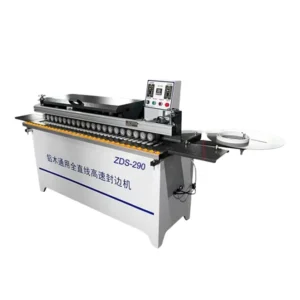
A: The ZDSF-60 is the portable entry point, designed for small-batch, curved, and on-site work with intermittent use patterns. When your daily output shifts to sustained straight-edge production on standard panel sizes, stepping to a full-function automatic model with powered feed and multi-stage trimming stations eliminates the throughput ceiling and manual handling that a portable unit requires.
Q: What voltage and frequency options are available for my local market?
A: The unit is quoted at 220V as standard, but the motor winding and heating element can be configured for any voltage from 110V to 440V. Confirm your local supply frequency at inquiry stage so the electrical schematic and factory test are completed against the correct specification before shipment.
Q: Can the ZDSF-60 handle my specific panel material and edge strip type without visible glue lines?
A: The double-sided gluing system handles PVC and veneer strips from 0.5 to 2mm on MDF, particleboard, and plywood up to 50mm thick. For melamine or specialty strips with higher activation temperatures, share the exact material at inquiry so the factory test record confirms bond quality on your substrate before you commit to the order.
Q: How does this portable unit integrate if I expand to a full production line later?
A: The ZDSF-60 serves as a supplementary unit for curved work, on-site adjustments, and small-batch exceptions even after a full automatic line is installed. Sourcing from the same manufacturer means control logic, spare parts inventory, and maintenance procedures remain consistent as you add sliding table saws, boring machines, and full-function edge banders to the same workshop.
Q: What documentation and spare parts support comes with the machine?
A: Every shipment includes a factory test record on your material, an electrical schematic with confirmed voltage, an operation manual in your agreed language, and a spare parts list identifying rollers, heating elements, and pneumatic components. Documentation supports customs clearance, and spare parts are available for reorder through the same channel as the original purchase.