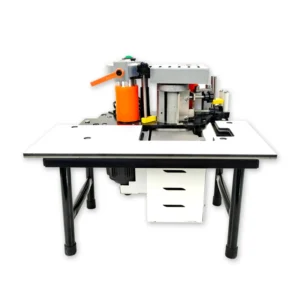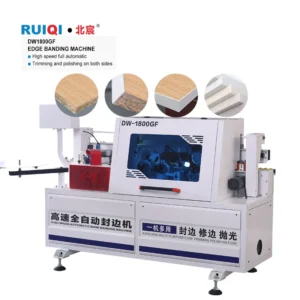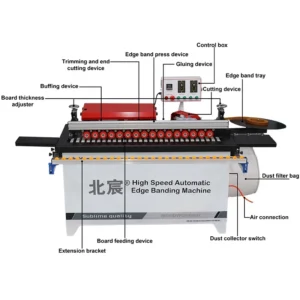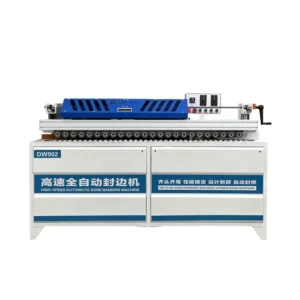
Description
Voltage-flexible edge banding — the ZDSF802 is configurable from 110V to 440V and ships with a confirmed electrical schematic matching your local grid, preventing the costly arrival of an unusable machine.
Technical Specifications
| Parameter | Value |
|---|---|
| Model | ZDSF802 |
| Product Type | Automatic Edge Banding Machine |
| Edge Type | Straight line |
| Rated Voltage | 220V (configurable from 110V to 440V) |
| Rated Power | 4 kW |
| Trimming Power | 800W × 2 |
| Polishing Power | 180W × 2 |
| Suction Power | 1200W |
| Heating Power | 1000W (5–10 min heat-up) |
| Strip Thickness Range | 0.5–2.5 mm |
| Sheet Thickness Range | 10–50 mm |
| Feed Speed | 0–10 m/min |
| Conveyor Belt Speed | 0–10 m/min |
| Glue Pot Capacity | 4000 ml |
| Rated Air Pressure | 0.4–0.6 MPa |
| Overall Dimensions (L×W×H) | 130 × 65 × 75 cm |
| Machine Weight | 150 kg |
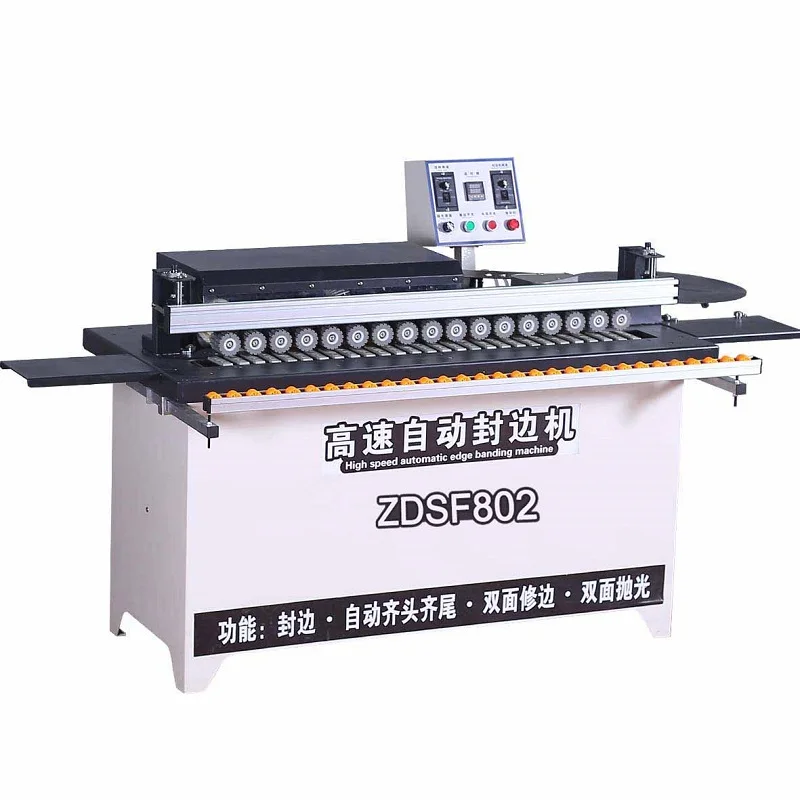
| Control Panel | Digital display of glue pot temperature, independent switches |
| Conveyor Belt Material | Silicone |
| Pressure Beam | Integrated, double-row pressure rollers |
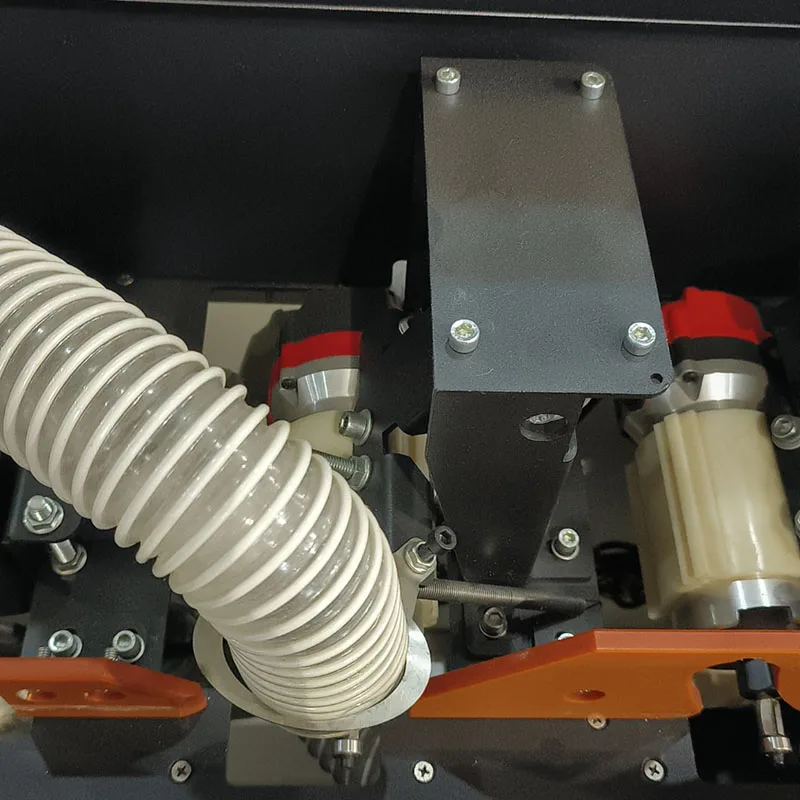
| Dust Extraction | Integrated vacuum cleaner (1200W) |
| Edge Banding Speed Claim | About 2 times of other models (basis not stated in source — confirm comparison model and panel format before relying on this figure) |
Application Suitability
| Application | Material or Output |
|---|---|
| Cabinet and wardrobe panel finishing | MDF and particleboard, 10–50 mm thickness |
| Custom furniture edge banding | Plywood and solid wood panels with PVC strip |
| Joinery workshop production | Veneer edge banding on straight-line substrates |
| Small-batch panel processing | ABS and PVC strips, 0.5–2.5 mm thickness |
Why the Voltage Question Should Come Before the Price on Any Automatic Edge Banding Machine
Confirming local voltage and frequency before configuration locks in prevents a machine from arriving dead on the shop floor.
I once watched a workshop in the Middle East take delivery of an edge bander that was wired for a grid standard they simply did not have. The machine sat under plastic wrap for weeks while a transformer was sourced locally, and even then the frequency mismatch meant the conveyor ran at the wrong speed, throwing off the feed timing against the trimming station. A 220V machine ordered without verifying 50 Hz versus 60 Hz is not a bargain — it is a liability. [NEED_CITE: voltage and frequency standards by export market]
How the ZDSF802 Fits Into a Growing Workshop Line
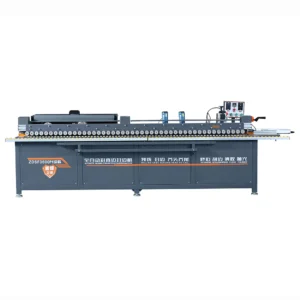
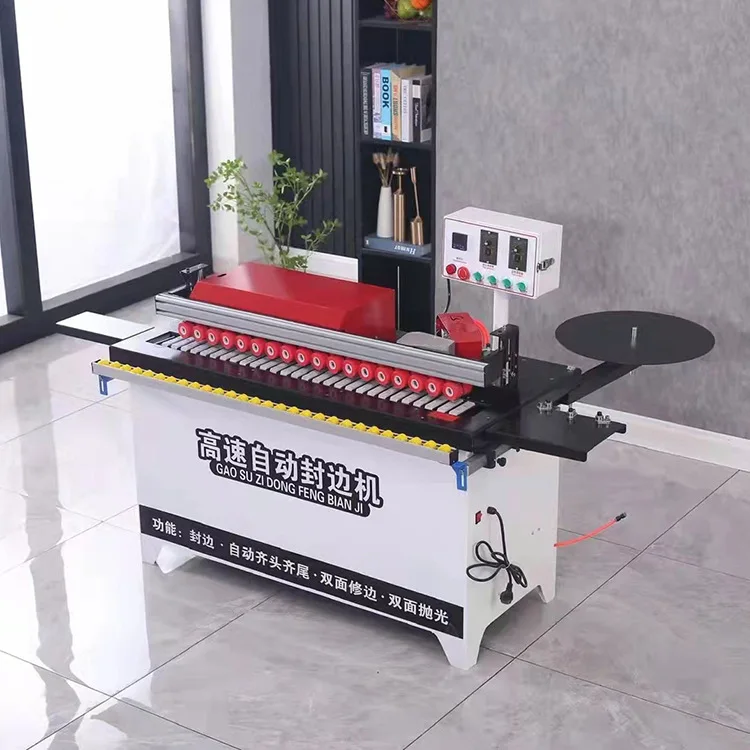
The ZDSF802 occupies the compact end of a full-family automatic edge banding machine range that extends upward to full-function pre-milling models. A joinery shop moving from manual trimming to mechanized banding can start here, then add a pre-milling station or upgrade to a multi-function unit as throughput demands increase — without changing the supplier relationship or relearning a different control logic. The digital temperature display and independent station switches keep the operator interface straightforward while the machine footprint stays within 130 × 65 cm.
Glue Pot Sizing and Continuous Run Behavior
A 4000 ml glue pot means fewer mid-batch refills when you are running a batch of cabinet panels through in one sitting. For small to mid-size workshops processing PVC or veneer strips, the capacity is sized so the operator can load the pot at the start of a shift and run through a typical production run without interrupting the feed to top up adhesive. The 1000W heating element brings the pot to working temperature in roughly five to ten minutes, which matters when the first board of the day needs to be edged while the glue is at a stable viscosity. [NEED_CITE: hot-melt adhesive viscosity and temperature stability in edge banding]
Feed Speed, Trimming Stations, and Edge Finish Quality
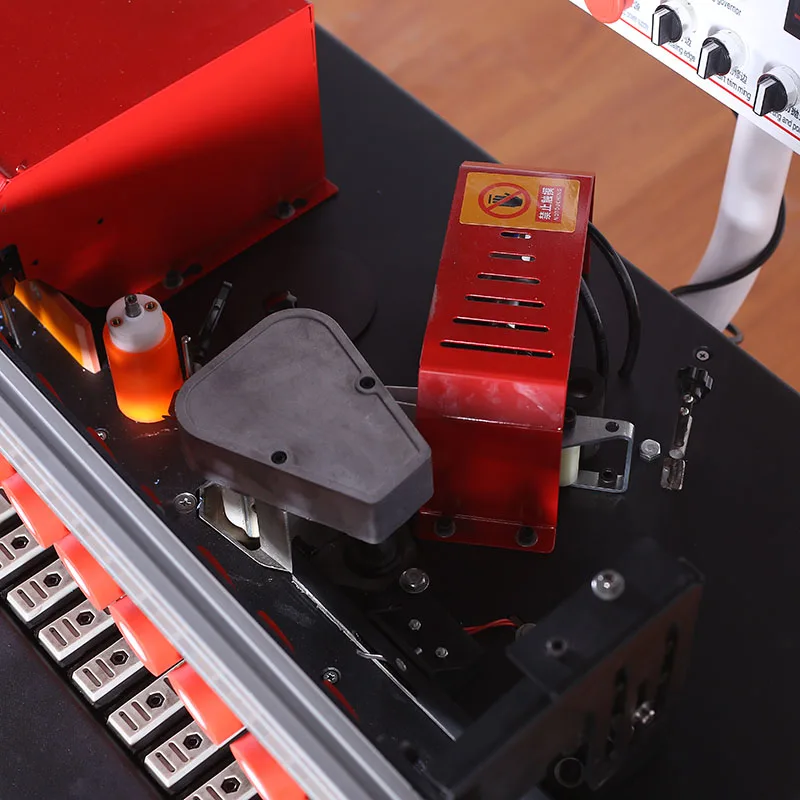
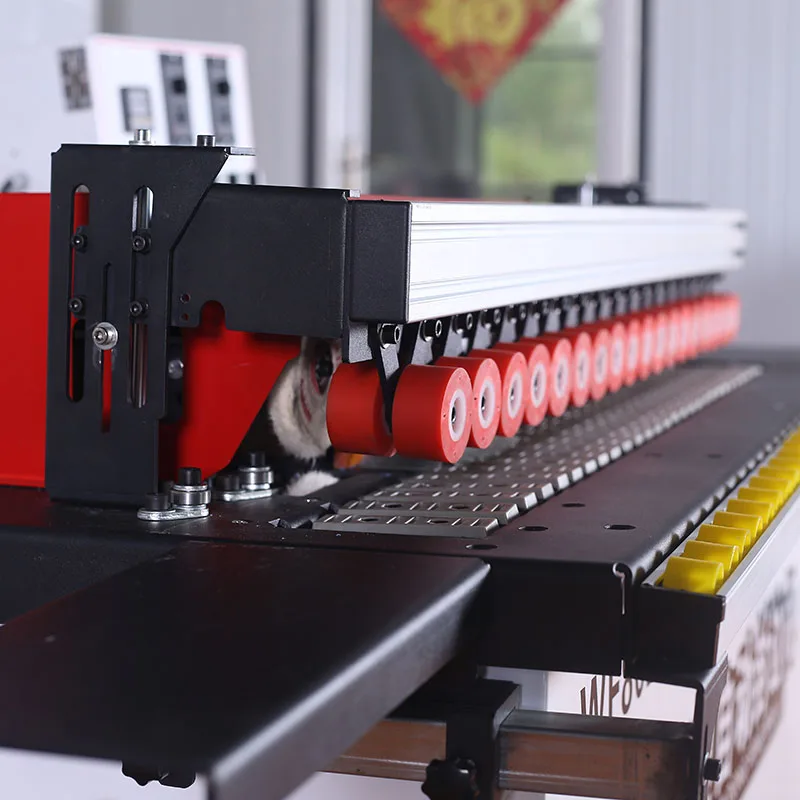
The 0–10 m/min variable feed speed pairs with dual 800W trimming motors and dual 180W polishing motors to handle a range of panel thicknesses from 10 to 50 mm. In practice, thinner PVC strips at the lower end of the 0.5–2.5 mm range tolerate higher feed speeds, while thicker veneer strips benefit from a slower pass that lets the trimming motors cut cleanly without chipping. The double-row silicone conveyor belt grips the panel without marking the surface, and the integrated pressure beam holds the workpiece flat against the glue roller — a mechanical detail that directly determines whether the finished edge shows a visible glue line or bonds tight enough to pass close inspection.
What Happens When Configuration Is Skipped
Ordering an edge bander without matching the strip material to the machine’s feed and trimming capability leads to a familiar pattern: the operator slows the feed down to compensate for poor trim quality, throughput drops well below expectation, and the workshop concludes the machine is underpowered when the real problem was a configuration mismatch. Veneer strips in particular demand different trimming behavior than PVC, and a machine set up for one and fed the other will produce inconsistent edges that show up later during assembly. [NEED_CITE: edge banding material compatibility and trimming station configuration]
Why Source This Machine Through Ruiqi Wood
In-house manufacturing with patented cutting mechanisms means tolerance claims can be verified on your actual panel material before the machine ships. The four-stage quality control process covers incoming material, in-process assembly, finished product, and pre-shipment verification — so you receive a factory test record, not just a specification sheet. Voltage, control panel language, and operational specifications are confirmed during the quotation stage rather than assumed. Engineer-led configuration recommendations are delivered as a formal quotation, matching machine capability to your documented production requirements rather than defaulting to a stock configuration.
Documentation & Verification
- CE declaration of conformity applicable to the ZDSF802 model configuration
- Electrical schematic confirming voltage and frequency for your local grid
- Factory test record showing edge banding results on your specified panel material
- Operation and maintenance manual in the agreed operator language
- Spare parts list with part numbers for trimming blades and conveyor components
- Packing photographs documenting machine condition prior to container loading
Installation, Commissioning & Support
- Floor space planning for the 130 × 65 cm footprint with operator access clearance
- Dedicated 4 kW electrical circuit matching confirmed voltage and frequency
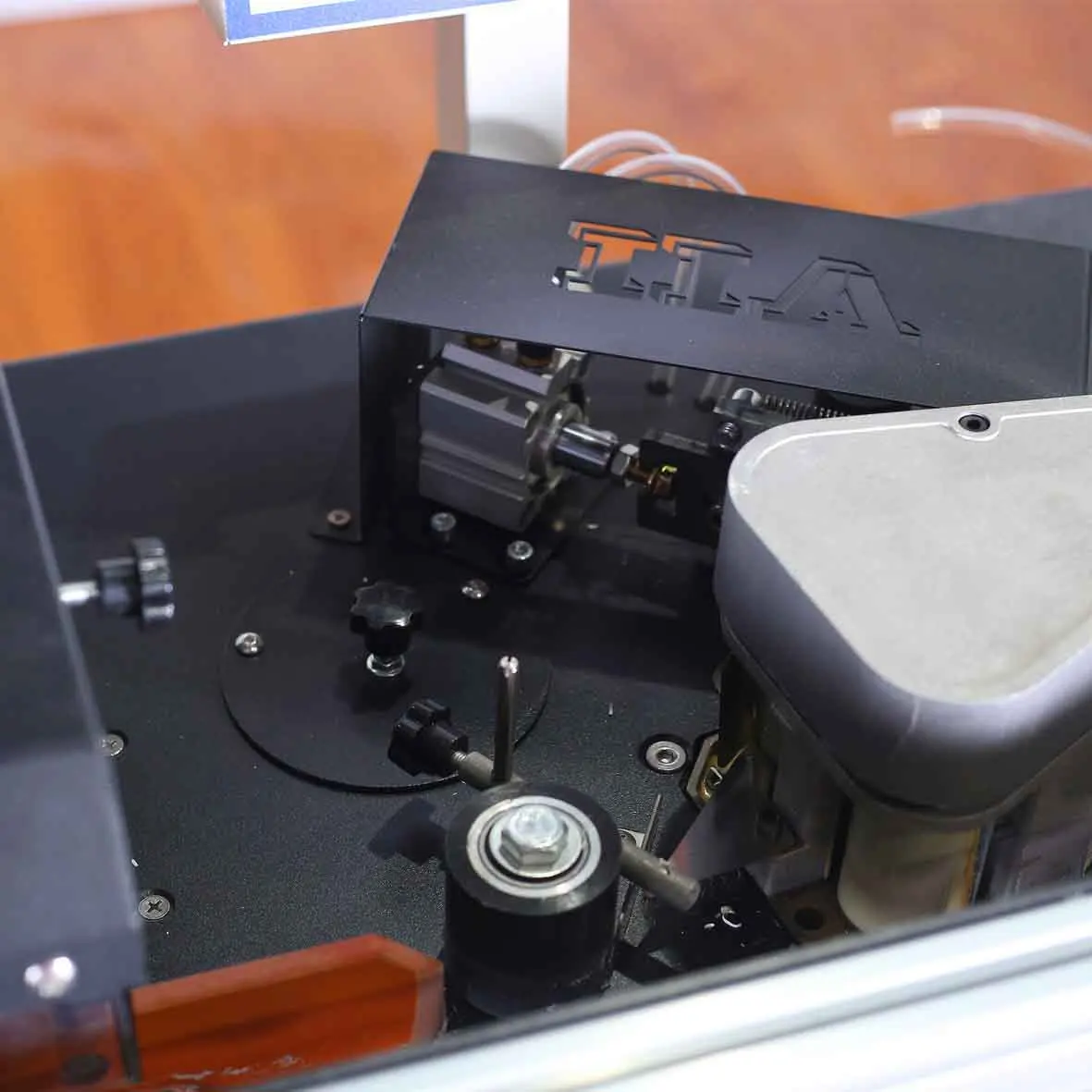
- Compressed air supply at 0.4–0.6 MPa routed to the pneumatic strip-breaking system
- Glue pot temperature calibration and feed speed tuning on your actual panel stock
- Operator training on digital control panel and independent station switch operation
- Spare trimming blades and silicone belt segments included with initial shipment
What to Include in Your Inquiry
Provide the panel materials you run most frequently — MDF, particleboard, plywood, or solid wood — along with the strip types and thicknesses you intend to bond. Specify your local voltage and frequency, the control panel language your operators need, and your typical batch size so the glue pot capacity and feed speed can be matched to your workflow.
Frequently Asked Questions
Q: Can the ZDSF802 be configured for 60 Hz power grids?
A: Yes. The machine is configurable for voltages from 110V to 440V and frequencies including both 50 Hz and 60 Hz. Your local grid standard must be confirmed before production begins so the motor winding and control transformer are matched correctly, preventing speed and heating issues on arrival.
Q: Which edge banding materials perform best on this model?
A: The ZDSF802 handles PVC, ABS, and veneer strips in the 0.5–2.5 mm thickness range. Veneer requires slower feed speeds and specific trimming blade angles compared to PVC. Confirming your primary strip material during the quotation stage ensures the trimming stations are set up accordingly.
Q: When should I choose a pre-milling model instead of the ZDSF802?
A: If your panels show visible saw marks on the cut edge before banding, a pre-milling station removes that layer and produces a clean bonding surface. The ZDSF802 is suited to panels that are already cut cleanly. An engineer can recommend the right tier based on your upstream cutting equipment.
Q: What are the installation requirements for this machine?
A: You need a level floor with space for the 130 × 65 × 75 cm machine plus operator access, a dedicated 4 kW circuit at your confirmed voltage, and a compressed air supply delivering 0.4–0.6 MPa for the pneumatic strip-breaking mechanism. An air dryer is recommended to protect the pneumatic components.