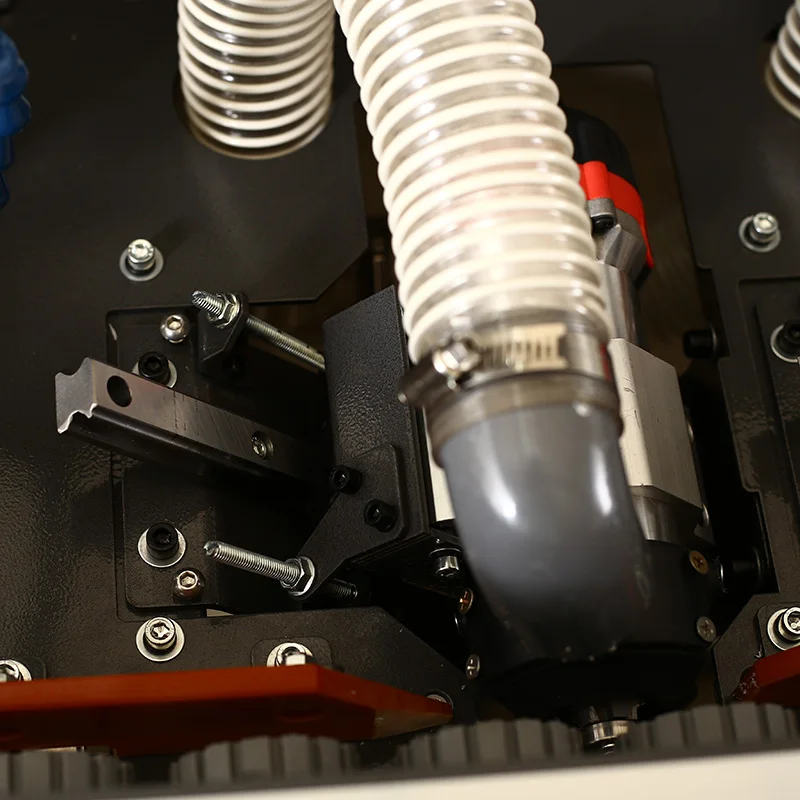
Description
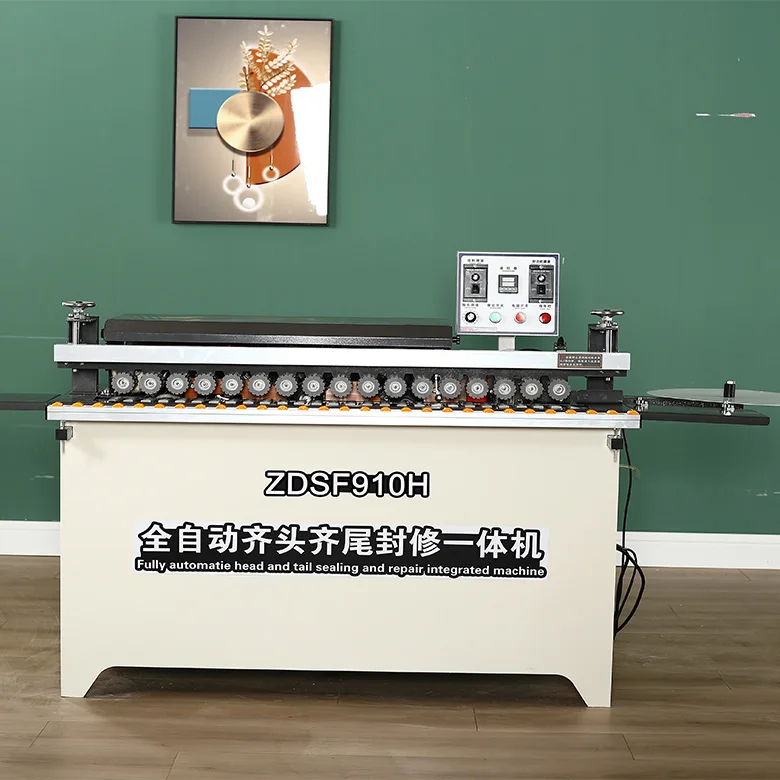
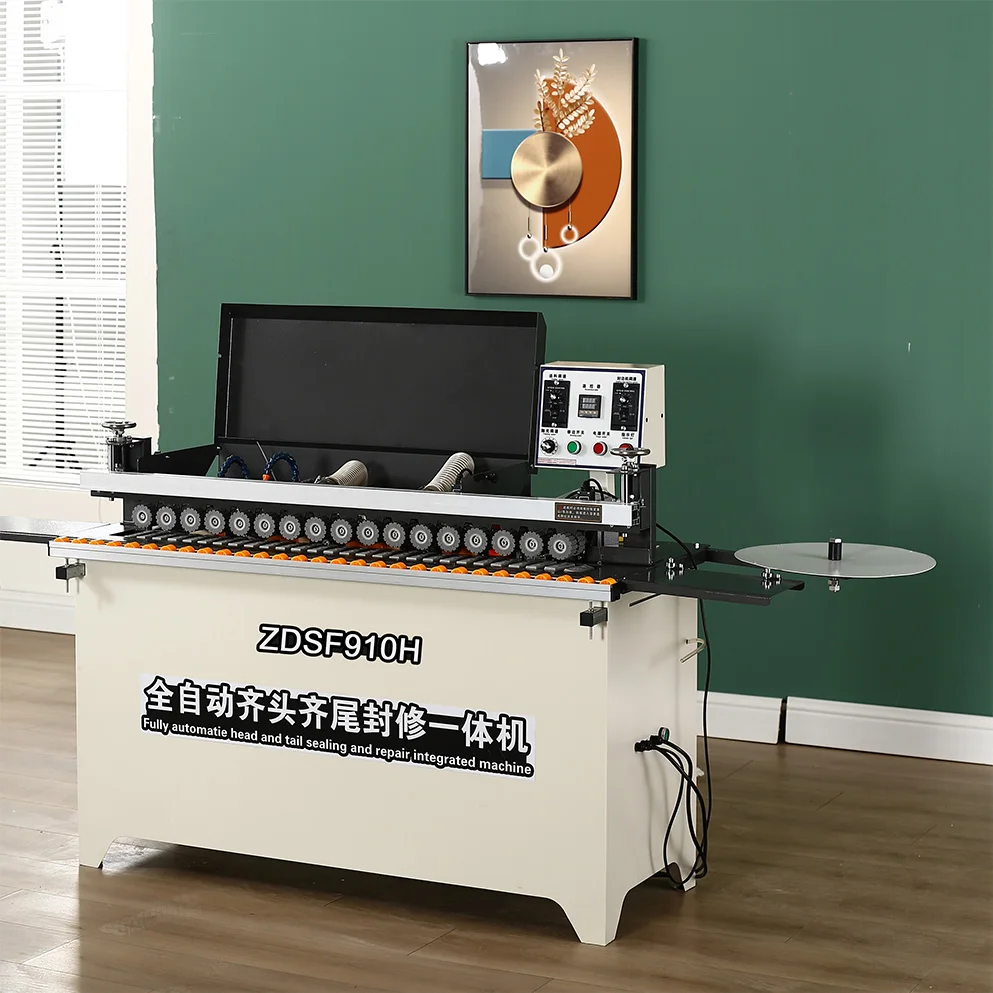
Precision-verified assembly — Every 910H curved and straight edge banding unit passes a four-stage QC protocol with pre-shipment test records, ensuring tolerance claims hold up on your actual panel stock before the crate leaves Shandong.
Technical Specifications
| Parameter | Value |
|---|---|
| Model | 910H |
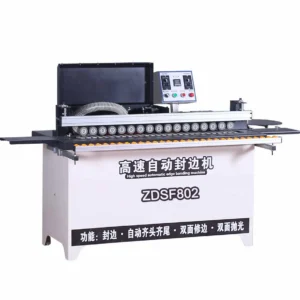
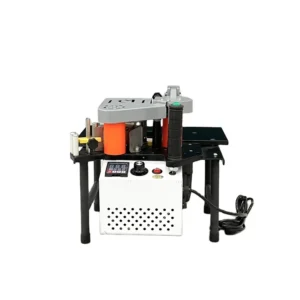
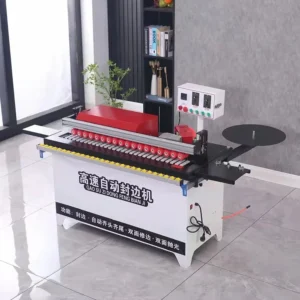
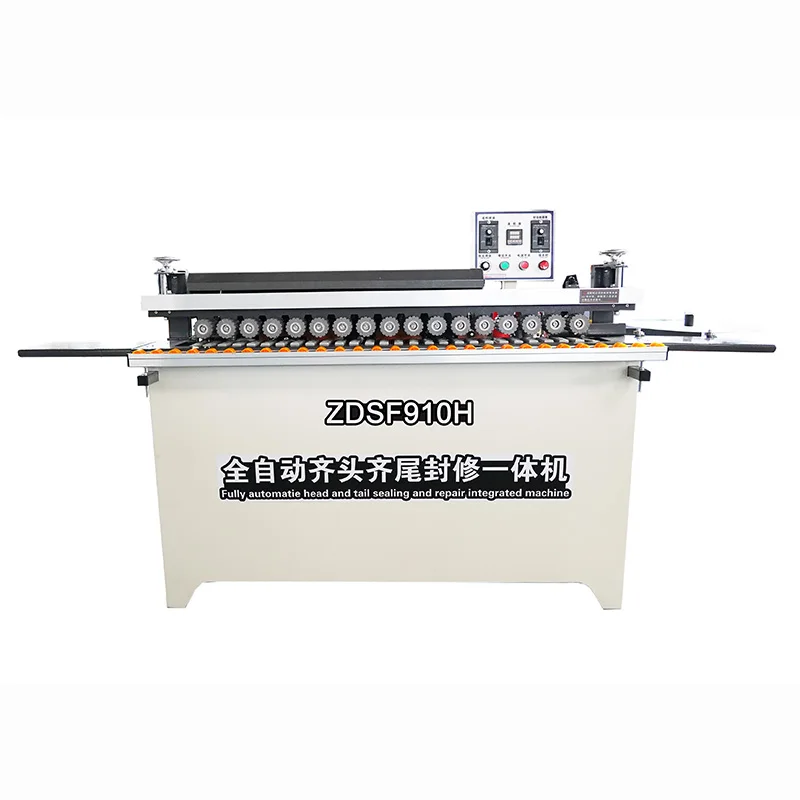
| Product Type | Automatic Curved and Straight Edge Banding Machine |
| Edge Type Capability | Both curved and straight lines |
| Sheet Thickness Range | 10–50 mm |
| Strip Thickness Range | 0.5–2.5 mm |
| Minimum Board Width for Edge Sealing | 2.5 cm |
| Overall Dimensions (L×W×H) | 1300 × 560 × 1090 mm |
| Weight | 140 kg |
| Rated Voltage & Frequency | 220V 50Hz (configurable from 110V to 440V) |
| Rated Power | 4 kW |
| Heating Power | 800 W |
| Trimming Power | 800 W × 2 |
| Polishing Power | 180 W × 2 |
| Suction Power | 1200 W |
| Transmission Power | 120 W |
| Belt Power | 25 W |
| Rated Air Pressure | 0.4–0.6 MPa |
| Glue Capacity | 1000 ml |
| Transmission Type | Crawler transmission with steel rod slide rails |
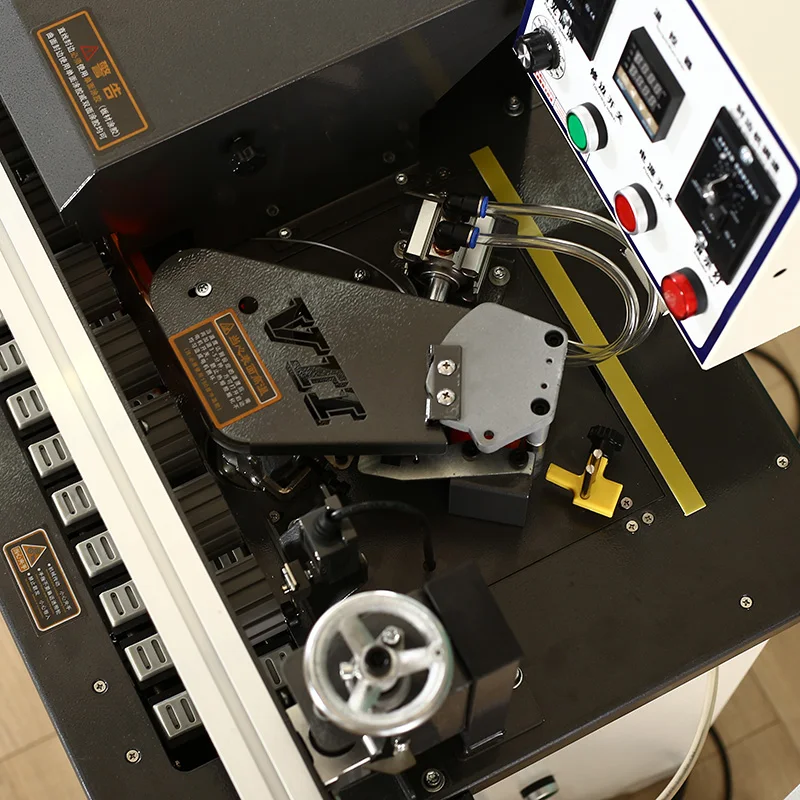
| Trimming Mechanism | Imported brand 4-blade alloy arc knife |
| Feed Mechanism | Double-row rubber pressure wheels, automatic plate feeding |
| Pressure Beam | Adjustable aluminum alloy |
| Curved Edge Method | Machine rotates 180° for curved edge banding |
| Edge Strip Cutting | Pneumatically controlled |
| Control Panel | Multi-function button operation |
Application Suitability
| Application | Material or Output |
|---|---|
| Custom furniture workshop edge sealing | MDF, particleboard, and plywood panels with PVC or melamine edge strips |
| Small-batch cabinet door production | Solid wood panels requiring both curved profile and straight edge finishing |
| Joinery shop transitioning from manual banding | Boards as narrow as 2.5 cm, strip thickness 0.5–2.5 mm |
| Prototype and sample-room operations | Mixed substrate runs with quick changeover between curved and straight profiles |
Why the Voltage Question Must Come Before the Quotation
A machine spec sheet that ignores your local grid is a liability, not an offer.
I learned this the hard way early in my career. We shipped a fully automatic edge bander to a Middle East customer without locking down the site voltage in the technical agreement. The workshop ran on 440V, the motor was rated for 380V, and the main control board burned out on first power-up. Replacement parts had to be air-freighted, and the customer lost two weeks of production [NEED_CITE: voltage and frequency standards by export market]. Since then, I insist every contract pins down local voltage and frequency before a single component is sourced.
The 910H is rated at 220V 50Hz as a baseline, but the manufacturer supports configuration from 110V to 440V. This matters because an automatic edge banding machine manufacturer that does not confirm your grid spec is leaving a critical failure point unaddressed. Buyers who skip this step often discover the problem only when the electrician on the shop floor refuses to connect the unit.
Mapping the 910H Within the Full Edge Banding Range
The 910H sits at the compact entry of a complete edge banding machine family. Workshops evaluating an edge banding machine for sale often encounter fragmented product lines where the compact model and the full-function pre-milling unit come from different suppliers, creating compatibility gaps in feed height and throughput. Starting with the 910H means you are already inside a unified product ecosystem that extends upward without changing the supply relationship.
Scaling Without Changing Supplier
As production volume grows, the transition from a single curved-and-straight dual-purpose unit to a multi-function line with pre-milling, scraping, and buffing stations becomes necessary. Because the 910H shares the same engineering lineage and QC standards as higher-tier models in this catalogue, a distributor or workshop can map the entire product family against regional demand without managing multiple vendor relationships. The upgrade path stays internal, keeping spare parts inventories and operator retraining within one system [NEED_CITE: machinery catalogue planning for regional distributors].
Reading the Specs That Actually Matter
The 10–50 mm sheet thickness range determines which panel stocks you can run. If your workshop routinely handles 18 mm particleboard alongside 25 mm MDF shelving panels, this range covers both without adjustment hardware changes. The 0.5–2.5 mm strip thickness range accommodates thin PVC for cabinet interiors as well as thicker melamine strips for visible carcass edges.
The crawler transmission on steel rod slide rails provides stable panel delivery, which directly affects glue line consistency. A feed system that vibrates or drifts produces uneven glue transfer, and that shows up as visible seams on light-colored edge banding. The 4-blade alloy arc knife trimming mechanism removes excess strip material cleanly at the head and tail, reducing the hand-finishing time that otherwise accumulates across a production run.
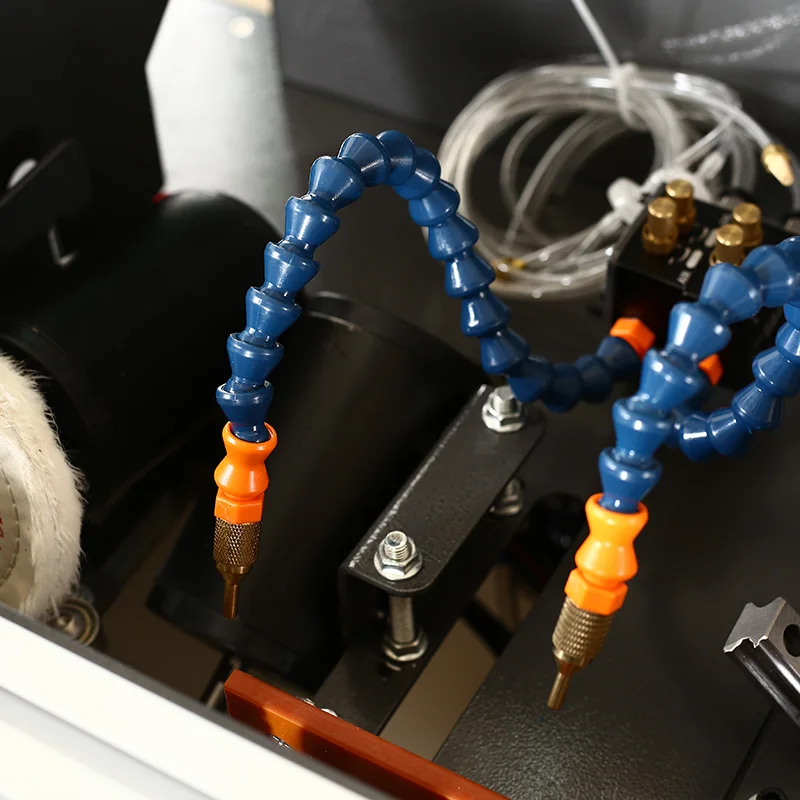
The 1200 W suction power and two large-diameter dust collectors address the PVC and melamine dust generated during trimming and polishing. Inadequate dust extraction leaves residue on the glue roller, which then contaminates the next panel. The adjustable glue roller and dedicated glue line cleaning device work together to keep the glue bead consistent and the finished edge clean.
The Real Cost of Buying Outside the Product Family
When a workshop sources a compact edge bander from one factory and later adds a full-function model from another, feed heights rarely match. Panels that transfer between stations jam or scratch because the conveyor planes are offset. Operators improvise with shims, which introduces vibration and accelerates wear on the pressure beam.
Control panels in different languages stall commissioning every time a new machine arrives. Maintenance procedures diverge, and spare parts lists no longer cross-reference [NEED_CITE: CE machinery directive requirements for industrial equipment]. These are not hypothetical problems. They show up as lost hours on the shop floor and as warranty disputes that neither supplier wants to own.
Why Sourcing This Range Matters
The 910H carries the same four-stage QC protocol — incoming material, in-process, finished product, and pre-shipment verification — applied to the higher-tier models in this catalogue. The patented cutting mechanisms and precision-ground components are not reserved for flagship units; they run through the entire product family.
Voltage and frequency are confirmed and locked into the technical agreement before production begins. The control panel language matches your operator’s requirement. Factory test records document performance on the specific sheet thickness and strip material you will run, not a generic demo panel. Engineer-led configuration recommendations arrive within 24 hours of your inquiry, grounded in your actual production requirements rather than a catalogue default.
Documentation & Verification
- Factory test record confirming 10–50 mm sheet thickness range on your panel stock before dispatch
- Electrical schematic with your confirmed voltage and frequency written into the drawing set
- CE declaration of conformity and ISO 9001 certificate included in the shipping documentation
- Operation and maintenance manual translated into your agreed operator language
- Spare parts list cross-referenced to the 4-blade alloy arc knife and glue roller assemblies
- Packing photographs and customs documentation prepared for your destination port
Installation, Commissioning & Support
- Allocate floor space matching the 1300 × 560 × 1090 mm footprint with clearance for 180° rotation during curved edge work
- Provide a dedicated 220V 50Hz circuit (or your confirmed local voltage) rated for the 4 kW total load plus startup surge
- Machine ships as a single 140 kg unit; position on level floor and connect 0.4–0.6 MPa compressed air supply before first run
- Initial commissioning includes glue temperature calibration for your specific PVC or melamine strip thickness
- Operator training covers multi-function button panel sequence for changeover between curved and straight modes
- Replacement alloy arc knives and dust collector bags stocked as consumables for ongoing maintenance
What to Include in Your Inquiry
Provide the panel materials you process, typical sheet thickness range, and the edge banding strip types and widths you run most often. Confirm your site voltage and frequency, the control panel language your operators need, and whether your current workshop layout constrains the machine footprint. If you need sample processing on your own substrate before committing, state that upfront so the factory can schedule a test run.
Frequently Asked Questions
Q: How does the 910H compare to higher-tier models in this range?
A: The 910H covers curved and straight edge banding in a single compact unit with trimming and polishing. Higher-tier models in the catalogue add pre-milling stations, additional scraping and buffing heads, and faster feed speeds for continuous production runs. The upgrade stays within the same product family, so QC standards and spare parts sourcing remain consistent as your volume grows.
Q: Can the voltage and control panel language be customized before shipment?
A: Yes. The baseline is 220V 50Hz, but the manufacturer configures voltage from 110V to 440V and sets the control panel to your required language. This is confirmed in the technical agreement before production starts, and the electrical schematic reflects your local grid spec in the final documentation package.
Q: What panel and edge banding materials are verified for this model?
A: The 910H handles MDF, particleboard, plywood, and solid wood panels within the 10–50 mm sheet thickness range. Compatible strip types include PVC and melamine edge banding from 0.5 to 2.5 mm thick. If you run a less common substrate, request a sample processing test on your material before placing the order.
Q: What is the minimum board width this machine can seal?
A: The minimum board width for edge sealing is 2.5 cm. The double-row rubber pressure wheel feed and adjustable aluminum alloy pressure beam maintain stability even on narrow stock. If your product mix includes panels near this lower limit, confirm compatibility during the configuration stage with your actual panel samples.
Q: How does the upgrade path work if production outgrows the 910H?
A: The 910H belongs to a full edge banding product family that extends to multi-station pre-milling lines. When throughput demands increase, you move to a higher-tier model within the same catalogue. The engineering standards, documentation format, and after-sales support structure remain the same, so operator retraining and spare parts management stay within one supplier ecosystem.