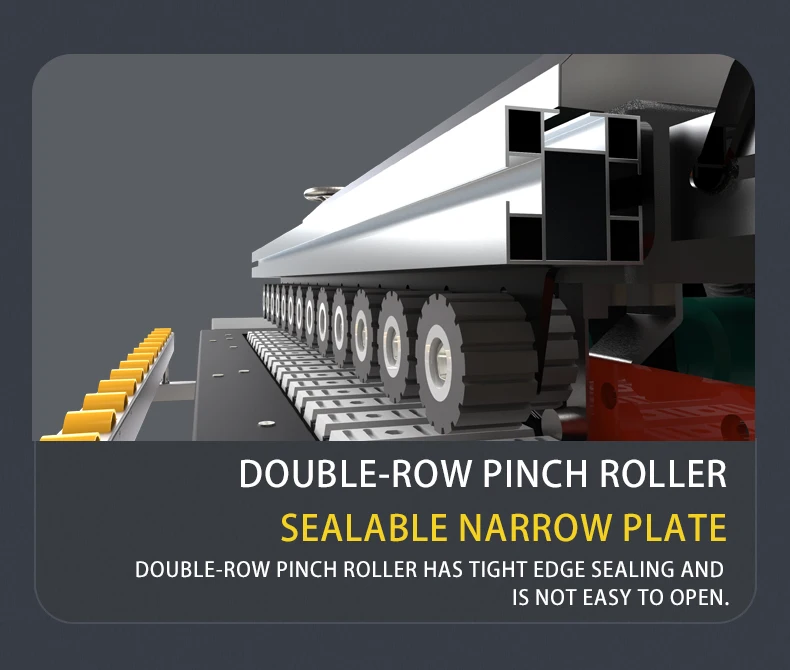
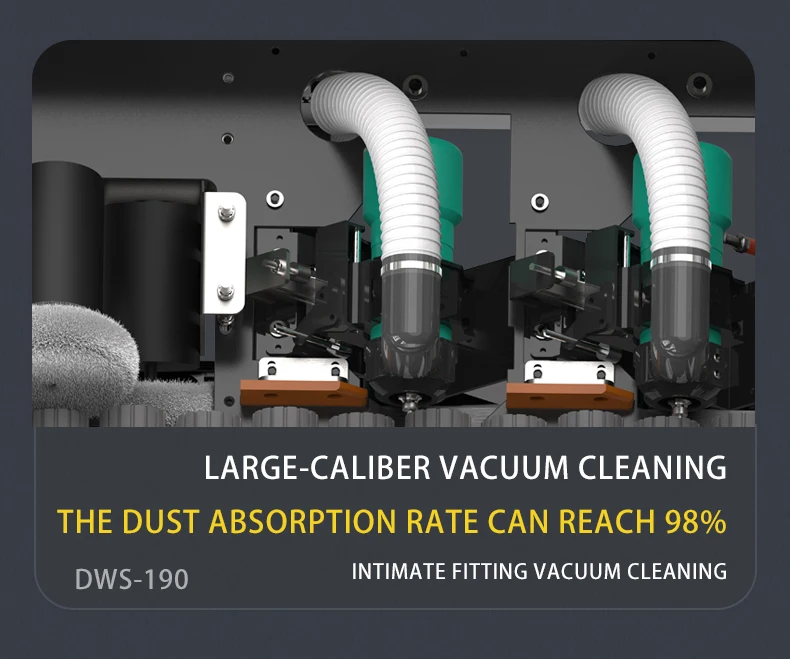
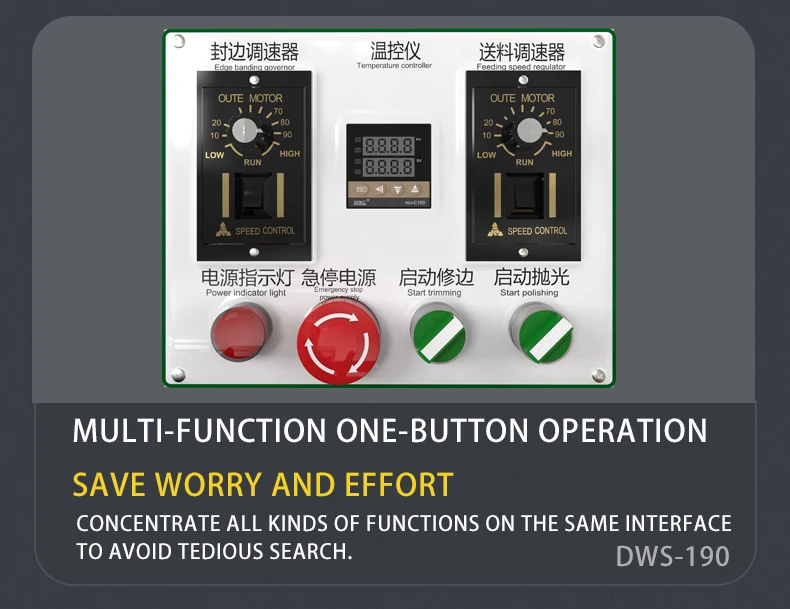
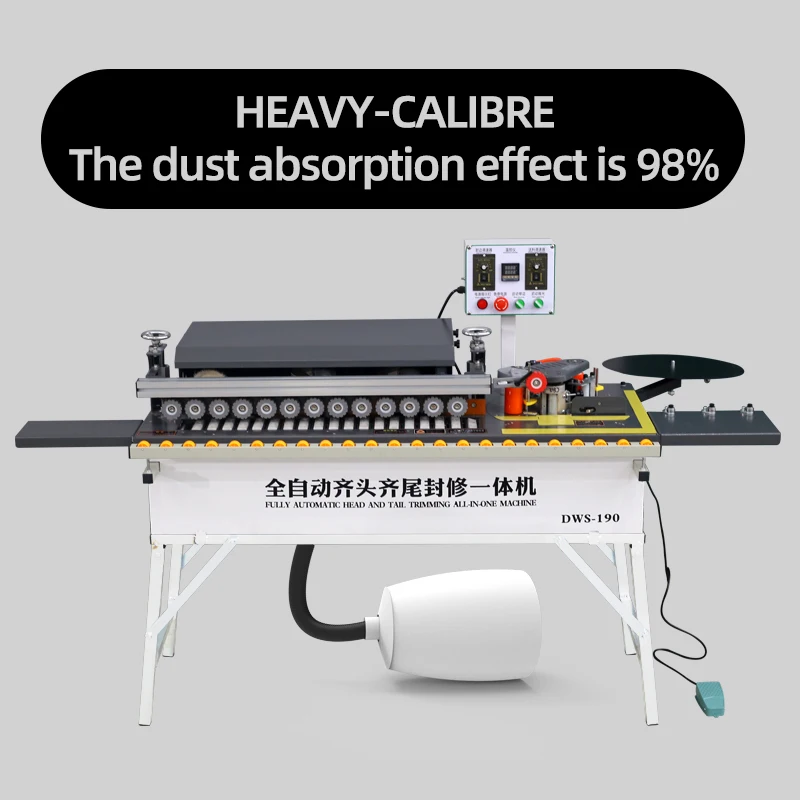
Description
Verified Tolerance Architecture — The DW190 carries Ruiqi’s proprietary cutting mechanism with a documented ±0.02 mm tolerance, verified at each stage of a four-part QC sequence before dispatch.
Technical Specifications
| Parameter | Value |
|---|---|
| Model | DW190 |
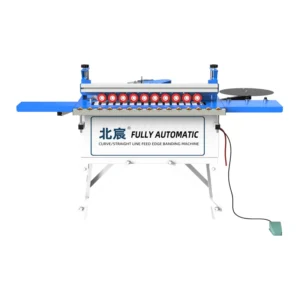
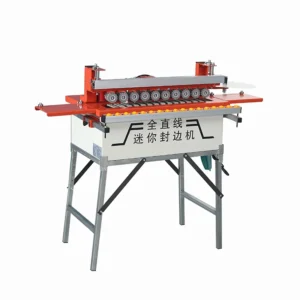
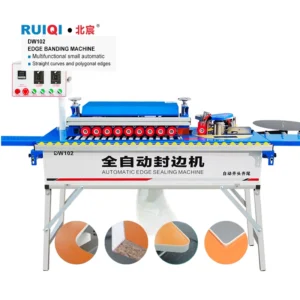
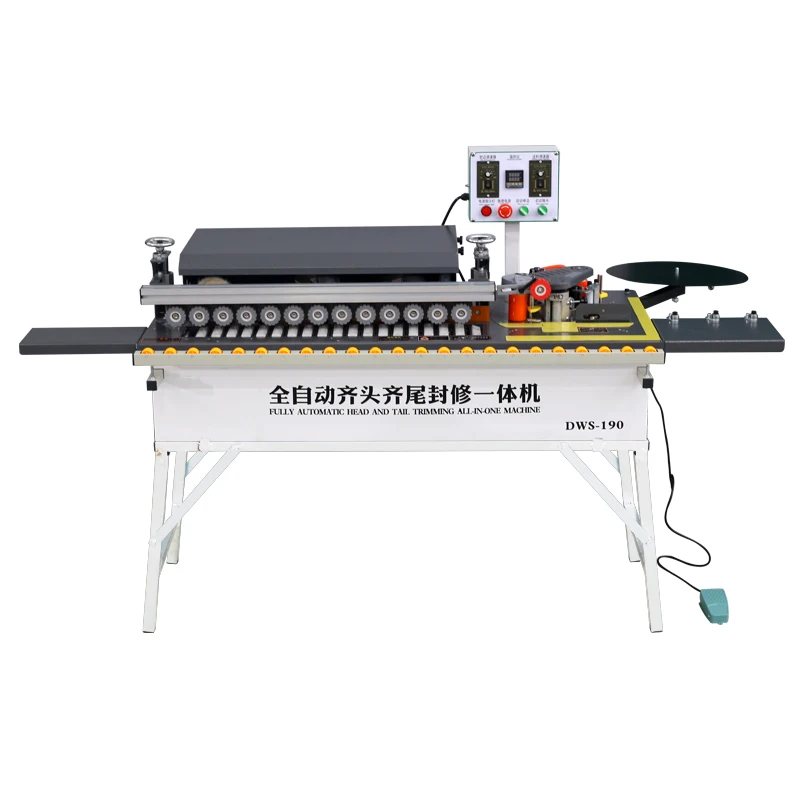
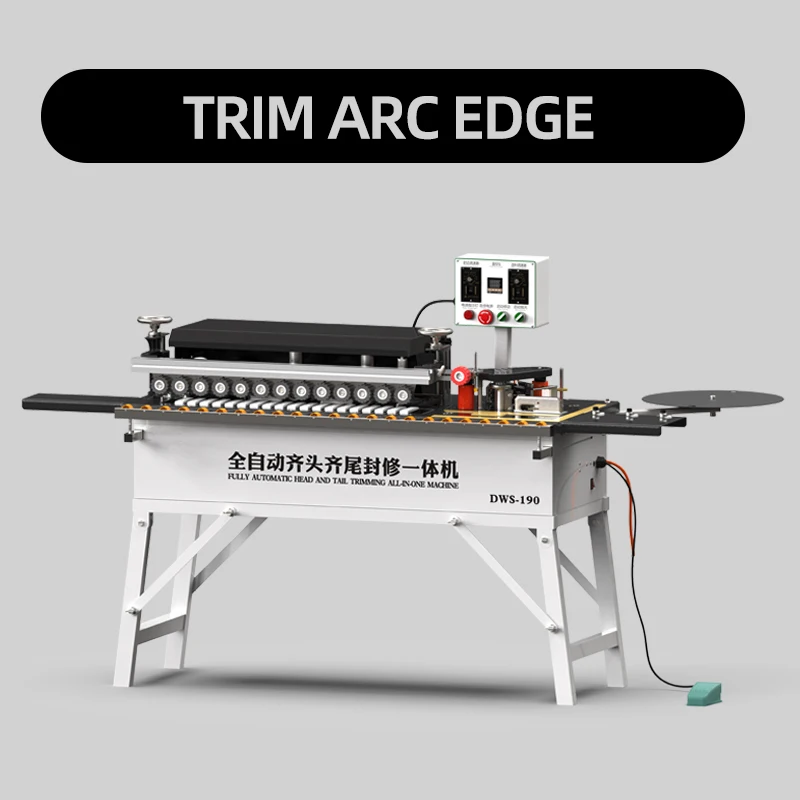
| Product Type | Fully Automatic Edge Banding Machine |
| Main Body Dimensions (L×W×H) | 130 × 52 × 66 cm |
| Extension Dimensions (L×W×H) | 190 × 83 × 120 cm |
| Equipment Weight | 100 kg |
| Glue Pot Capacity | 2000 ml |
| Rated Power | 4000 W |
| Voltage | 220 V (50/60 Hz to be confirmed) |
| Plug Options | EU / USA / AU / UK |
| Control Panel Language | Chinese & English standard; other languages customizable |
| Assembly State | Fully assembled, wooden box packed |
| Customization | OEM logo printing, custom voltage, custom control panel language, drawing-based OEM production |
Application Suitability
| Application | Material or Output |
|---|---|
| Straight edge banding for custom cabinet panels | MDF and particleboard with PVC edge banding |
| Small-batch wardrobe door production | Plywood panels with melamine or veneer banding |
| Compact workshop furniture finishing | Solid wood panels with thin PVC or wood veneer strips |
| Prototyping and sample runs for joinery businesses | Mixed substrate test panels |
Why the Voltage Question Must Come Before the Price
An automatic edge banding machine manufacturer that does not lock voltage and frequency at quotation stage is handing you a three-week delay before the crate is even opened.
I have watched a 415 V / 50 Hz workshop in West Africa stand idle because the machine on the floor was wired for 380 V. The motor tripped the moment the contactor engaged, and the variable-frequency cabinet had to be air-freighted from the factory. That kind of stall is not a logistics accident — it is a specification failure. When a buyer surveys an automatic edge banding machine manufacturer catalogue, the first question should not be about feed speed or glue pot size; it should be about what the local grid actually delivers at the panel [NEED_CITE: voltage and frequency standards by export market].
How the DW190 Fits Inside a Scalable Machine Family
The DW190 occupies the entry tier of Ruiqi’s edge banding line, giving a small custom-furniture workshop a realistic starting point. A joinery business moving from hand-held trimmers to its first automatic edge banding machine manufacturer solution can commission this unit on a standard 220 V single-phase supply, then add higher-tier pre-milling models from the same engineering platform as volume grows. Keeping the supplier constant means control logic, spare-part numbering, and operator training stay consistent across the shop floor.
What the Compact Footprint Actually Means on the Floor
At 130 × 52 × 66 cm for the main body, the DW190 fits between a sliding table saw and a boring machine without forcing a layout redraw. The 100 kg weight allows two technicians to reposition the unit when a workshop reorganizes its material flow. For a startup cabinet maker leasing a 200 m² unit, that repositioning flexibility is often the difference between a straight-line workflow and a bottleneck at the banding station [NEED_CITE: typical workshop layout constraints for small furniture manufacturers].
Reading the Specs That Matter for Edge Quality
The 2000 ml glue pot sustains continuous straight-edge runs without frequent refills, which keeps the adhesive temperature stable across a batch of panels. Stable temperature directly affects how the PVC or veneer strip bonds to MDF end grain — a cold pot leaves visible glue lines that show up under lacquer. The 4000 W rated power is matched to the single-phase 220 V supply, meaning the heater circuit and feed motor share a load that standard workshop breakers can handle. Tolerance of ±0.02 mm on the trimming unit means the banded edge sits flush with the panel face, so downstream hinge-boring jigs register against a true surface rather than a proud strip of PVC.
The Hidden Cost of Ignoring Feed-Height Compatibility
Buyers who purchase a single banding machine without checking the feed height against their existing sliding table saw and boring station often discover that panels leave one station at a different datum than the next. The result is rework at every transfer point — operators shimming, re-measuring, and occasionally scrapping panels that have already been cut to final size. I have seen workshops lose entire afternoons to this kind of mismatch, and the loss compounds once production moves from prototypes to batch work [NEED_CITE: CE machinery directive requirements for industrial equipment].
Why Sourcing From One Platform Matters
Ruiqi manufactures the DW190 in-house, so the patented cutting mechanism and tolerance verification belong to the same production line that builds the higher-tier models. Voltage customization from 110 V to 440 V is documented on the electrical schematic before the machine enters assembly. The four-stage QC sequence — incoming material, in-process, finished product, pre-shipment — is applied to this model exactly as it is to the full-function pre-milling units. Engineer-led configuration recommendations arrive within 24 hours, referencing the buyer’s panel thickness and local grid. Factory visits are open, letting a buyer watch the DW190 run their own substrate before the crate closes.
Documentation & Verification
- CE declaration of conformity covering the DW190 trimming and feed circuits
- ISO 9001 certificate applicable to the manufacturing batch
- Machine specification sheet listing confirmed voltage, plug type, and panel language
- Electrical schematic and voltage confirmation signed against the target market grid
- Factory test record on buyer-supplied panel thickness and edge banding material
- Operation and maintenance manual in the agreed language with illustrated spare-parts list
Installation, Commissioning & Support
- Floor must carry 100 kg concentrated load on the 130 × 52 cm main body footprint
- Dedicated 220 V single-phase circuit with breaker matched to the 4000 W rated draw
- Unit arrives fully assembled in a wooden crate — uncrate and position only
- First-run glue temperature and feed speed set against buyer’s PVC or veneer stock
- Control panel language confirmed before dispatch so operators can navigate menus on day one
- Spare-parts list included with part numbers matching the Ruiqi platform for future reorders
What to Include in Your First Inquiry
Send the panel material and thickness range you run most often, the edge banding type — PVC, melamine, or wood veneer — and the daily output you expect from this station. Confirm the workshop supply voltage and frequency, and specify the control panel language your operators read. If the DW190 will join an existing line, share the feed heights of neighbouring machines so compatibility can be checked before quotation.
Frequently Asked Questions
Q: How does the DW190 compare to higher-tier Ruiqi edge banders in the product family?
A: The DW190 handles straight-edge banding on standard panel thicknesses with a compact footprint. Higher tiers add pre-milling, corner rounding, and buffing stations for shops running high-gloss or textured surfaces. All tiers share the same engineering platform, so upgrading later keeps spare parts and operator training consistent.
Q: What voltage and frequency configurations are available for my market?
A: Ruiqi customizes voltage from 110 V to 440 V and confirms frequency at quotation stage. An electrical schematic and voltage confirmation document ship with the machine, matching the grid specification you provide. This prevents the motor-trip delays that stall commissioning.
Q: Can the control panel be delivered in my operator’s language?
A: Chinese and English are standard. Spanish and other languages are customizable before assembly. Confirming the language at order stage means the operator can navigate menus and alarms on the first day without a translator on the shop floor.
Q: What panel materials and edge banding types is the DW190 designed to handle?
A: The machine is set up for MDF, particleboard, plywood, and solid wood panels with PVC or veneer edge banding. Glue pot temperature and feed speed are adjusted during commissioning to match the specific substrate and strip thickness you supply.
Q: How do I plan an upgrade path from the DW190 to a full production line as output grows?
A: Because the DW190 belongs to a broader Ruiqi family, you can add pre-milling banders, boring machines, and panel saws from the same supplier. Throughput matching and feed-height alignment are checked at configuration stage, so each new station drops into the existing workflow without re-engineering the line.