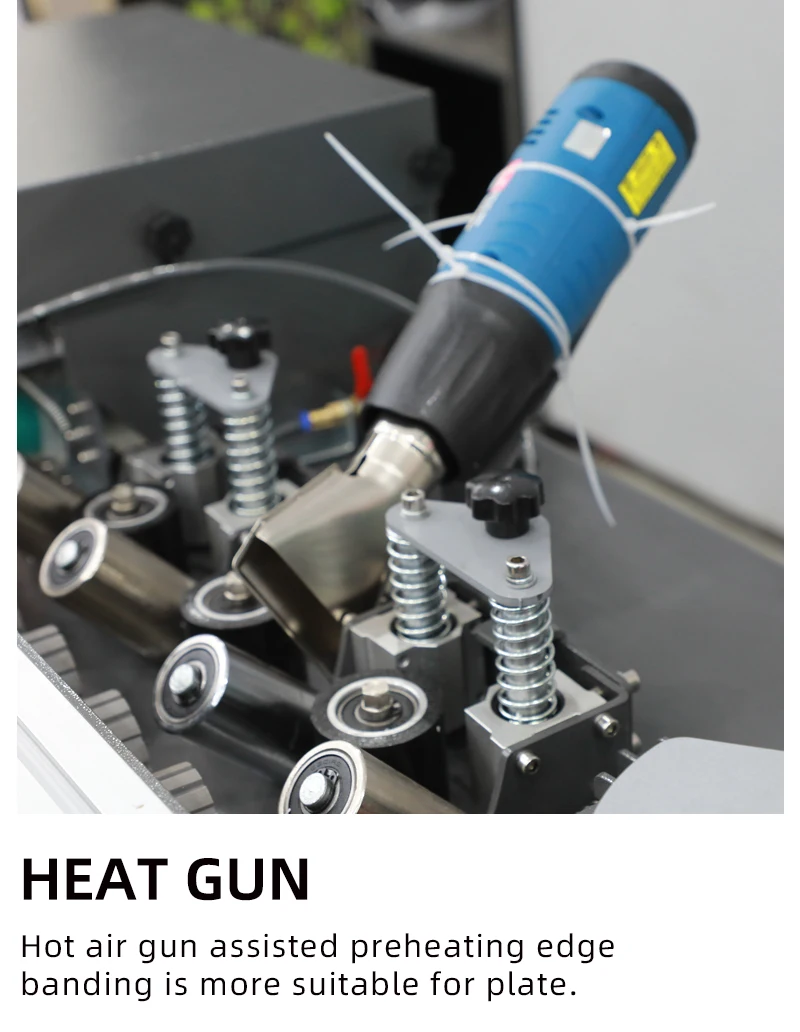
Description
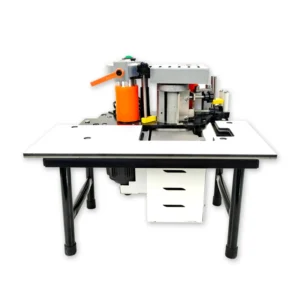
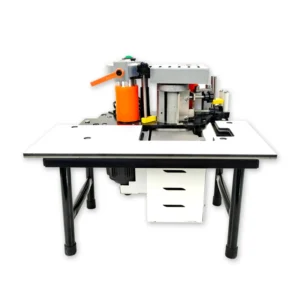
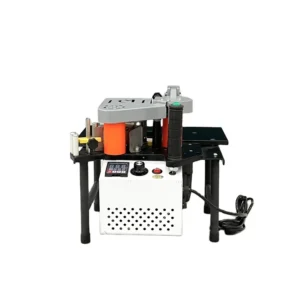
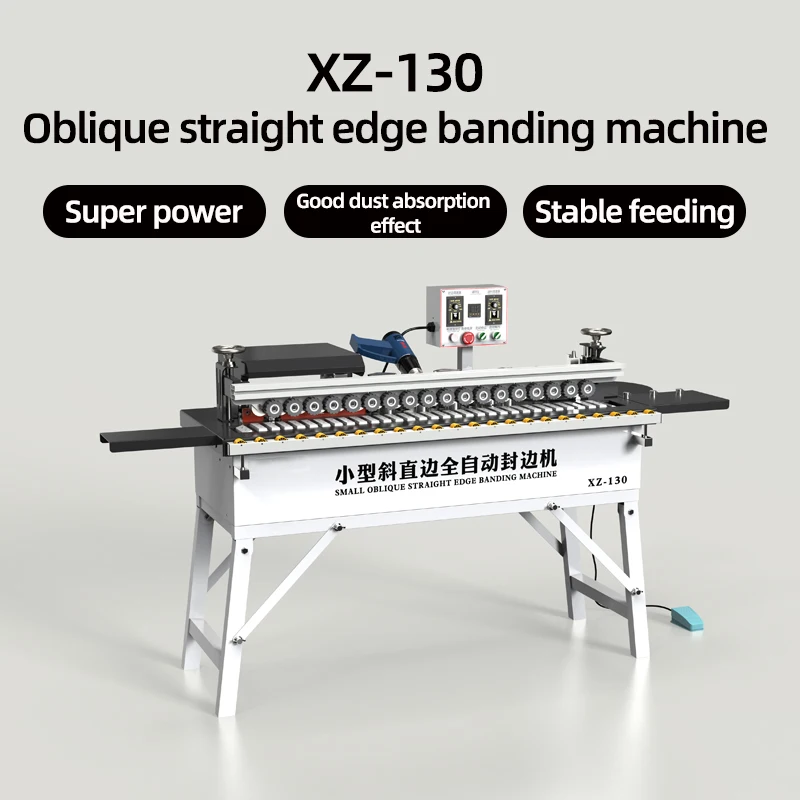
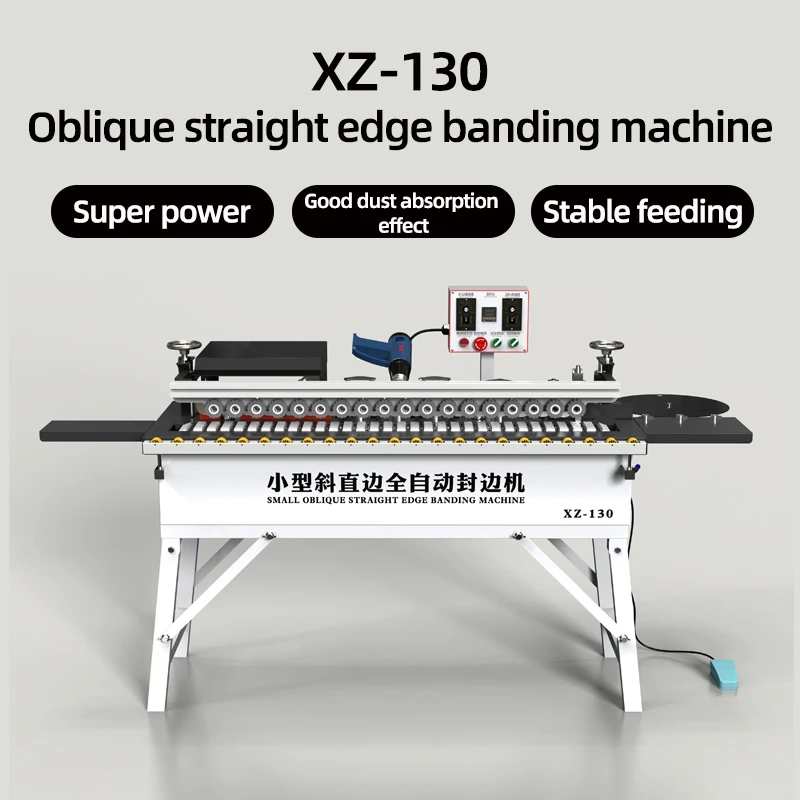
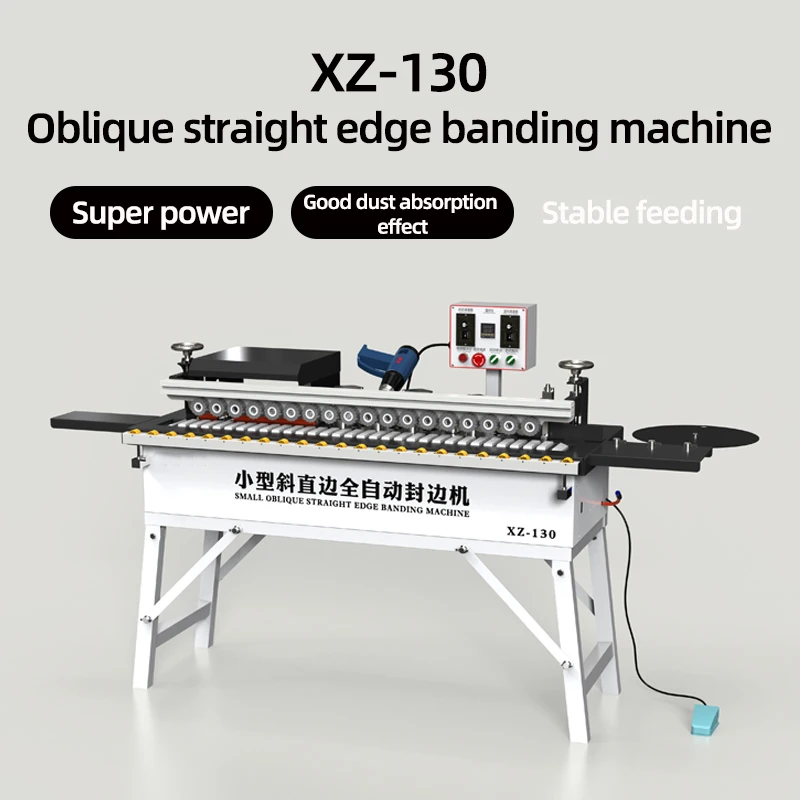
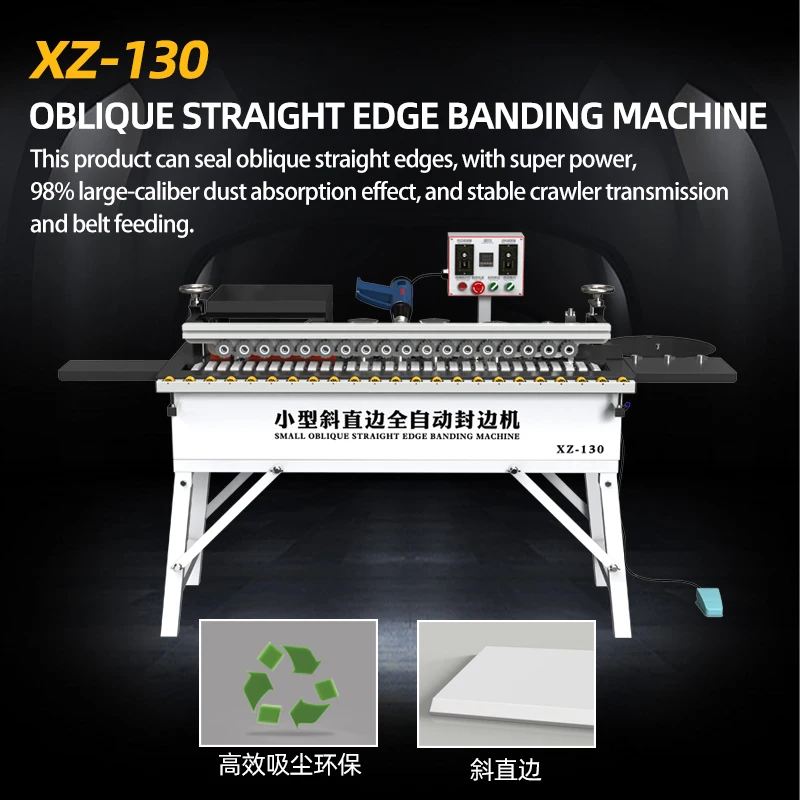
Compact footprint for small shops — The DW130 occupies less than half a square meter of floor space, fitting into joinery workshops where every meter of bench room matters before you add dust extraction ducting and material staging.
Technical Specifications
| Parameter | Value |
|---|---|
| Model | DW130 |
| Product Type | Edge Banding Machine |
| Overall Dimensions (L×W×H) | 139×52×61 cm |
| Glue Pot Capacity | 2000 ml |
| Heating Time | 5–10 min |
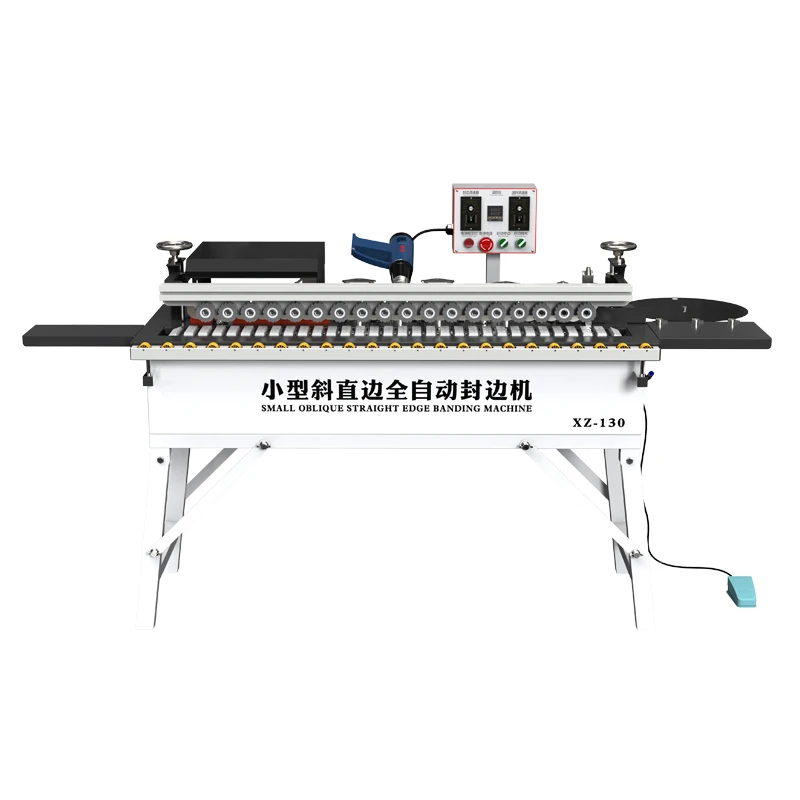
| Edge Type | Oblique and straight edge |
| Voltage & Frequency | 220V (frequency 50Hz/60Hz to be confirmed) |
| Language Options | Chinese and English standard; Spanish or other languages customizable |
| Plug Options | EU, USA, AU, UK |
| Standards | CE declaration of conformity; ISO 9001 certified facility |
Application Suitability
| Application | Material or Output |
|---|---|
| Cabinet door edge banding | MDF and particleboard with PVC edge banding |
| Small-batch furniture production | Plywood panels with veneer or melamine edging |
| Workshop prototyping and repairs | Solid wood panels with straight or oblique edge profiles |
| Custom shelving and storage units | Particleboard substrates requiring clean trim on both faces |
Why Voltage Must Be Confirmed Before You Compare an Edge Banding Machine Manufacturer
A 220V machine shipped to a 60Hz market without frequency verification will run its feed motor at the wrong speed, producing uneven glue coverage that only shows up after assembly.
I have seen joinery workshops in the Middle East receive machines quoted purely on price, only to discover on commissioning day that the local grid runs a different frequency than the factory default. The heater element cycles differently, the glue viscosity drifts, and the operator spends weeks blaming the adhesive supplier. When sourcing from any edge banding machine manufacturer, the voltage and frequency question belongs in the very first exchange, not as an afterthought once the crate is open [NEED_CITE: voltage and frequency standards by export market].
Where the DW130 Sits in the Full Catalogue
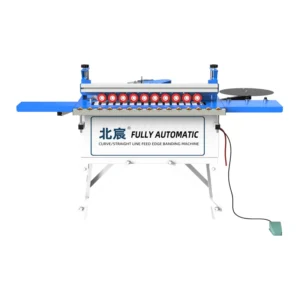
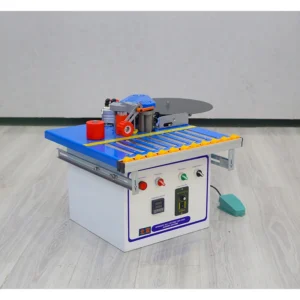
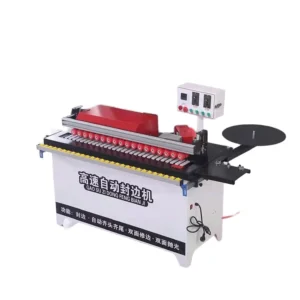
The DW130 is the compact tier in a broader edge banding family that extends upward to full-function pre-milling models for high-volume panel plants. Buyers surveying the complete range can identify whether this model matches their current throughput, or whether stepping up to a wider feed table and additional trimming stations would prevent a bottleneck twelve months from now. An edge banding machine manufacturer that publishes the full lineup lets you plan that upgrade path before committing capital.
Scaling Without Changing Supplier
Workshops that start with manual edge gluing often jump to the first automated unit they find, then outgrow it within a year and face the cost of retraining operators on an entirely different control interface. Because the DW130 shares the same control logic and language options as the higher-tier models in this range, an operator trained here can move to a larger machine without relearning menus or parameter screens. That continuity matters when your lead carpenter is also your de facto maintenance tech [NEED_CITE: operator retraining costs in small manufacturing].
Reading the Specs That Actually Affect Edge Quality
The 2000 ml glue pot on the DW130 holds enough adhesive for sustained runs on standard PVC banding, and the 5–10 minute heating window means the machine is ready within a typical morning setup routine rather than forcing you to power it on an hour before first shift. Oblique and straight edge capability in one unit covers both bevel-profile cabinet doors and flat-edge shelving without a second pass or a separate fixture. The 139×52×61 cm footprint leaves room on a standard workshop bench for the offcut pile and a roller stand on the infeed side, which is where most small-shop jams originate. Multilingual control panels available on request mean a Spanish-speaking operator in Latin America or an Arabic-speaking technician in the Gulf does not have to memorize English error codes before the first production run.
The Hidden Cost of Buying a Machine Isolated from the Line
Piecemeal purchases look cheaper on the invoice until the new edge bander arrives with a feed height that does not match your existing panel saw output table. Operators spend the first week shimming roller conveyors and adjusting infeed guides, and the throughput loss from that mismatch is never recovered. When a workshop maps its entire material flow before selecting a model tier, the DW130 either slots in cleanly or signals that a different station needs rethinking first [NEED_CITE: line integration failures in small woodworking shops].
What Manufacturing Depth Means for This Model
The DW130 is built in a facility that runs four-stage quality control from incoming material through pre-shipment verification, so the glue pot thermostat and feed motor are tested under load before the crate is sealed. Patented cutting mechanisms across the product family mean the trimming stations are engineered in-house rather than sourced as generic assemblies. Custom voltage from 110V to 440V and plug options spanning EU, USA, AU, and UK standards are configured at the order stage, not improvised with adapters on your shop floor. An edge banding machine manufacturer that holds CE and ISO 9001 certification provides the documentation your local customs broker and insurance underwriter will eventually ask for.
Documentation & Verification
- CE declaration of conformity covering the DW130 for European market entry
- ISO 9001 certificate for the manufacturing facility available for download
- Electrical schematic with confirmed voltage and frequency for your specific order
- Factory test record on your specified panel thickness and edge material before dispatch
- Operation manual in the agreed language with illustrated spare parts list
- Packing photographs showing crate condition and accessory placement prior to shipment
Installation, Commissioning & Support
- Compact 139×52×61 cm footprint requires only a standard workbench with level floor and no special foundation
- 220V single-phase supply on a dedicated circuit with confirmed frequency matching local grid
- Machine ships fully assembled; place on bench, connect dust extraction, and verify plug type before first power-on
- Glue pot heating cycle and feed speed calibrated during factory test; operator verifies on first panel run
- English-standard control panel with optional Spanish or other languages set before dispatch
- Spare wear parts list included in the manual for trimmer blades and glue roller replacement
What to Include in Your First Inquiry
Send the panel materials you run most often — MDF, particleboard, plywood, or solid wood — along with the edge banding type and thickness you need to apply. Specify your local voltage and frequency so the electrical configuration is locked before production. If you operate alongside existing saws or boring machines, share their feed height and table dimensions to confirm the DW130 integrates without adapter plates.
Frequently Asked Questions
Q: How does the DW130 compare to higher-tier models in the range, and which suits my volume?
A: The DW130 is the compact entry point designed for workshops running smaller batch sizes with limited floor space. Higher-tier models add pre-milling stations and wider feed tables for continuous production. If your daily panel count is growing and you anticipate doubling output within a year, reviewing the full catalogue now helps you choose a tier that avoids a premature upgrade.
Q: What voltage and frequency options exist, and how is compatibility confirmed?
A: The standard configuration is 220V with plug options for EU, USA, AU, and UK markets. Frequency must be confirmed as 50Hz or 60Hz based on your local grid. The factory provides an electrical schematic and voltage confirmation document before production begins, ensuring the motor and heater element match your supply.
Q: Can the control panel language be changed for my operators?
A: Chinese and English are standard on the DW130 control interface. Spanish and other languages are available as custom options set before dispatch. Specify your preferred language at the inquiry stage so the panel firmware is loaded and tested during the pre-shipment verification run.
Q: Is a sample processing test available before I place the order?
A: Yes. You can send representative panel samples with your chosen edge banding material, and the factory runs a processing test on the DW130 to verify glue adhesion, trim quality, and edge finish. A factory visit is also welcome if you prefer to witness the test in person.
Q: What is the upgrade path if production grows beyond this model?
A: Because the DW130 shares control logic and language options with higher-tier machines in the same product family, operators transition without retraining. When your volume increases, the next model up adds trimming stations and a wider feed table while keeping the same interface, so you scale without changing supplier or rewriting your standard operating procedures.