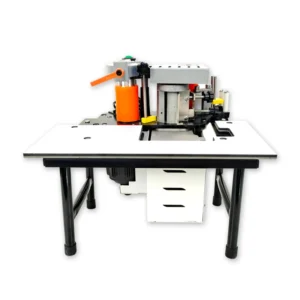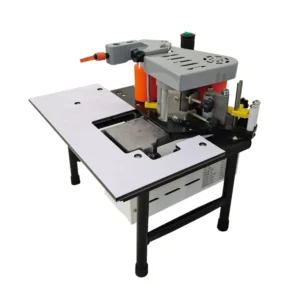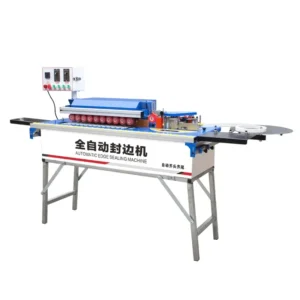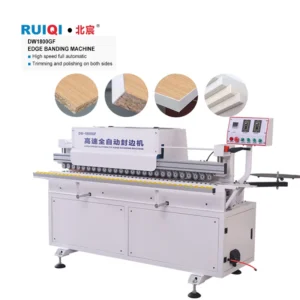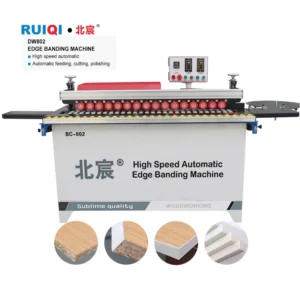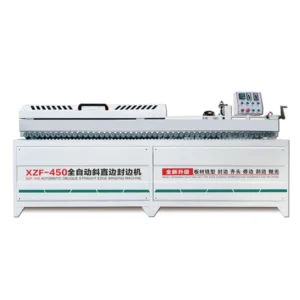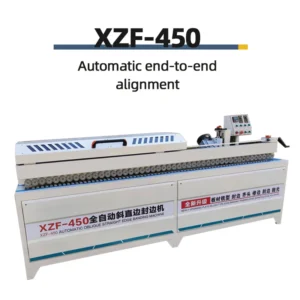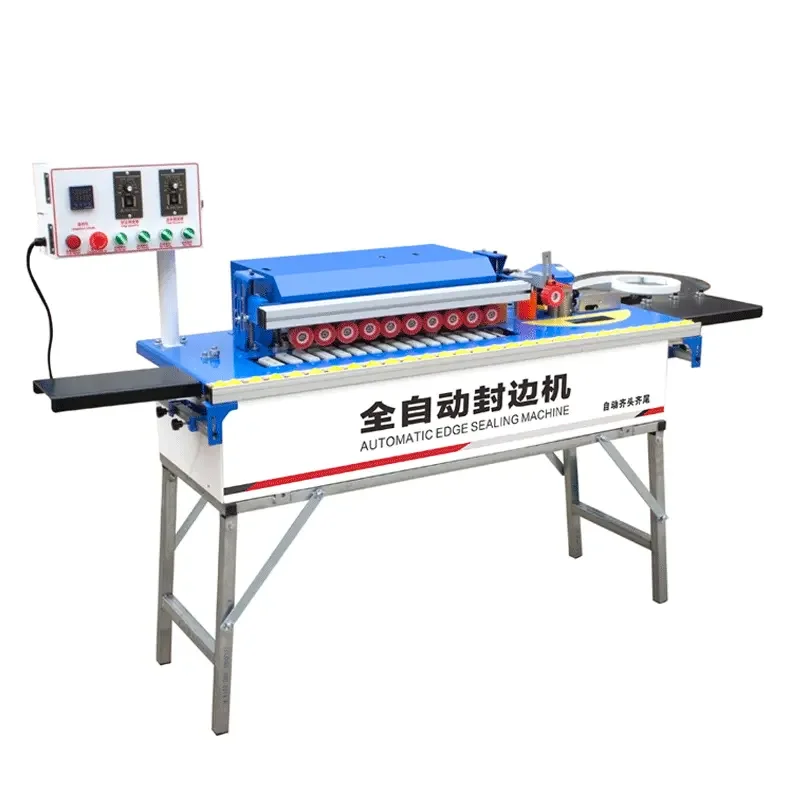
Description
Verified Tolerance, Factory Tested — DW102 undergoes four-stage QC including pre-shipment verification on your specified panel substrate, ensuring edge banding tolerance and finish match your actual production material before the machine leaves the factory.
Technical Specifications
| Parameter | Value |
|---|---|
| Model | DW102 |
| Product Type | Automatic Edge Banding Machine |
| Total Power | 3800W |
| Voltage | 220V/380V/customization |
| Edge Banding Thickness | 0.3-3MM |
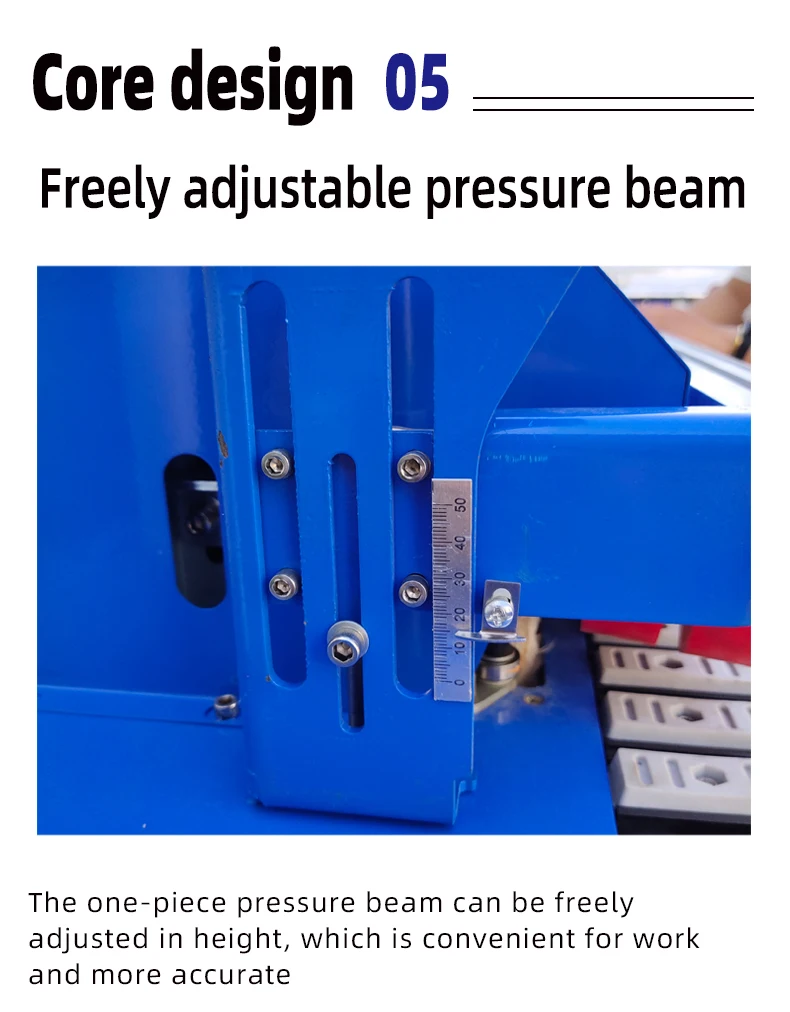
| Edge Banding Height | 0-50MM |
| Minimum Sheet Length | 25CM |
| Minimum Sheet Width | 5CM |
| Trimming Power | 650W×2 |
| Polishing Power | 180W×2 |
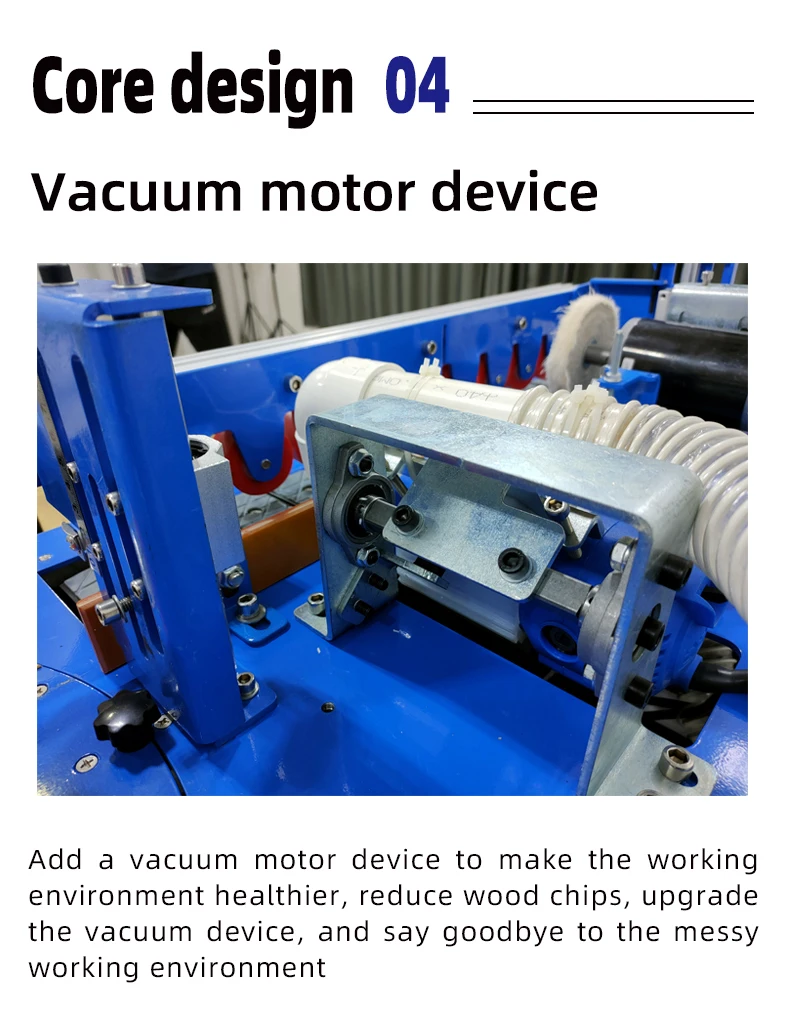
| Vacuum Power | 1200W |
| Transmission Power | 60W |
| Edge Power | 20W |
| Glue Pot Capacity | 1000ml |
| Air Source Pressure | 0.5-0.8Mpa |
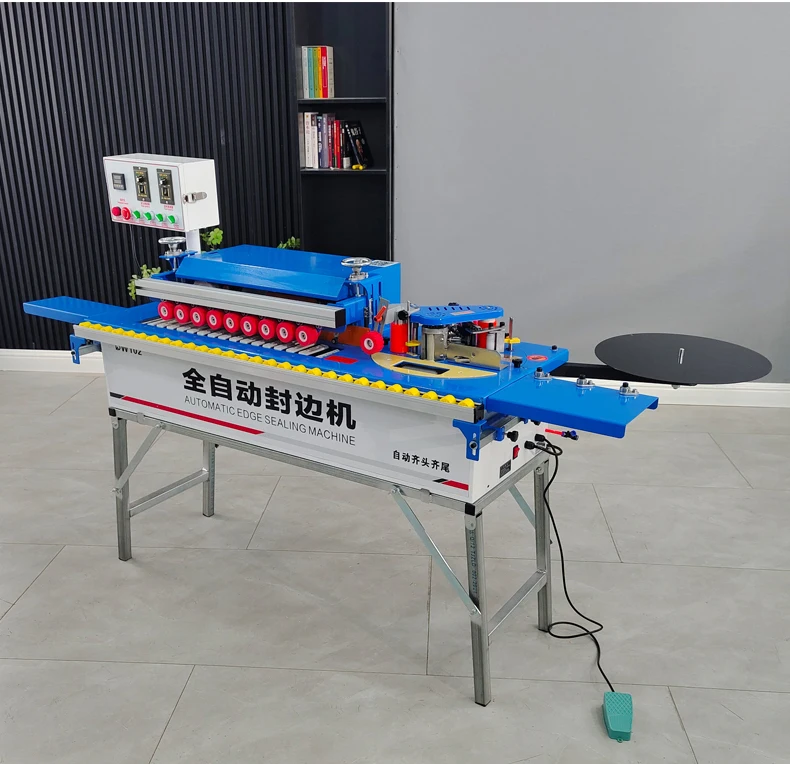
| Product Size | 128×47×69CM |
| Product Weight | 75KG |
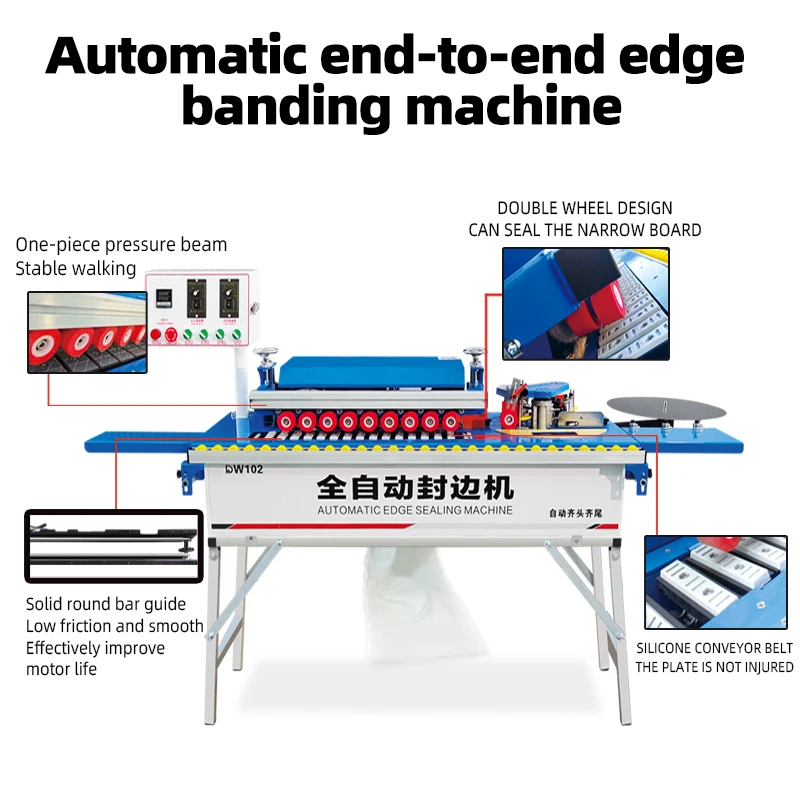
| Standard Features | Curved and straight edge banding, edge trimming, polishing, automatic head and tail cutting, vacuum hold-down |
| Control Panel Language | Chinese, English, or customized (Spanish, French, etc.) |
| Plug Options | EU, USA, AU, UK |
| Certifications | CE, ISO 9001 |
Application Suitability
| Application | Material or Output |
|---|---|
| Custom cabinet door and drawer front edge banding | MDF, particleboard, plywood with PVC or veneer edge banding |
| Curved furniture component finishing | Shaped MDF and blockboard panels requiring flexible edge application |
| Medium-volume panel processing for furniture factories | MDF, plywood, and polymer door panels with 0.3-3MM banding thickness |
| Small to mid-scale joinery workshop production | Wood panels and blockboard transitioning from manual to automated banding |
Why Material Verification Matters More Than Brochure Specs
Edge banding quality is only as consistent as the test material used to validate it.
I have watched workshops receive machines that performed perfectly on the supplier’s test panels, only to discover visible glue lines and edge chipping when running their own stock. A furniture factory in Shandong once took delivery of a bander rated for particleboard, but their primary output was MDF with melamine facing. The feed pressure and glue temperature that worked for particleboard caused delamination on the denser fiberboard substrate. Commissioning stalled for days while parameters were re-established from scratch [NEED_CITE: material-specific edge banding parameters]. The edge banding machine manufacturer you choose should test on your actual material, not a generic sample.
Mapping the Full Machine Range to Your Production Stage
The DW102 sits within a broader product family that allows a workshop to scale from entry-level manual feed machines to full-function pre-milling configurations without changing suppliers. This edge banding machine manufacturer structures its range so that a growing cabinet maker can add capacity or capability incrementally, maintaining consistency in control systems, spare parts inventory, and operator familiarity across the shop floor.
The Advantage of Curved and Straight Capability in One Unit
Many small to mid-volume workshops encounter a bottleneck when curved components must be sent to a separate station or outsourced entirely. The DW102 handles both curved and straight edge banding within a single pass, which keeps material flow continuous. This matters for custom furniture makers producing radius cabinet doors, rounded shelving, or shaped table aprons where switching between machines introduces handling damage and alignment variation [NEED_CITE: curved edge banding process requirements].
How Power Distribution Across Stations Affects Edge Finish
The DW102 allocates 650W to each of its two trimming stations and 180W to each polishing unit. This power split is significant: trimming must cleanly shear the overhanging banding material without tearing the substrate face, while polishing removes residual adhesive without generating enough heat to soften the bond line. The 1200W vacuum system stabilizes the panel through these sequential operations. When feed speed increases, insufficient trimming power manifests as ragged edges on the exit side of the workpiece, a defect that often goes unnoticed until assembly [NEED_CITE: trimming power requirements for edge banding]. The 0.3-3MM banding thickness range covers PVC, ABS, melamine, and wood veneer, each demanding different trimming forces and polishing pressures.
The Hidden Cost of Skipping Voltage Confirmation
Machines arriving at a workshop with the wrong voltage configuration represent a recurring issue in cross-border equipment procurement. The DW102 ships configurable between 220V and 380V, with plug options spanning EU, USA, AU, and UK standards. When voltage is assumed rather than confirmed, the machine either fails to start, operates at reduced torque causing feed slippage, or damages the motor winding. This is not a warranty scenario — it is a specification failure that delays production and requires costly rewinding or transformer installation. Every quotation should include explicit voltage and frequency confirmation tied to the destination facility’s supply [NEED_CITE: voltage and frequency standards by export market].
What This Edge Banding Machine Manufacturer Brings to Your Floor Plan
In-house manufacturing with proprietary cutting mechanisms means the tolerance claimed on the specification sheet is traceable to the tool path and fixture design, not an aspirational target. The four-stage QC process covers incoming material inspection, in-process assembly checks, finished product functional testing, and pre-shipment verification using the buyer’s specified panel type and banding material. Voltage, control panel language, and plug configuration are treated as standard customization points rather than special requests. The DW102 documentation package includes electrical schematics confirming the voltage build, an operation manual in the agreed language, and a factory test record showing actual edge finish on the material you specified.
Documentation & Verification
- CE declaration of conformity matching the DW102 configuration as shipped
- Electrical schematic confirming voltage build, frequency, and plug type for your facility
- Factory test record showing edge finish quality on your specified panel thickness and material
- Operation and maintenance manual in your chosen control panel language
- Spare parts list with part numbers for trimming blades, polishing wheels, and vacuum cups
Installation, Commissioning & Support
- Confirm 220V or 380V dedicated circuit availability matching the DW102 voltage build before delivery
- Air supply must maintain 0.5-0.8Mpa at the machine inlet with a dedicated filter-regulator
- Allow clearance around the 128×47×69CM footprint for infeed and outfeed handling of panels up to the minimum 25CM length
- First commissioning includes setting glue pot temperature for your specific banding material thickness within the 0.3-3MM range
- Operator training covers control panel navigation in the configured language and vacuum hold-down adjustment for curved workpieces
Requesting an Accurate Configuration Proposal
To receive a quotation that matches your production reality rather than a generic catalog entry, share your primary panel material and thickness range, the edge banding material you intend to use, your local voltage and frequency, and your preferred control panel language. If your operation includes curved components, note the typical radius and whether you currently process them on a separate station or by hand.
Frequently Asked Questions
Q: How can I verify edge banding tolerance before the DW102 ships?
A: Request a factory test record that documents edge finish on your actual panel material and banding thickness. The test should use the same substrate density and edge material you will run in production, not a generic sample. This record is generated during pre-shipment verification and accompanies the machine.
Q: What voltage options are available for the DW102?
A: The machine is configurable from 220V to 380V, with plug options for EU, USA, AU, and UK standards. Voltage must be confirmed at the quotation stage based on your facility’s actual supply. Frequency should also be specified, as 50Hz and 60Hz markets require different motor winding configurations.
Q: Can the control panel be set to a language my operators understand?
A: Standard options include Chinese and English, with customization available for Spanish, French, and other languages. Confirming the language at order placement ensures the interface matches operator capability, preventing commissioning delays caused by unreadable menus and parameter screens.
Q: What spare parts should I stock for the DW102?
A: High-wear items include trimming blades, polishing wheels, vacuum cups, and glue pot seals. The spare parts list provided with the machine includes part numbers for each. Confirming local availability or ordering a recommended spares package with the initial shipment avoids production stoppages.
Q: Is a factory visit possible before placing an order?
A: Factory visits are welcomed and can include witnessing a test run on your supplied panel samples. This allows you to verify edge finish quality, observe the curved and straight banding capability, and confirm the machine configuration matches your production requirements before shipment.