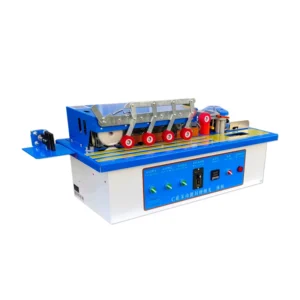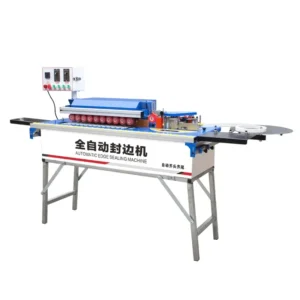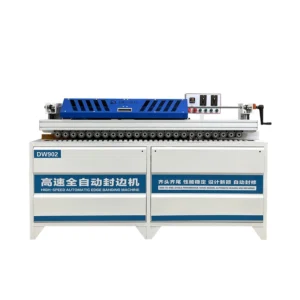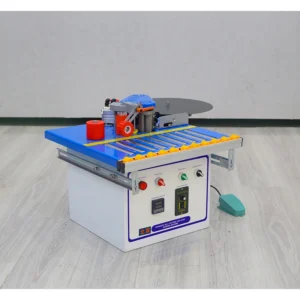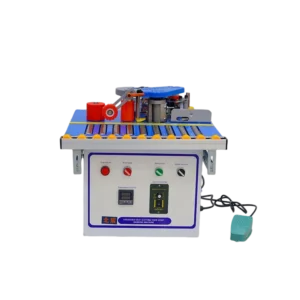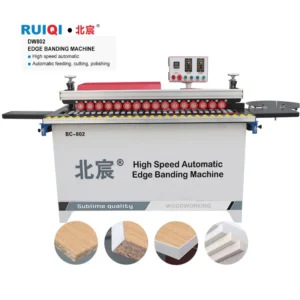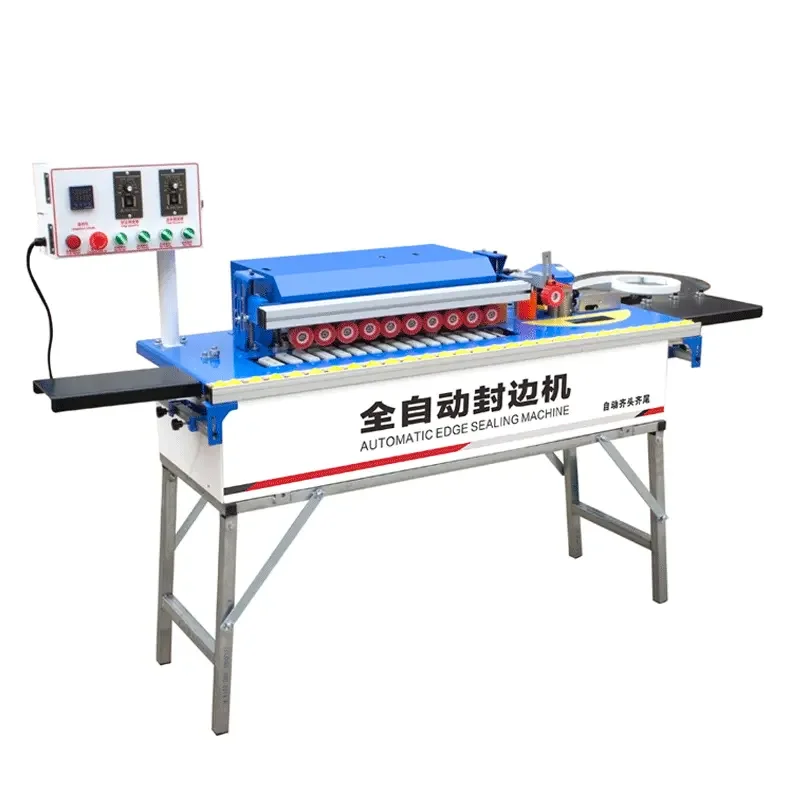
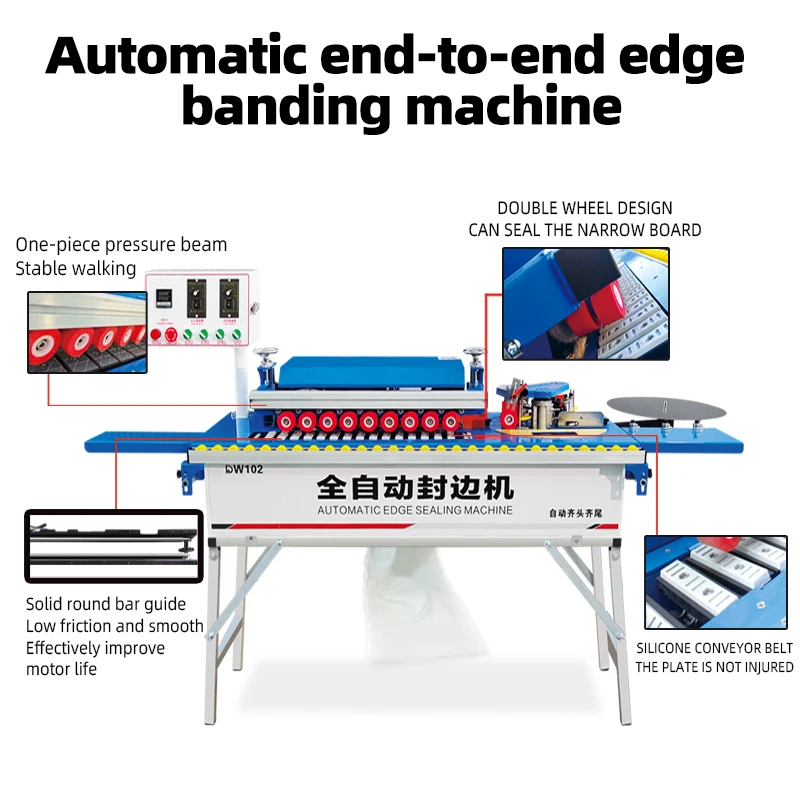
Description
Voltage-Adaptive Configuration — the DW102 ships with selectable 220V or 380V input and further customization available, confirmed on the electrical schematic before dispatch so the machine runs correctly on arrival.
Technical Specifications
| Parameter | Value |
|---|---|
| Model | DW102 |
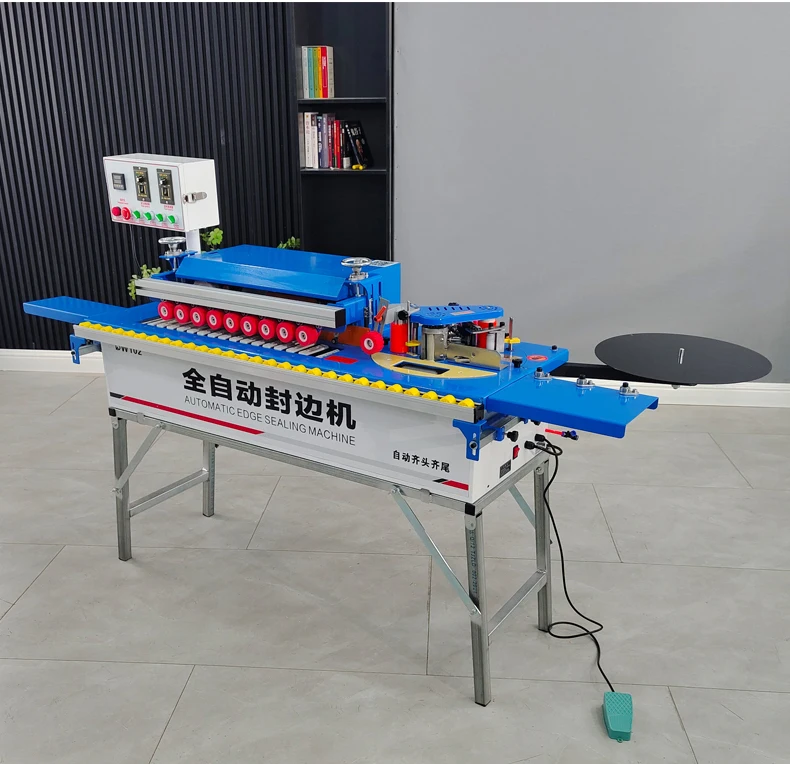
| Product Type | Automatic Edge Banding Machine |
| Total Power | 3800 W |
| Voltage Options | 220 V / 380 V / customization available |
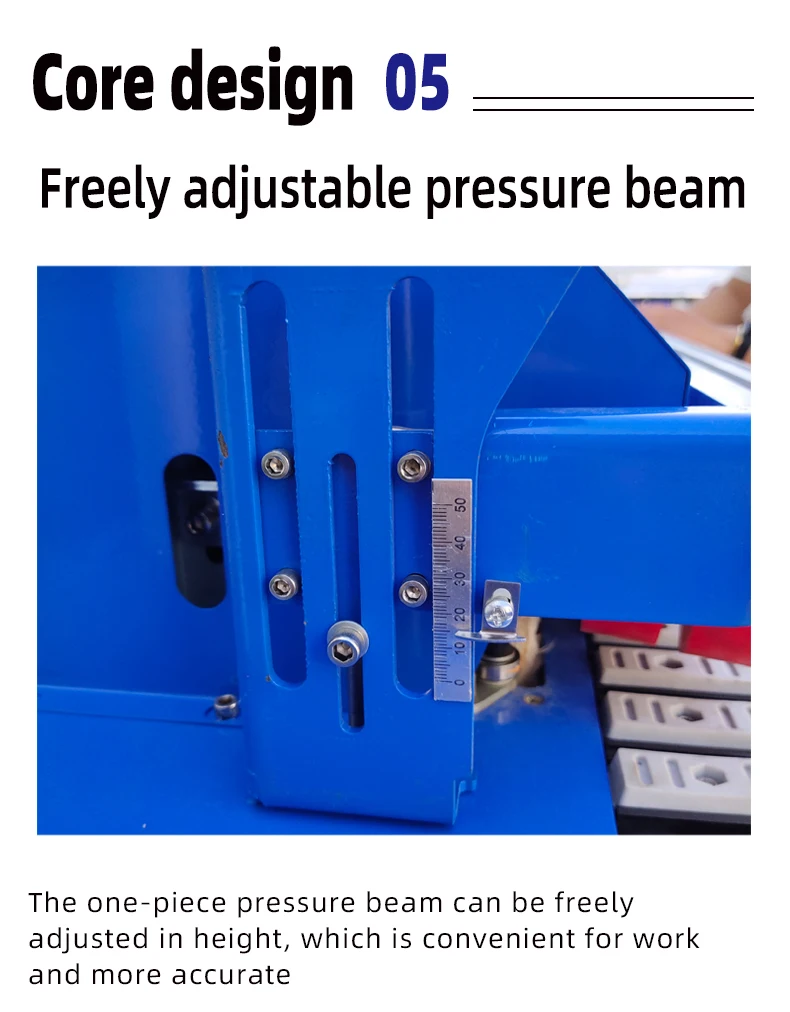
| Edge Banding Height | 0–50 mm |
| Edge Banding Thickness | 0.3–3 mm |
| Minimum Sheet Length | 25 cm |
| Minimum Sheet Width | 5 cm |
| Glue Pot Capacity | 1000 ml |
| Air Source Pressure | 0.5–0.8 MPa |
| Trimming Stations | Dual, 650 W × 2 |
| Polishing Stations | Dual, 180 W × 2 |
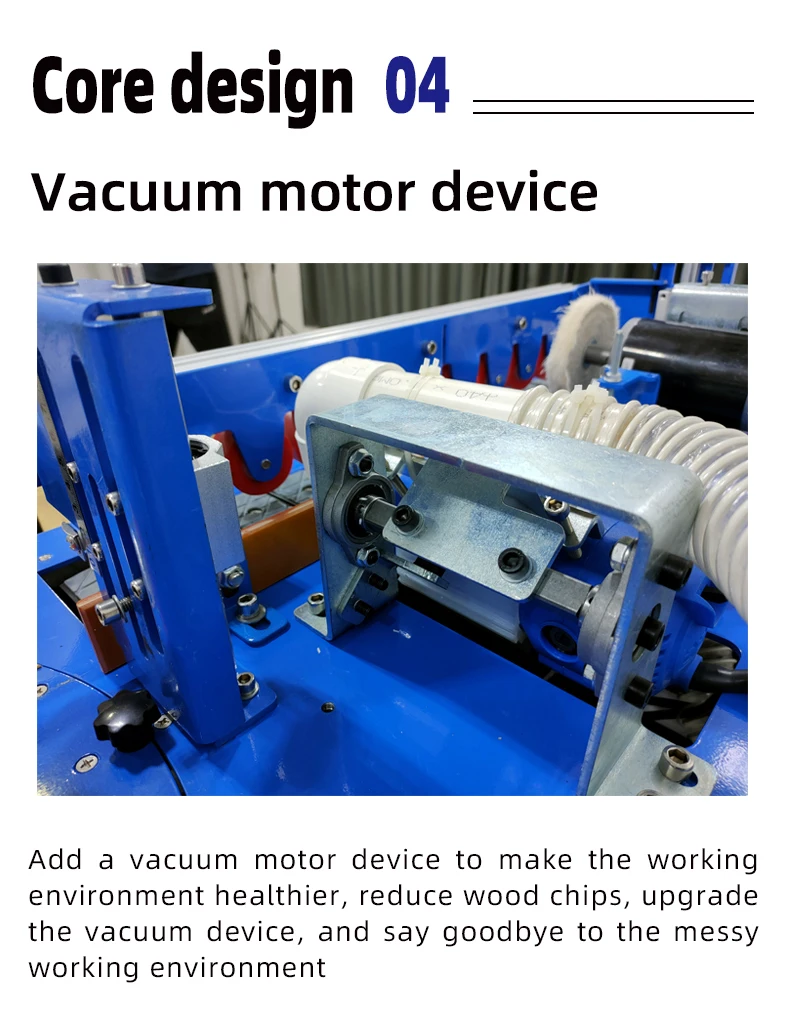
| Vacuum Power | 1200 W |
| Product Dimensions (L×W×H) | 128 × 47 × 69 cm |
| Product Weight | 75 kg |
| Control Language | Chinese, English (other languages customizable) |
| Assembly State | Fully assembled, ready to connect |
| Standards | CE, ISO 9001 |
Application Suitability
| Application | Material or Output |
|---|---|
| Cabinet panel edge banding | MDF and particleboard with PVC or melamine strips |
| Custom furniture edging | Plywood and blockboard with veneer banding 0.3–3 mm |
| Polymer door finishing | Polymer door blanks requiring curved and straight edge trimming |
| Workshop-scale production runs | Medium-density fiberboard and solid wood panels in batch processing |
What "0.3 to 3 mm" Really Means on the Shop Floor
Band thickness range only delivers consistent results when the machine is set up for the specific substrate and edge material you actually run.
Too many workshops buy an edge banding machine manufacturer spec sheet at face value, then discover that switching from PVC to thin veneer requires a complete parameter overhaul. Glue temperature, feed pressure, and trimming depth all shift when the banding material changes. I have walked into cabinet shops where the operator spent more time adjusting than producing, simply because the configuration conversation never happened before the order was placed [NEED_CITE: substrate-specific edge banding setup requirements]. The DW102 covers 0.3–3 mm across PVC, melamine, and veneer, but the real question is whether the machine leaving the factory has been tuned for your exact material stack.
Where the DW102 Sits in a Growing Workshop
The DW102 occupies the mid-tier of an automatic edge bander for sale range that extends from compact entry-level units to full-function pre-milling models. For a cabinet maker moving away from manual edge application, this model introduces automated head-and-tail cutting and dual polishing in a single pass. The footprint stays manageable at 128 cm long, meaning it fits into workshops where floor space is already committed to saws and boring machines. As volume increases and panel specifications tighten, buyers can step up to a pre-milling model within the same product family without switching supplier or retraining operators on an entirely different control platform.
Matching Machine Tier to Actual Daily Volume
A common mistake in this equipment class is placing an entry-level bander into a daily throughput it was never engineered to sustain. The DW102 carries a 3800 W total power budget and dual 650 W trimming motors, giving it headroom for sustained batch runs on standard panel sizes [NEED_CITE: edge bander duty cycle and motor thermal limits]. When a workshop regularly processes panels above 50 mm edge height at continuous feed, the thermal load on the glue pot and trimming heads increases significantly. Understanding your typical daily sheet count and edge height distribution helps determine whether this model covers your needs or whether a higher-tier unit with pre-milling is the more honest choice.
How Each Specification Translates to Panel Output
The 0.3–3 mm banding thickness range covers most furniture-grade PVC and veneer strips, but running the thin end of that range demands precise trimming alignment to avoid scoring the panel surface. The dual trimming stations at 650 W each provide independent rough and fine trimming passes, which matters when switching between thick PVC and fragile veneer within the same production day. The 1000 ml glue pot capacity supports continuous runs without frequent refills, though glue type and temperature must match the banding material specified. The integrated 1200 W vacuum system captures offcuts and dust at the trimming and polishing zones, keeping the workpiece surface clean for downstream inspection and reducing manual cleanup between batches. Air pressure at 0.5–0.8 MPa drives the pneumatic feed and cutting mechanisms, so confirming compressor capacity before installation avoids feed stutter mid-cycle.
The Hidden Cost of Skipping Voltage Confirmation
Ordering an automatic edge bander for sale without confirming local voltage and frequency leads to machines that cannot start on arrival or, worse, run with degraded motor performance that damages trimming accuracy over time. I have seen workshops in regions with 220 V three-phase supply receive machines wired for 380 V, requiring costly rewiring before the first panel is edged. The DW102 supports both standards with further customization available, but the confirmation step must happen during quotation, not after crating [NEED_CITE: voltage and frequency standards by export market]. An incorrect voltage setup also voids motor warranties and can cause premature bearing wear that only appears weeks into production.
Why Sourcing This Model Here Makes Sense
The DW102 is built on a manufacturing line that runs four-stage quality control from incoming material through pre-shipment verification. Every unit ships fully assembled, so there is no field alignment of the trimming heads or polishing wheels on first power-up. Voltage and control language are confirmed during the specification stage, meaning a buyer in a non-Chinese market receives documentation and panel interfaces they can actually read. Factory test records use the buyer’s own substrate sample, so edge quality is demonstrated before the machine is packed rather than discovered after installation. The product family structure means spare parts and consumable specifications remain consistent if the workshop later adds a pre-milling model from the same range.
Documentation & Verification
- Electrical schematic with confirmed voltage and frequency matching your facility supply
- Factory test record showing edge quality on your specific panel substrate and banding type
- CE declaration of conformity and ISO 9001 certificate provided with shipment
- Operation and maintenance manual written in the language agreed during order confirmation
- Spare parts list with part numbers for consumables and wear items specific to this model
Installation, Commissioning & Support
- Requires a dedicated circuit matching the confirmed 220 V or 380 V supply with appropriate breaker rating for the 3800 W total load
- Compressed air line at 0.5–0.8 MPa must be connected before first run to ensure pneumatic feed and cutting cylinders function correctly
- Arrives fully assembled; positioning requires a level floor area of at least 150 × 70 cm allowing clearance for panel feed and offcut removal
- First-run commissioning includes glue pot temperature calibration matched to your specific edge banding material and thickness
- Dual trimming and polishing stations require initial alignment verification using your production panels to confirm edge finish quality
What to Include in Your Inquiry
Share the panel materials you process most frequently, including substrate type and typical edge banding thickness, so the configuration can be matched before quotation. Confirm your facility voltage and frequency, along with the preferred control panel language, to avoid commissioning delays. If you run both straight and curved edge profiles, specify the minimum curve radius so the feed mechanism can be verified against your actual workpieces.
Frequently Asked Questions
Q: Where does the DW102 sit in the full edge bander range, and when should I step up to a pre-milling model?
A: The DW102 handles trimming, polishing, and head-and-tail cutting in a single pass for standard panel edging. A pre-milling model becomes necessary when your panels show saw marks or minor sizing inaccuracies that must be removed before edge application. If your upstream sawing is precise and your edge quality requirements are within standard furniture tolerances, the DW102 covers the work without the additional pre-milling station.
Q: How do I confirm voltage and frequency match my facility before ordering?
A: Provide your facility supply specification during the inquiry stage, and the electrical schematic is issued with the quotation showing exact voltage, frequency, and breaker requirements. The DW102 supports 220 V and 380 V with further customization available, but confirmation must be completed before production begins to avoid rewiring or motor damage on arrival.
Q: What panel materials and edge banding thicknesses has this model been verified on?
A: The DW102 covers MDF, particleboard, plywood, blockboard, and polymer doors with edge banding from 0.3 to 3 mm in PVC, melamine, and veneer. Verification on your specific substrate is completed through a factory test using your material sample before the machine ships, ensuring trimming and polishing parameters are set for your actual production mix.
Q: Can I visit the factory to see the DW102 running on my own substrate?
A: Factory visits are welcomed at the Ningjin, Shandong facility. Bring or ship your panel samples and preferred edge banding material so the test run reflects your production conditions. The machine is operated under observation, and edge quality is measured against your assembly tolerances before any order commitment.
Q: What documentation ships with the machine for customs and commissioning?
A: Each DW102 ships with a CE declaration of conformity, ISO 9001 certificate, electrical schematic, factory test record, operation manual in your agreed language, and a spare parts list. Packing photographs are taken before crating, and customs documentation support is provided to ensure smooth clearance at destination.