Description
Integrated Quality Control — Every 910H unit undergoes a four-stage inspection covering incoming components, in-process assembly, finished function, and pre-shipment verification before leaving our Ningjin facility.
Technical Specifications
| Parameter | Value |
|---|---|
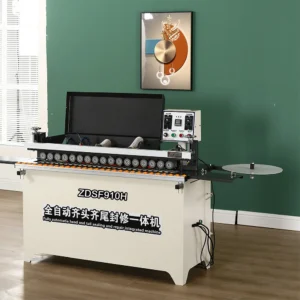
| Model | 910H |
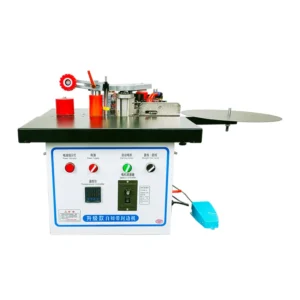
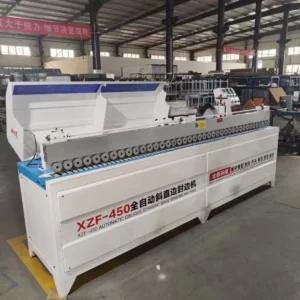
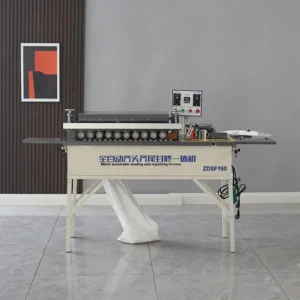
| Product Type | Small Automatic Edge Banding Machine (Curved & Straight) |
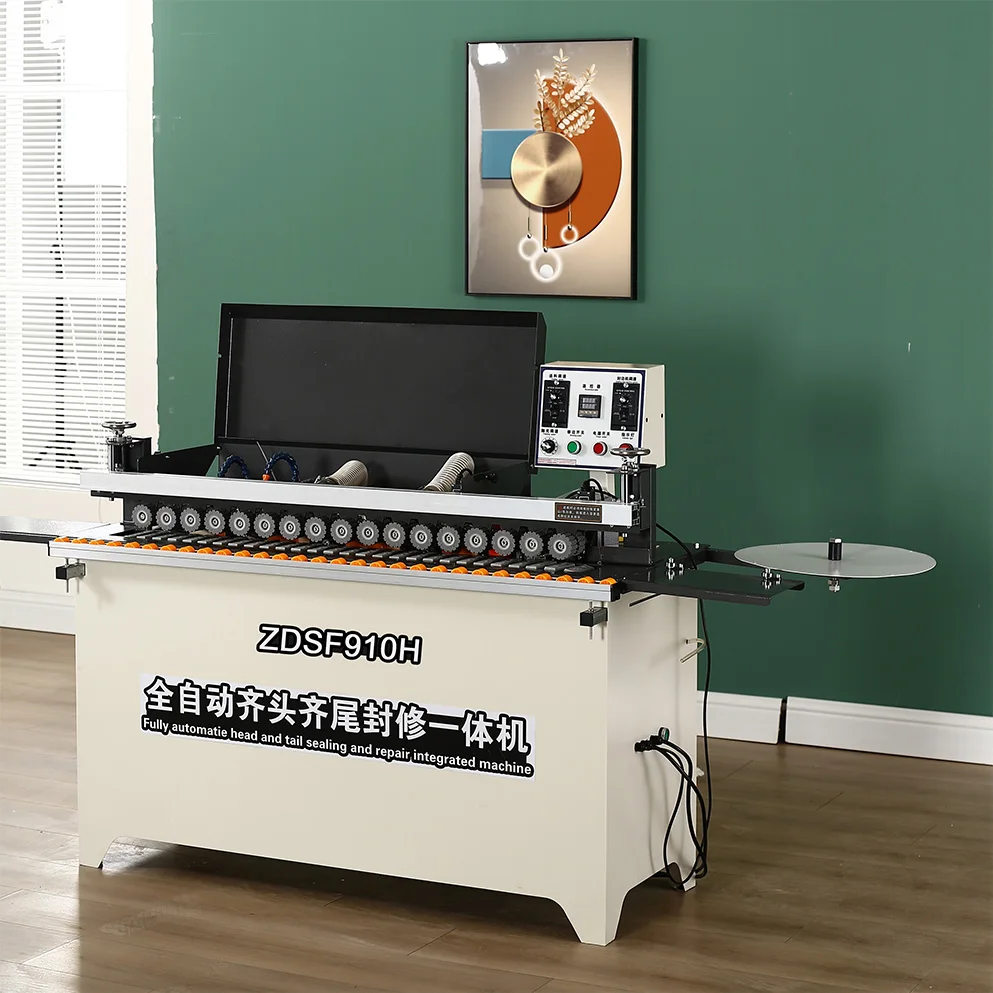
| Function | Automatic plate feeding, double-sided gluing, upper and lower polishing, automatic head and tail trimming |
| Edge Type | Both curved and straight lines |
| Voltage & Frequency | 220V 50Hz (basis not stated in source — confirm other options for target market) |
| Rated Power | 4 kW |
| Heating Power | 800 W |
| Polishing Power | 180 W × 2 |
| Trimming Power | 800 W × 2 |
| Rated Air Pressure | 0.4–0.6 MPa |
| Suction Power | 1200 W |
| Sheet Thickness Range | 10–50 mm |
| Strip Thickness Range | 0.5–2.5 mm |
| Glue Pot Capacity | 1000 ml |
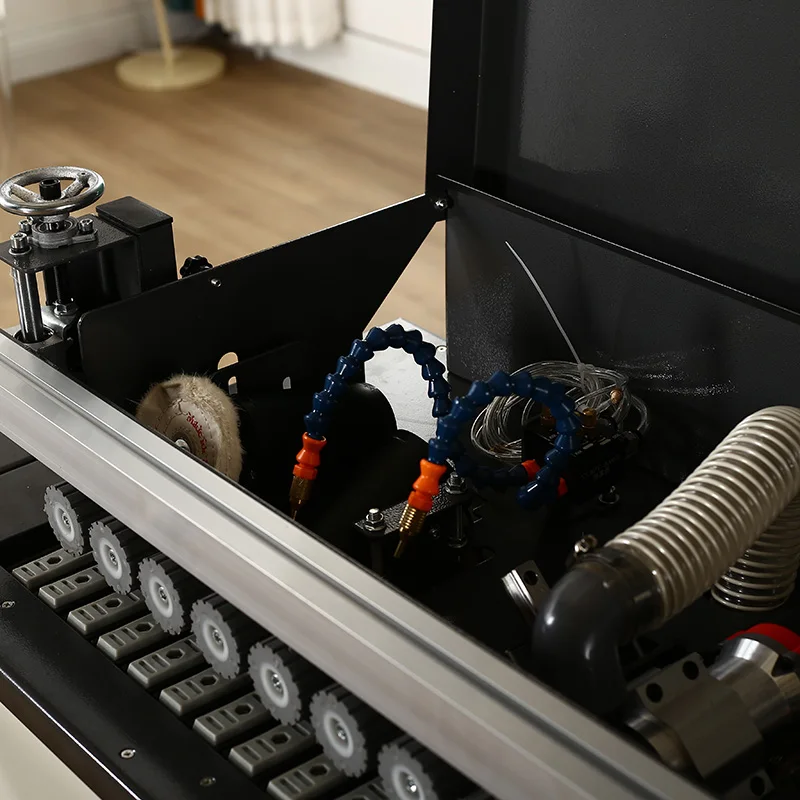
| Feed Mechanism | Double-row rubber pressure wheels, automatic plate feeding |
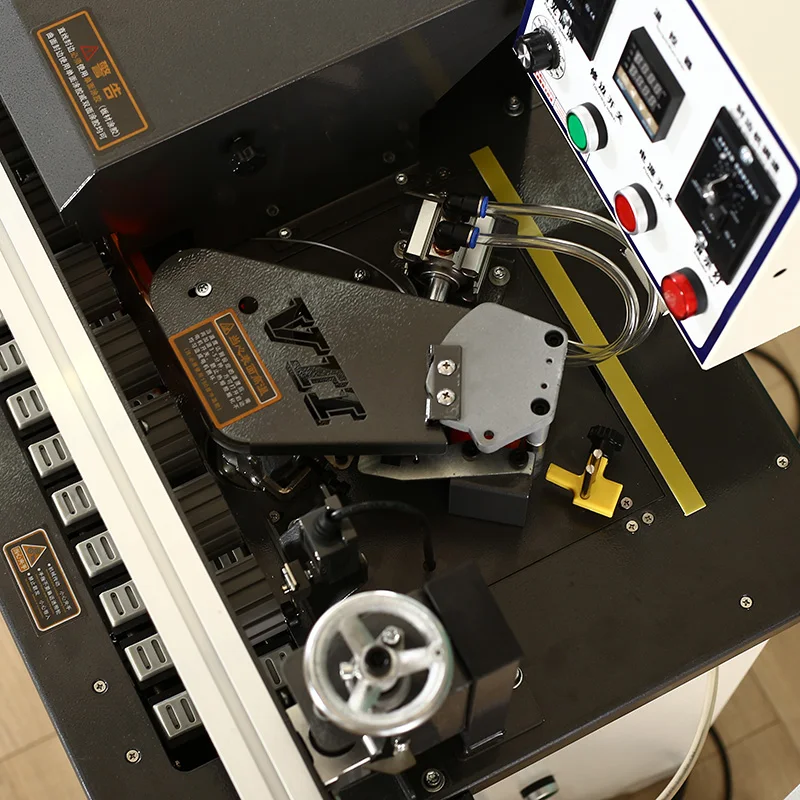
| Control System | Multi-function button control panel |
| Overall Dimensions (L×W×H) | 1300 × 560 × 1090 mm |
| Net Weight | 140 kg |
Application Suitability
| Application | Material or Output |
|---|---|
| Small-scale custom furniture workshops | MDF, particleboard, and plywood panels with curved or straight edge profiles |
| Cabinet makers processing mixed panel components | Standard and regrind MDF substrates with PVC or veneer edge banding |
| Low-volume production environments | Compact footprint panels requiring 220V single-phase power compatibility |
| Joinery shops transitioning from manual methods | Curved and straight cabinet components on a single machine |
Why the Voltage Question Must Come Before the Purchase Decision
A machine that cannot plug into your local grid is a heavy paperweight, not a production asset.
I have watched workshops in Southeast Asia receive edge banding equipment wired for 380V three-phase when their facility only had 220V single-phase available. The automatic edge banding machine manufacturer you choose should confirm electrical compatibility before quoting, not after crating. Small workshops often discover this mismatch only when the electrician arrives on installation day [NEED_CITE: voltage and frequency standards by export market]. The 910H is configured for 220V 50Hz operation, but your local supply may differ.
Mapping Your Workshop Entry Point in the Edge Bander Range
When a joinery shop moves from hand-trimming to automated edge banding, the equipment decision carries weight beyond the immediate purchase. The 910H sits at the entry tier of our small edge banding machine for sale range, positioned for workshops processing limited volumes of both curved and straight profiles. This matters because your next machine upgrade stays within the same product family, maintaining control logic familiarity and spare parts commonality.
What Dual-Mode Capability Actually Means on the Floor
The 180° rotation mechanism allows switching between straight and curved edge banding without relocating the workpiece or moving to a dedicated curved-edge unit. For small custom furniture operations producing cabinet doors with both radiused corners and straight runs, this eliminates the capital outlay and floor space of a second machine. The four-edge arc-shaped alloy cutter head engages differently on curved versus straight sections, requiring pressure adjustments that the operator learns during commissioning [NEED_CITE: edge banding cutter geometry for curved profiles].
Reading the Numbers That Affect Daily Production
The 4 kW rated power draw reflects the combined load of trimming motors, polishing units, and heating elements running simultaneously. Workshops should verify their electrical panel can accommodate this sustained draw plus startup surge. The 10–50 mm sheet thickness range covers standard cabinet panel stock, though the lower limit matters when processing thin drawer bottoms or backing boards. Double-row rubber pressure wheels provide feed stability on smaller workpieces that might otherwise drift under a single-row configuration. The 0.5–2.5 mm strip thickness range accommodates thin PVC through standard wood veneer, but thicker solid-wood lipping falls outside this machine’s design envelope. Dust extraction at 1200 W suction capacity handles trimming debris, though the integrated port diameter should match your workshop’s central collection system.
When the Cheaper Option Costs More Later
A workshop I worked with purchased an entry-level bander from another supplier based on price alone, then discovered the feed mechanism could not handle their standard 18 mm particleboard without leaving compression marks. The pressure beam lacked adjustment range, forcing them to shim panels manually. Such workarounds accumulate into daily lost time and inconsistent edge quality that only becomes apparent when assembled carcasses show visible glue lines [NEED_CITE: edge banding quality issues from inadequate pressure systems].
What Manufacturing Depth Means for Your Procurement
Our Ningjin facility builds the 910H with the same four-stage QC protocol applied to our full-function pre-milling models. Patented cutting mechanisms developed in-house achieve the trimming finish you see in test samples. Voltage customization from 110V to 440V is standard configuration work, not a special engineering request. Factory test records document actual performance on substrates you specify, not generic MDF run under ideal conditions. Engineer-led configuration recommendations arrive within 24 hours of receiving your processing requirements, ensuring the machine matches your actual production rather than a catalog assumption.
Documentation & Verification
- Factory test record documenting trimming tolerance on your specified sheet thickness and edge material
- Electrical schematic with voltage confirmation matching your facility’s supply before crating
- Operation manual in your workshop’s primary language, not a generic English default
- Spare parts list identifying wear components and supply lead times
- CE declaration of conformity traceable to the manufacturing facility
- Packing photographs showing machine condition at dispatch
Installation, Commissioning & Support
- KD packing requires assembly on arrival; allocate floor space exceeding the 1300 × 560 mm footprint for unpacking
- Dedicated 220V circuit rated for sustained 4 kW draw plus startup surge, separate from other machinery
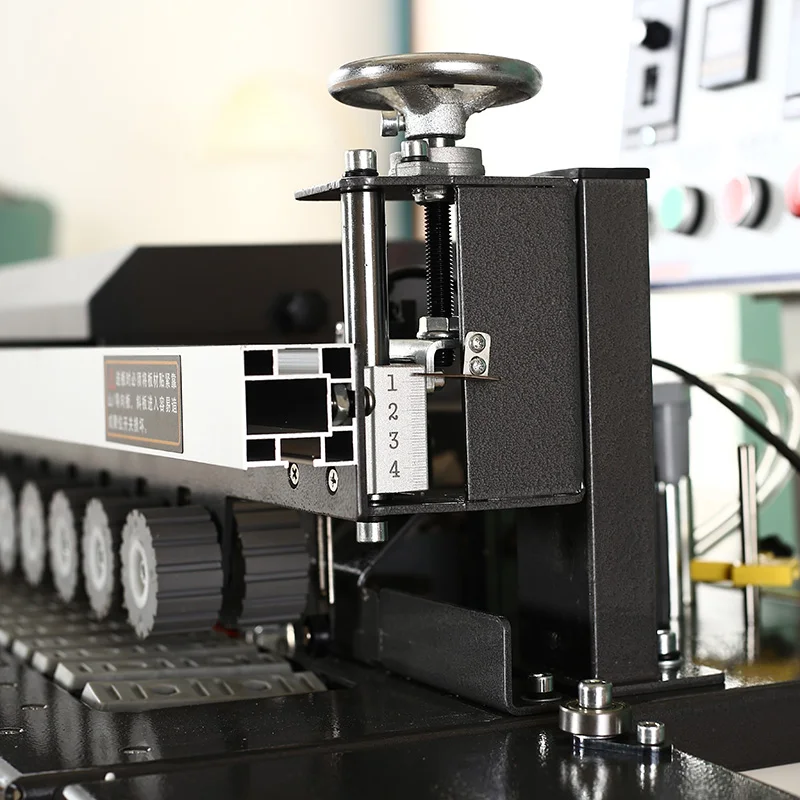
- Adjustable aluminum alloy pressure beam requires calibration to your actual panel thickness during first run
- Glue pot temperature must be set based on your specific adhesive type and ambient workshop conditions
- Multi-function button control panel operation training covers curved-to-straight mode switching procedures
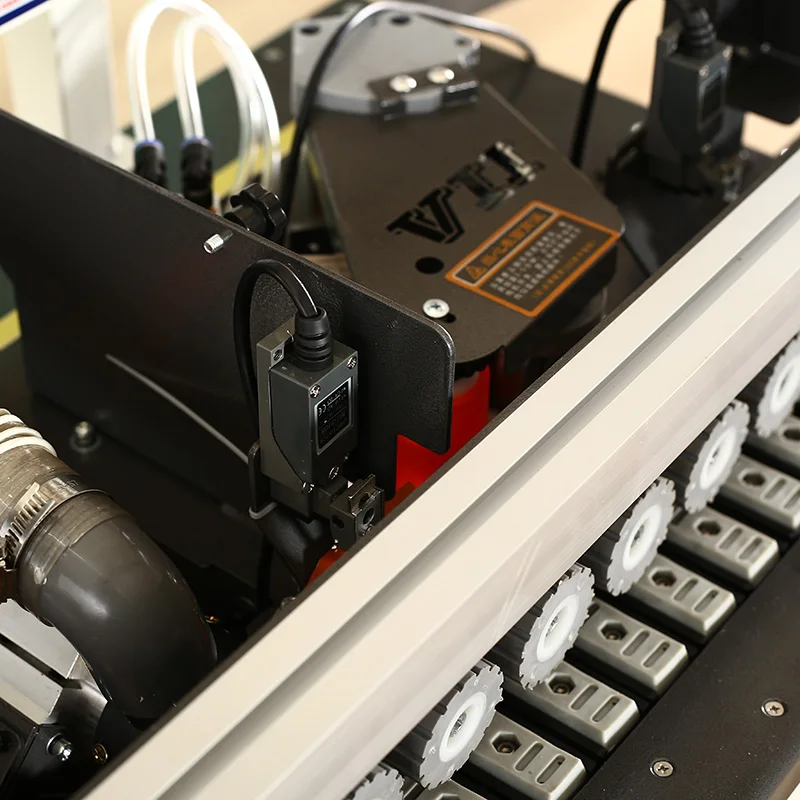
- Trimming station wear parts include the four-edge arc-shaped cutter heads and polishing pads
Starting the Technical Conversation
Before we quote, we need to understand your actual production environment. What panel materials and thicknesses do you process most frequently? What is your local voltage and frequency, and does your workshop have dedicated circuit capacity? Are you currently running any upstream saws or downstream boring equipment that must align with this machine’s throughput?
Frequently Asked Questions
Q: Where does the 910H sit in the full edge banding machine range, and what is the upgrade path?
A: The 910H represents our entry tier for small workshops handling both curved and straight profiles. As your production volume grows, you move into our mid-range models with higher feed speeds and additional trimming stations, then to full-function pre-milling units. All models share control logic familiarity, so operators transition without retraining.
Q: How do I confirm voltage, frequency, and control panel language match my workshop?
A: Provide your local electrical specifications and preferred operator language during inquiry. We confirm compatibility in the formal quotation and document it in the electrical schematic. The control panel labeling and manual are produced in your specified language before shipment.
Q: What edge profiles and strip thicknesses can the 910H handle compared to higher-tier models?
A: The 910H processes 0.5–2.5 mm strip thickness on both curved and straight profiles. Higher-tier models extend this range for thicker solid-wood lipping and add pre-milling stations for edge preparation. If your work involves profiles outside this range, we recommend the appropriate tier during configuration.
Q: Can I arrange a sample processing test on my own panel material before ordering?
A: Yes. Send us representative samples of your actual substrate and edge banding material. We run the 910H on these materials, document trimming tolerance and edge quality in a factory test record, and share results with photographs before you commit to the order.
Q: How does the 910H’s throughput compare with the next model tier?
A: The 910H suits low-volume production where flexibility between curved and straight work matters more than feed speed. The next tier delivers higher throughput through faster feed rates and additional automated stations. Your daily panel count and available operator time determine which tier matches your workflow.