
Description
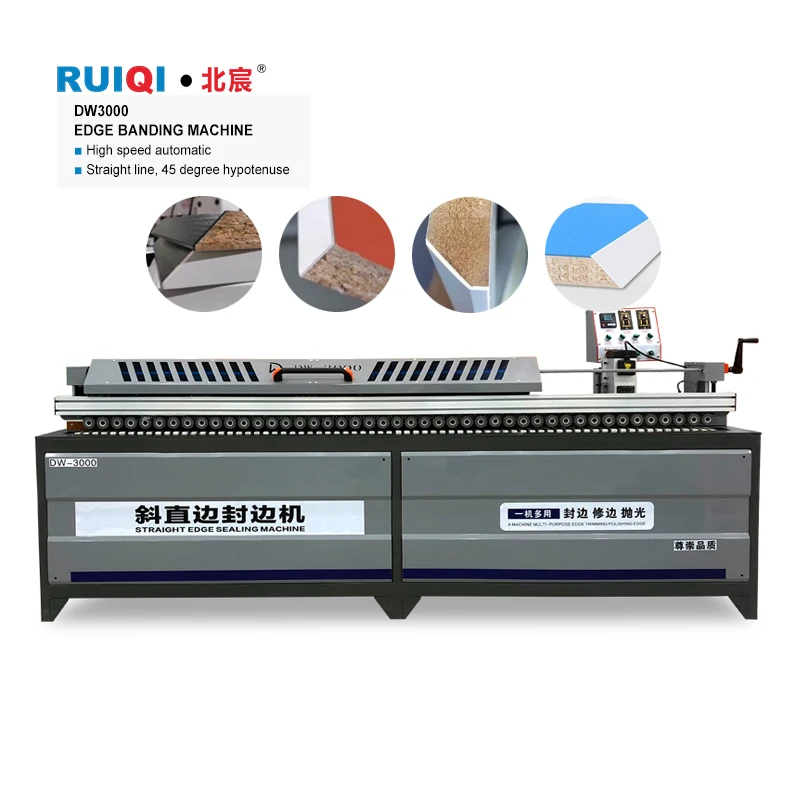
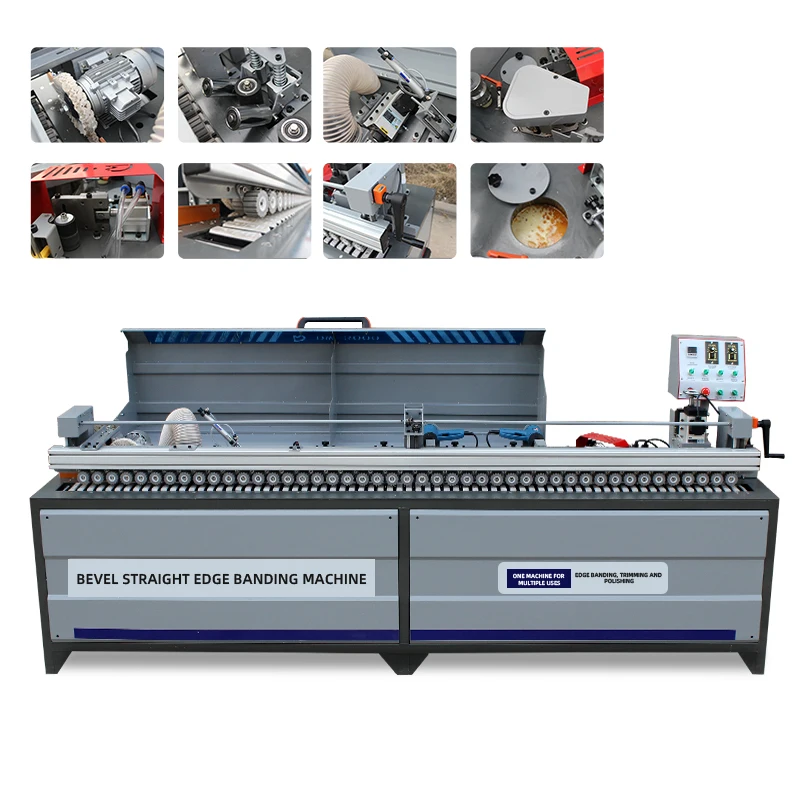
Dual-Mode Bevel Capability — the DW3000 handles both straight and 30–90° oblique edge banding within one pass, eliminating the need for a secondary angled-edge machine on the production floor.
Technical Specifications
| Parameter | Value |
|---|---|
| Model | DW3000 |
| Product Type | Automatic Edge Banding Machine with Oblique and Straight Bevel Function |
| Total Power | 11 kW |
| Pre-milled Motor | 2.2 kW |
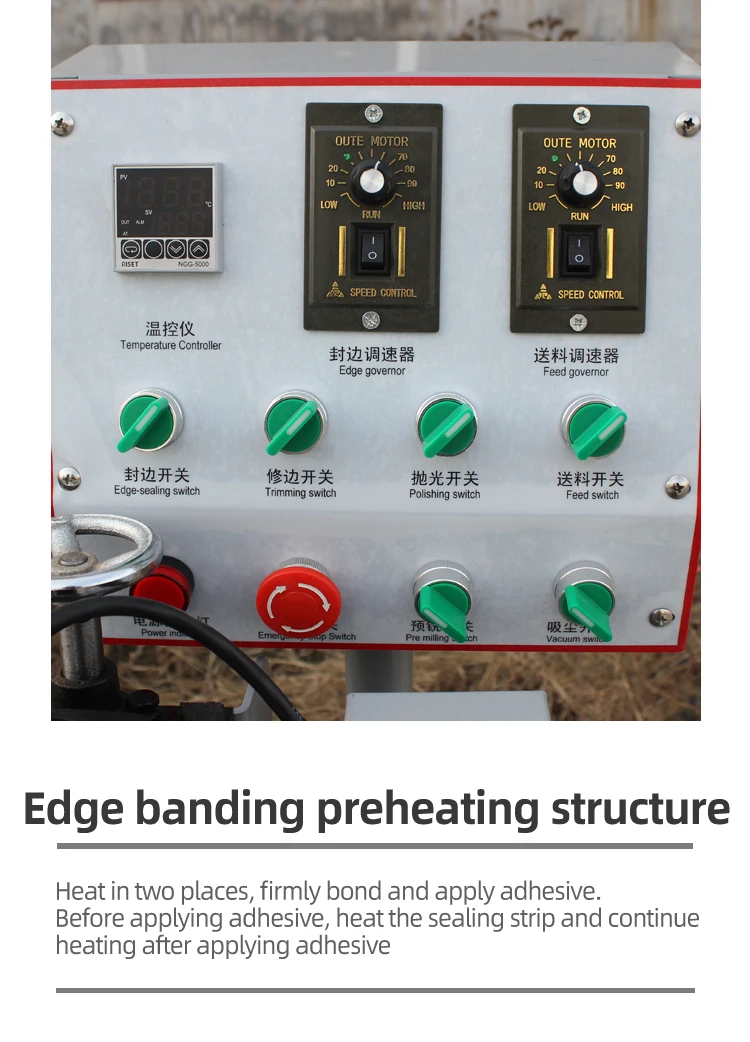
| Heating Power | 2.2 kW × 2 (double heat gun) |
| Trimming Power | 2.2 kW × 2 |
| Polishing Power | 0.4 kW × 2 |
| Vacuum Power | 550 W |
| Voltage | 380V / 415V (configurable from 110V to 440V) |
| Edge Speed | 0–12 m/min |
| Transmission Speed | 0–12 m/min |
| Minimum Sheet Length | 300 mm |
| Minimum Sheet Width | 150 mm |
| Edge Banding Height | 0–50 mm |
| Edge Banding Thickness | 0.3–3 mm |
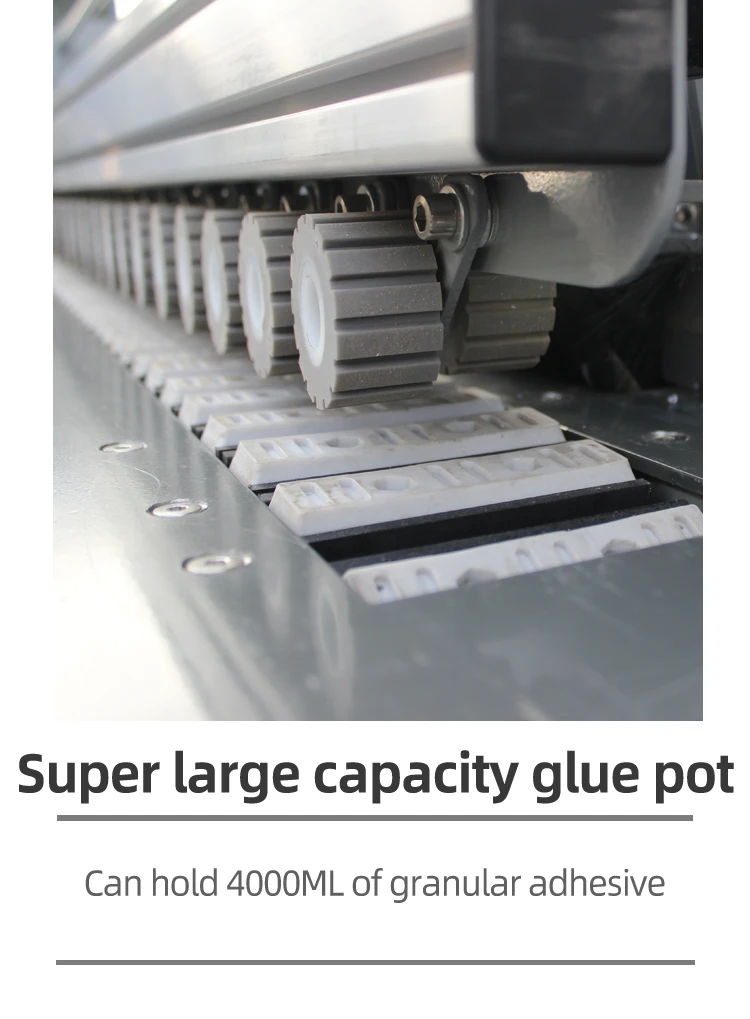
| Glue Pot Capacity | 4000 ml |
| Air Source Pressure | 0.5–0.7 MPa |
| Oblique Pressure Wheel Angle | 30–90° (8 sets) |
| Trimming Motor Configuration | 3 spindle motors |
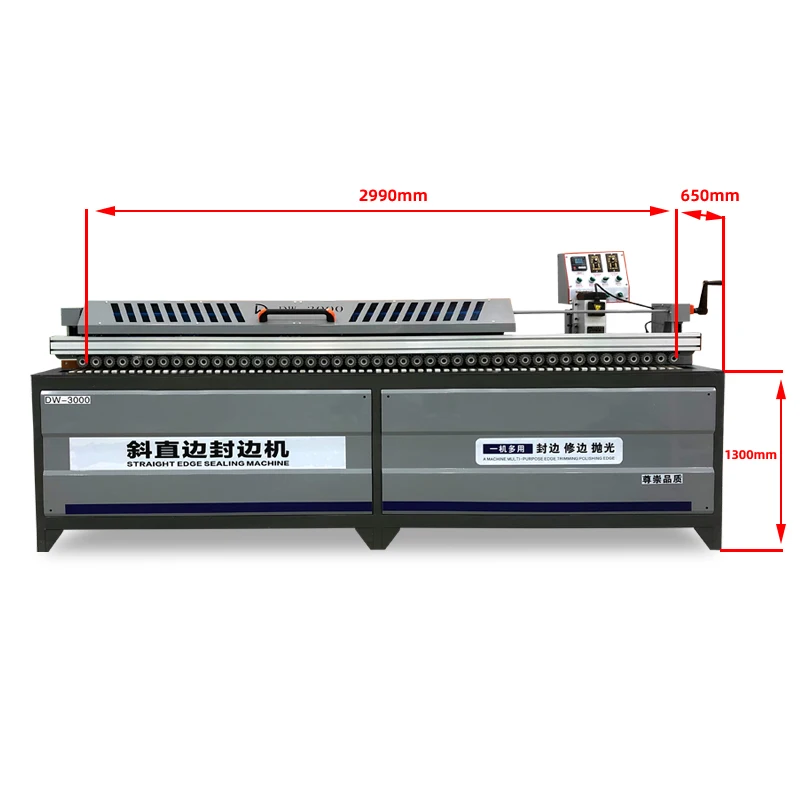
| Overall Dimensions (L×W×H) | 2990 × 650 × 1300 mm |
| Net Weight | 430 kg |
| Feed Belt Type | Double cylinder feeding belt |
| Key Features | Plate milling, 45° pre-milling, straight and oblique banding, trimming, scraping, polishing, high-power vacuuming, edge band slotting device, feeding auxiliary slide, automatic alignment, flexible edge scraper |
| Certification | CE |
Application Suitability
| Application | Material or Output |
|---|---|
| Cabinet door straight-edge banding | MDF and particleboard panels 0.3–3 mm PVC or melamine banding |
| Angled tabletop and shelf bevel finishing | Plywood and MDF with 30–90° oblique edge profiles |
| Custom wardrobe panel edge sealing | Particleboard panels with veneer or ABS edge banding |
| Mixed-run contract furniture production | MDF, particleboard, and plywood in alternating straight and bevel runs |
| Workshop transition from manual to automated edging | Small to mid-batch panel processing with varied edge requirements |
Why the Voltage Question Must Come Before the Crate Is Nailed Shut
Confirming your workshop supply against the machine rating before production starts avoids a machine that sits dead on the floor for weeks.
I once watched a buyer in the American Southeast take delivery of a 380V edge bander when their shop ran 208V three-phase. The automatic edge banding machine manufacturer had built exactly what was on the purchase order. Nobody asked, and nobody checked. The unit sat under a tarp for eleven days while an electrician sourced a step-up transformer that fit the panel. Voltage mismatches are the single most common reason full-function machines arrive and never power on [NEED_CITE: voltage and frequency standards by export market].
When you are surveying a full equipment range to outfit a line, the voltage and frequency of each unit must match the local supply before the order is locked. The DW3000 ships standard at 380V/415V but is configurable from 110V to 440V, and the confirmation step sits inside the formal quotation process so there is no guesswork at the loading dock.
Where the DW3000 Sits in the Edge Banding Lineup
The DW3000 occupies the full-function tier of the edge banding family, positioned above entry-level straight-only models and below high-speed continuous-feed production machines. For a workshop that has outgrown a basic trimmer-and-polish configuration but does not yet run volumes that justify a through-feed line, this automatic edge banding machine manufacturer offering fills the gap. It handles pre-milling, straight and oblique banding, trimming, scraping, polishing, and slotting in one frame.
A buyer moving from a manual or semi-automatic setup gains the ability to process angled edges without adding a second machine. The 30–90° oblique pressure wheel system with eight adjustable groups means the same unit that bands a square cabinet carcass can bevel a decorative shelf front on the next pass, keeping floor space and capital expenditure contained within one station.
Scaling From One Machine to a Production Cell
When a custom furniture shop begins taking on contracts that mix straight and angled edge profiles across MDF, particleboard, and plywood, the temptation is to buy dedicated machines for each edge type. The DW3000 consolidates that requirement. Its 45° pre-milling station prepares the panel surface before the glue is applied, and the double heat gun design keeps activation consistent whether you are running thin PVC at 0.3 mm or thicker veneer stock approaching the 3 mm ceiling [NEED_CITE: edge banding material behavior under thermal activation].
For a buyer mapping a complete range before narrowing to specific models, this machine anchors the mid-volume production cell. Pair it upstream with a panel saw for cutting to size and downstream with a multi-boring machine for hardware fitting, and the three stations cover the core workflow of a cabinet-making operation.
Reading the Specs That Matter on the Shop Floor
The 2.2 kW pre-milled motor paired with a 45° cutting angle removes surface imperfections and sizing saw marks before the panel reaches the glue station. Without pre-milling, residual tear-out on particleboard edges telegraphs through the banding and produces a visible ripple after trimming. The 4000 ml glue pot capacity supports sustained runs without frequent refill stops, which matters when a batch of forty cabinet sides flows through in sequence.
The 0–12 m/min feed speed range gives operators control over adhesion dwell time. Thicker banding materials at 2–3 mm benefit from a slower feed, allowing the double heat gun system to bring the adhesive to full activation temperature before the pressure wheels engage. The eight oblique pressure wheel sets, adjustable from 30° to 90°, distribute clamping force evenly across the bevel face, preventing the partial-bond failures that show up only when a door panel is mounted and the edge catches light at an angle.
The 300 mm minimum sheet length and 150 mm minimum sheet width define the lower boundary of what the feed belt can grip reliably. Small drawer fronts and narrow filler strips near these dimensions require careful loading, but the double cylinder feeding belt provides steady traction across the panel base [NEED_CITE: feed belt traction requirements for narrow panel stock].
The Cost of Configuring by Guesswork
Ordering an edge bander without matching the pressure wheel count to your bevel profile mix leads to uneven adhesion on angled edges. Operators compensate by slowing the feed rate, which reduces throughput across the entire batch. The DW3000 eight-group oblique system addresses this directly, but a buyer who selects a lower-tier machine with fewer pressure stations will encounter the same visible glue line problem on plywood substrates that prompted the purchase in the first place.
Skipping the pre-milling step on a machine that omits it to save cost means panel edges with saw marks go straight to banding. The result is a surface that looks acceptable under factory lighting but fails visual inspection at the installation site. Sourcing from an automatic edge banding machine manufacturer that includes pre-milling as a standard station avoids this downstream rejection pattern [NEED_CITE: panel surface preparation standards for furniture assembly].
What Separates This Sourcing Point From Others
The DW3000 is manufactured in-house with proprietary cutting mechanisms that achieve verified tolerance on the pre-milled edge, so the bevel surface is flat before banding begins rather than relying on the pressure wheels to correct an uneven substrate.
Voltage, control panel language, and specification customization are built into the quotation as standard options, not treated as special requests that add lead time. The machine arrives with a control interface the operator can read on day one.
Four-stage quality control covers incoming material inspection, in-process checks, finished product verification, and pre-shipment testing with a documented factory test record. Buyers receive photographs of the packed unit alongside the test results before the crate leaves the floor.
The full product family, from entry-level to full-function, means a workshop can scale production capacity by adding a higher-tier machine from the same manufacturer without retraining maintenance staff on a different control architecture.
Documentation & Verification
- CE declaration of conformity for customs clearance in regulated markets
- Machine specification sheet matching the confirmed voltage and language configuration
- Factory test record on your panel thickness range before dispatch
- Electrical schematic with confirmed voltage and circuit breaker ratings
- Operation and maintenance manual in the agreed language
- Spare parts list with part numbers for the trimming and pressure wheel assemblies
Installation, Commissioning & Support
- Floor space allocation of at least 3500 × 1200 mm around the 2990 × 650 mm frame for panel infeed and outfeed clearance
- Dedicated 380V/415V three-phase circuit with confirmed amperage rating for the 11 kW total power draw
- Machine arrives fully assembled on a pallet; forklift unloading and positioning only, no field assembly required
- First-run parameter setting for glue temperature, feed speed, and pressure wheel angle by operator using the included manual
- Flexible edge scraper and polishing wheel adjustment during commissioning to match the selected banding thickness
- Spare trimming blades and scraper inserts included for initial production runs before reorder
What to Share With the Engineering Team Before Quoting
Provide the panel materials you run most often — MDF, particleboard, plywood, or solid wood — along with the edge banding types and thicknesses in your typical order mix. Specify the voltage and frequency at your facility panel, the control language your operators read, and whether your current line includes a panel saw and boring machine upstream and downstream. If you produce both straight and beveled edges, note the angle range and the volume split between the two.
Frequently Asked Questions
Q: Where does the DW3000 sit in the edge banding machine range, and what upgrade path exists?
A: The DW3000 occupies the full-function tier, combining pre-milling, oblique bevel, trimming, scraping, polishing, and slotting in one unit. Workshops starting with entry-level straight-only machines can move to this model as their product mix expands to include angled edges, keeping the same manufacturer ecosystem and spare parts supply without retraining staff on an unfamiliar platform.
Q: How does the oblique bevel function compare to using a dedicated bevel machine?
A: A dedicated bevel machine handles angled edges at higher speed but requires separate floor space and a second operator. The DW3000 eight-group adjustable oblique pressure wheel system processes 30–90° bevels in the same pass as straight edges, which suits workshops running mixed batches where dedicating a full station to bevel work alone would leave it idle for most of the shift.
Q: What voltage options are available, and how is compatibility confirmed before shipment?
A: Standard configuration is 380V/415V three-phase, with customization available from 110V to 440V. Voltage and frequency are confirmed during the formal quotation stage, and the electrical schematic shipped with the machine reflects the agreed specification. This step prevents the common failure mode of a machine arriving with a motor rating that does not match the local supply.
Q: Which edge banding materials does the DW3000 handle within the 0.3–3 mm range?
A: The machine processes PVC, ABS, melamine, and veneer edge banding within the stated thickness range. The double heat gun design provides consistent glue activation across these materials, and the flexible edge scraper cleans residual adhesive from the panel face regardless of whether you are running thin PVC or thicker wood veneer stock.
Q: What other machines are needed alongside the DW3000 to build a complete panel furniture cell?
A: A typical cell includes a sliding table saw or panel saw upstream for cutting panels to size, and a multi-boring or hinge boring machine downstream for hardware fitting. This automatic edge banding machine manufacturer offers the full range, allowing the line to be configured and sourced from one supplier so that feed heights and throughput rates match across stations.