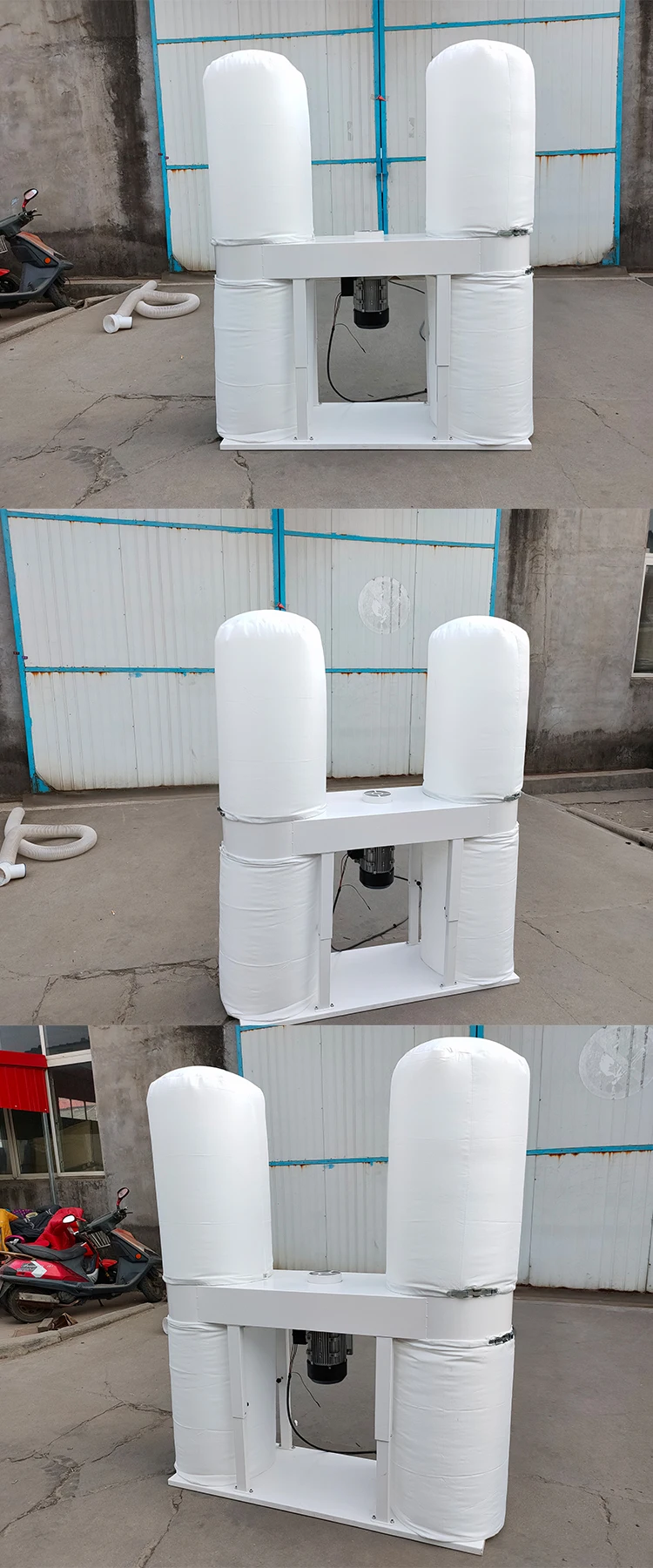

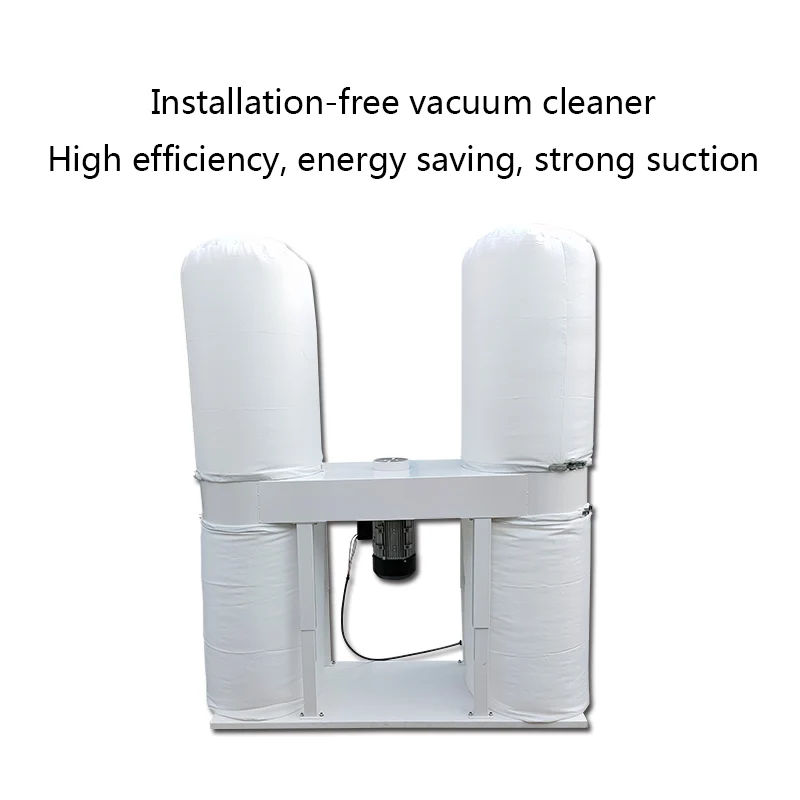
Description
Engineer-Led Line Integration — Every auxiliary unit is matched to your primary woodworking machines for verified airflow, port sizing, and electrical compatibility before it leaves the factory floor.
Technical Specifications
| Parameter | Value |
|---|---|
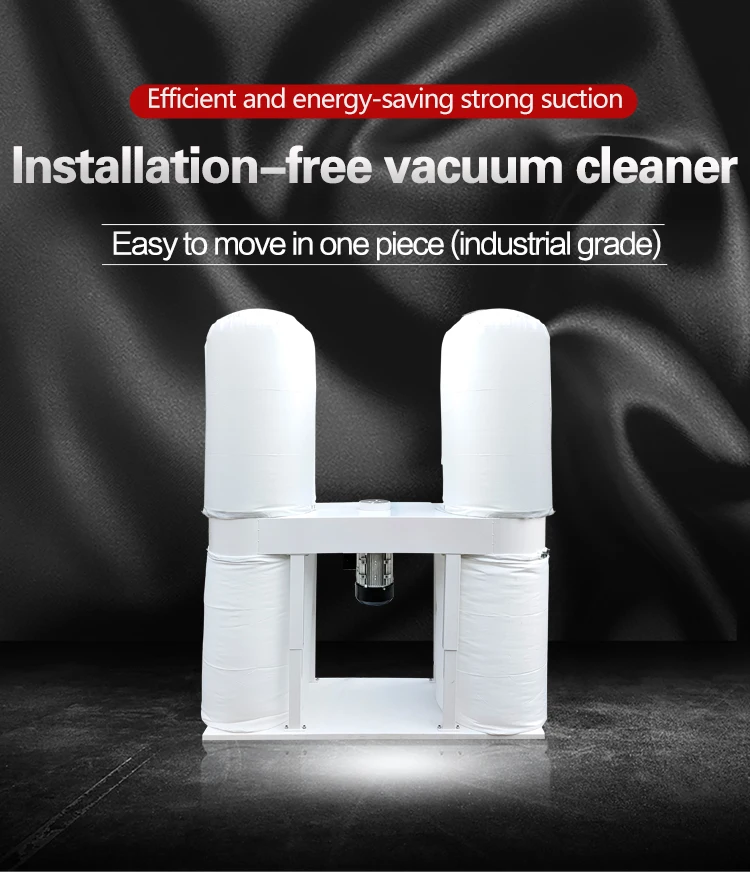
| Product Type | Industrial Dust Collector |
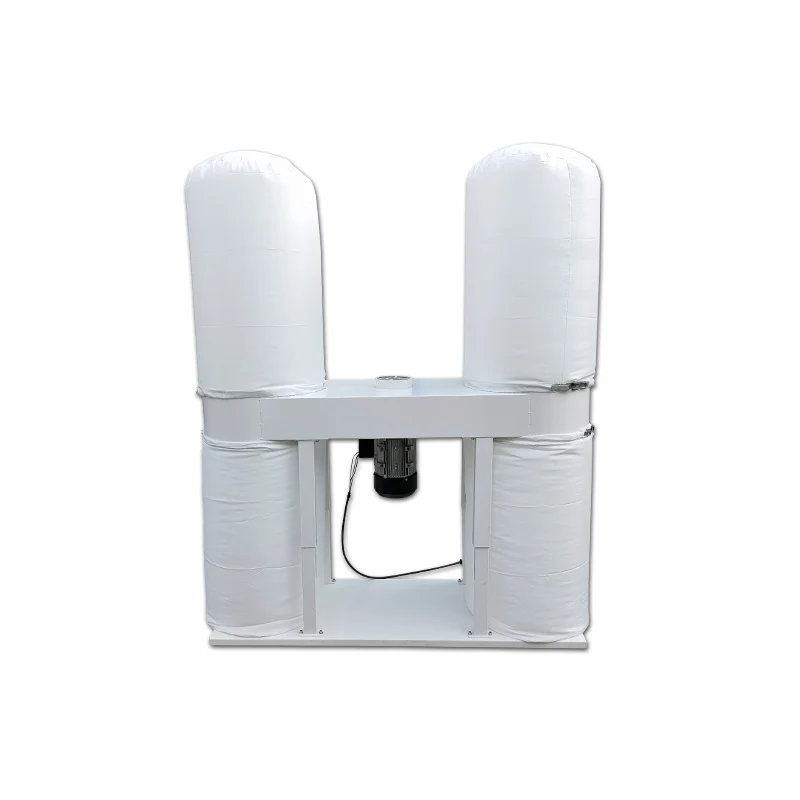
| Filtration Method | Bag filtration with diversion device for large particle separation |
| Dust Separation Principle | Large particles fall into dust hopper via guide pipe; fine dust adsorbed on filter bags |
| Airflow Distribution | Even distribution across multiple filtration chambers |
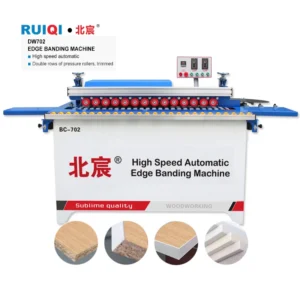
| Compatible Equipment | CNC router, sander, panel saw, edge banding machine, slotting machine |
| Voltage & Frequency | Configurable from 110V to 440V (to be confirmed per site) |
| Certification | CE and ISO 9001 (manufacturer profile) |
| Assembly State | Source value — verify |
| Control System | Source value — verify |
| Rated Power | Source value — verify |
| Airflow Capacity | Source value — verify |
| Filtration Area | Source value — verify |
| Dust Hopper Capacity | Source value — verify |
| Noise Level | Source value — verify |
| Dust Extraction Port Size | Source value — verify |
Application Suitability
| Application | Material or Output |
|---|---|
| CNC router dust extraction | MDF, plywood, particleboard routing swarf and fine dust |
| Panel saw dust management | Sawdust and offcut fines from MDF, particleboard, and plywood sizing cuts |
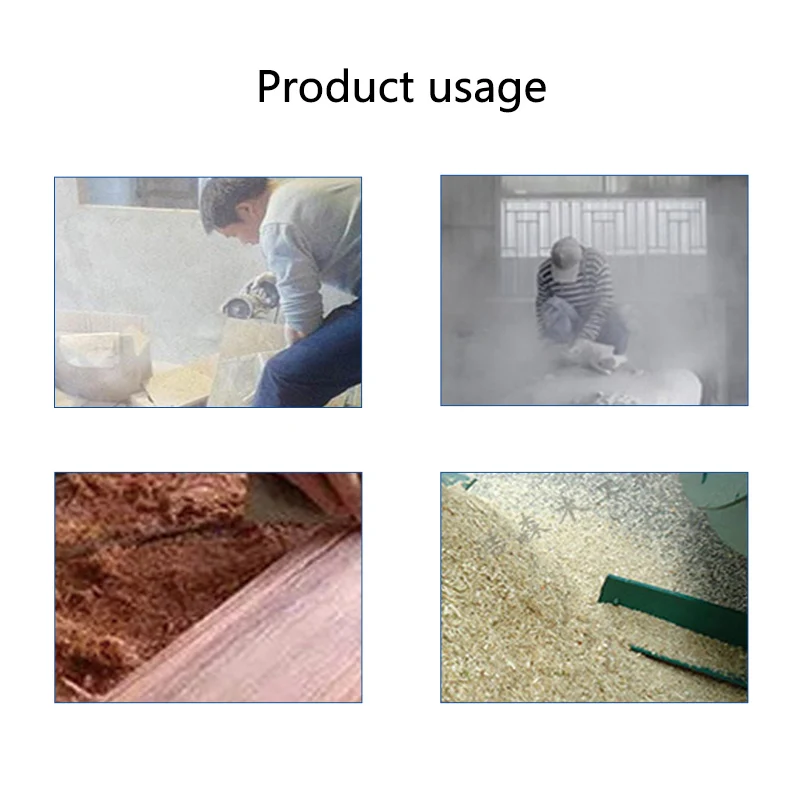
| Sander dust collection | Fine airborne particulate from surface sanding of solid wood and composite panels |
| Edge banding station extraction | PVC and wood veneer trimmings plus adhesive residue particles |
| Slotting machine dust control | Groove-cutting fines from MDF and plywood shelf pin and hardware slots |
What Happens When Dust Extraction Is an Afterthought on the Line
A dust collector for woodworking machines manufacturer must treat extraction as part of the production line, not a bolt-on you figure out later.
I spent a season commissioning a panel processing plant near Jeddah. The line ran well until the sanding station — boards came off the sander coated in a fine film because the collector port on the sander did not match the ductwork diameter the contractor installed. Static pressure dropped, suction collapsed at the furthest machine, and operators started blowing dust off panels with compressed air. The whole finishing section had to rework. That project reinforced something I already knew: dust extraction port sizing, duct runs, and fan static pressure have to be confirmed against every machine on the line before anything ships [NEED_CITE: ductwork static pressure calculations for multi-station woodworking lines].
Line-Matched Port Sizing and Airflow Balancing
A dust collector for woodworking machines manufacturer that understands line integration will verify the extraction port diameter on each connected machine — CNC routers typically require larger ports than edge banders, and sanders generate finer particulate that demands different duct velocities. When these port sizes are mapped before shipment, the ductwork layout avoids the common failure where the furthest station starves for airflow.
Diversion Separation Before the Filter Bags
The diversion device routes large chips and heavy particles directly into the dust hopper through a guide pipe before they reach the filtration media. This pre-separation reduces the abrasive load on the filter bags, which matters in panel processing plants running MDF and particleboard where the volume of coarse routing swarf can quickly overwhelm a bag-only system. Extending bag service life keeps maintenance intervals predictable across the production schedule [NEED_CITE: filter bag wear rates under mixed coarse and fine woodworking dust loads].
Reading the Spec Sheet Against Your Actual Machines
Airflow capacity, filtration area, and port dimensions are the three numbers that determine whether this dust collector will actually keep pace with your line. If you run a CNC router and a panel saw simultaneously, the combined extraction demand must fall within the unit’s rated airflow range — otherwise suction degrades at both stations. Voltage confirmation is equally practical: the unit supports configuration from 110V to 440V, so specifying your local supply frequency and phase before production prevents the collector from arriving with an incompatible motor. Even distribution across multiple filtration chambers means the suction pull stays consistent as bags in one chamber load up, which protects extraction performance during long shifts. The dust hopper capacity determines how often an operator needs to empty the unit — undersized hoppers on high-volume MDF lines mean interruptions every couple of hours.
When Extraction Is Undersized for the Line Volume
A collector specified for a two-machine workshop gets pushed into a six-station line. Suction at the edge bander drops below the threshold needed to capture PVC trimming dust, which settles on freshly glued panels and contaminates the bond line. Downstream, the hinge boring machine pulls in airborne fines that accelerate bearing wear. The result is not a single dramatic failure — it is a slow accumulation of quality defects and maintenance calls that nobody traces back to undersized extraction [NEED_CITE: airborne dust contamination effects on woodworking machine bearings and guide rails].
Why Source the Collector From the Same Factory Building Your Line
In-house manufacturing across the primary machine range means the dust collector is tested alongside the edge bander, panel saw, and CNC router it will serve — port heights, duct routing, and electrical load are checked as a system. Voltage and multilingual control panel customization are handled under the same production order, so there is no mismatch between a 380V collector and a 220V panel saw. The four-stage QC process includes a pre-shipment verification that runs the collector under actual dust load conditions. Engineer-led configuration means the proposal accounts for your total machine count and substrate mix, not just a standalone airflow number. Factory visits allow you to see the matched line running before you commit.
Documentation & Verification
- CE declaration of conformity covering the dust collector unit and motor assembly
- Machine specification sheet listing filtration area, airflow capacity, and extraction port dimensions
- Electrical schematic confirming voltage, frequency, and phase for your local supply
- Factory test record showing airflow performance under simulated woodworking dust load
- Operation and maintenance manual in the agreed language covering bag replacement and hopper cleaning
- Spare parts list identifying filter bag specifications and consumable components
Installation, Commissioning & Support
- Foundation pad leveled to support the dust hopper weight when fully loaded with wood particulate
- Dedicated electrical circuit matching the confirmed voltage and frequency rating of the collector motor
- Ductwork connections verified against the extraction port size on each connected woodworking machine
- Initial airflow balancing performed across all filtration chambers to confirm even suction distribution
- Filter bag replacement intervals scheduled based on your substrate mix and daily operating hours
- Spare filter bags and hopper gaskets identified and stocked from the included spare parts list
What to Include in Your Inquiry
Provide the full list of woodworking machines this collector will serve, including make, model, and extraction port diameter for each. Specify your local voltage, phase, and frequency so the motor and control panel are configured correctly before production. If you are integrating this unit into an existing line, share the current ductwork layout so port sizing and static pressure can be validated against the actual installation.
Frequently Asked Questions
Q: How is dust collector airflow matched to the number and type of woodworking machines on the line?
A: The configuration starts with the extraction port size and rated airflow demand of each machine — a CNC router cutting MDF pulls more volume than a hinge boring machine. Total demand across all simultaneously active stations is summed, and the collector is selected so its rated airflow covers that combined load with margin for duct friction losses.
Q: What voltage and frequency options are available, and how is local compatibility confirmed before shipment?
A: The unit supports configuration from 110V to 440V across standard industrial frequencies. Your local supply specifications are confirmed during the quotation stage and documented in the electrical schematic. The pre-shipment test runs the motor at the specified voltage to verify performance before dispatch [NEED_CITE: industrial voltage and frequency standards across Middle Eastern and Southeast Asian markets].
Q: How often do filter bags need replacement, and what spare parts are included with the initial order?
A: Bag replacement intervals depend on your substrate mix and daily operating hours — MDF routing generates heavier dust loads than solid wood edge trimming. The operation manual specifies inspection intervals, and the initial spare parts list identifies the correct bag specification so replacements can be sourced without downtime.
Q: Can the dust collector be added later to an existing Ruiqi machine, or must it be ordered with the line?
A: It can be added to an existing installation. The key requirement is confirming the extraction port size on your current machines and the available ductwork layout so the collector’s airflow and static pressure are matched correctly. A site survey or duct drawing review typically resolves this before ordering.
Q: What documentation is provided for customs clearance and local environmental compliance?
A: The shipment includes a CE declaration of conformity, packing photographs, and full customs documentation support. The machine specification sheet and factory test record provide the performance data that environmental authorities in many jurisdictions require when approving industrial dust extraction installations.