Description
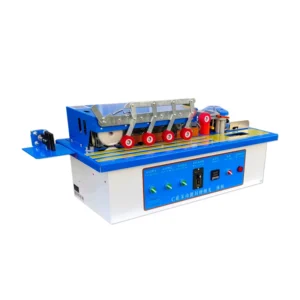
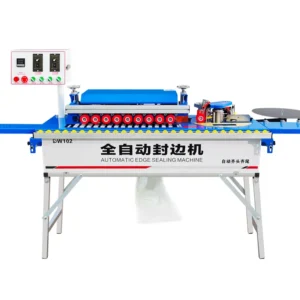
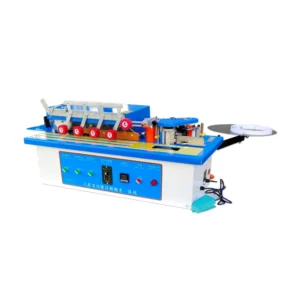
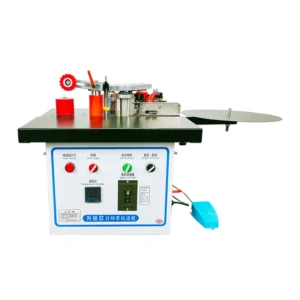
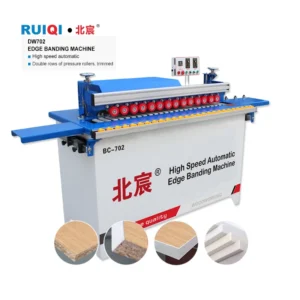
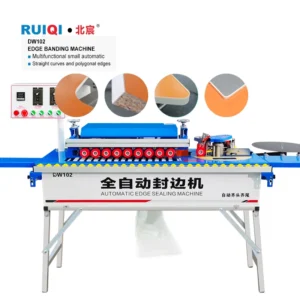
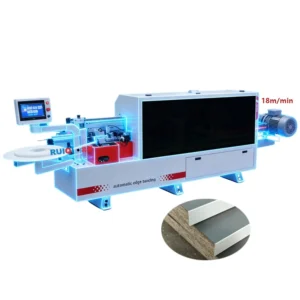
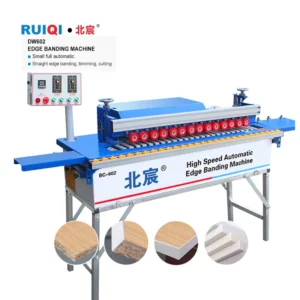
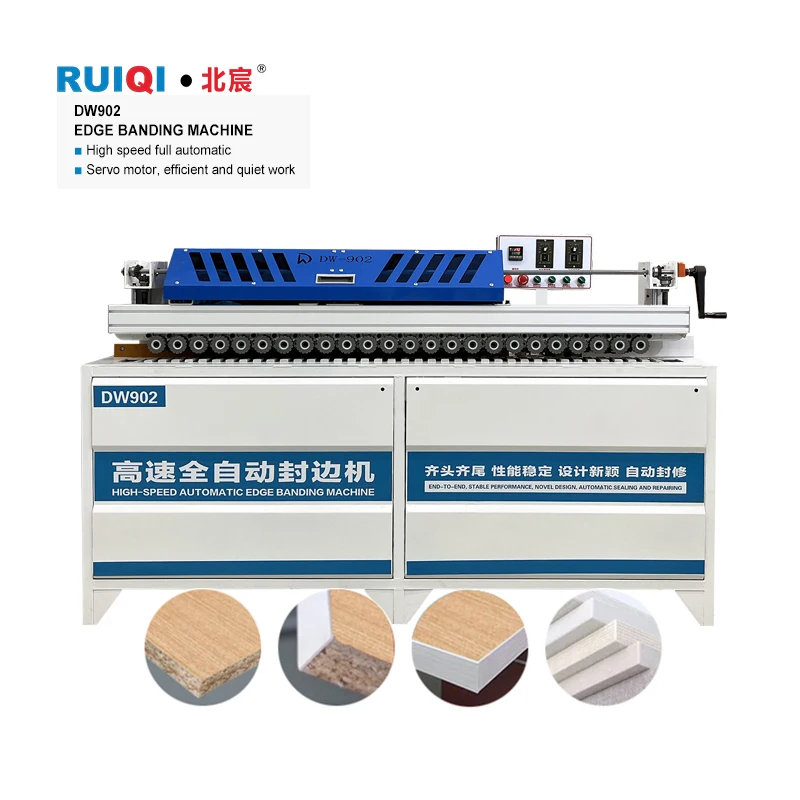
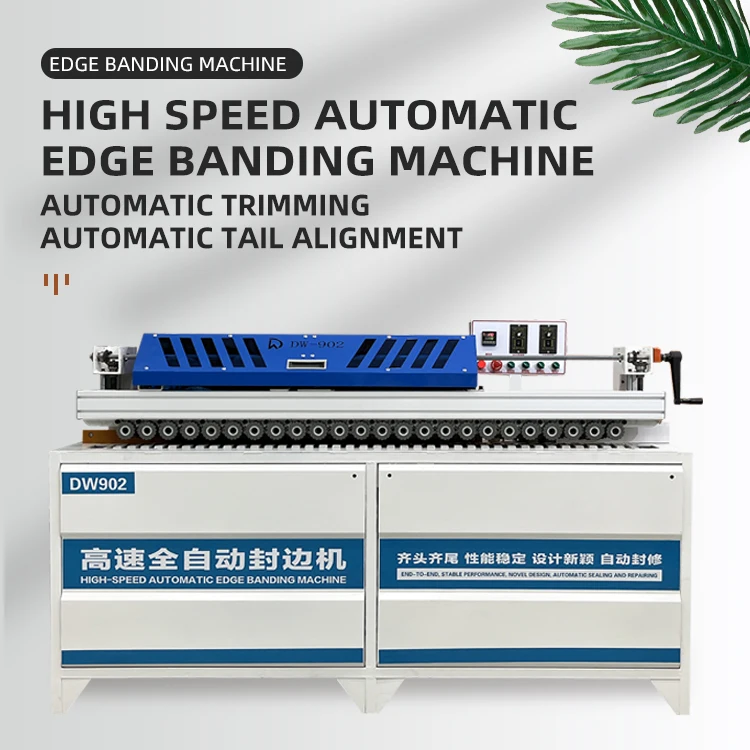
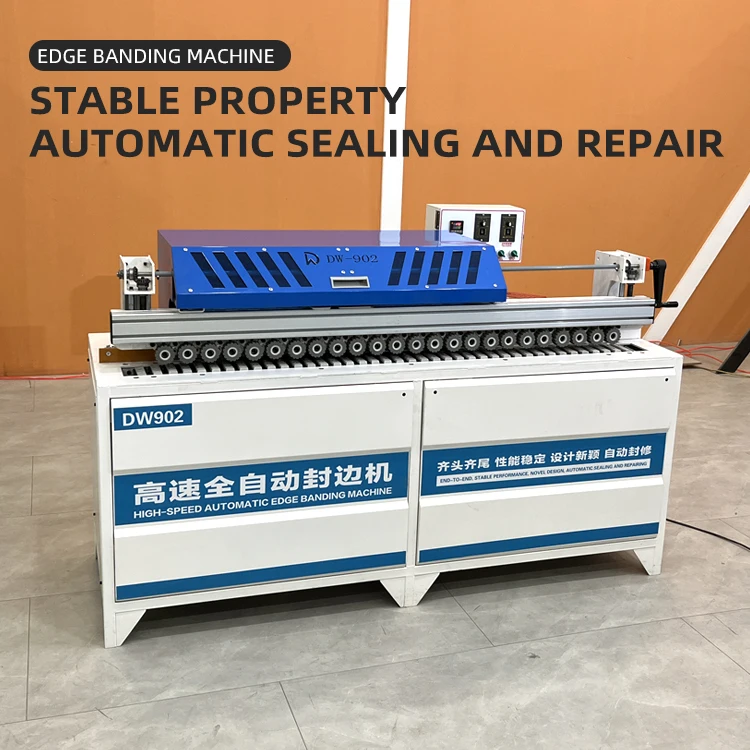
Comprehensive Product Family — The DW902 anchors a complete edge banding machine lineup spanning entry-level to full-function configurations, letting workshops expand capacity without switching suppliers.
Technical Specifications
| Parameter | Value |
|---|---|
| Model | DW902 |
| Product Type | Automatic Edge Banding Machine |
| Total Power | 4000W |
| Voltage | 220V / 380V / customization available |
| Edge Banding Height | 5 cm |
| Edge Banding Thickness Range | 0.3–3 mm |
| Trimming Motor | 800W × 2, 24,000 r/min |
| Polishing Motor | 380W × 2 |
| Vacuum Motor | 550W |
| Edge Feed Power | 140W |
| Transmission Power | 140W |
| Glue Pot Capacity | 4000 ml |
| Air Source Pressure | 0.5–0.8 MPa |
| Minimum Sheet Length | 25 cm |
| Minimum Sheet Width | 10 cm |
| Overall Dimensions | 175 × 87 × 112 cm |
| Net Weight | 240 kg |
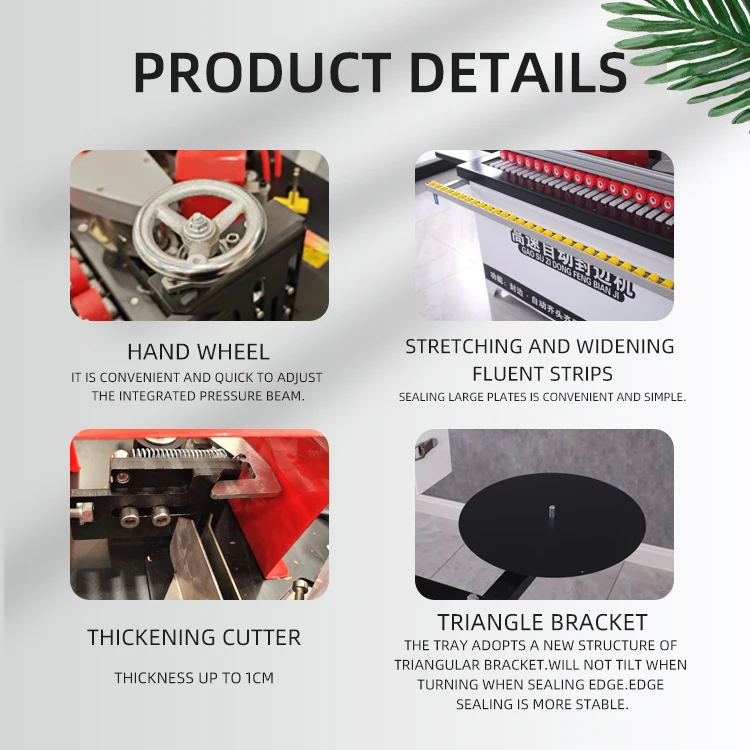
| Key Features | Oblique and straight dual-purpose banding, double hot air design, feeding auxiliary slide plate, 4-group oblique pressure wheels, double row pressing wheels, chamfering, trimming, polishing, scraping |
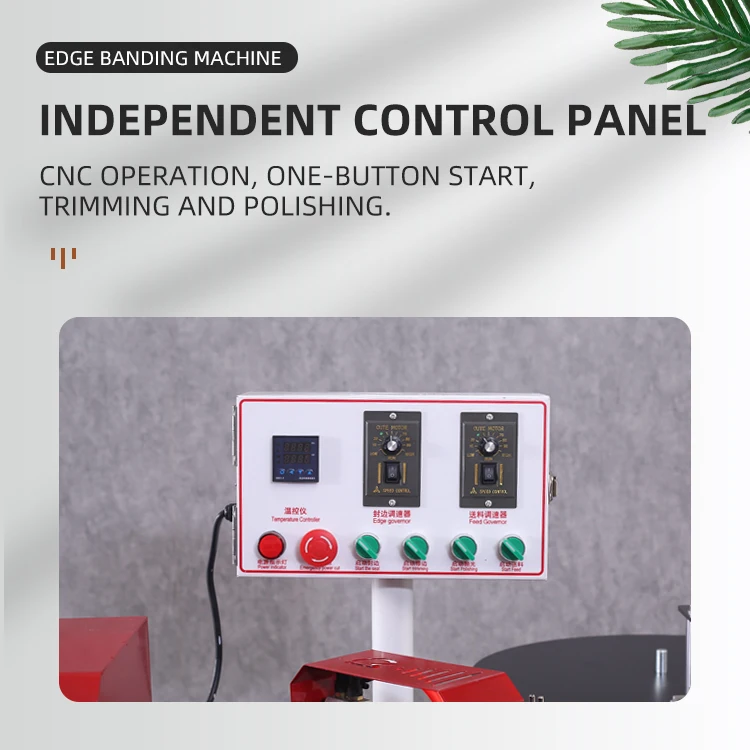
| Control Panel | Chinese / English standard; Spanish and other languages on request |
| Plug Options | EU / USA / AU / UK |
Application Suitability
| Application | Material or Output |
|---|---|
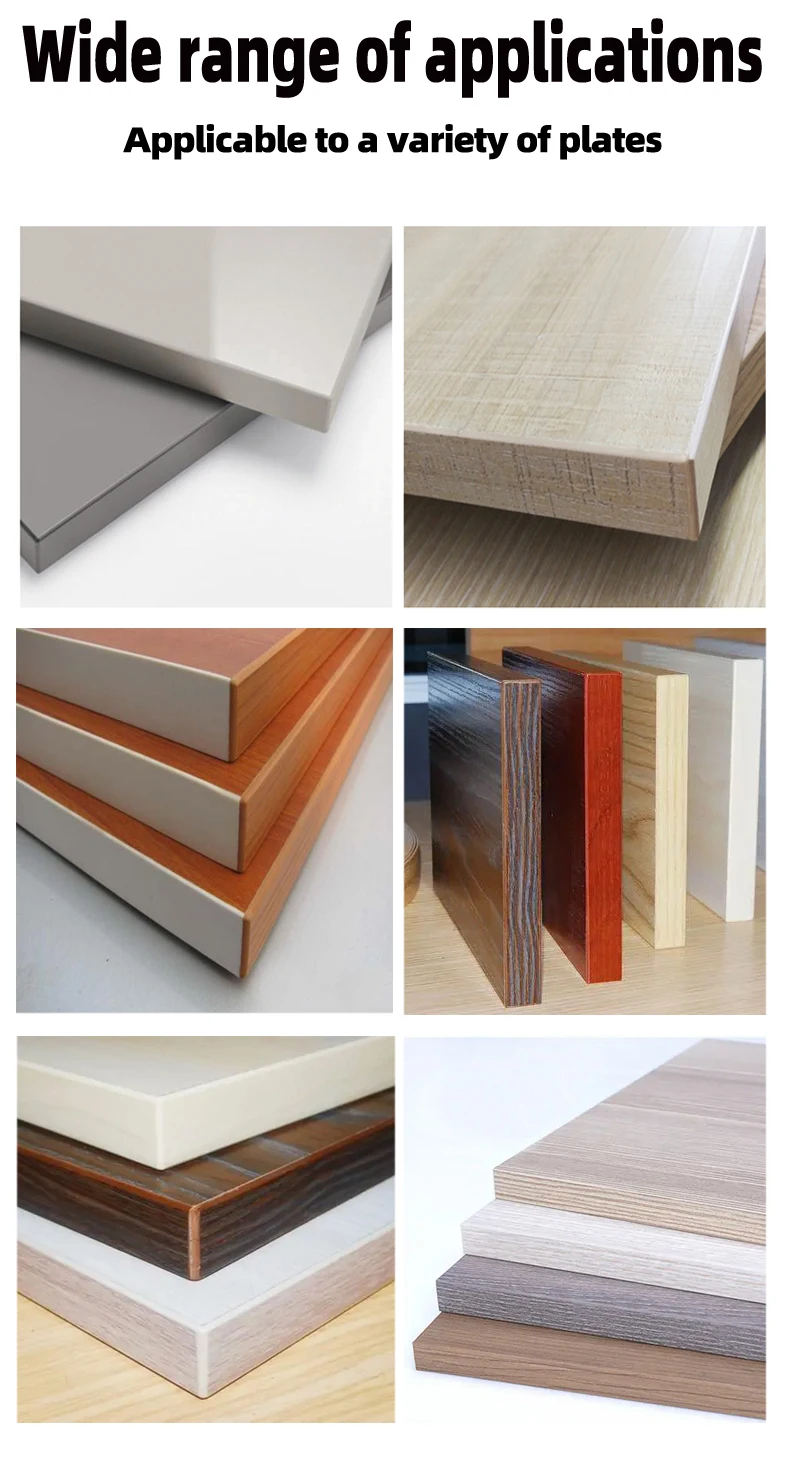
| Custom cabinet door production | MDF and particleboard with PVC or melamine edge banding |
| Furniture panel edge finishing | Plywood and ecological board up to 5 cm thickness |
| Home decoration millwork | Solid wood board with veneer banding |
| Small-batch bespoke joinery | Mixed substrates requiring oblique and straight banding in one setup |
| Mid-volume workshop scaling | 90-degree straight edge work on furniture and cabinet components |
Why Voltage Confirmation Matters Before You Compare Edge Banding Machines
Every automatic edge banding machine for sale must match your local supply before it leaves the factory floor.
I have watched workshops uncrate a machine only to discover the motor was wound for a different frequency. The control panel lights up, but the feed motor runs at the wrong speed, and the glue pot never reaches stable temperature. That kind of mismatch is not a warranty claim — it is a purchase process failure [NEED_CITE: voltage and frequency standards by export market]. When you evaluate an edge banding machine manufacturer, the first document you should receive is an electrical schematic confirming voltage, phase, and frequency for your facility. The DW902 ships with voltage configurable from 220V to 380V, and the plug type is specified before production starts.
Mapping the Product Range to Your Workshop Stage
The DW902 sits within a full edge banding machine family that covers entry-level units for joinery startups through to pre-milling models built for continuous production runs. This means a cabinet shop can begin with a compact configuration and later add upstream or downstream stations from the same supplier, keeping feed heights, control languages, and electrical standards consistent across the line. Choosing the right tier now prevents the situation where an entry-level machine is pushed into volumes it was never designed to sustain.
How Dual Hot Air and Pressure Wheel Design Address Substrate Variability
Edge banding quality often breaks down at the glue line — visible seams on particleboard, poor adhesion on MDF, or lifted veneer on plywood edges. The DW902 addresses this with a double hot air system that maintains consistent glue temperature across the entire banding path, paired with four groups of oblique pressure wheels and a double row pressing arrangement. This combination applies even pressure regardless of whether you are running straight 90-degree edges or oblique cuts. The result is a repeatable bond across substrates, reducing the rework that slows a furniture line [NEED_CITE: edge adhesion variability across MDF and particleboard substrates].
Reading the Specs That Actually Affect Edge Quality
The trimming station uses two 800W motors running at 24,000 r/min, which determines how cleanly the surplus banding is removed from the panel edge. Lower spindle speeds tend to leave chatter marks on PVC and melamine, forcing operators into a second manual pass. The 4000 ml glue pot capacity supports longer uninterrupted runs before a refill is needed, which matters when you are batching cabinet doors in sets of fifty or more. Meanwhile, the 0.3–3 mm banding thickness range covers the most common PVC, ABS, and veneer tapes used in furniture production, so you are not limited to a single consumable supplier. The minimum sheet dimensions of 25 cm length and 10 cm width mean small offcuts and narrow drawer sides can be edged without a separate manual station.
What Happens When You Skip the Configuration Step
Buying an edge banding machine without confirming the full setup leads to compounding problems. A control panel in a language the operator cannot read stalls commissioning for weeks. A machine rated for light duty placed into a two-shift panel plant will show premature wear on the feed chain and pressure wheels. And a single machine purchased in isolation may have a feed height that does not align with the panel saw or boring machine already on the floor [NEED_CITE: production line feed height compatibility standards]. These are not defects — they are configuration oversights that surface only after installation.
Why Buyers Source This Edge Banding Machine Manufacturer
In-house manufacturing with patented cutting mechanisms gives you tolerance you can verify on your own panels, not just read on a data sheet. The product range from entry-level to full-function means your next machine comes from the same family, so spare parts and training carry over. Voltage, plug, and language customization are confirmed at quotation stage, not treated as afterthoughts. A four-stage quality control process covers incoming material inspection, in-process checks, finished assembly testing, and pre-shipment verification with documented factory test records. Engineer-led configuration ensures the quotation you receive within 24 hours reflects your actual panel sizes, substrate mix, and production volume.
Documentation & Verification
- CE declaration of conformity covering the DW902 automatic edge banding machine
- Electrical schematic confirming your specified voltage and frequency before production
- Factory test record run on your panel thickness and banding material
- Operation and maintenance manual in your agreed language
- Spare parts list with part numbers matching the as-built configuration
- Pre-shipment photographs of the packed DW902 with serial and packing marks
Installation, Commissioning & Support
- Requires a dedicated circuit matching the confirmed voltage and the 4000W total power draw
- Air supply line rated for 0.5–0.8 MPa must be connected before the glue pot test cycle
- Overall footprint of 175 × 87 cm allows placement against a standard workshop wall
- First-run calibration covers feed speed, trimming depth, and pressure wheel alignment
- Operator training addresses the multilingual control panel and glue pot refill procedure
- Wear items include trimming cutters and polishing pads, listed in the spare parts document
Preparing Your Inquiry
To receive an accurate configuration, share the panel materials you run most often, the banding thickness range you need, and your local voltage and frequency. Let us know the control panel language your operators require and whether the DW902 will work alongside existing saws or boring machines on your floor. If you need sample edge banding on your own substrate before committing, state that in your initial message so a test run can be scheduled.
Frequently Asked Questions
Q: Where does the DW902 sit within the full edge banding machine range, and what is the upgrade path?
A: The DW902 is a mid-tier automatic edge banding machine for sale within a product family that spans entry-level benchtop units through to full-function pre-milling models. As your production volume grows, you can move to a higher-tier model from the same manufacturer, keeping spare parts compatibility, control language, and electrical standards consistent across your workshop.
Q: How is local voltage and frequency compatibility confirmed before the machine ships?
A: Your facility voltage, phase, and frequency are captured at the quotation stage. The electrical schematic is prepared to match, and the factory test run is conducted on the configured supply before packing. Plug type — EU, USA, AU, or UK — is confirmed at the same time so the machine is ready to connect on arrival.
Q: What control panel languages are available, and how is the interface confirmed?
A: Chinese and English are standard. Spanish and other languages are available on request. The language selection is confirmed before production, and the control panel is verified during the pre-shipment factory test so operators can navigate menus from day one without translation delays on the shop floor.
Q: Which model tier should I choose for MDF versus plywood versus solid wood?
A: MDF and particleboard typically require consistent glue temperature and steady pressure, which the double hot air system and four-group oblique pressure wheels provide. Plywood edges benefit from the trimming speed of 24,000 r/min for clean removal. For solid wood with veneer banding, the oblique banding capability handles angled edges that straight-only machines cannot process.
Q: What OEM customization is available for distributors stocking multiple models?
A: Distributors can specify custom branding, private label documentation, and market-specific voltage and plug configurations across the range. Each model in the lineup can be ordered with the same language and electrical standard so your regional inventory stays consistent. Factory test records and CE documentation are provided for each unit.