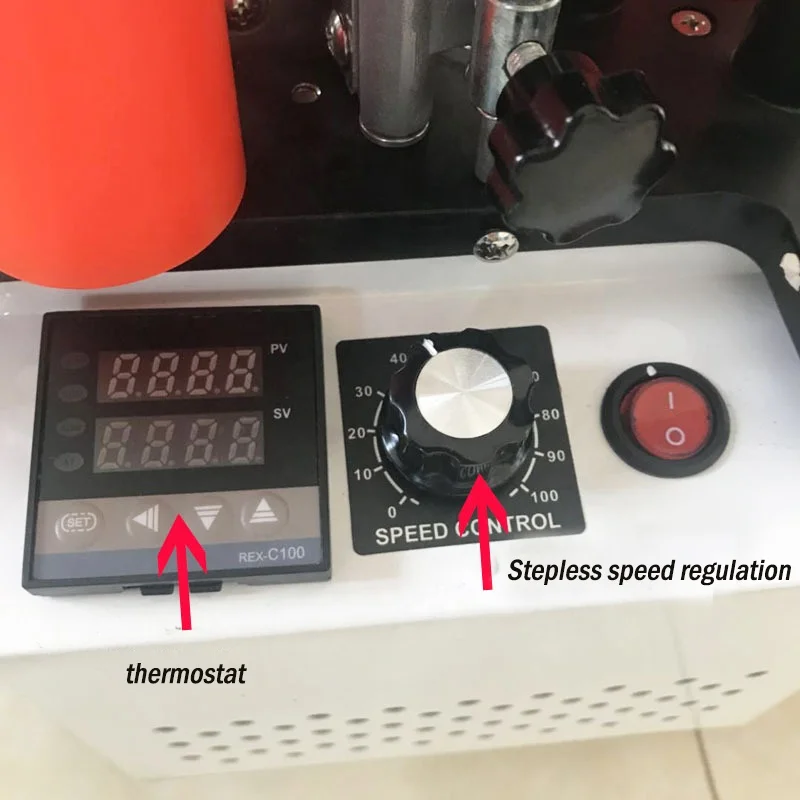
Description
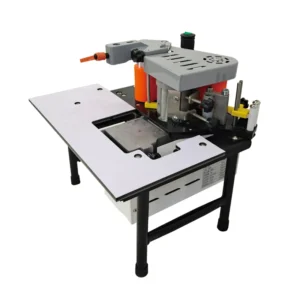
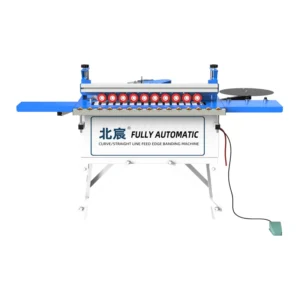
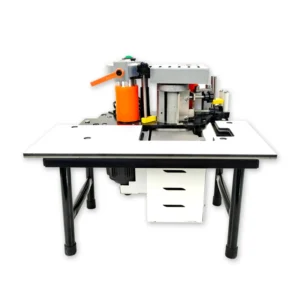
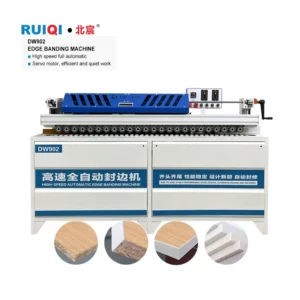
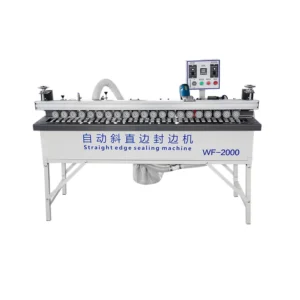
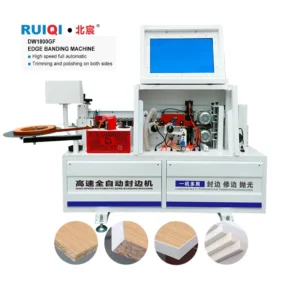
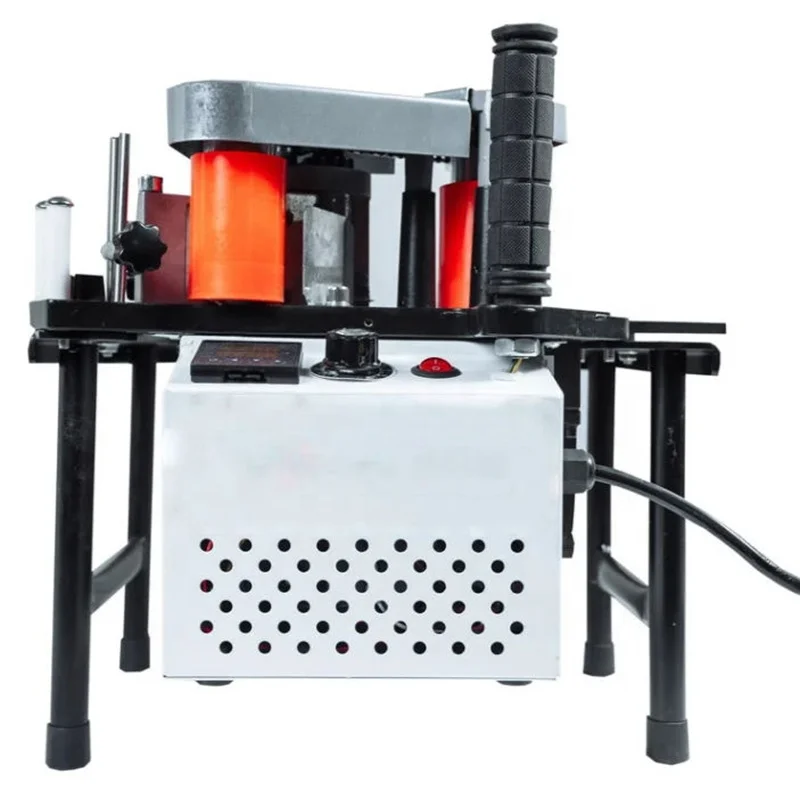
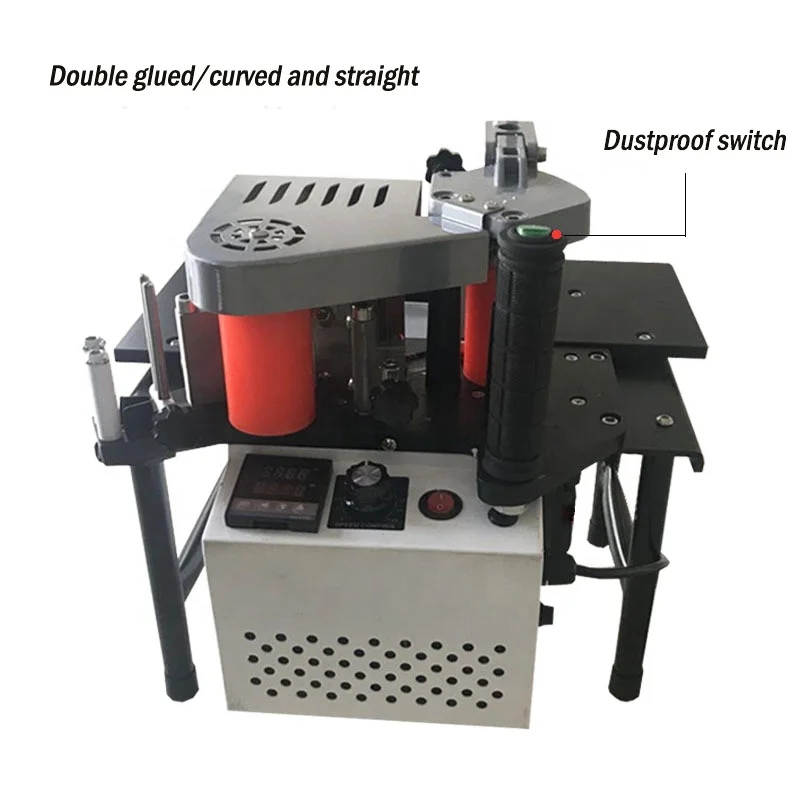
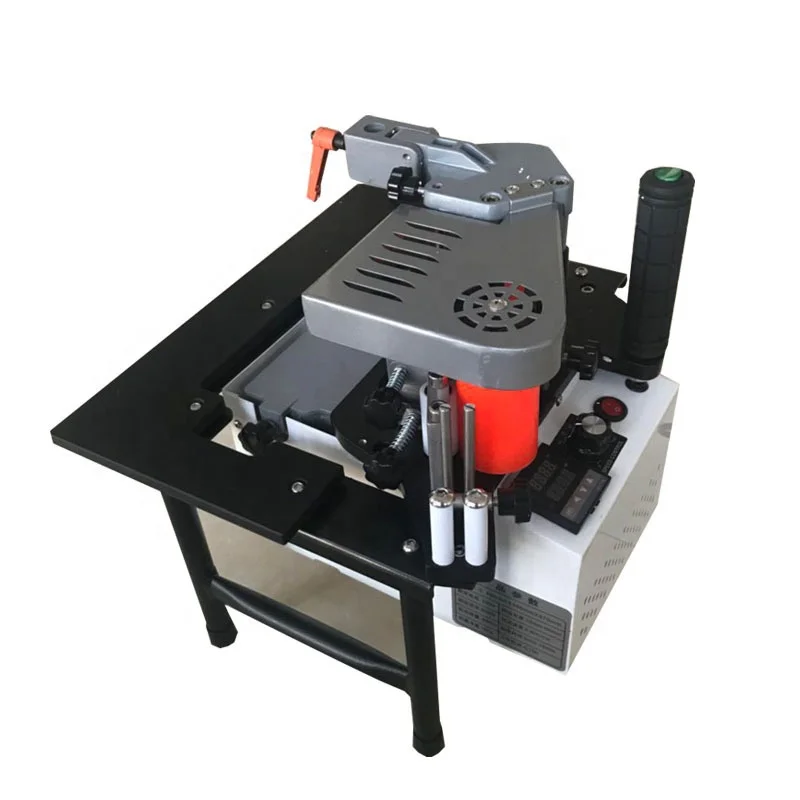
Precision Across the Entire Edge Banding Family — A portable edge bander for curved and rework tasks sits alongside fully automatic models from one manufacturer, letting your workshop scale without switching suppliers.
Technical Specifications
| Parameter | Value |
|---|---|
| Product Type | Portable Edge Banding Machine |
| Shape of Edge-banding Plates | Curved, Straight, and Special-shaped Sheet |
| Edge Thickness | 0.3–3 mm |
| Edge Sealing Speed | 0–6 m/min |
| Edge Sealing Height | 7–60 mm |
| Gluing Method | Double-sided gluing |
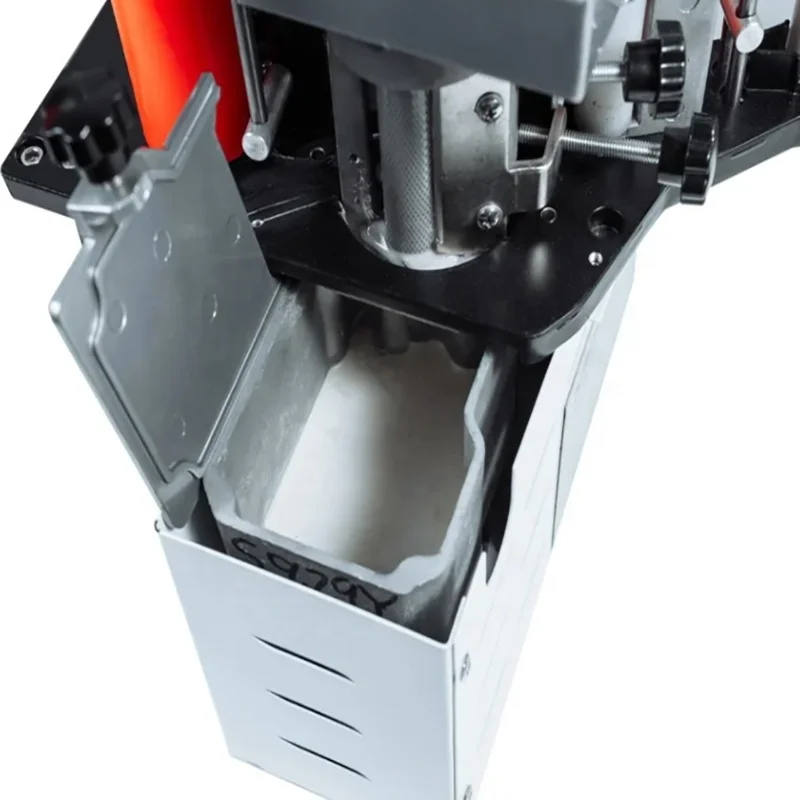
| Glue Pot Volume | 1000 ml |
| Machine Weight | 14 kg |
| Voltage & Frequency | Basis not stated in source — confirm local voltage and frequency before order |
| Rated Power (kW) | Basis not stated in source — confirm motor power |
| Overall Dimensions (L×W×H) | Basis not stated in source — verify against manufacturer catalog |
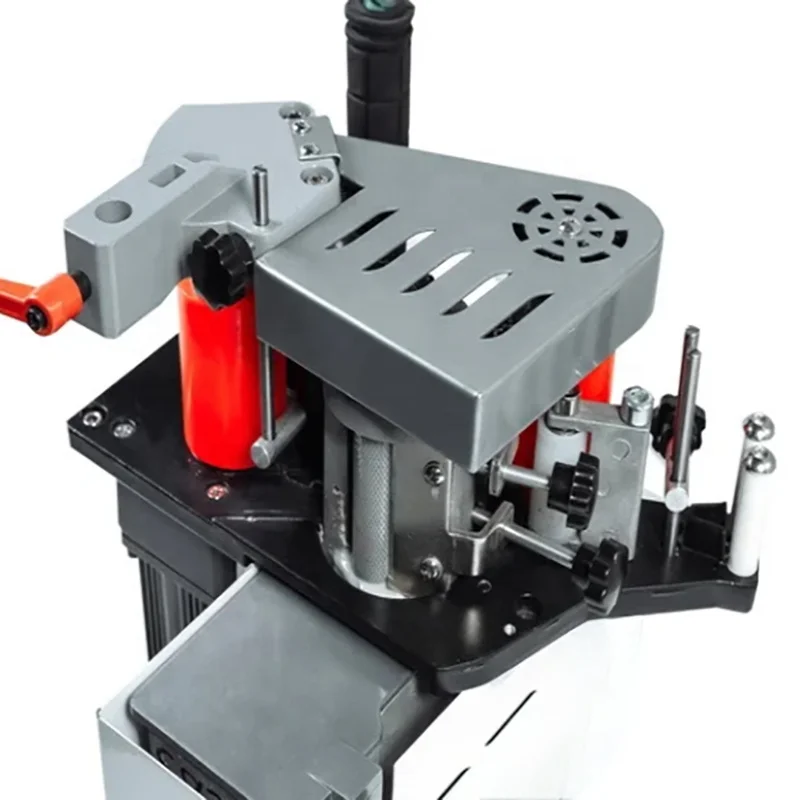
| Assembly State | Portable, hand-held operation |
| Plug Options | EU / AU / UK / USA / CN plug available |
| Logo Customization | Available |
| Language Options | Basis not stated in source — confirm manual language |
| Certification | Basis not stated in source — confirm CE or other applicable standard |
Application Suitability
| Application | Material or Output |
|---|---|
| Small cabinet and custom furniture workshops | MDF, particleboard, and plywood panel edges |
| On-site or bench-top edge banding | Curved, straight, and special-shaped profiles |
| Low-volume production and rework sealing | PVC and veneer edge banding strips 0.3–3 mm |
| Supplemental banding alongside automatic lines | Rework and touch-up on pre-cut panel components |
Why the Voltage Question Should Come Before the Price on a Portable Edge Banding Machine
Confirming local voltage and frequency before the purchase order is the single most effective way to avoid a machine that arrives unusable.
I have seen workshops receive edge banders only to discover the motor was wound for 50 Hz while the local grid runs at 60 Hz. The unit burned out within days, and the factory floor waited weeks for a replacement or transformer [NEED_CITE: voltage and frequency standards by export market]. For a Portable Edge Banding Machine that operators carry between job sites, this mismatch is especially costly because there is no fixed installation point where a step-down transformer can sit permanently. Locking the correct electrical configuration into the technical confirmation sheet before production begins removes the risk entirely.
Where the Hand-Held Tier Sits in the Full Range
The catalogue begins with this portable, hand-operated model designed for curved and special-shaped edges that a fixed feed rail cannot reach. Moving up the range, bench-top semi-automatic units handle straight panels at higher feed speeds, and the top tier includes full-function pre-milling automatic edge banders with multi-station trimming. A small joinery shop starting out may only need the portable unit, but knowing that the same manufacturer builds the next tier means an upgrade path exists without requalifying a new supplier.
Choosing Between Portable and Bench-Top for Your Panel Mix
The deciding factor is usually the proportion of curved or on-site work in your order book. If most panels are rectangular cabinet sides, a bench-top model with a guided feed rail will deliver more consistent results at higher throughput. The portable model earns its place when you frequently edge-band radius doors, custom-shaped shelving, or need to perform rework on panels already assembled in a carcass [NEED_CITE: edge banding process selection for curved versus straight panels]. Many workshops end up keeping one portable unit for these tasks while the main volume runs through an automatic machine.
Reading the Specs That Define Duty Cycle
The edge sealing height range of 7–60 mm tells you the maximum panel thickness this unit can wrap, which covers the common 18 mm MDF and particleboard used in cabinet making. Double-sided gluing ensures adhesive contact on both the panel edge and the strip back, which is necessary when bonding PVC or veneer to porous substrates. The 1000 ml glue pot volume suits short runs and rework; for continuous production shifts you would move to an automatic model with a larger glue reservoir. Edge thickness capacity of 0.3–3 mm accommodates thin melamine strips through thicker solid-wood lipping, though at the upper end you should verify that the trimming tools can cleanly dress a 3 mm strip on a curved radius.
The Hidden Cost of Skipping Configuration Details
Ordering a Portable Edge Bander for sale without confirming plug type, control language, or electrical rating creates a cascade of delays at arrival. The operator cannot read the control interface, the plug does not match the workshop socket, and the motor runs hot under the wrong frequency [NEED_CITE: common causes of woodworking machine commissioning failure]. Each of these issues is solvable before shipment but expensive after the crate is opened.
Why Buyers Source This Tier from One Manufacturer
In-house manufacturing with patented cutting mechanisms means the same engineering team designs the portable unit and the automatic lines above it. The four-stage QC process — incoming material, in-process, finished product, and pre-shipment verification — applies across every model in the range. Voltage, language, and specification customization are offered as standard, not as special requests. An engineer reviews your panel mix and recommends whether the portable tier or the next model up is the right starting point. A formal quotation with full specification and voltage confirmation arrives within 24 hours of the inquiry.
Documentation & Verification
- Factory test record on your specific panel thickness and edge stock before dispatch
- Electrical schematic with voltage and frequency locked to your local grid standard
- Operation and maintenance manual supplied in your operator’s language
- CE declaration of conformity documentation available upon confirmation
- Machine specification sheet listing all confirmed parameters and plug type
Installation, Commissioning & Support
- Hand-held unit requires only a stable bench surface, no dedicated foundation
- Single-phase power supply matched to confirmed voltage and plug type
- Arrives fully assembled; first use involves heating the glue pot and running a test strip
- Operator trained on edge feed angle and speed control for curved profiles
- Spare edge banding strips and glue sticks included for initial commissioning runs
- Daily cleaning of the glue pot and pressure roller after each work session
Narrowing the Right Configuration for Your Workshop
To receive a recommendation that matches your production stage, share the panel materials you cut most often, the proportion of curved versus straight edges, and your local voltage and frequency. Let us know the language your operators prefer on the manual and whether you plan to add an automatic edge bander later so the portable unit can be positioned as a complementary tool rather than a bottleneck.
Frequently Asked Questions
Q: When should I move from a portable edge bander to a bench-top or automatic model?
A: The portable tier suits low-volume curved edges and on-site rework. If your daily output involves hundreds of straight cabinet panels, a bench-top or automatic model with a powered feed rail will deliver more consistent edge quality at higher speed. We recommend the portable unit as a companion machine alongside an automatic line for the edges the larger machine cannot reach.
Q: How is the correct voltage and frequency confirmed before production?
A: During the inquiry stage we collect your local grid specification — voltage, phase, and Hz — and lock it into the technical confirmation sheet. The motor is wound or selected to match, the correct plug is fitted, and the machine is test-run at that configuration before dispatch.
Q: What panel materials and edge thicknesses does this portable model handle?
A: The unit is designed for MDF, particleboard, and plywood with PVC or veneer edge strips between 0.3 and 3 mm thick and panel heights from 7 to 60 mm. For thicker solid-wood lipping or high-pressure laminate strips, we would recommend stepping up to a heavier bench-top model.
Q: Can I start with one portable unit and add a full line later?
A: Yes. Because the same manufacturer builds every tier from portable to full-function automatic, your supply relationship, documentation format, and spare parts channel stay consistent. We can plan a phased investment that adds bench-top and automatic machines as your volume grows.
Q: What documentation ships with the machine, and can I visit the factory first?
A: You receive the specification sheet, electrical schematic, factory test record, CE documentation, and an operation manual in your chosen language. Factory visits are welcome; you can watch a test run on your own panel samples before placing the order.