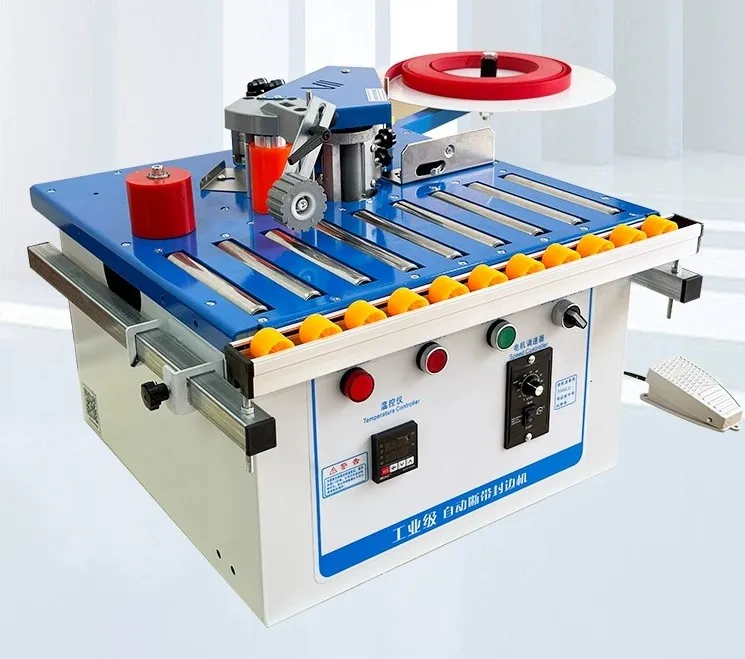
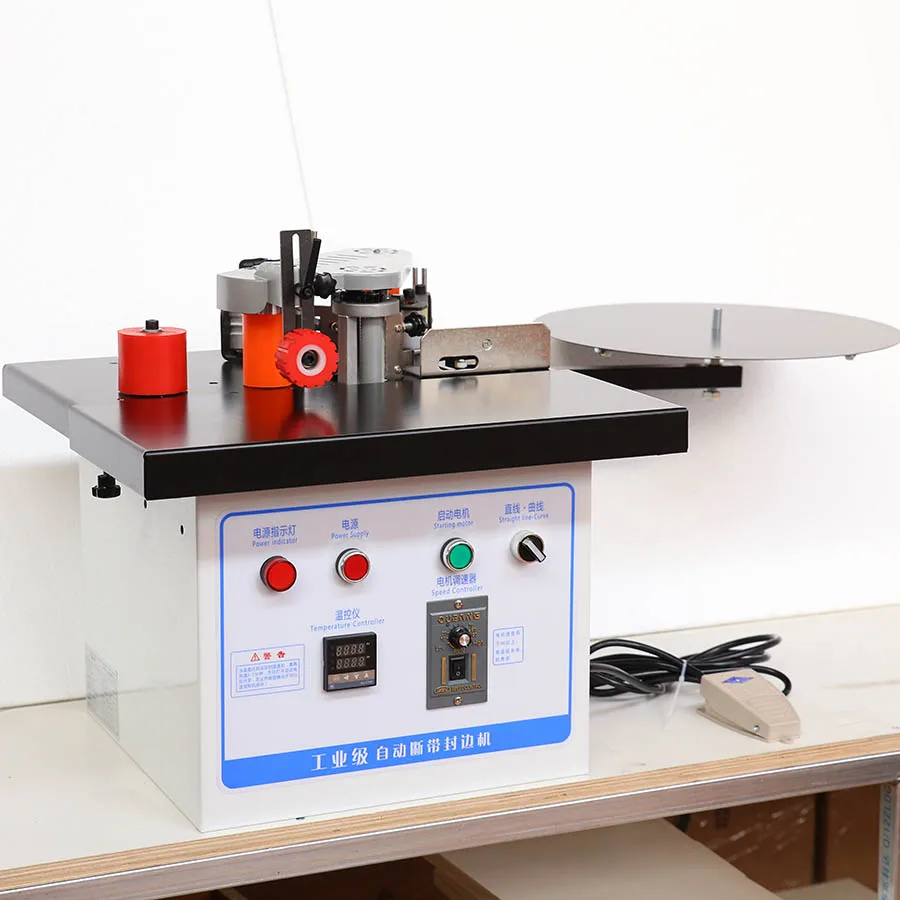
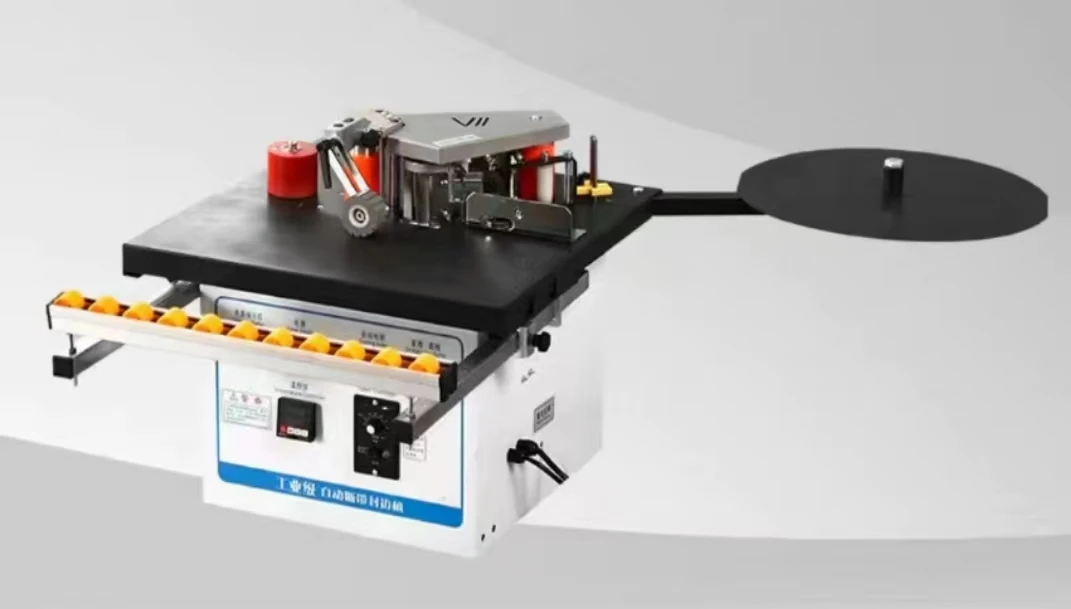
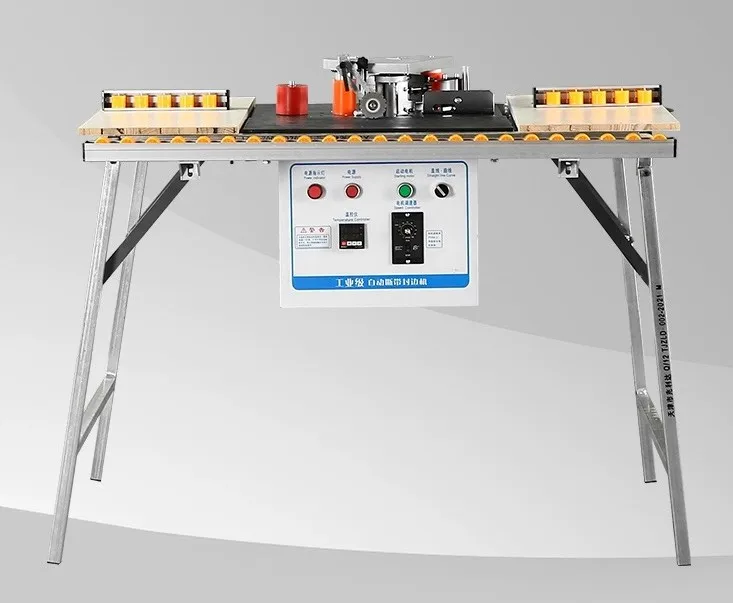
Description
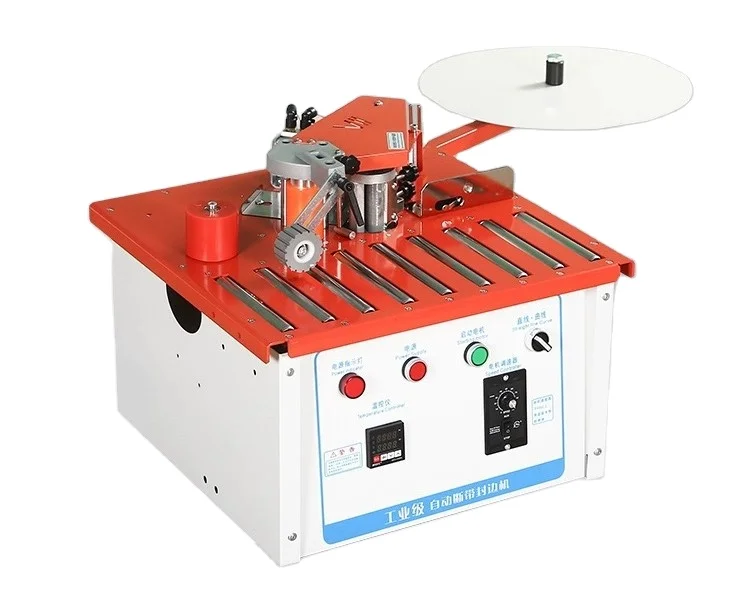
Precision Cutting Mechanisms — verified ±0.02mm tolerance on this portable edge bander with in-house manufactured components across the full model lineup.
Technical Specifications
| Parameter | Value |
|---|---|
| Model | ZDSF50 |
| Product Type | Mini Edge Banding Machine |
| Rated Voltage | 220V |
| Rated Power | 1.2kW |
| Rated Air Pressure | 0.4-0.6MPa |
| Edge Banding Feed Speed | 0-6m/min |
| Strip Thickness Range | 0.5-1.5mm |
| Sheet Thickness Range | 10-60mm |
| Glue Pot Capacity | 1000ml |
| Glue Heating Time | 5-10min |
| Glue Application Method | Double-sided, glue-coated rollers |
| Edge Strip Breaking | Pneumatic foot switch (curved); travel switch (straight) |
| Pressure Roller | Adjustable, rubber material |
| Edge Strip Transport | Adjustable bayonet per strip height |
| Heating Configuration | 4 heating tubes |
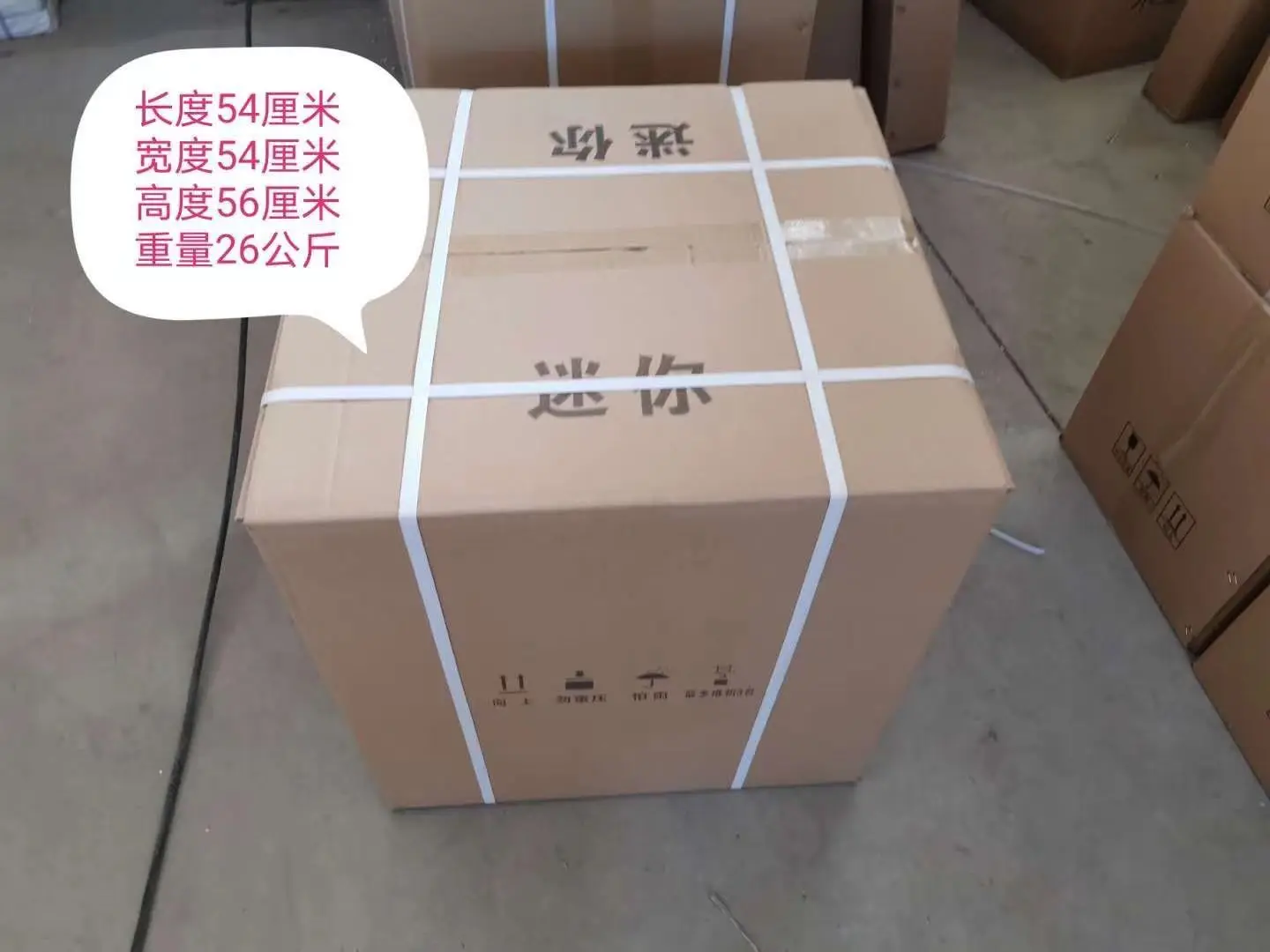
| Overall Dimensions (L×W×H) | 54×54×56cm |
| Net Weight | 26kg |
Application Suitability
| Application | Material or Output |
|---|---|
| Custom furniture curved panels | MDF and plywood with PVC edge strip 0.5-1.5mm |
| Cabinet door shaped edges | Particleboard with veneer banding |
| Small-batch joinery production | Solid wood panels within 10-60mm thickness |
| Workshop prototype and sample runs | Straight, curved and irregular profile boards |
Why Voltage Confirmation Matters Before You Compare Mini Edge Banding Machine Options
Matching the machine to your local power supply prevents weeks of downtime on arrival.
I worked with a South American cabinet shop that received a portable edge bander wired for 380V when their facility ran 110V/60Hz. The machine sat idle while they sourced and installed a step-up transformer, and their entire production schedule stalled. Voltage incompatibility is one of the most common reasons small woodworking equipment fails to commission on site, and it is entirely avoidable with a single confirmation step before production begins [NEED_CITE: voltage and frequency standards by export market]. When evaluating any Mini Edge Banding Machine manufacturer, insist on a written voltage and frequency document matched to your facility before the order enters production.
Mapping the ZDSF50 Within the Full Edge Bander Range
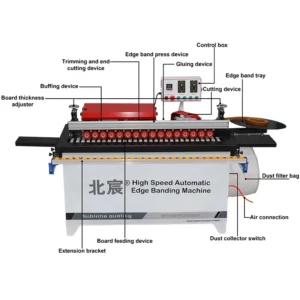
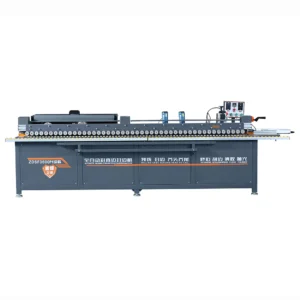
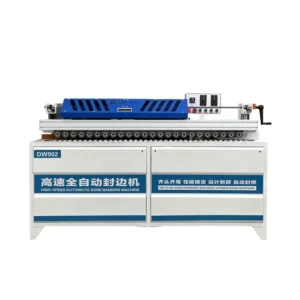
The ZDSF50 occupies the entry position in a product family that extends from portable desktop units through full-function automatic edge banders with pre-milling. This positioning matters because a workshop can start with double-sided gluing on straight, curved, and shaped edges, then move upward to higher-throughput models within the same supplier ecosystem. Each tier shares common consumable specifications and maintenance logic, reducing the learning curve as production volume grows. A Mini Edge Banding Machine manufacturer offering a complete product family eliminates the risk of buying a standalone unit that has no upgrade path.
Double-Sided Gluing and Pressure Consistency on Curved Profiles
Glue-coated rollers apply adhesive to both the panel edge and the strip simultaneously, which is particularly important when banding curved or shaped profiles where contact area varies along the contour. The adjustable rubber pressure rollers maintain consistent contact force regardless of board thickness within the 10-60mm range. The pneumatic foot switch gives the operator direct control over strip breaking on curved sections, while the travel switch handles automatic breaking on straight runs [NEED_CITE: edge banding adhesion standards for curved panel profiles]. This dual-mode approach means a single operator can manage both geometries without swapping tooling or fixtures.
What the Specification Sheet Tells You About Real Workshop Output
The 0-6m/min feed speed is a variable range rather than a fixed rate, giving the operator control over pacing when transitioning between straight sections and tight curves. At the lower end of that range, a worker can carefully guide an irregular shaped panel; at the upper end, straight production runs move at a pace suitable for small-batch cabinet work. The 1000ml glue pot capacity supports sustained operation without frequent refills, while the four-tube heating configuration brings the adhesive to working temperature within minutes of startup. The 10-60mm sheet thickness range covers standard MDF, plywood, and particleboard used in furniture and interior fit-out, and the 0.5-1.5mm strip range accommodates both PVC and veneer banding materials commonly stocked by joinery suppliers.
The Hidden Cost of Buying a Standalone Machine Outside a Product Family
When a workshop purchases a compact edge bander from a supplier with no larger models in their range, the upgrade path leads to an entirely different manufacturer with different control logic, different spare parts, and different maintenance procedures. Operators must be retrained, consumables must be re-sourced, and the original machine often becomes redundant rather than complementary. This fragmentation is especially painful when curved and shaped work arrives alongside a production run that demands higher throughput — the small machine cannot keep pace, and the new machine cannot replicate the manual dexterity the smaller unit provided [NEED_CITE: machinery compatibility issues in scaling woodworking operations].
Why Buyers Source This Range from One Manufacturer
Every model in the edge banding lineup is built in-house with proprietary cutting mechanisms, meaning tolerance claims are backed by the same precision-ground components across all tiers. Voltage customization from 110V to 440V and multilingual control panels are standard configuration options, not special requests. A four-stage quality control process — incoming material, in-process, finished product, and pre-shipment verification — runs on every unit regardless of its position in the range. Engineer-led configuration recommendations arrive as formal quotations within 24 hours, so a buyer surveying the full catalogue can compare entry-level and automatic models side by side on verified specifications. Factory visits are welcomed for buyers who want to see assembly and testing firsthand.
Documentation & Verification
- Electrical schematic with 220V rating and local frequency confirmation before dispatch
- Factory test record using your specified panel thickness and edge strip material
- Operation manual in the agreed language covering both curved and straight banding procedures
- Packing photographs showing the ZDSF50 secured for international freight
- CE declaration of conformity and ISO 9001 certificate available with shipment
Installation, Commissioning & Support
- Requires a dedicated 220V circuit rated for the 1.2kW draw with appropriate breaker sizing
- Desktop footprint of 54×54cm fits a standard workbench with clearance for panel feed on both sides
- Pneumatic connection to workshop air supply at 0.4-0.6MPa for strip breaking cylinder
- First-run glue temperature calibration against your specific adhesive type and ambient workshop conditions
- Spare roller and heating tube set included for initial consumable coverage
Preparing Your Inquiry for Accurate Configuration
To receive a specification-matched quotation, provide your typical panel material and thickness range, the edge strip types you run most frequently, and your local voltage and frequency. Let us know whether your production is predominantly straight, curved, or a mix of both, and whether this unit will operate standalone or alongside existing machinery. If you need a sample processing test on your own board stock before committing, include that request at the inquiry stage.
Frequently Asked Questions
Q: How does the ZDSF50 fit into a plan to eventually run a full automatic edge banding line?
A: The ZDSF50 handles low-volume and curved work that a full automatic line is not designed to manage efficiently. When you scale to a higher-throughput automatic model from the same manufacturer, the ZDSF50 remains useful for shaped panels and short runs, so it stays productive rather than being replaced.
Q: Is the 220V rating compatible with both 50Hz and 60Hz power systems?
A: The stated voltage requires confirmation against your local frequency before production. Voltage and frequency are configured per order, and the manufacturer supplies a written electrical confirmation document matched to your facility specification as part of the pre-shipment documentation package.
Q: What panel and strip combinations fall within the working range?
A: Boards between 10mm and 60mm thick can be processed, with PVC or veneer edge strips from 0.5mm to 1.5mm. This covers standard MDF, plywood, particleboard, and solid wood panels used in furniture and interior joinery, provided the strip material is compatible with the adhesive in use.
Q: What support is available for installation and operator familiarization?
A: An operation and maintenance manual in the agreed language ships with every unit. The manufacturer provides remote installation guidance covering pneumatic setup, glue temperature calibration, and pressure roller adjustment for your specific board and strip combination.
Q: Which spare parts ship with the machine and how are consumables sourced afterward?
A: Wear items such as pressure rollers and heating tubes are included in the initial shipment. A spare parts list accompanies the documentation, and consumables can be reordered directly from the manufacturer or sourced locally against the provided specifications.