Description
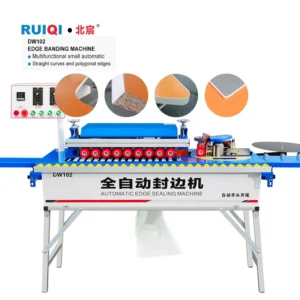
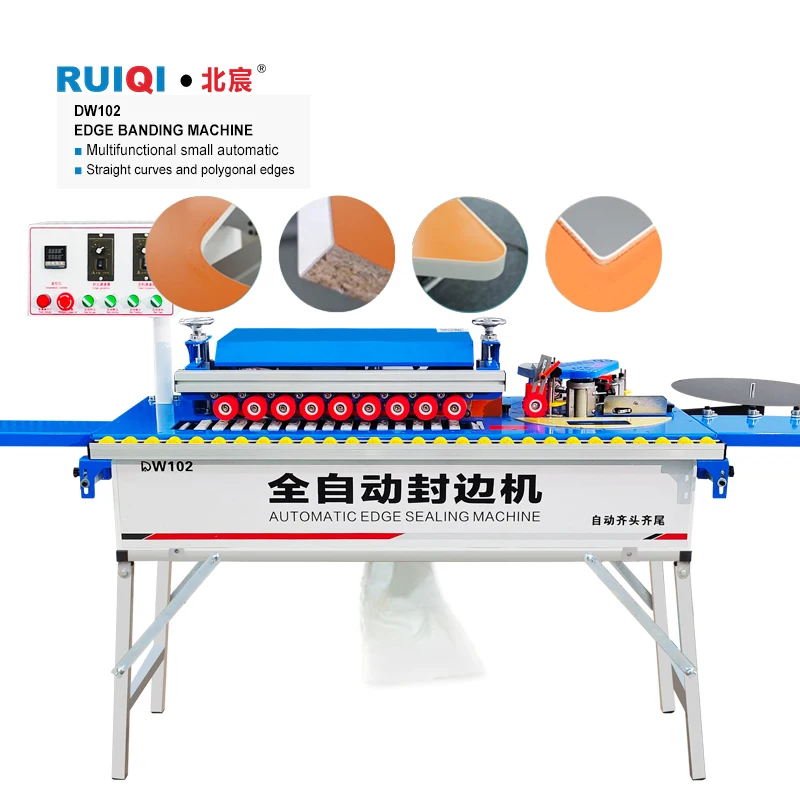
Voltage-customizable edge banding — the DW102 automatic edge banding machine ships with confirmed 220V/380V or custom electrical configurations so operators can commission immediately upon arrival without rewiring.
Technical Specifications
| Parameter | Value |
|---|---|
| Model | DW102 |
| Product Type | Automatic Edge Banding Machine |
| Total Power | 3800W |
| Voltage | 220V / 380V / customization (frequency to be confirmed) |
| Edge Banding Height | 0–50 mm |
| Edge Banding Thickness | 0.3–3 mm |
| Minimum Sheet Length | 25 cm |
| Minimum Sheet Width | 5 cm |
| Edge Power | 20W |
| Transmission Power | 60W |
| Trimming Power | 650W × 2 |
| Polishing Power | 180W × 2 |
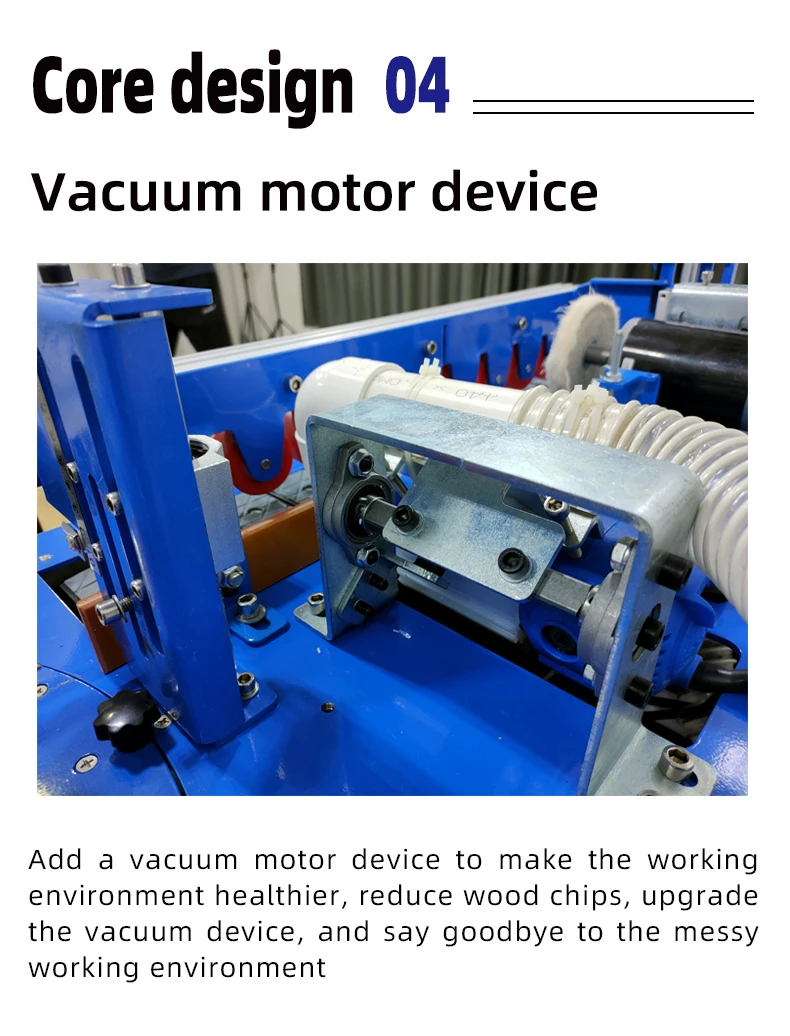
| Vacuum Power | 1200W |
| Air Source Pressure | 0.5–0.8 MPa |
| Glue Pot Capacity | 1000 ml |
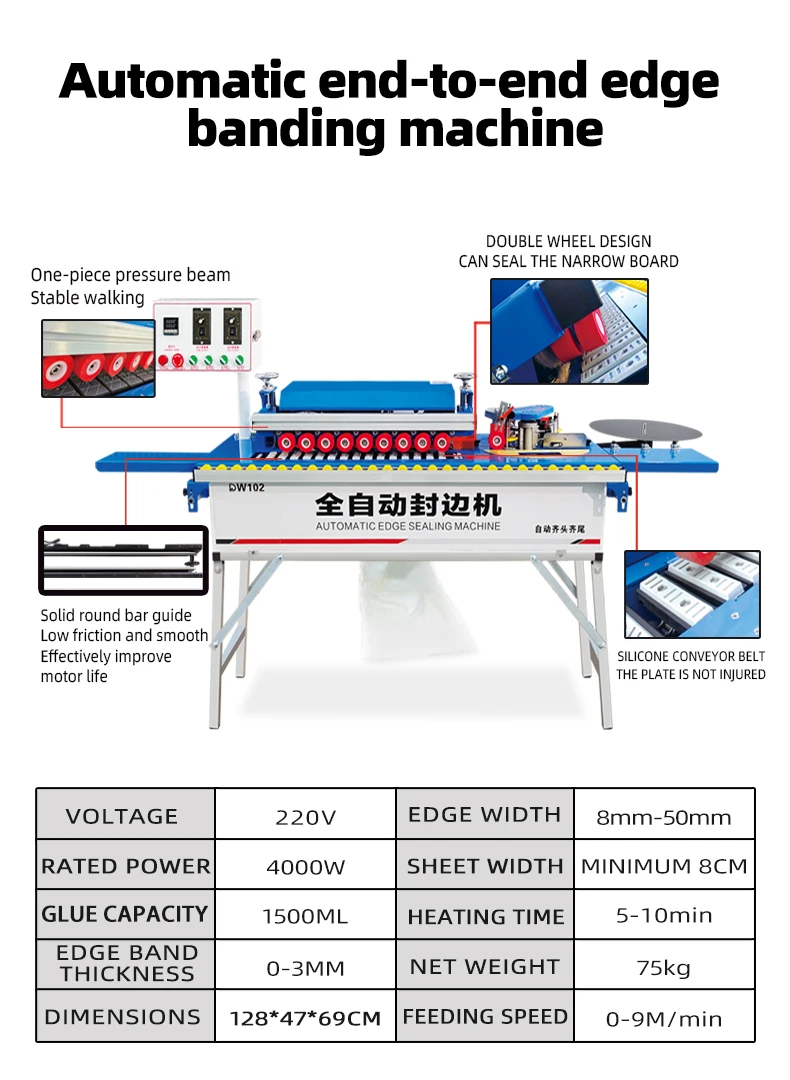
| Product Size | 128 × 47 × 69 cm |
| Product Weight | 75 kg |
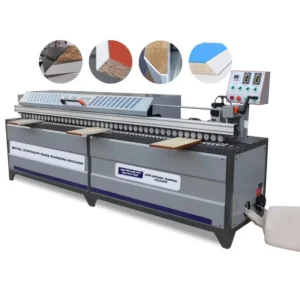
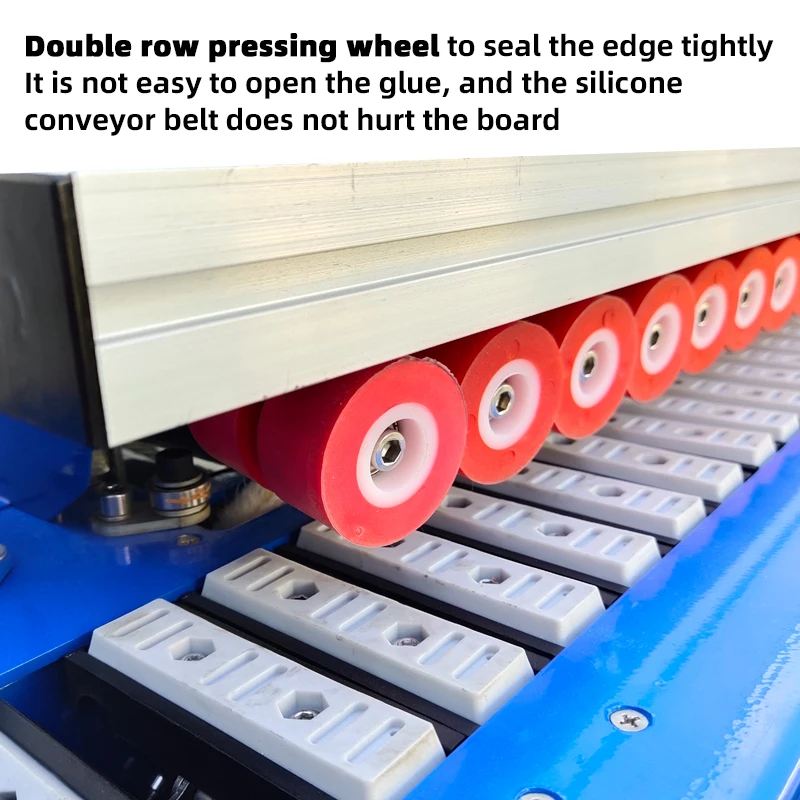
| Key Features | Curved and straight edge banding, automatic head and tail cutting, edge trimming, polishing, integrated vacuum extraction |
| Control System | To be confirmed (PLC or manual control) |
| Feed Speed | To be confirmed |
| Panel Thickness Range | To be confirmed |
| Language Options | Chinese, English; Spanish or other languages on request |
| Plug Options | EU, USA, AU, UK |
Application Suitability
| Application | Material or Output |
|---|---|
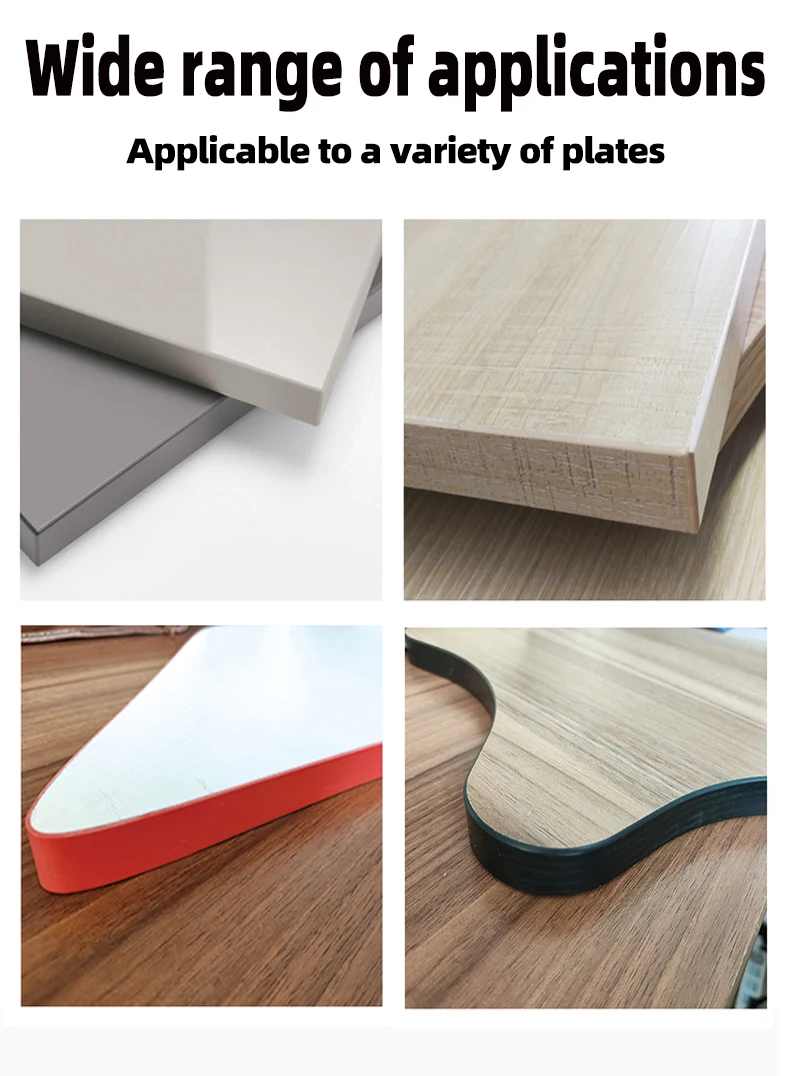
| Custom cabinet door edge finishing | MDF and particleboard with PVC edge banding |
| Plywood furniture panel banding | Plywood and blockboard with veneer or PVC strips |
| Polymer door curved edge processing | Polymer door panels requiring combined straight and curved edge trimming |
| Small-batch workshop production | Wood panels and blockboard for joinery and built-in furniture |
| Cabinet carcass edge sealing | Particleboard and MDF shelving with 0.3–3 mm banding |
Why Local Voltage Confirmation Must Happen Before the Quotation
A machine built for 380V/50Hz will not start on a 220V/60Hz supply, and rewiring after arrival is rarely an option.
I once saw a workshop in the Middle East receive an automatic edge banding machine manufacturer shipment that sat idle for weeks because the frequency mismatch tripped the motor overload within minutes of startup. The buyer had confirmed voltage but never discussed hertz. For the DW102, where the trimming stations alone draw 650W × 2 and the vacuum motor pulls 1200W, even a small voltage drop under load can cause the polishing wheels to stall mid-panel, leaving burn marks on the edge. This automatic edge banding machine supports 220V and 380V configurations, but the exact frequency must be locked in before production begins. [NEED_CITE: voltage and frequency standards by export market]
Matching the Machine Footprint to Workshop Workflow
The DW102 measures 128 × 47 × 69 cm and weighs 75 kg, meaning two operators can position it without overhead lifting equipment. In a small joinery workshop where floor space is shared between a sliding table saw and an assembly bench, this footprint leaves enough clearance for material staging on both the infeed and outfeed sides. The compact glue pot at 1000 ml capacity suits batch runs rather than continuous high-volume production, keeping adhesive fresh across shorter runs.
How Straight and Curved Banding Reduces Changeover
Shops that produce both rectangular cabinet sides and shaped door panels normally switch between a straight-edge machine and a manual curved-edge process. The DW102 handles both in one setup with automatic head and tail cutting, so a curved panel does not require a separate operator trimming the leading and trailing edges by hand. The dedicated trimming motors at 650W × 2 provide independent control, allowing the operator to adjust cut depth without affecting the polishing station downstream. [NEED_CITE: CE machinery directive requirements for edge banding equipment safety]
Reading the Spec Sheet Against Your Panel Stock
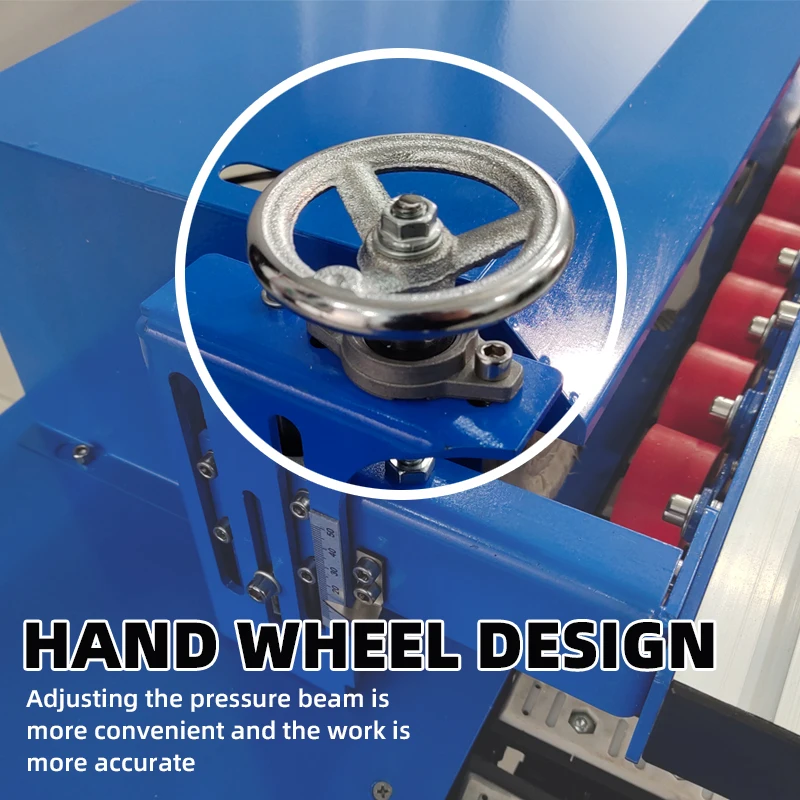
Edge banding height from 0 to 50 mm and thickness from 0.3 to 3 mm cover standard PVC and wood veneer strips, but the actual panel thickness range is not stated in the source — this must be confirmed against your stock. If you run 25 mm blockboard for shelving alongside 8 mm MDF for drawer bottoms, the feed mechanism must accommodate both without manual roller adjustment between batches. The air source pressure requirement of 0.5–0.8 MPa means your compressor must sustain that range continuously; a compressor that dips below 0.5 MPa during trimming will cause the pneumatic cutters to leave ragged tails on the banding.
The Cost of Skipping Feed Speed Verification
When feed speed is not confirmed before ordering, buyers sometimes discover the machine runs too slowly for their daily panel count or too fast for their glue open time. A workshop processing high-density particleboard with slow-curing adhesive may find that the standard feed rate leaves the banding peeling at the trailing edge because the glue had not set before the trimming station engaged. I have seen edge banders of this class returned to manual feeding after the buyer realized the throughput assumption never matched their substrate. The DW102 feed speed should be requested in writing against your specific board density and adhesive type before the order is finalized. [NEED_CITE: adhesive open time requirements for particleboard edge banding]
What This Manufacturer Brings to the DW102 Configuration
In-house manufacturing with proprietary cutting mechanisms means the trimming and polishing stations on this automatic edge banding machine are built and tested at the same facility, not assembled from third-party sub-modules. Four-stage quality control — incoming material, in-process, finished product, and pre-shipment verification — ensures the DW102 you receive matches the specification sheet. Voltage and language customization are treated as standard configuration steps, not special requests, so the control panel and manual arrive in your operator’s working language. Engineer-led configuration means the proposal accounts for your actual panel mix rather than quoting a default setup. Factory visits are available so you can run your own board stock on the DW102 before committing to the order.
Documentation & Verification
- Machine specification sheet confirming all station powers and voltage for your DW102 unit
- Electrical schematic with confirmed frequency matching your local grid supply
- Operation and maintenance manual in English, Spanish, or your agreed language
- Factory test record on your actual panel thickness and edge banding material
- Pre-shipment packing photographs of the DW102 before container loading
- CE declaration of conformity for the automatic edge banding machine category
Installation, Commissioning & Support
- Requires a dedicated circuit matching the confirmed 220V or 380V supply for the 3800W total load
- Air compressor must sustain 0.5–0.8 MPa continuously to feed pneumatic trimming cutters
- 128 × 47 × 69 cm footprint needs clearance on both infeed and outfeed for panel staging
- Glue pot at 1000 ml requires initial fill and temperature calibration during first commissioning
- Spare trimming blades and polishing wheels included for initial operation period
- Operator training covers curved and straight banding mode switching and vacuum system maintenance
What to Prepare Before Requesting a Quotation
To configure the DW102 accurately, share your primary panel materials and their thickness range, the edge banding type and thickness you run most often, your local voltage and frequency, and the control panel language your operators need. If you process both straight and curved edges, confirm the minimum curve radius so the feed path can be validated against your product drawings.
Frequently Asked Questions
Q: How do I confirm feed speed and panel thickness range before placing an order?
A: Request the full machine specification sheet for the DW102, which lists feed speed and acceptable panel thickness. Share your board density and adhesive type with the engineering team so they can validate the configuration against your actual production conditions rather than quoting a default setup.
Q: What voltage and frequency options are available for my market?
A: The DW102 supports 220V and 380V configurations, with frequency confirmed during the quotation stage. Provide your local grid specifications so the electrical schematic and motor winding match your supply. Plug options include EU, USA, AU, and UK standards.
Q: Can the control panel and manual be provided in our local language?
A: Chinese and English are standard. Spanish and other languages are available on request. Confirming the language during the specification stage ensures the operator can read the interface and the maintenance manual without translation delays at commissioning.
Q: When should a workshop move from the DW102 to a higher-tier edge bander?
A: The DW102 suits small to medium batch production with straight and curved edges. If your daily panel volume grows beyond what a 1000 ml glue pot and the confirmed feed speed can sustain, or if you need pre-milling for heavy chipboard, the same product family offers full-function models to scale into without changing supplier.
Q: What spare parts should I stock for the first year of operation?
A: Trimming blades, polishing wheels, and vacuum filter components are the primary consumables. Request the spare parts list with your DW102 order so you can identify part numbers and order quantities. The integrated vacuum system at 1200W requires regular filter cleaning to maintain extraction performance.