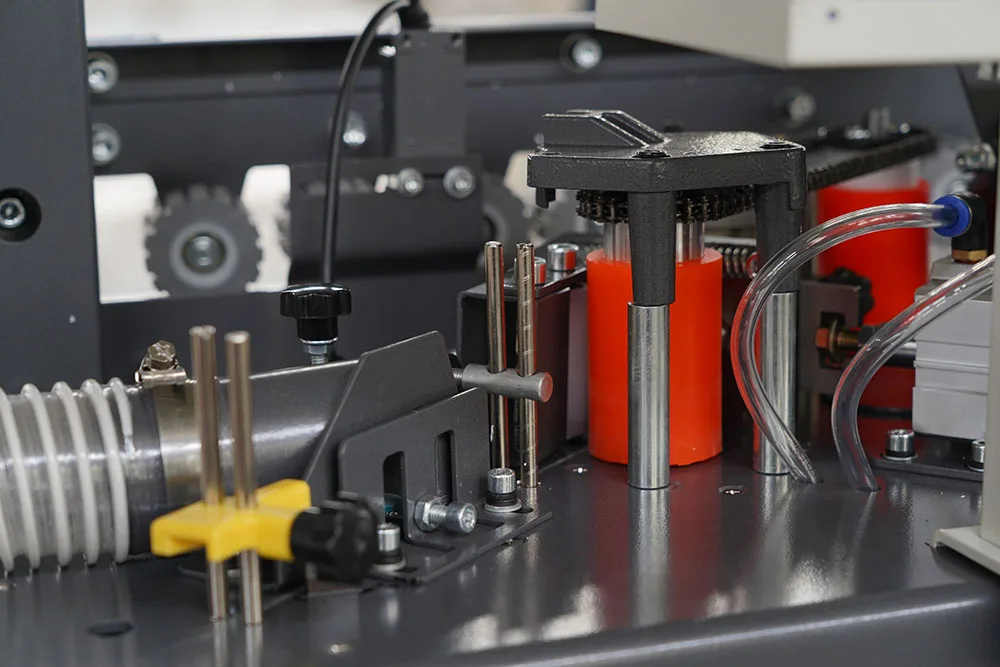
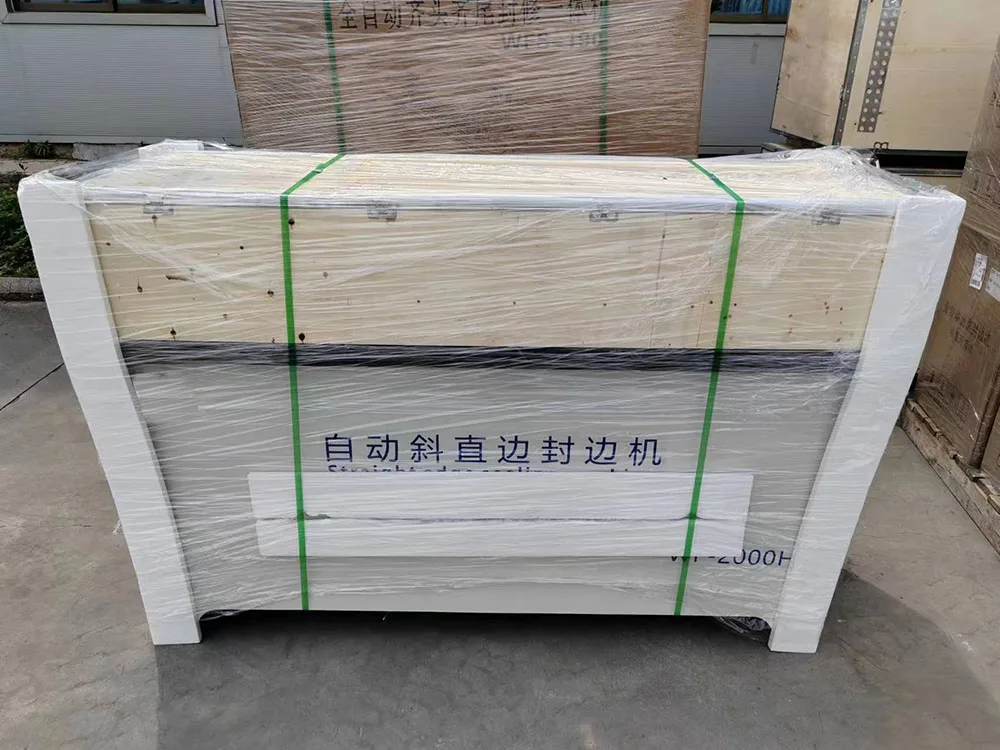
Description
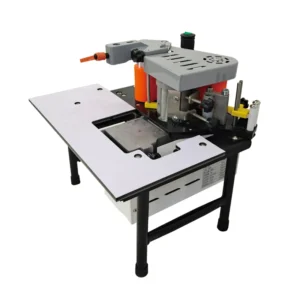
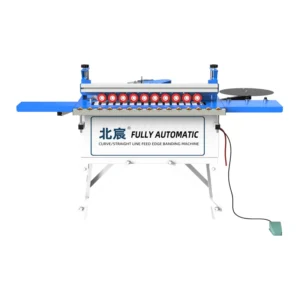
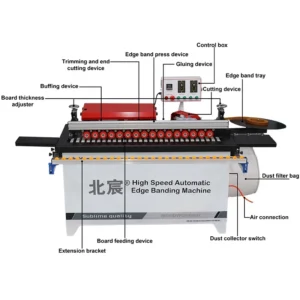
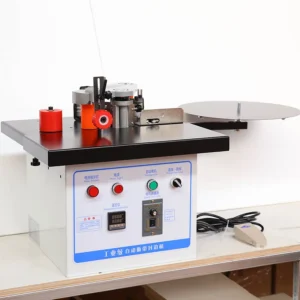
Full Catalogue Depth — The ZDSF-2000H sits within a complete edge banding lineup spanning entry-level to full-function pre-milling configurations, letting your workshop scale panel complexity without switching suppliers.
Technical Specifications
| Parameter | Value |
|---|---|
| Model | ZDSF-2000H / WF-2000H |
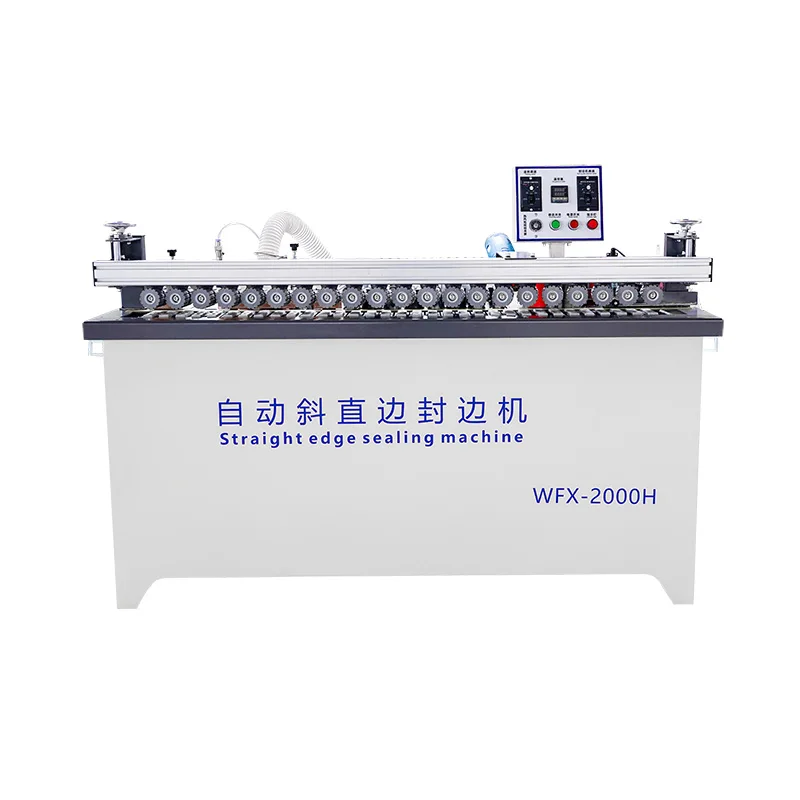
| Product Type | Automatic Slanted Straight Edge Banding Machine (Bevel Edge Bander) |
| Overall Dimensions | 2100×600×1100 mm |
| Net Weight | 149 kg |
| Plate Thickness Range | 18–25 mm |
| Strip Thickness | 1.2 mm |
| Rated Voltage | 220V (frequency not specified in source) |
| Rated Power | 6.17 kW |
| Rated Air Pressure | 0.4–0.6 MPa |
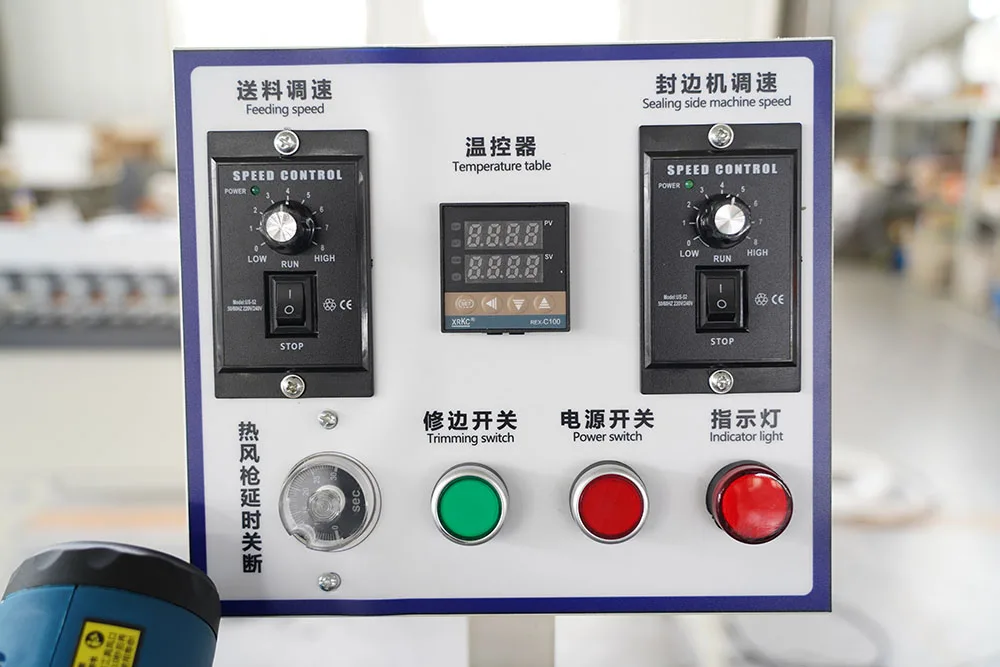
| Plate Feeding Speed | 0–14 m/min |
| Gluing System | Hot air heating throughout the process |
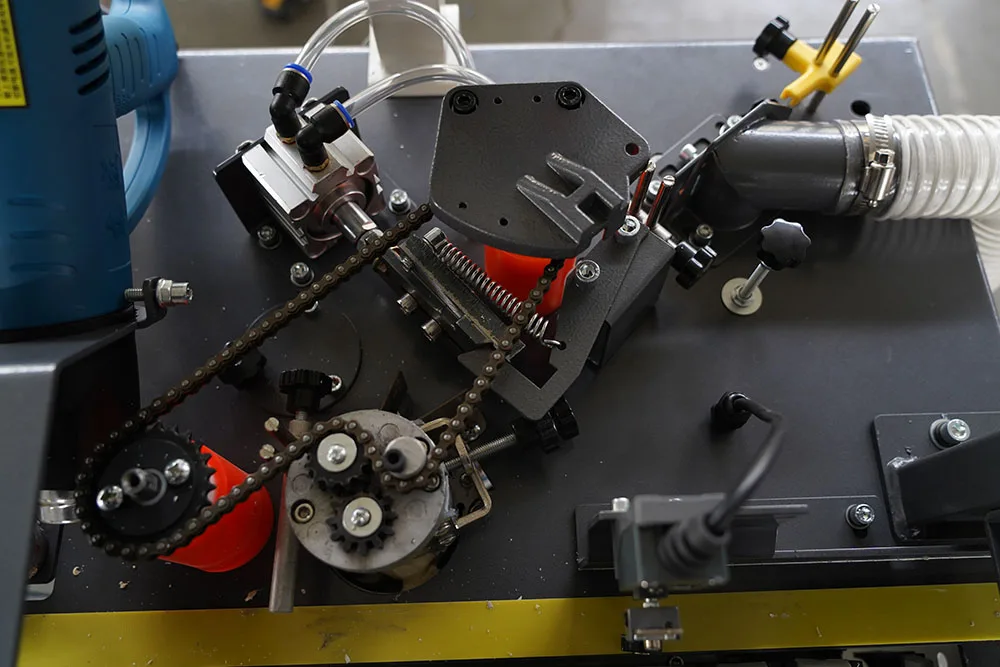
| Trimming Stations | Elastic profiling trimming; automatic belt breaking device |
| Pressing System | 8 pressing rollers |
| Finishing | Polishing device included |
| Slotting Function | Yes |
| Vacuum / Dust Extraction | Self-contained vacuum device |
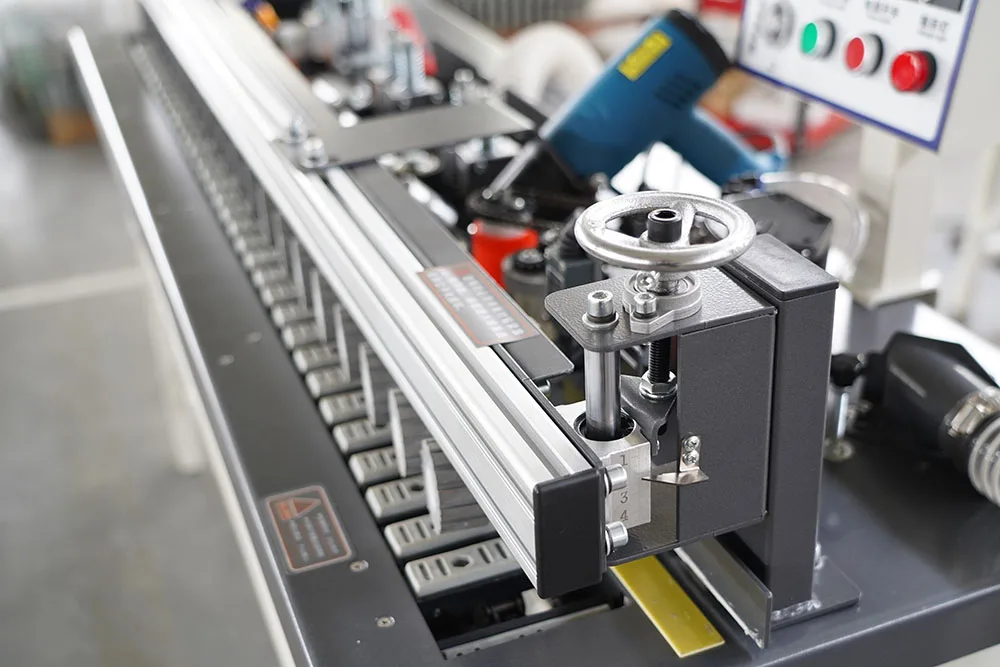
| Pressure Beam | Aluminum alloy, manually adjustable up and down |
| Plate Feeding | Automatic plate feeding, stable transmission |
| Key Features | Slanted and straight edge capability, hot air gluing, self-contained vacuum, slotting edge banding function |
Application Suitability
| Application | Material or Output |
|---|---|
| Custom furniture panel edge banding | MDF, particleboard, and plywood panels with bevel or slanted edge profiles |
| Cabinet door and carcass finishing | PVC and veneer edge banding strips up to 1.2 mm on 18–25 mm boards |
| Small to mid-size workshop automation | Mixed substrate runs requiring both straight and oblique edge profiles |
| Joinery production scaling from manual | Boards requiring edge banding with integrated slotting for downstream assembly |
Why Voltage Confirmation Must Happen Before the Quotation
Specifying local voltage and frequency first prevents a machine from arriving electrically incompatible with your workshop supply.
I once shipped an edge bander configured for 380V/50Hz to a region running 220V/60Hz. The motor overheated within the first production run, and the control board failed before the end of the week. The buyer lost days of output waiting for replacement components. With the ZDSF-2000H, rated at 220V with frequency to be confirmed per destination market, this conversation happens at the inquiry stage — not after the container is loaded. Voltage customization from 110V to 440V is available as standard, but the confirmation must come before the configuration sheet is finalized [NEED_CITE: voltage and frequency standards by export market]. An automatic bevel edge banding machine manufacturer that skips this step is leaving your production floor exposed.
How the ZDSF-2000H Fits Within the Full Ruiqi Edge Bander Lineup
The ZDSF-2000H occupies the mid-range tier for workshops processing 18–25 mm panels with both straight and slanted edge requirements. It delivers hot air gluing, elastic profiling trimming, and a self-contained vacuum — features that entry-level models typically omit. For operations running mixed panel materials across MDF, particleboard, and plywood, this configuration covers the majority of daily production without over-investing in pre-milling stations that higher-volume lines require.
Scaling From Single Machine to Multi-Station Line
When a workshop grows from processing panels one at a time to running continuous batch output, the edge bander must match throughput with upstream panel saws and downstream boring equipment. The ZDSF-2000H feeds at 0–14 m/min with automatic plate feeding and stable transmission, keeping pace with typical panel saw output in small to mid-size operations. If your production eventually demands higher feed speeds or additional trimming and scraping stations, the Ruiqi catalogue includes full-function models with pre-milling that pick up where this unit leaves off [NEED_CITE: CE machinery directive requirements for industrial edge banding equipment]. Transitioning within one automatic bevel edge banding machine manufacturer keeps spare parts commonality and service familiarity intact.
Reading the Specs That Actually Matter on the Floor
The 18–25 mm plate thickness range defines which panel stocks this machine can process — anything thinner requires a different pressure beam setup, and anything thicker exceeds the current frame geometry. The 1.2 mm strip thickness limit means PVC and veneer banding materials fall within range, but thicker solid wood lipping does not. Hot air heating across the full gluing process maintains consistent adhesive temperature, which directly affects bond quality when switching between MDF and particleboard substrates that absorb heat differently. The 8 pressing rollers distribute uniform pressure along the edge band, reducing the risk of visible glue lines that appear when contact pressure varies. The aluminum alloy pressure beam is manually adjustable, meaning operators set it per board thickness rather than relying on fixed clearance — a practical choice for workshops running multiple panel gauges throughout the day.
What Happens When Configuration Skips the Material Check
I configured a slanted edge bander for a customer based on PVC edge banding samples, matching glue temperature and feed speed to that material. When the machine arrived, the customer was actually running wood veneer strips. The adhesive temperature was insufficient for the thicker, more porous veneer, and the edge strips lifted within hours of pressing. Three days of on-site rework followed. With the ZDSF-2000H, the strip thickness, substrate material, and edge banding type must all be confirmed before the gluing system parameters are locked. Skipping this step means the machine arrives optimized for a material you are not using [NEED_CITE: adhesive compatibility requirements across PVC and veneer edge banding materials].
Why Procurement Through Ruiqi Reduces Configuration Risk
In-house manufacturing with patented cutting mechanisms means the ZDSF-2000H tolerance claims are verifiable at the factory, not just stated in a brochure. The four-stage QC process — covering incoming material, in-process assembly, finished product inspection, and pre-shipment testing — ensures the machine you receive matches the specification sheet signed off at order confirmation. Voltage confirmation and electrical schematics are finalized before production begins, so the machine arrives compatible with your local power supply. The full product family from entry-level to full-function models within one manufacturer means your upgrade path stays within a single supplier relationship, keeping documentation, spare parts, and technical support consistent across equipment generations.
Documentation & Verification
- CE declaration of conformity covering the ZDSF-2000H bevel edge banding configuration
- ISO 9001 certificate referencing manufacturing quality management procedures
- Machine specification sheet confirming voltage, frequency, and panel thickness range
- Electrical schematic and voltage confirmation document matched to your local supply
- Factory test record documenting edge banding performance on your specified panel material
- Operation and maintenance manual in the agreed language with spare parts list
Installation, Commissioning & Support
- Requires a dedicated 220V circuit rated for the 6.17 kW total power draw of the ZDSF-2000H
- Floor space of approximately 2100×600 mm with clearance around the unit for panel feeding and maintenance access
- Rated air pressure supply of 0.4–0.6 MPa from a dedicated compressor line for consistent pressing roller operation
- First-run commissioning includes calibration of hot air gluing temperature to your specific PVC or veneer strip material
- Self-contained vacuum device operates independently, eliminating the need for connection to a centralized dust extraction system
- Operator training covers manual pressure beam adjustment across the 18–25 mm plate thickness range
What to Include in Your Inquiry
To receive a configuration proposal for the ZDSF-2000H that matches your production environment, provide the panel substrates you process most frequently, the edge banding materials and strip thicknesses in use, and your local voltage and frequency specifications. Confirming the control panel language preference and whether your workshop requires slotting capability alongside standard edge banding allows the engineering team to finalize the quotation within 24 hours. If your production volume is approaching the upper limit of this model’s feed speed range, noting your upstream panel saw throughput helps determine whether a higher-tier model in the catalogue better serves your line.
Frequently Asked Questions
Q: How does the ZDSF-2000H compare to other models in the Ruiqi edge banding range for my production volume?
A: The ZDSF-2000H covers straight and slanted edge banding for 18–25 mm panels with hot air gluing and elastic profiling trimming. If your line requires pre-milling for panel surface preparation or additional trimming stations for higher throughput, the full Ruiqi catalogue includes higher-tier models. The engineering team reviews your daily panel count and substrate mix to recommend where this model fits or whether scaling up within the product family is advisable.
Q: What voltage and frequency options are available, and how is local compatibility confirmed before shipment?
A: Voltage customization from 110V to 440V is available as standard. Your local voltage and frequency are confirmed during the specification review stage, and the electrical schematic is finalized before production begins. The ZDSF-2000H ships with documentation verifying the configured voltage, ensuring the machine connects directly to your workshop supply without transformers or adapters.
Q: Which edge banding materials and panel substrates are compatible with this model’s strip and plate range?
A: The ZDSF-2000H processes PVC and veneer edge banding up to 1.2 mm strip thickness on MDF, particleboard, and plywood panels within the 18–25 mm range. The hot air gluing system maintains adhesive temperature across different substrates. Confirming your specific material combination during inquiry ensures the gluing parameters are set correctly before the machine ships.
Q: How do I plan a phased upgrade from this model to a full-function edge bander as my workshop scales?
A: The Ruiqi product family is designed so workshops can move from the ZDSF-2000H to higher-tier models with pre-milling and additional stations without changing supplier. Spare parts commonality, consistent documentation formats, and the same technical support channel carry across the lineup. When your feed speed or panel complexity requirements grow, the transition path is mapped within a single manufacturer relationship.