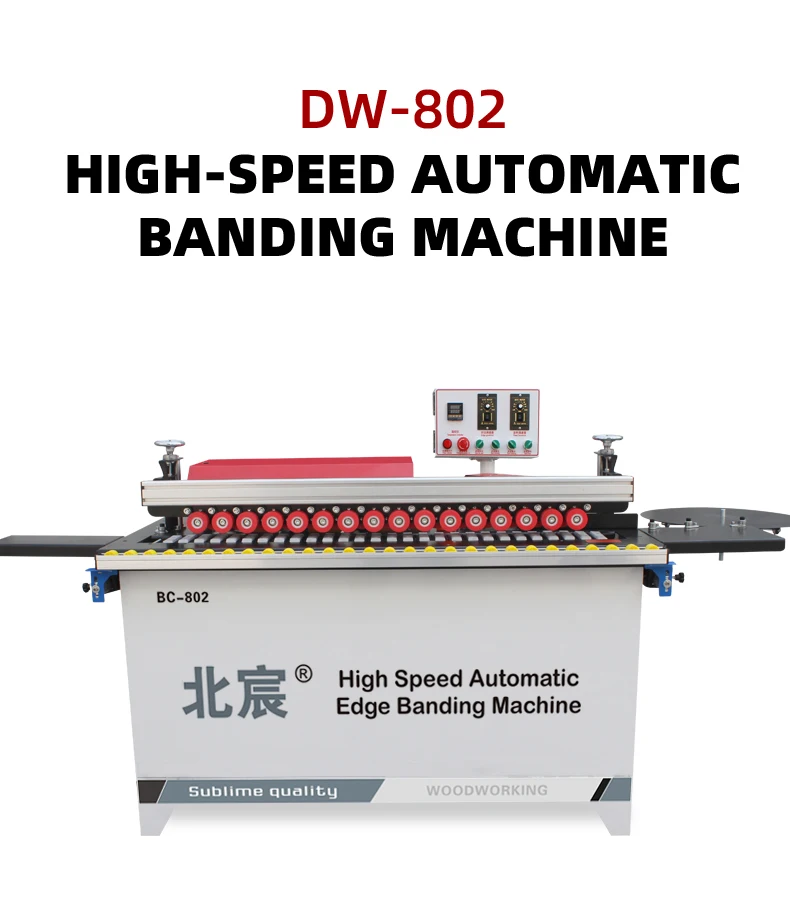
Description
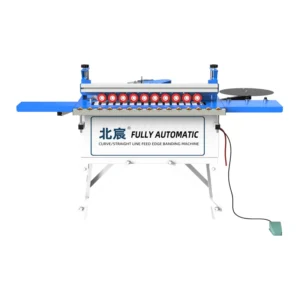
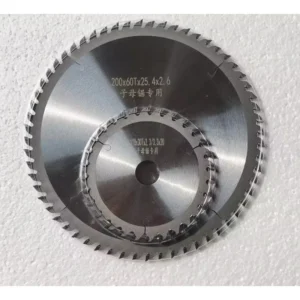
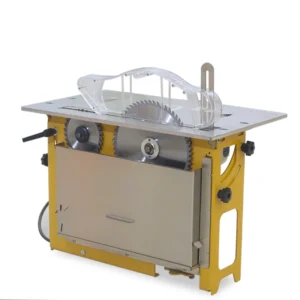
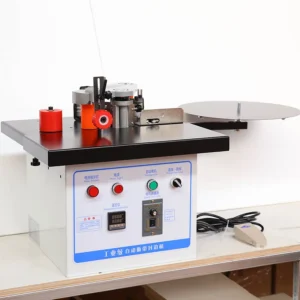
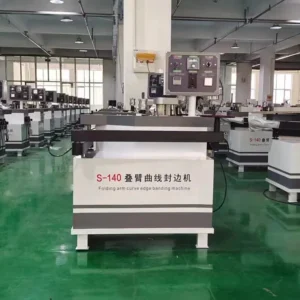
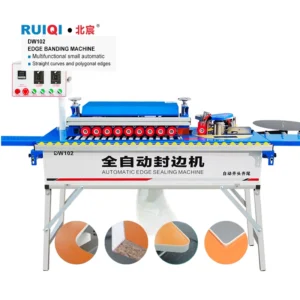
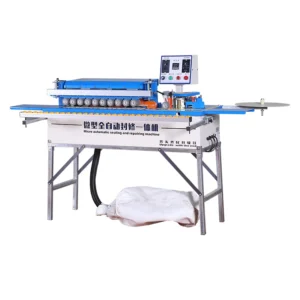
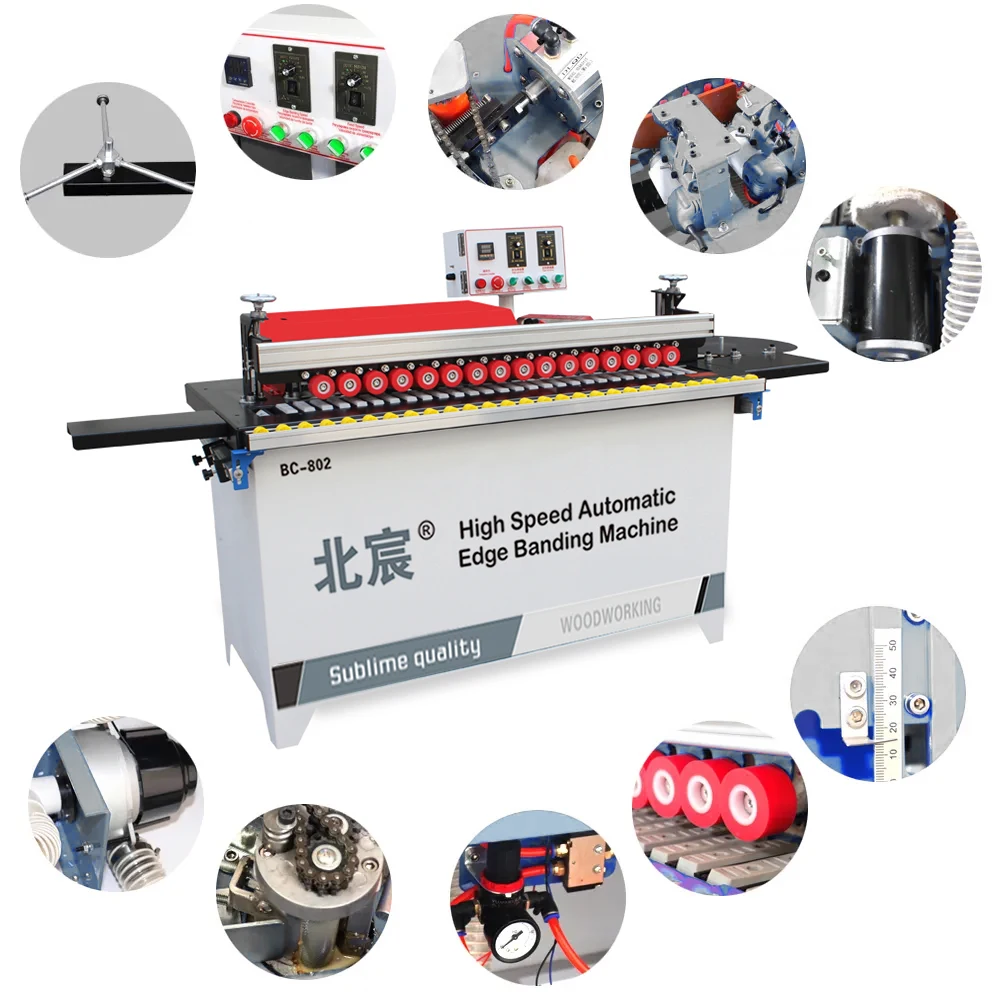
Complete machine range coverage — the DW802 sits within a tiered edge banding lineup, giving workshops a clear upgrade path from manual sealing to fully automated trimming and polishing without switching suppliers.
Technical Specifications
| Parameter | Value |
|---|---|
| Model | DW802 |
| Product Type | Automatic Edge Banding Machine |
| Total Power | 4200W |
| Voltage | 220V / 380V / customization available |
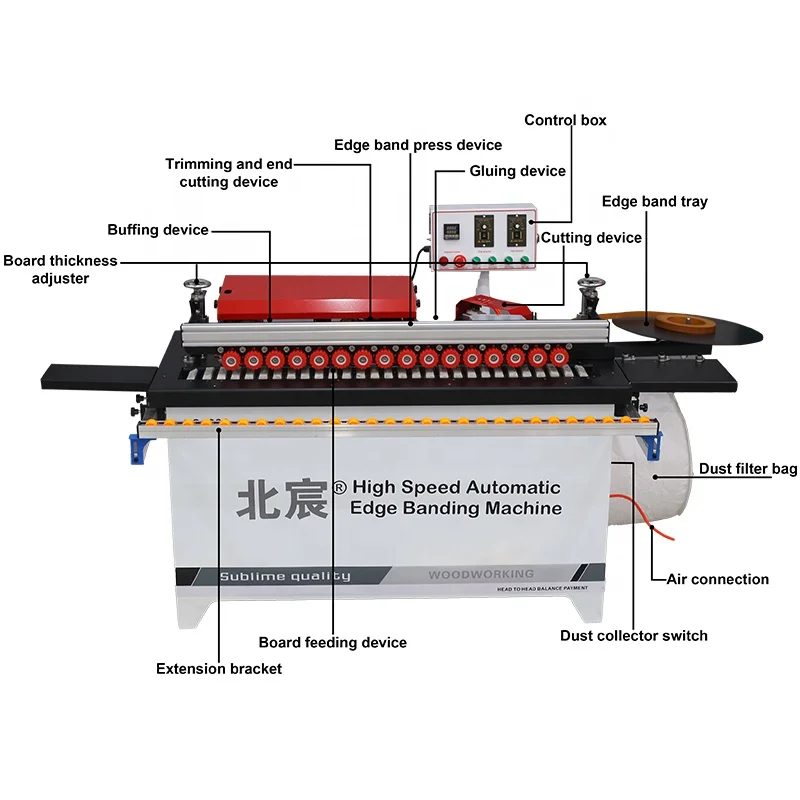
| Standard Functions | Edge banding, trimming, polishing, automatic head and tail cutting, vacuum system |
| Minimum Sheet Length | 250 mm |
| Minimum Sheet Width | 100 mm |
| Edge Banding Height | 0–50 mm |
| Edge Banding Thickness | 0.3–3 mm |
| Edge Feed Power | 140W |
| Transmission Power | 140W |
| Trimming Power | 800W × 2 |
| Polishing Power | 180W × 2 |
| Vacuum Power | 1200W |
| Air Source Pressure | 0.4–0.8 MPa |
| Glue Pot Capacity | 4000 ml |
| Machine Dimensions | 1300 × 600 × 950 mm |
| Machine Weight | 135 kg |
| Certification | CE |
Application Suitability
| Application | Material or Output |
|---|---|
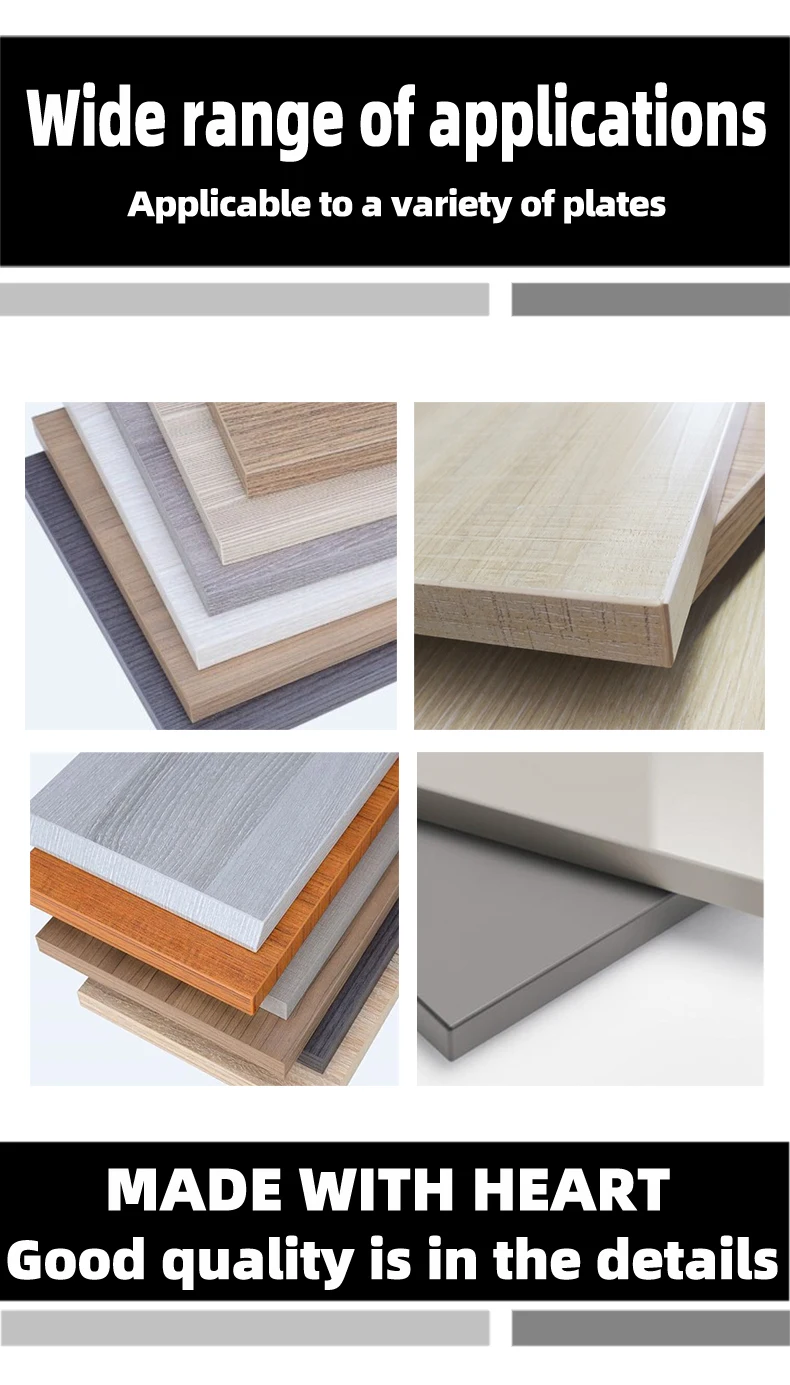
| Custom cabinet door and carcass edge sealing | MDF and particleboard with PVC or melamine edge banding |
| Small-batch furniture production | Plywood and ecological board with veneer or PVC strips |
| Home decoration on-site panel finishing | Solid wood panels and blockboard with thin veneer edges |
| Workshop transitioning from manual banding | Mixed substrate runs requiring quick changeover between material types |
Why Voltage Confirmation Must Precede the Purchase Order
An automatic edge banding machine manufacturer cannot guarantee a usable machine until your local voltage and frequency are confirmed in writing.
I have walked into workshops where a newly delivered edge bander sat idle for weeks because it was wired for 380V three-phase while the facility only had single-phase 220V available. The DW802 is configurable across 220V and 380V with further customization, but that flexibility only matters if the correct configuration is specified before production begins. A mismatched motor will overheat, the glue pot heater will underperform, and the trimming motors will stall mid-cycle. These are not warranty claims — they are specification errors that fall on the buyer when voltage was never formally confirmed [NEED_CITE: voltage and frequency standards by export market].
Mapping the DW802 Across a Workshop’s Machine Range
The DW802 occupies the compact, full-function tier within the broader edge banding lineup available on this catalogue. It integrates gluing, trimming, polishing, and automatic head-and-tail cutting into a single 1300 mm footprint, which positions it for workshops that have outgrown manual banding but are not yet running continuous production shifts. Buyers surveying the full range will find simpler glue-only models below it and high-feed-speed lines above it. This automatic edge banding machine manufacturer structures the catalog so a facility can move between tiers as throughput demands change, keeping operator training and spare parts within one product family.
Understanding Where This Model Fits in a Scaling Facility
Workshops moving from handheld edge banders to a stationary automatic machine typically need integrated trimming and polishing to eliminate secondary hand-finishing. The DW802 addresses that transition with dual 800W trimming motors and dual 180W polishing motors, removing the visible glue lines and rough overhangs that manual methods leave behind. For a small cabinet shop running mixed MDF and particleboard orders, the ability to process edge thicknesses from 0.3 mm to 3 mm means one machine handles both thin PVC for carcass panels and thicker veneer for visible door edges. The 4000 ml glue pot supports longer runs between refills, which matters when an operator is managing multiple panel batches in a single shift [NEED_CITE: CE machinery directive requirements for industrial equipment].
How Core Parameters Translate to Edge Finish Quality
The 0–50 mm edge banding height range covers standard panel thicknesses from thin 3 mm MDF backs up to 50 mm solid wood shelves, meaning the operator does not need to swap tooling between common furniture components. Trimming power at 800W per motor provides sufficient torque to clean-cut PVC and melamine edges without tearing, which is the failure point on underpowered units when they encounter dense particleboard. The vacuum system at 1200W captures trim waste at the cutting point rather than letting it accumulate on the feed track — accumulated debris causes panel drift and inconsistent edge pressure downstream. Air source pressure between 0.4 and 0.8 MPa drives the pneumatic actuators for head-and-tail cutting; running below that range causes incomplete cuts, while exceeding it risks damaging the banding material on thinner edges.
The Hidden Cost of Skipping the Sample Test
Buying a single machine without running your actual panel material through it first is one of the most common mistakes I see in small workshops. A machine may produce a clean edge on MDF during the factory demonstration, but the same feed speed and glue temperature on coarse particleboard can leave ragged trimming and visible glue seepage. Without a pre-shipment sample processed on your substrate, you discover these issues only after the machine is installed, when rework costs are already multiplying across your production schedule [NEED_CITE: panel substrate variability and edge adhesion performance].
What This Manufacturer Brings to the Transaction
In-house manufacturing with patented cutting mechanisms means tolerance claims on the DW802 are verifiable through factory test records, not just brochure figures. The full product family from entry-level to full-function units allows your workshop to scale within one supplier relationship, simplifying spare parts and operator training. Voltage and control panel language customization is treated as standard configuration, not an afterthought negotiated post-order. A four-stage quality control process covers incoming material through pre-shipment verification, so the machine that arrives matches the specification sheet you signed off on. Engineer-led configuration recommendations with formal quotations are typically provided within 24 hours of a detailed inquiry.
Documentation & Verification
- CE declaration of conformity covering the DW802 automatic edge banding machine
- Machine specification sheet confirming voltage, power, and functional stations as ordered
- Electrical schematic with confirmed voltage and wiring diagram for your facility
- Factory test record using your specified panel material and edge banding type
- Operation and maintenance manual provided in your agreed operator language
- Spare parts list identifying trimming blades, polishing wheels, and glue pot components
Installation, Commissioning & Support
- Requires a dedicated circuit matching the confirmed 220V or 380V supply with appropriate breaker rating for the 4200W total load
- Compact 1300 × 600 mm footprint fits standard workshop floors without special foundation work
- Arrives partially assembled; feed track and glue pot require on-site alignment and calibration
- First-run commissioning includes setting glue temperature, feed speed, and trimming depth for your panel material
- Operator training covers control panel navigation in the confirmed language and daily cleaning of the vacuum system
- Wear parts including trimming blades and polishing wheels are documented with replacement intervals
Preparing Your Inquiry
To configure the DW802 correctly for your workshop, share the panel materials you process most frequently, the edge banding types and thicknesses you use, and your local voltage and frequency standard. If your operators require a control panel in a specific language beyond Chinese or English, note that in your initial inquiry. Buyers planning a phased equipment rollout should also describe existing upstream saws or downstream boring machines so throughput compatibility can be assessed across the line.
Frequently Asked Questions
Q: What panel thickness range and edge material types does the DW802 handle?
A: The machine processes panels with edge banding heights from 0 to 50 mm, covering standard MDF, particleboard, plywood, ecological board, and solid wood. It accepts edge banding thicknesses from 0.3 mm to 3 mm, which includes thin PVC, melamine, and wood veneer strips commonly used in cabinet and furniture production.
Q: How do I confirm the correct voltage and plug type for my region?
A: The DW802 is available in 220V and 380V configurations with further customization for specific regional requirements. Provide your local voltage, phase, frequency, and plug standard during the inquiry stage so the electrical system is built and tested to match before the machine ships from the factory.
Q: Can the control panel interface be set to my operator’s language?
A: Multilingual control panel options are available beyond the standard Chinese and English interface. Specify the required language during the quotation stage so the control system is programmed and tested before dispatch, avoiding commissioning delays caused by unreadable menus on the shop floor.
Q: What is the minimum panel size this machine can process effectively?
A: The DW802 handles sheets with a minimum length of 250 mm and a minimum width of 100 mm. Panels smaller than these dimensions may not feed reliably through the transmission and trimming stations, so very small offcuts are better handled by manual edge banding methods.
Q: How do I verify edge banding quality before the machine ships?
A: Request a factory test record that documents edge banding runs on your specific panel material and edge type. Review sample photographs showing the trimmed and polished edge finish, and confirm that glue line visibility and trimming accuracy meet your acceptance criteria before authorizing shipment.