Description
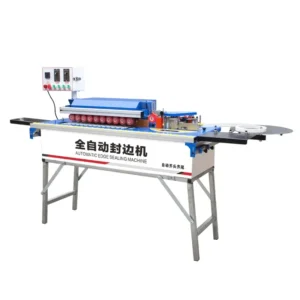
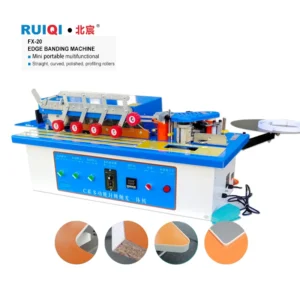
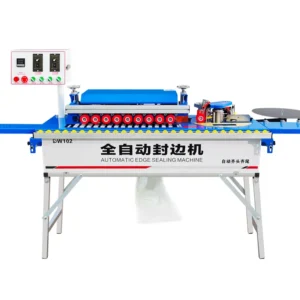
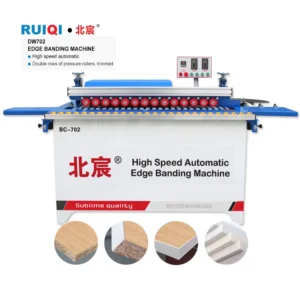
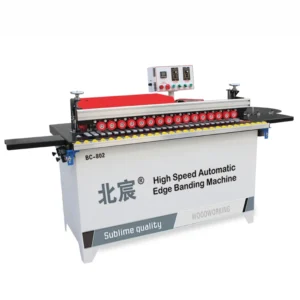
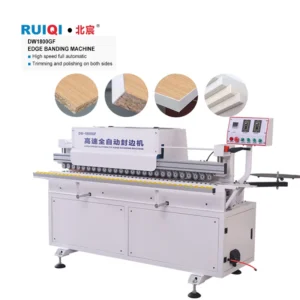
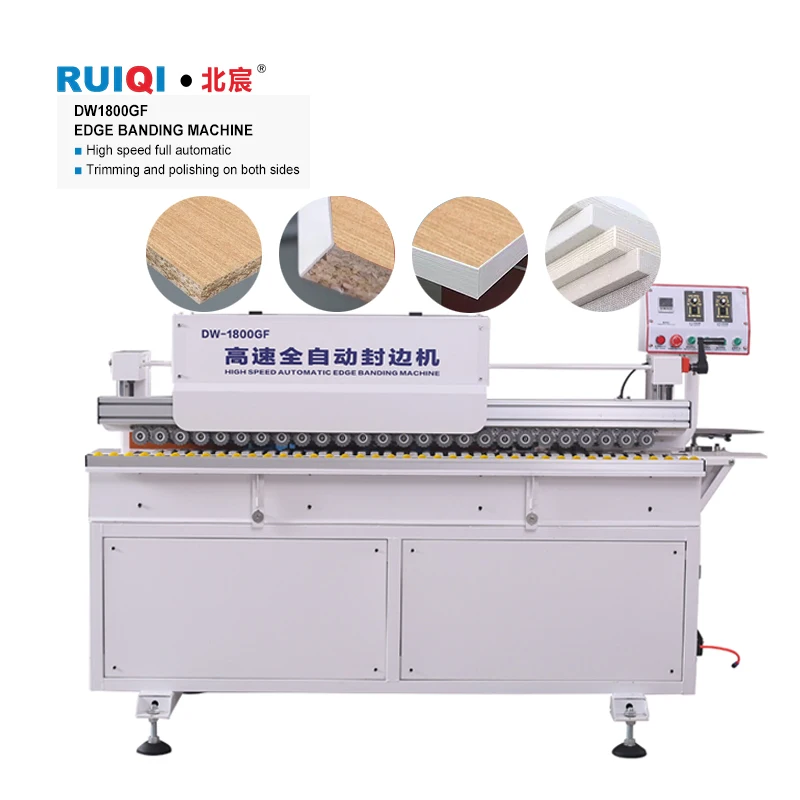
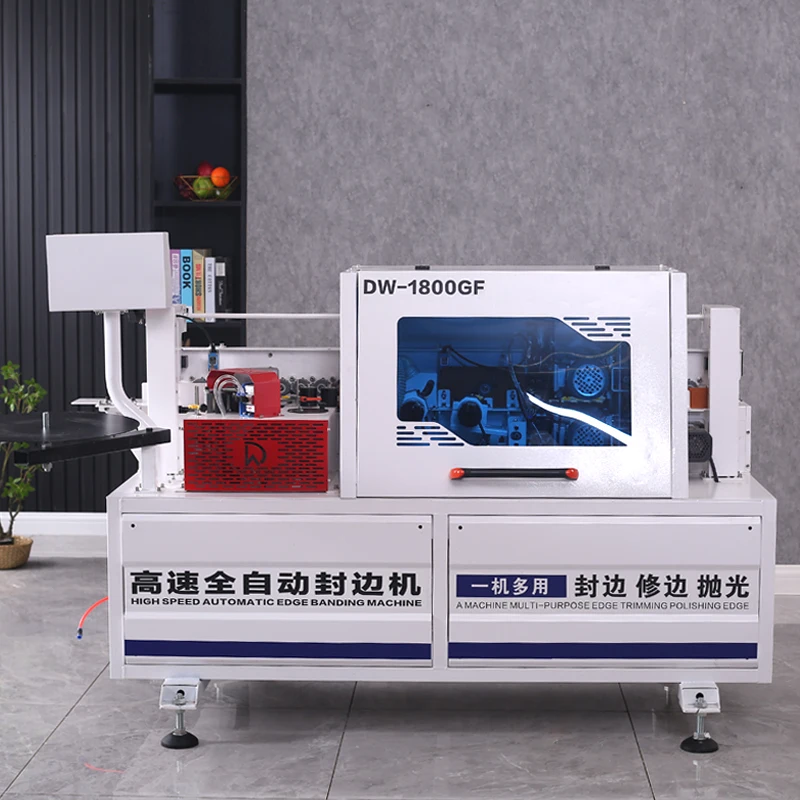
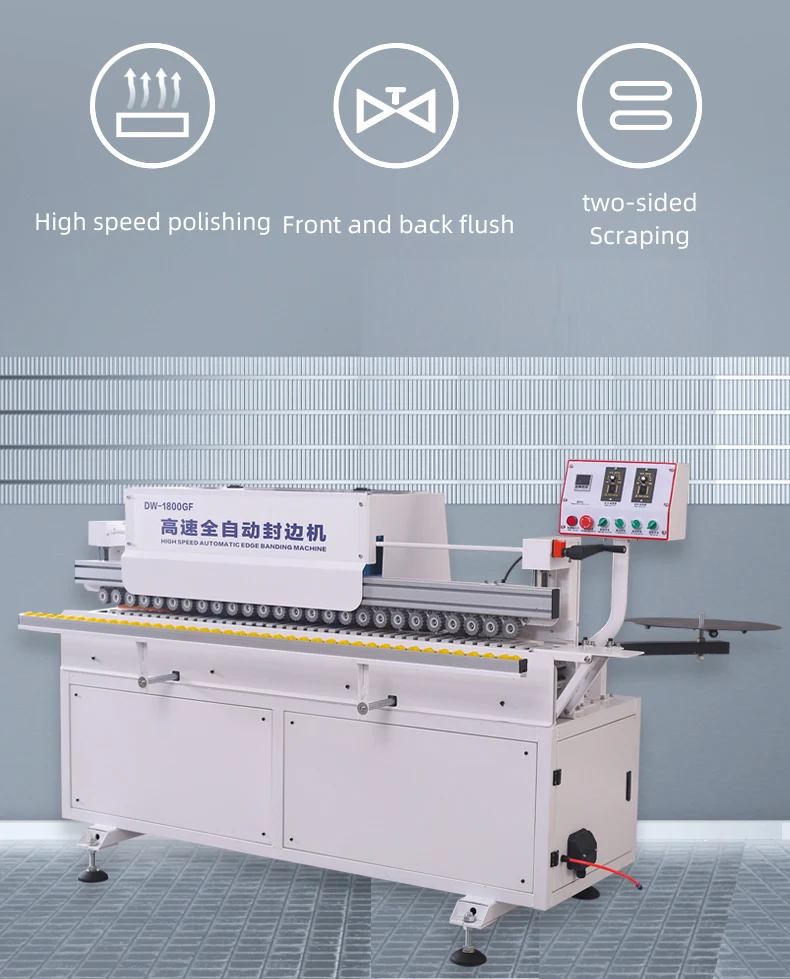
Integrated Function Sequence — the DW1800 completes gluing through polishing in a single automated pass, eliminating the need to match separate machines from different suppliers within Ruiqi’s full catalogue range.
Technical Specifications
| Parameter | Value |
|---|---|
| Model | DW1800 |
| Product Type | Automatic Edge Banding Machine |
| Total Power | 4.9 kW |
| Voltage Options | 380V / 220V / 415V (frequency to be confirmed) |
| Control System | Operation panel in Chinese / English (customizable to Spanish or other languages) |
| Overall Dimensions | 220 × 65 × 125 cm |
| Net Weight | 320 kg |
| Edge Banding Height Range | 0–50 mm |
| Edge Banding Thickness Range | 0.3–3 mm |
| Minimum Sheet Length | 20 cm |
| Minimum Sheet Width | 10 cm |
| Feed Speed | 0–14 m/min |
| Transmission Power | 180 W |
| Edge Power | 160 W |
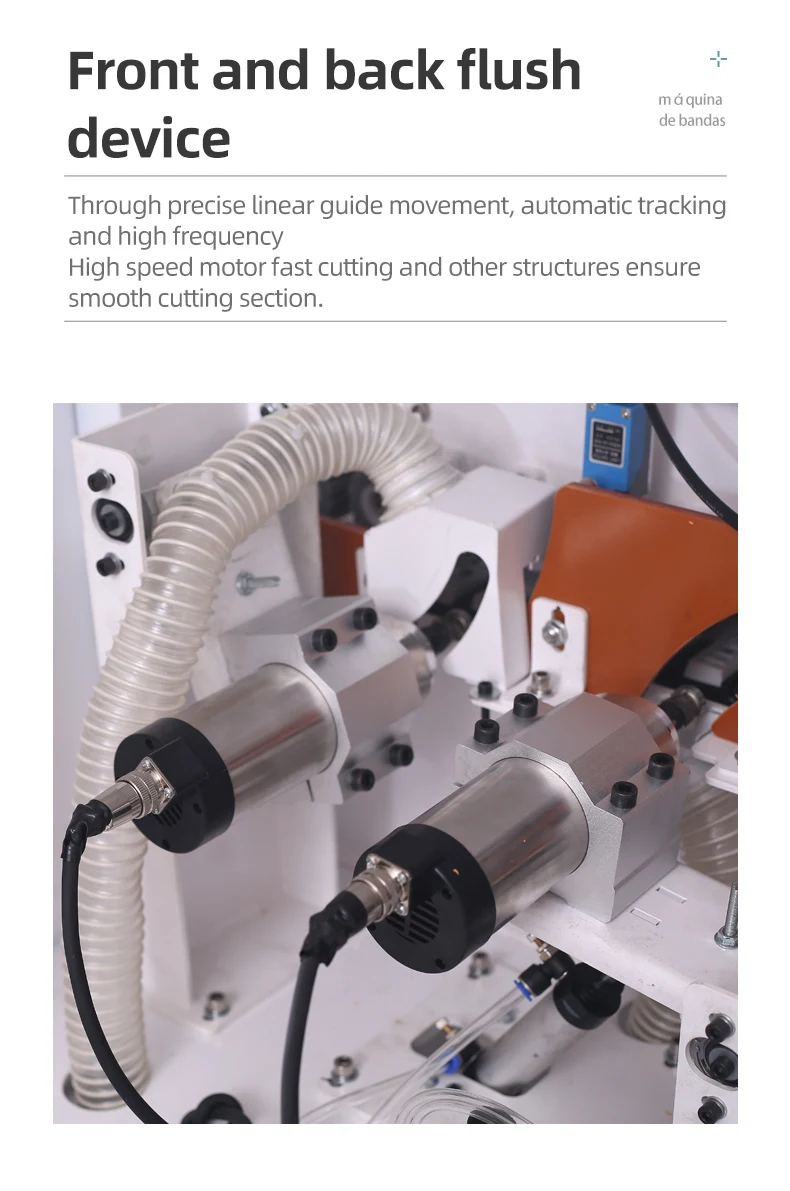
| Trimming Power | 800 W × 2 at 24,000 r/min |
| Polishing Power | 380 W × 2 |
| Vacuum Power | 550 W |
| Glue Pot Capacity | 4,000 ml |
| Air Source Pressure | 0.4–0.6 MPa |
| Standard Functions | Gluing, end cutting, rough trimming, fine trimming, tracking, scraping, polishing, dust extraction |
| Conveyor Structure | Roll-ball differential mobile table guide, extruded aluminum alloy workstation, oxidation-treated table surface |
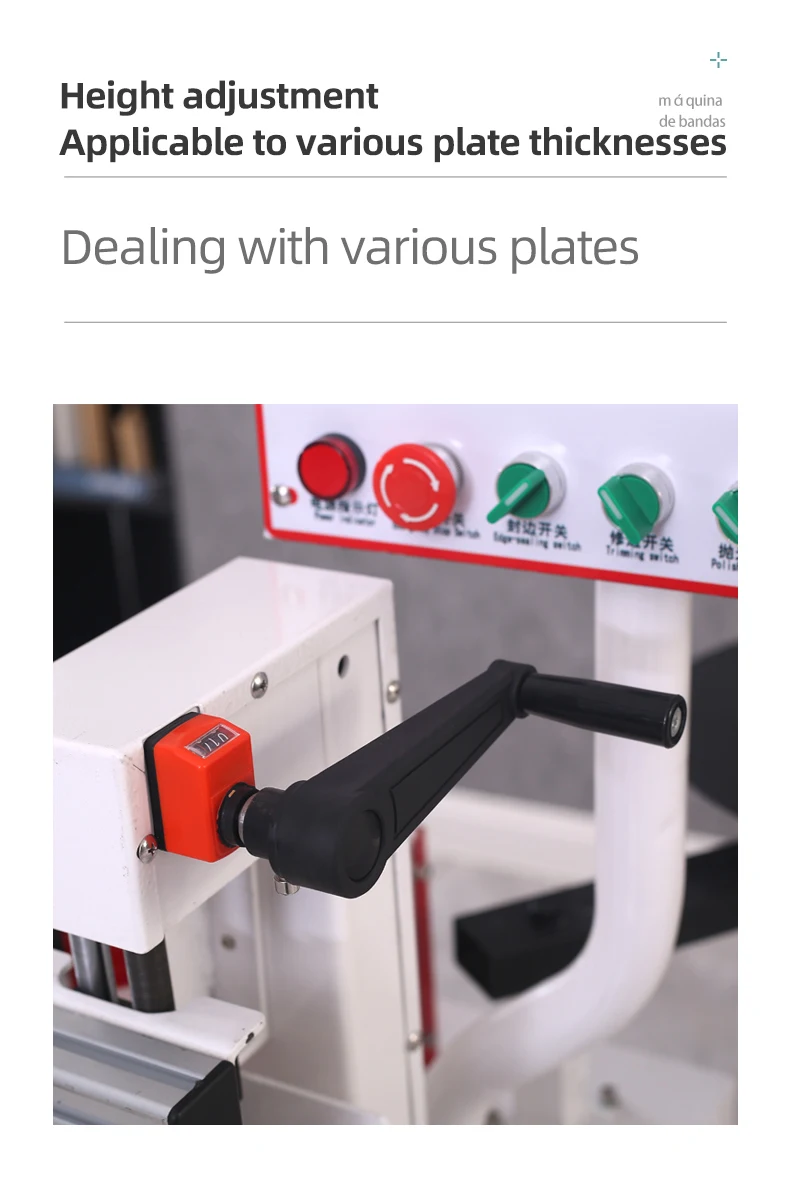
| Blade Adjustment | Main blade with crossed angle of inclination, precision instrument visual display |
Application Suitability
| Application | Material or Output |
|---|---|
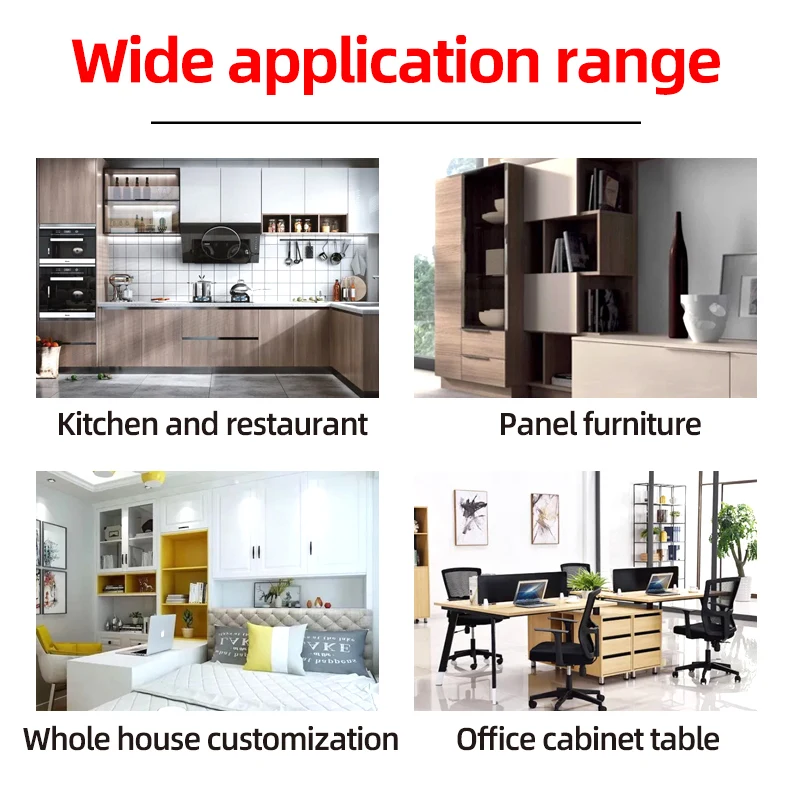
| Custom cabinet door production | MDF and particleboard with PVC edge banding |
| Wardrobe and shelving panel processing | Plywood with veneer or melamine edge banding |
| Furniture component edge finishing | Solid wood panels and ABB boards |
| Decorative panel edging | Organic glass plates and PVC panels |
| Small-batch workshop output | Mixed panel materials requiring frequent changeover |
Why Voltage Confirmation Should Come Before the Model Decision
Specifying local voltage and frequency before selecting an automatic edge banding machine manufacturer prevents costly commissioning failures.
I once watched a workshop manager stand in front of a newly delivered edge bander that would not power on — the factory had wired it for 380V/50Hz while the local grid ran at 415V/60Hz. The motor tripped on overload within seconds. This is not a rare event. Importers frequently request a quote, confirm the price, and only realize the voltage mismatch when the machine is bolted to the floor [NEED_CITE: voltage and frequency standards by export market]. The DW1800 is configurable across 380V, 220V, and 415V, but that flexibility only helps when the buyer states the requirement upfront. An Automatic Edge Banding Machine manufacturer should always ask for your local electrical standard before issuing a formal quotation.
How the DW1800 Fits Within the Ruiqi Catalogue
The DW1800 occupies the full-function tier of the Ruiqi edge banding range. Buyers surveying the complete catalogue will find entry-level models below it — typically gluing and trimming only — and pre-milling models above it, which add a scoring station for thicker laminates. This automatic edge banding machine covers eight processing stations in one pass, making it the default choice for workshops that need trimming, tracking, scraping, and polishing without adding separate machines. When a buyer is comparing models across tiers, the DW1800 represents the point where a single machine handles the complete edge finishing cycle.
Conveyor Design and Panel Positioning Accuracy
The roll-ball differential mobile table guide on the DW1800 serves a specific purpose. Standard flat-bed conveyors can drag panels, especially heavier MDF or plywood sheets, causing micro-shifts that accumulate along the feed path. The roll-ball structure reduces friction at the contact point while the extruded aluminum alloy workstation resists deformation under sustained load [NEED_CITE: conveyor friction effects on panel edge accuracy]. The oxidation-treated table surface further prevents adhesion of glue overspray or dust, keeping the reference edge consistent over long production runs. For workshops processing mixed materials throughout a shift, this matters more than feed speed alone.
Reading the Specification Sheet Against Your Production Reality
The DW1800’s edge banding height range of 0–50 mm and thickness range of 0.3–3 mm define which panel-and-banding combinations the machine can handle. A workshop running 18 mm particleboard with 0.4 mm PVC banding sits comfortably within that envelope, but a shop processing 25 mm solid wood panels with 3 mm solid wood edging is working near the upper limits — feed speed should be reduced accordingly. The trimming station runs at 24,000 r/min on dual 800 W motors, which provides sufficient cutting speed for clean edge removal on PVC and melamine without tear-out. The 4,000 ml glue pot capacity supports sustained operation, though operators running high-melt-temperature adhesives for solid wood banding should confirm glue compatibility with their specific material. The precision instrument visual display on the blade adjustment allows operators to verify trimming angles numerically rather than by eye, directly affecting the consistency of the finished edge across a batch [NEED_CITE: trimming angle verification methods in woodworking].
What Happens When Panel Thickness Range Is Ignored
I saw a custom cabinet factory feed 25 mm boards into an edge bander rated for thinner stock. The pressure roller could not maintain contact, the glue bead broke mid-pass, and the scraping station tore into the panel edge. The entire batch of door fronts was rejected by the client. This is the hidden cost of buying a machine without matching its specification to your actual panel range. When workshops purchase piecemeal — a saw here, a bander there — they often discover that feed heights and throughput rates are incompatible across the line [NEED_CITE: production line compatibility in furniture manufacturing]. The DW1800’s minimum sheet dimensions of 20 cm length and 10 cm width also matter; smaller offcuts from nesting operations may fall below that threshold and require manual edging.
Why Procurement Through the Full Catalogue Matters
Sourcing the DW1800 through the Ruiqi full catalogue means the machine is positioned within a broader product family — if your workshop later needs a pre-milling station or an upgraded feed speed, the next model up shares the same control platform and spare parts ecosystem. In-house manufacturing with patented cutting mechanisms means replacement blades and trimming heads are produced at the same facility, not outsourced. Voltage, language, and specification customization are treated as standard configuration steps, not special requests. The four-stage QC process covers incoming material, in-process assembly, finished product testing, and pre-shipment verification — each documented. Engineer-led configuration recommendations are provided with a formal quotation, so the buyer receives a specification matched to their stated production requirement rather than a generic price list.
Documentation & Verification
- CE declaration of conformity matched to the DW1800’s export configuration
- ISO 9001 certificate covering the manufacturing facility
- Machine specification sheet with confirmed voltage, frequency, and language settings
- Factory test record on your stated panel thickness and edge banding material
- Operation and maintenance manual in the agreed operator language
- Packing photographs and customs documentation support
Installation, Commissioning & Support
- Floor space allocation based on the DW1800’s 220 × 65 × 125 cm footprint plus operator clearance
- Dedicated 380V or confirmed local voltage circuit with appropriate breaker rating for the 4.9 kW total load
- Fully assembled delivery — verify crane or forklift access for the 320 kg unit
- Compressed air supply at 0.4–0.6 MPa connected to the glue pot and pneumatic stations
- First-run parameter setup covering glue temperature, feed speed, and trimming angle calibration
- Spare parts list supplied with initial consumable blades and polishing wheels
What to Include in Your Inquiry
When requesting a configuration proposal for the DW1800, provide the panel materials you process — MDF, particleboard, plywood, or solid wood — along with typical thickness and the edge banding material and thickness you intend to use. State your local voltage and frequency so the electrical system is built to match. Confirm the preferred control panel language for your operators. If you are planning a broader production line, indicate what upstream and downstream equipment you already run so throughput can be matched across stations.
Frequently Asked Questions
Q: Where does the DW1800 sit in the Ruiqi edge banding range compared to entry-level and pre-milling models?
A: The DW1800 is the full-function model in the catalogue, covering gluing through polishing in one pass. Entry-level models handle gluing and basic trimming only, while pre-milling models above it add a scoring station for thick laminates. The DW1800 suits workshops that need complete edge finishing without adding separate machines.
Q: How do I confirm the correct voltage and plug configuration for my country?
A: Provide your local voltage, phase, and frequency — for example 415V three-phase at 60Hz — when requesting a quotation. The DW1800 is configurable across 380V, 220V, and 415V. The electrical schematic and voltage confirmation document are included with every shipment to ensure the installation electrician has the correct reference.
Q: Can the control panel language be customized beyond Chinese and English?
A: Yes. The standard panel is available in Chinese or English, and customization to Spanish or other languages is offered as a standard configuration step. Specify your preferred language during the quotation stage so the control interface is set before shipment.
Q: What panel materials and thickness range can the DW1800 handle?
A: The machine processes MDF, particleboard, plywood, ABB boards, PVC panels, organic glass plates, and solid wood. Edge banding height ranges from 0 to 50 mm with banding thickness from 0.3 to 3 mm. Minimum sheet size is 20 cm length by 10 cm width.
Q: Is a factory visit or sample processing test available before ordering?
A: Factory visits are welcomed, and sample processing tests can be arranged using your specified panel material and edge banding. This allows you to verify edge quality, glue line appearance, and trimming finish on your actual production materials before committing to an order.