Description
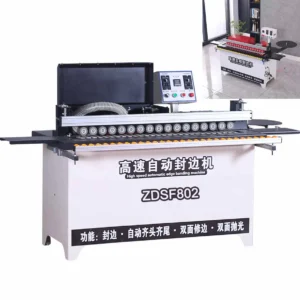
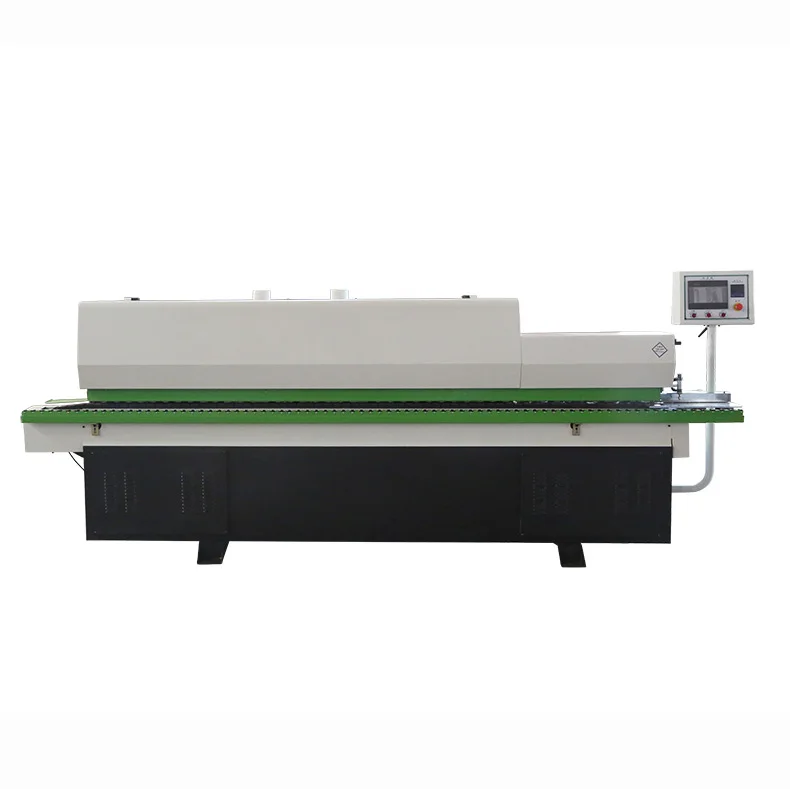
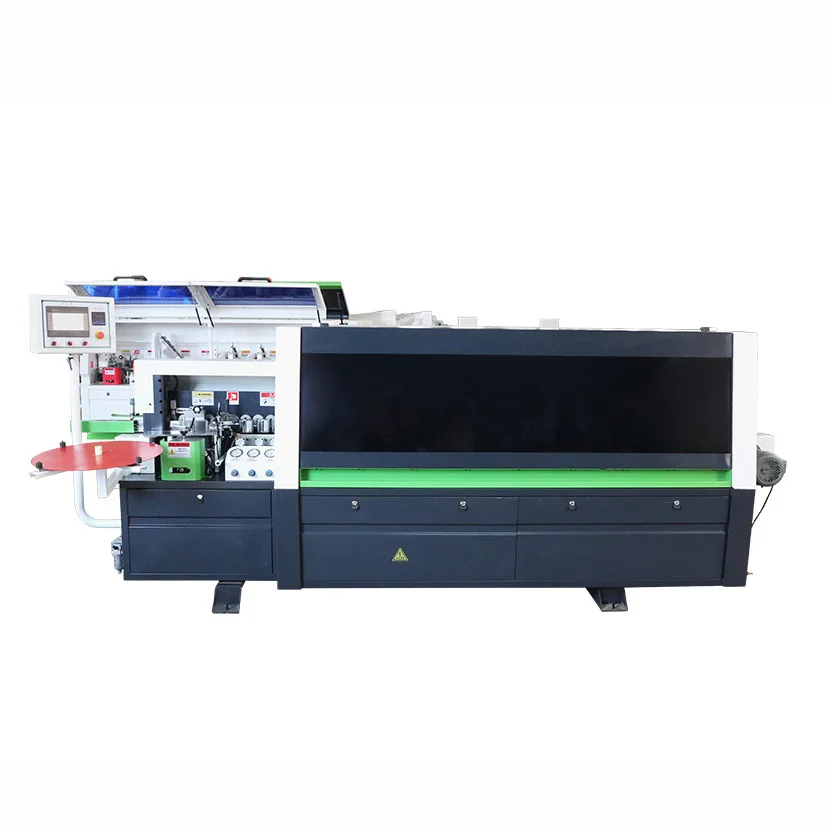
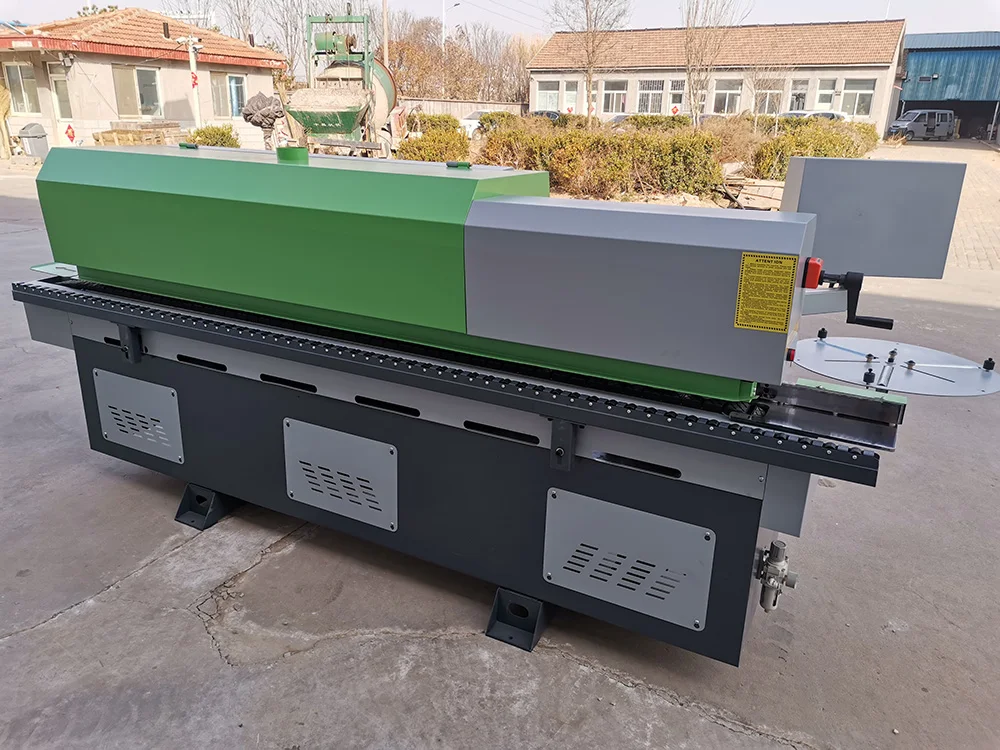
Six-Station Edge Finishing — The ZDS368A covers gluing through buffing in one pass, eliminating secondary trimming stations that typically fragment small-to-mid-scale furniture lines.
Technical Specifications
| Parameter | Value |
|---|---|
| Model | ZDS368A |
| Product Type | Automatic Edge Banding Machine |
| Main Functions | Gluing, End Trimming, Rough Trimming, Fine Trimming, Scraping, Buffing |
| Working Pressure | 0.6–0.8 MPa |
| Panel Thickness Range | 10–55 mm |
| Edge Thickness Range | 0.3–3.5 mm |
| Conveyor Belt Speed (Feed Speed) | 18 m/min |
| Min. Panel Width | 40 mm |
| Min. Panel Length | 60 mm |
| Voltage | 380V, 3-Phase |
| Rated Power | 8.5 kW |
| Net Weight | 1500 kg |
| Overall Dimensions (L×W×H) | 4200×1000×1500 mm |
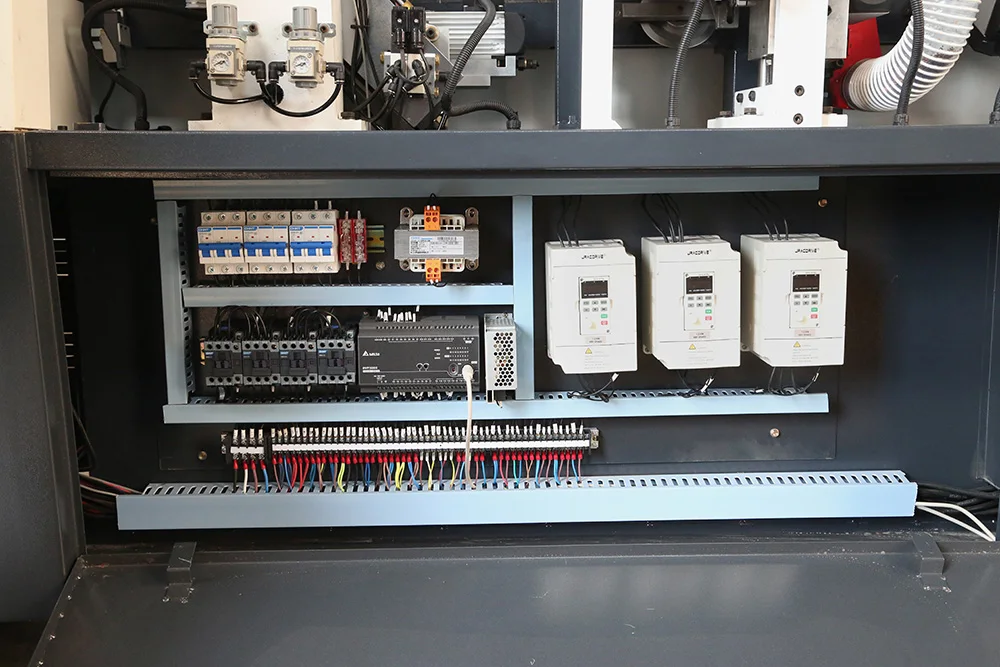
| Control System | Taiwan Delta PLC with Touch Screen |
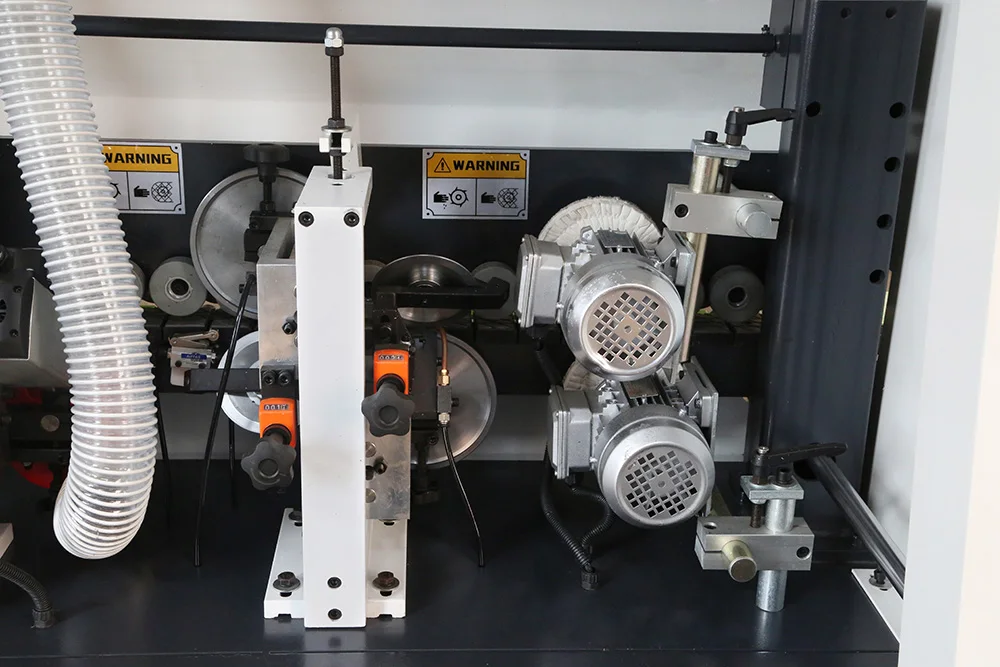
| Pneumatic Components | Taiwan AirTAC cylinders and safety valves |
| Electrical Components | Delixi/Chint air switches and contactors, Japanese Omron travel switches |
| Inverter | JORAL (Switzerland) |
| Edge Banding Materials Supported | PVC, Veneer |
| Max Edge Banding Width | 40 mm |
| Warranty | 1 year |
Application Suitability
| Application | Material or Output |
|---|---|
| Learning desk and study table production | MDF panels with PVC edge banding |
| Wardrobe and cabinet carcass assembly | Particleboard with PVC or veneer banding |
| Custom furniture panel edge finishing | Plywood panels, 10–55 mm thickness |
| Solid wood furniture edge protection | Solid wood panels with veneer edge strips |
| Small-to-mid batch contract furniture | Mixed substrate runs across MDF and particleboard |
Why Voltage Confirmation Should Happen Before You Compare Automatic Edge Banding Machine Quotes
A machine wired for the wrong frequency will run — but the PLC timing, glue pot heating cycle, and feed motor synchronization will all drift from spec.
I spent years on the assembly floor before moving into technical sales, and I have watched crated machines sit idle on docks because someone skipped the voltage conversation. The ZDS368A is configurable from 110V to 440V, but that flexibility only matters if you state your local supply before production starts. A 380V/50Hz unit shipped to a 60Hz market will run the conveyor at the wrong speed and throw off every trimming station downstream [NEED_CITE: voltage and frequency standards by export market]. That is not a warranty issue — it is a specification gap that could have been caught in a five-minute email exchange.
How the Six-Station Sequence Shapes Your Output Quality
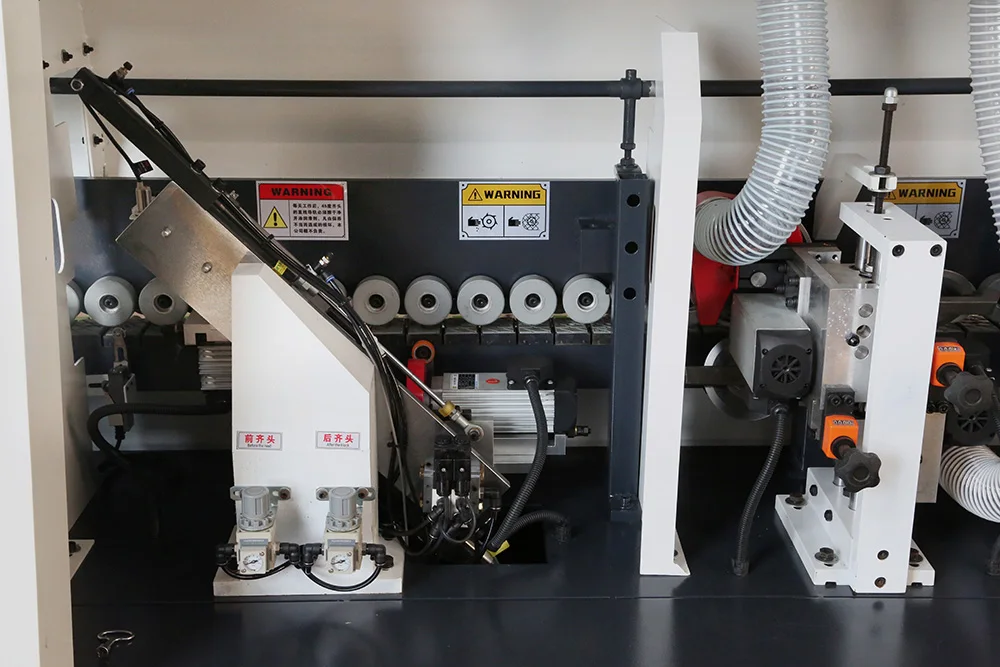
The ZDS368A processes each panel through gluing, end trimming, rough trimming, fine trimming, scraping, and buffing in a single continuous feed. For furniture factories running MDF or particleboard, this means the edge goes from raw glued strip to a finished, burr-free surface without manual intervention between stages. Each station is pneumatically actuated through Taiwan AirTAC cylinders, which hold pressure consistently across long production runs. When you are evaluating where this automatic edge banding machine sits in your line, the six-station layout tells you it handles the complete finishing workflow — not just the gluing step.
Where This Model Fits in a Scaling Workshop
A joinery shop moving from manual edge banding typically starts with a basic gluing-and-trim unit. The ZDS368A occupies the next tier: full trimming and buffing without the pre-milling station found on higher-end models in the same family. That makes it a practical choice for factories processing pre-cut panels that already have clean edges from the saw. If your operation later shifts to rough-sawn or recycled board that needs edge preparation before gluing, the product family includes pre-milling variants that share the same control platform and mechanical footprint [NEED_CITE: edge preparation requirements for recycled and rough-sawn substrates]. You can scale within one supplier ecosystem rather than retraining operators on an entirely different interface.
Reading the Specifications Against Your Actual Panel Stock
The 10–55 mm panel thickness range covers standard MDF, particleboard, and plywood used in cabinet and furniture production, but it is the feed speed and trimming motor relationship that determines real-world edge quality. At 18 m/min, the trimming cutters engage the PVC or veneer strip with enough contact time to produce a clean shear rather than a tear — especially important on veneer, where a rushed cut leaves visible fiber pull-out. The JORAL inverter maintains consistent conveyor speed under variable panel weight, preventing the micro-stutters that show up as chatter marks on the finished edge. The 0.3–3.5 mm edge thickness range handles thin PVC for visible faces and thicker strips for worktops and shelving that take more impact in service.
What Happens When Machines Are Quoted Without Matching Your Line
Buying a single automatic edge banding machine without checking feed height against your upstream saw and downstream boring station is one of the most common specification mismatches I encounter. The panel enters the ZDS368A at a fixed conveyor height — if your sliding table saw discharges at a different level, operators end up manually lifting boards onto the feed belt, which introduces alignment errors and slows throughput. Another frequent gap is the control panel language: a machine with Chinese-only menus sitting in a workshop where operators read Arabic or Spanish means commissioning stalls until someone rewrites the HMI. Both issues are solvable before the machine ships, but only if they surface during the quotation stage rather than at installation [NEED_CITE: machinery commissioning delays caused by language and line integration gaps].
What Sets This Procurement Path Apart
The ZDS368A comes from a manufacturing setup where the cutting mechanism itself is patented, not sourced from a third-party integrator — the ±0.02mm tolerance is verified on the factory floor, not borrowed from a supplier datasheet. Voltage customization from 110V to 440V is treated as a standard configuration step, with electrical schematics confirmed before production begins rather than assumed. The four-stage quality control process — incoming material inspection, in-process checks, finished product testing, and pre-shipment verification — means the unit you receive has been run against test panels matching your thickness and edge material specification. Every machine ships with documentation in your agreed language, including the operation manual and spare parts list. Factory visits are welcomed, and sample processing tests using your actual panel stock can be arranged before you commit to an order.
Documentation & Verification
- CE declaration of conformity covering the ZDS368A machinery directive scope
- ISO 9001 certificate confirming the production quality management system
- Electrical schematic with your confirmed voltage and frequency before build
- Factory test record run on your specified panel thickness and edge material
- Operation and maintenance manual delivered in your operator’s working language
- Packing photographs showing crate condition and component securing before dispatch
Installation, Commissioning & Support
- 4200×1000 mm footprint requires a level concrete floor with clearance on the feed and discharge sides
- 8.5 kW rated power needs a dedicated 3-phase circuit matching your confirmed voltage and frequency
- Machine ships fully assembled; only dust extraction ducting and air supply connection required on site
- Delta PLC touch screen calibrated during commissioning for your specific edge thickness and panel material
- AirTAC pneumatic system requires a clean, dry air supply at 0.6–0.8 MPa with inline filtration
- Spare parts list included with wear items identified for your first reorder cycle
How to Start a Meaningful Technical Conversation
When you are ready to evaluate the ZDS368A for your line, the most useful details to share are your panel substrate types and typical thickness range, the edge banding material you run most often, and your local voltage and frequency. If you are integrating this machine into an existing layout, let us know the discharge height of your upstream saw and the feed height of your downstream station so we can confirm line compatibility. For workshops planning a phased expansion, tell us your projected daily panel volume so we can position this model correctly within the broader product family.
Frequently Asked Questions
Q: How does the ZDS368A compare to other models in the range for different production volumes?
A: The ZDS368A sits at the full-trim tier without pre-milling, making it suited to workshops processing pre-cut panels with clean edges. Higher-volume operations running rough-sawn or recycled board benefit from pre-milling variants in the same family that share the control platform. We recommend sharing your daily panel count and substrate mix so we can position the right model for your actual throughput.
Q: What voltage and frequency configurations are available for my market?
A: The machine is configurable from 110V to 440V across standard frequency ranges. We confirm your local supply specifications — voltage, phase, and Hz — before production begins and issue an electrical schematic for your approval. This step prevents the situation where a machine arrives wired for a frequency that causes PLC timing and feed speed drift.
Q: Can the control panel language be customized for my operators?
A: Yes. The Delta PLC touch screen supports multi-language configuration, and we set the HMI to your operator’s working language before the machine ships. The operation and maintenance manual is also provided in that same language, so commissioning and daily operation do not depend on translation delays.
Q: What edge banding materials and board thicknesses does this model handle?
A: The ZDS368A processes PVC and veneer edge banding from 0.3 to 3.5 mm thick, applied to panels between 10 and 55 mm. This covers standard MDF, particleboard, plywood, and solid wood panels used in furniture and cabinet production. If you work with unusual substrates or banding materials, a sample processing test can confirm compatibility before you order.
Q: Is a factory visit or sample processing test available before ordering?
A: Both are available. You can visit the production facility to observe the four-stage quality control process and see machines under assembly. Alternatively, send us your actual panel stock and preferred edge banding material, and we will run a sample test with documented results so you can evaluate edge quality and trimming precision on your own materials.