Description
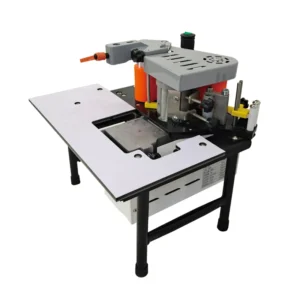
Voltage-confirmed edge banding — every DW400 order ships only after local voltage, frequency, and plug type are verified against your facility’s supply, preventing the costly reality of machines that arrive but cannot run.
Technical Specifications
| Parameter | Value |
|---|---|
| Model | DW400 |
| Product Type | Edge Banding Machine |
| Total Power | 3800W |
| Voltage Options | 220V / 380V / customization available |
| Transmission Power | 60W |
| Trimming Power | 650W × 2 stations |
| Polishing Power | 180W × 2 stations |
| Vacuum Power | 1200W |
| Air Source Pressure | 0.5–0.8 MPa |
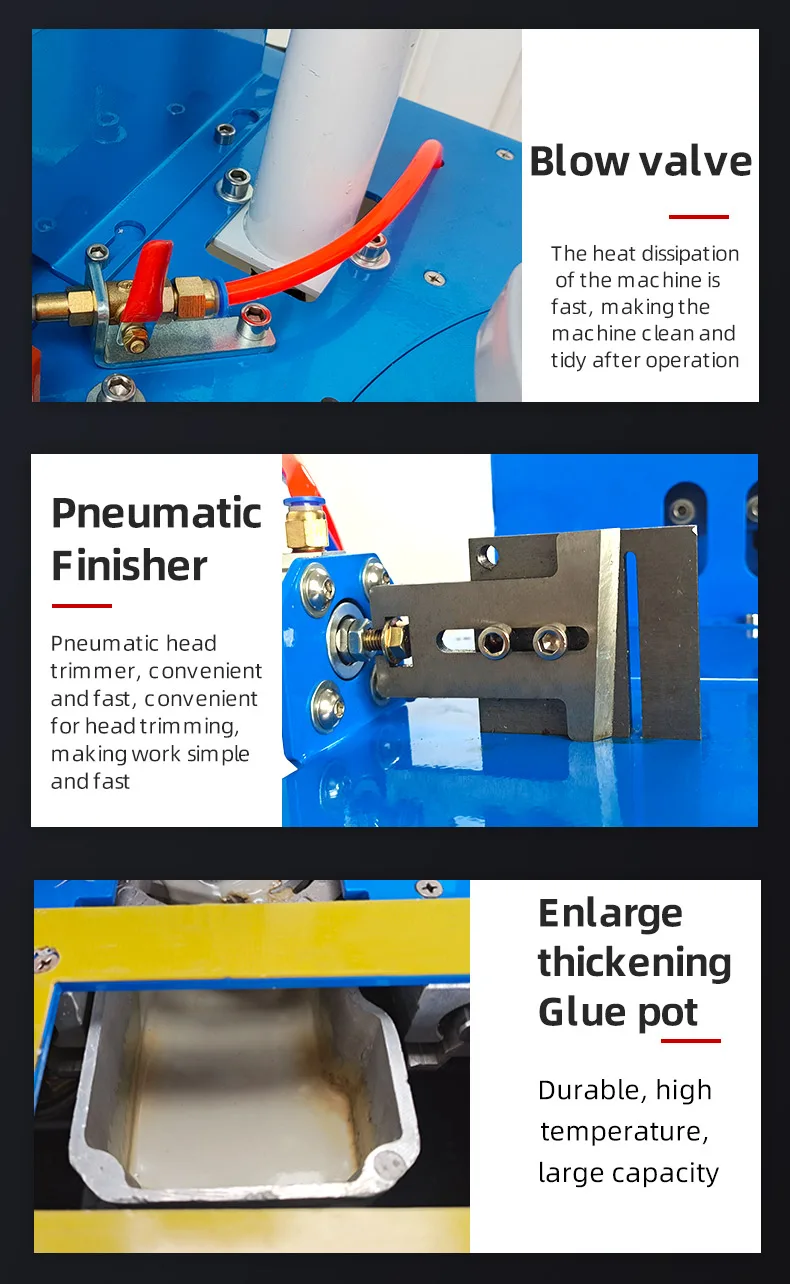
| Glue Pot Capacity | 1000 ml |
| Edge Banding Height Range | 0–50 mm |
| Edge Banding Thickness Range | 0.3–3 mm |
| Minimum Sheet Length | 250 mm |
| Minimum Sheet Width | 100 mm |
| Overall Dimensions (L×W×H) | 1160 × 470 × 690 mm |
| Net Weight | 70 kg |
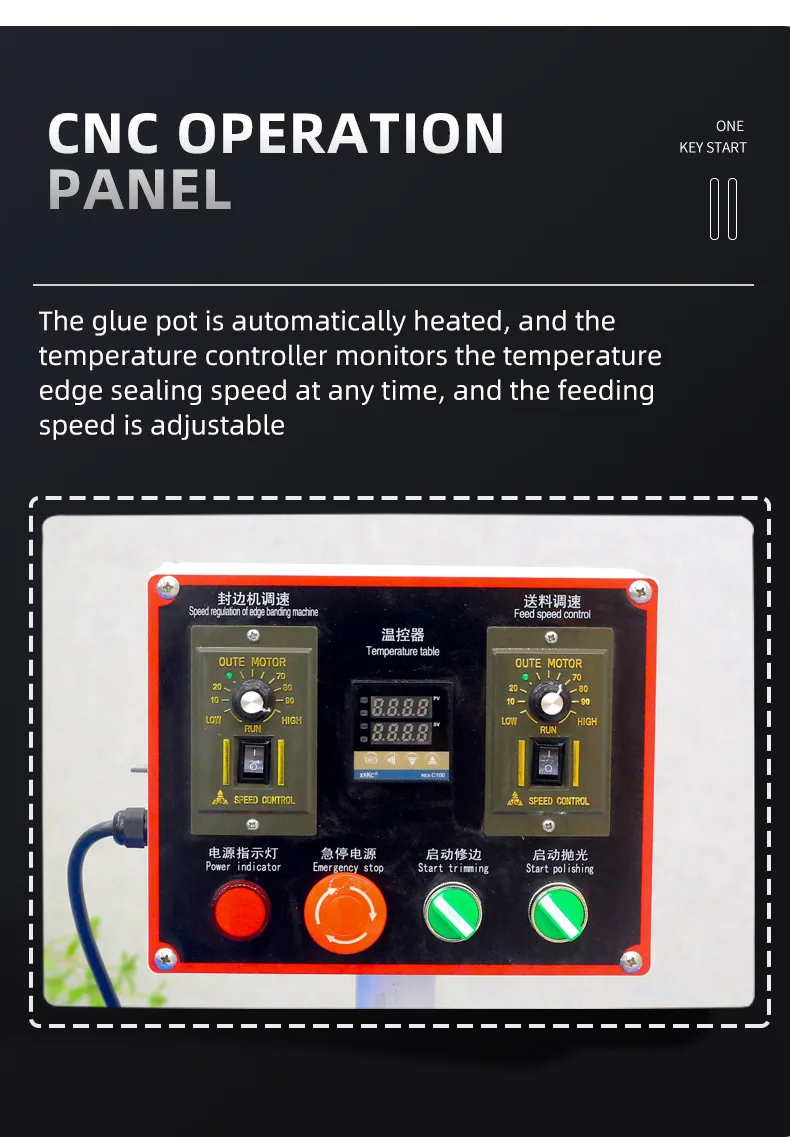
| Control Panel Languages | Chinese, English; customizable to Spanish and others |
| Plug Options | EU, USA, AU, UK |
| Key Features | Straight edge banding, trimming, polishing |
Application Suitability
| Application | Material or Output |
|---|---|
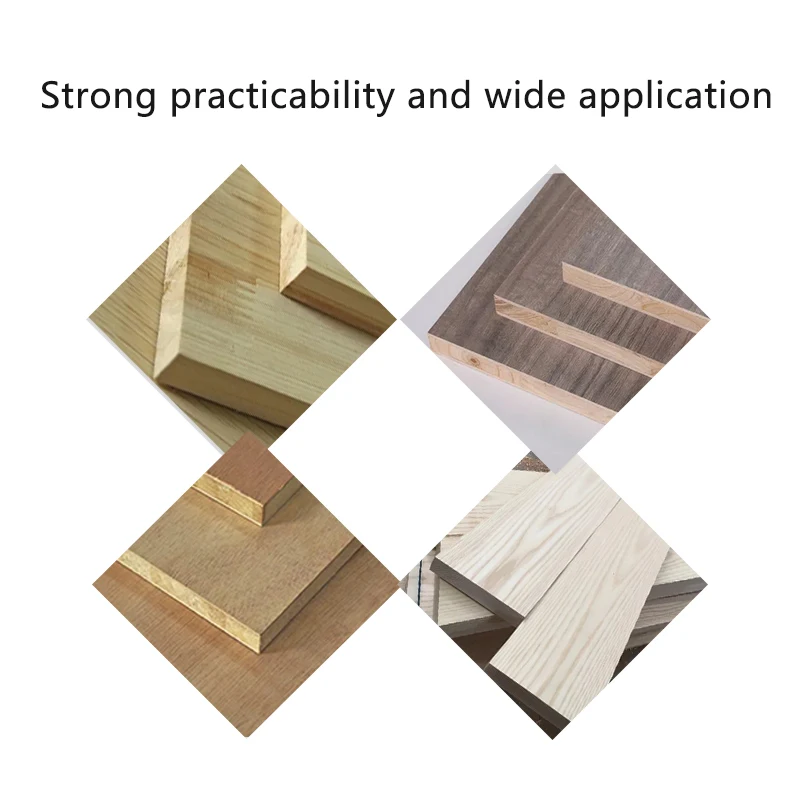
| Cabinet door and carcass edge finishing | MDF and particleboard with PVC or melamine banding |
| Custom furniture panel edging | Plywood and blockboard with veneer banding |
| Polymer door profile banding | Polymer substrates with matching PVC edge strips |
| Small-batch workshop production | Mixed panel materials in job-shop environments |
| Phased line entry station | Panels requiring straight edge banding before downstream boring or slotting |
Why Voltage Confirmation Should Precede Every Edge Banding Machine Order
An edge bander that does not match your local electrical supply is not a machine — it is dead weight on your factory floor.
I have been called to commissioning jobs where the machine arrived with a 380V motor wired for a region running 220V single-phase. The glue pot never reached temperature, the trimming motors stalled under load, and the entire first batch showed visible glue lines on every panel. The Edge Banding Machine manufacturer had built the unit correctly; the specification conversation had simply skipped the most basic question. That kind of oversight does not just waste a day — it erodes operator trust before production has even started [NEED_CITE: voltage and frequency standards by export market].
Matching the Machine Tier to Your Current and Future Panel Volume
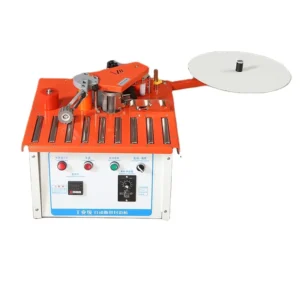
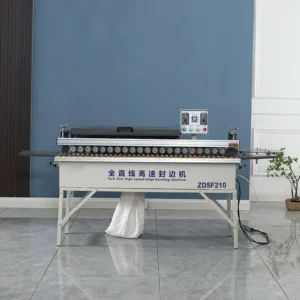
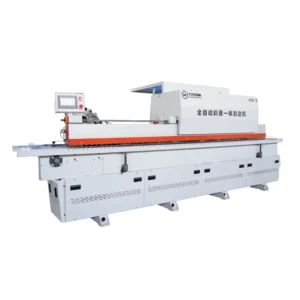
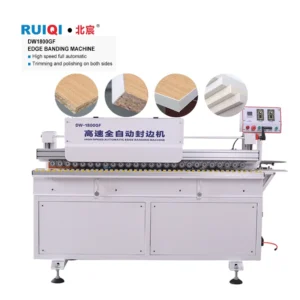
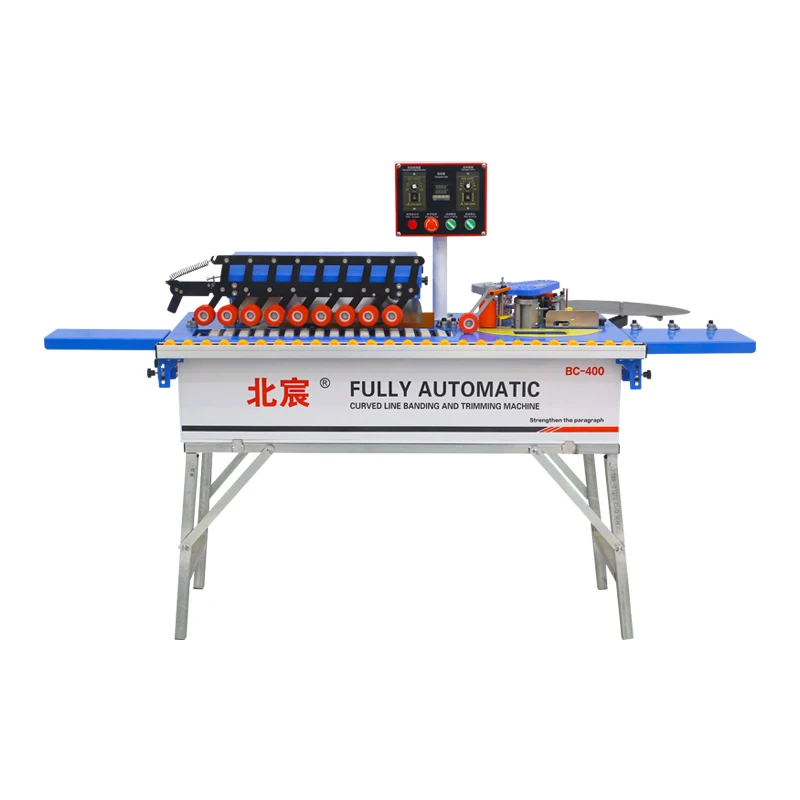
When a workshop surveys a complete edge banding machine family, the first decision is not about features but about where production sits today and where it needs to go. The DW400 occupies the entry tier of this Edge Banding Machine manufacturer’s range, configured for straight banding, dual trimming, and polishing. For a joinery shop moving from manual edge treatment to mechanized output, this configuration handles daily runs on MDF, plywood, and particleboard without demanding the footprint or power draw of a full pre-milling line.
Understanding What Each Station Contributes to Edge Quality
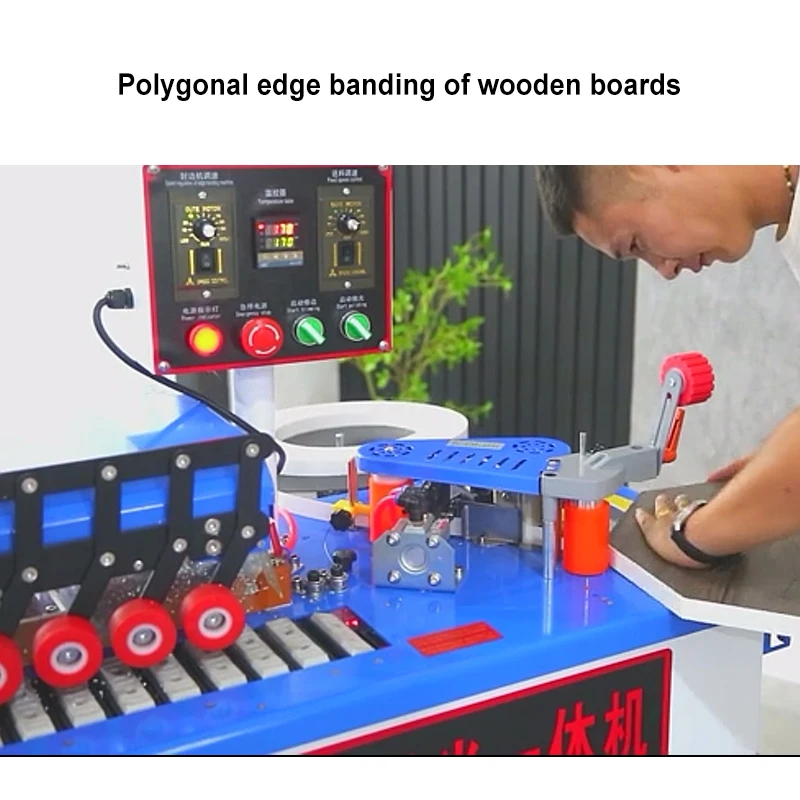
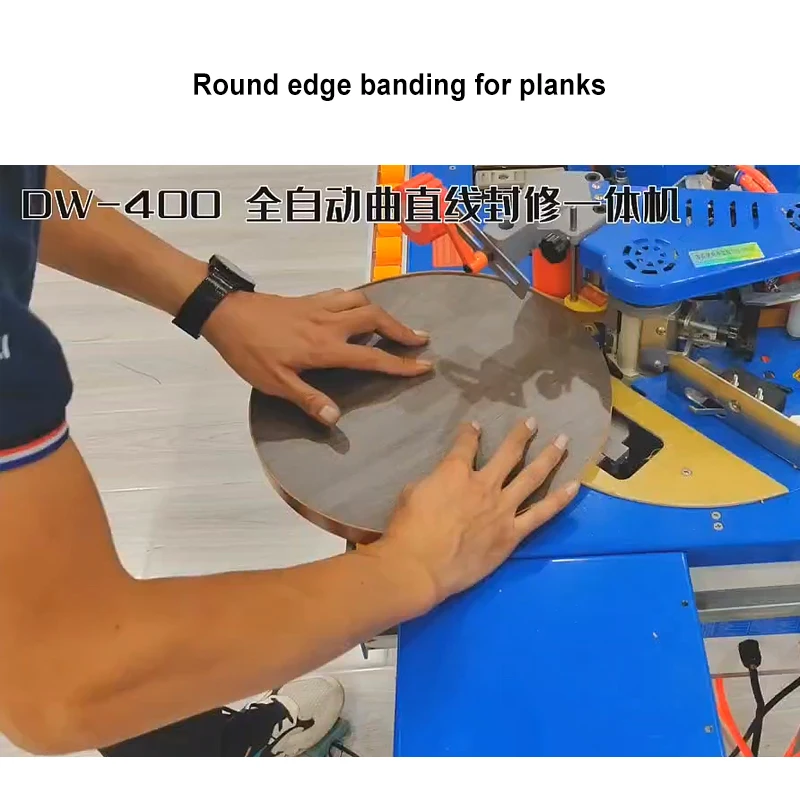
Straight edge banding applies the adhesive and presses the strip to the panel edge. The two trimming stations — each driven by a 650W motor — remove overhanging material from the top and bottom of the strip. Polishing stations at 180W each then smooth the trimmed edge. This sequence produces a finished edge ready for assembly or further processing. Workshops evaluating this model against higher-tier machines should consider whether pre-milling, corner rounding, or scraping functions are necessary for their current substrate mix, or whether those stations can be added later as volumes grow.
Reading the Specifications Through a Production Lens
How Glue Pot Capacity and Banding Thickness Interact in Practice
The 1000 ml glue pot on the DW400 holds enough adhesive for sustained runs on standard panel widths before requiring a refill. Thicker banding materials — particularly PVC at the upper end of the 0.3–3 mm range — demand more adhesive per linear meter than thin melamine strips, so pot capacity directly influences how long an operator can run uninterrupted. The 0.5–0.8 MPa air pressure range feeds the pneumatic pressure rollers that press the banding against the panel edge; insufficient pressure on thick PVC leaves the visible glue lines I have seen scrap entire batches. The 1160 mm machine length keeps the footprint manageable for workshops where floor space is already allocated to saws and boring machines [NEED_CITE: compressed air requirements for pneumatic edge banding systems].
The Cost of Configuring on Assumptions Rather Than Verified Data
When a buyer specifies a machine based on the cheapest quote rather than confirmed substrate compatibility, the failures show up weeks after installation. Thick PVC banding on a machine set up for thin melamine produces chipped edges and incomplete trimming. Panels that are narrower than the minimum sheet width specification — 100 mm on the DW400 — slip past the pressure rollers and jam the feed mechanism. Control panels in a language the operator cannot read mean that temperature and speed adjustments are guessed rather than set, and glue line quality drifts without anyone noticing until assembly rejects pile up [NEED_CITE: CE machinery directive requirements for industrial equipment].
Why Procurement Through This Catalogue Reduces Specification Risk
Every model in this range is manufactured in-house, which means the Edge Banding Machine manufacturer can confirm component availability and configuration changes at the quotation stage rather than discovering limits after the order is placed. Voltage customization from 220V to 380V is treated as a standard part of the specification conversation, not a special request. Control panels ship in the language the buyer confirms — Spanish for Latin American plants, English for export markets — so the operator can read temperature settings on day one. The four-stage quality control process includes a pre-shipment test run, meaning the machine is verified against documented parameters before it leaves the factory rather than being tested for the first time on your floor.
Documentation & Verification
- Machine specification sheet with confirmed voltage, frequency, and plug type for your market
- Factory test record using your panel thickness and banding material before dispatch
- CE declaration of conformity and ISO 9001 certificate for customs and compliance
- Operation and maintenance manual written in your confirmed language
- Electrical schematic matching the as-built voltage configuration
- Spare parts list with part numbers for trimming cutters, polishing wheels, and glue pot seals
Installation, Commissioning & Support
- Requires a dedicated circuit matching the confirmed 220V or 380V supply and the 3800W total power draw
- Compact 1160 × 470 mm footprint fits standard workshop aisles without special foundation work
- Arrives as a single unit at 70 kg — two technicians can position it without a forklift
- First-run commissioning includes glue pot temperature calibration for your specific banding thickness
- Operator training covers air pressure adjustment across the 0.5–0.8 MPa range for different substrates
- Trimming cutter and polishing wheel replacement intervals documented in the maintenance manual
What to Include in Your Enquiry
Provide the panel materials you run most frequently — MDF, particleboard, plywood, or a mix — along with the edge banding type and thickness you plan to use. Confirm your facility voltage, frequency, and the plug standard required locally. Specify the control panel language your operators need. If you are evaluating this model as part of a broader line layout, note your upstream saw capacity and downstream boring or slotting stations so throughput can be matched.
Frequently Asked Questions
Q: Which model tier fits my current production volume and future growth?
A: The DW400 handles straight edge banding, trimming, and polishing for workshops moving from manual to mechanized production. If your volume grows to require pre-milling, corner rounding, or scraping, the manufacturer’s range includes higher-tier models within the same product family. This allows you to scale capacity without switching suppliers or retraining operators on an entirely different control platform.
Q: How is voltage, frequency, and plug type confirmed before shipment?
A: During the quotation stage, the application engineer requests your facility voltage, frequency, and plug standard. The DW400 is configurable for 220V or 380V and ships with EU, USA, AU, or UK plugs as specified. The electrical schematic included with the machine documentation reflects the as-built configuration, and the pre-shipment test run is conducted at the confirmed voltage.
Q: What edge banding materials and thicknesses does the DW400 handle?
A: The machine processes PVC, veneer, and melamine banding in a thickness range of 0.3 to 3 mm, with an edge height capacity of 0 to 50 mm. Thicker PVC banding near the upper limit requires careful glue pot temperature and air pressure calibration to avoid visible glue lines. Confirming your banding material and thickness at the enquiry stage ensures the machine ships with the correct setup.
Q: Can I visit the factory to see sample processing on my own panels?
A: Factory visits are welcomed and can include a test run using your own panel substrate and edge banding material. The pre-shipment test record documents edge quality, trimming accuracy, and polishing finish on your specific material combination. If a physical visit is not practical, a sample processing video and test report can be arranged before the machine ships.
Q: How does the full machine range support scaling from one station to a complete line?
A: The catalogue spans entry-level models like the DW400 through full-function pre-milling edge banders, alongside sliding table saws, boring machines, and auxiliary equipment. A workshop can start with a single edge banding station and add compatible upstream and downstream machines over time. Because all equipment comes from the same manufacturer, feed heights, throughput rates, and control interfaces remain compatible across the line.