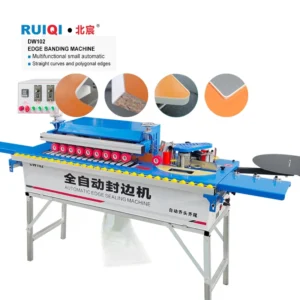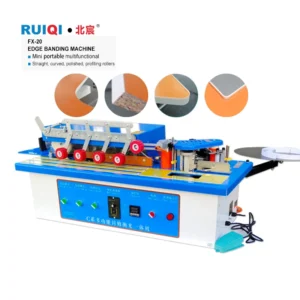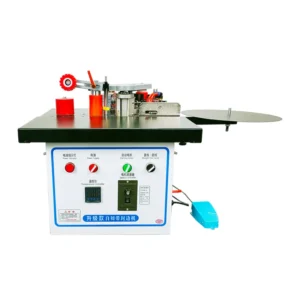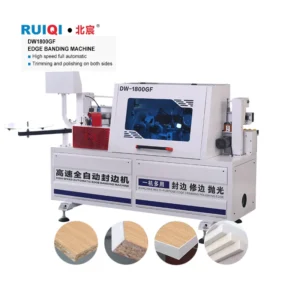
Description
Verified electrical configuration — every DW702 ships with a confirmed voltage, frequency, and plug type matched to the buyer’s local grid before the crate leaves Shandong.
Technical Specifications
| Parameter | Value |
|---|---|
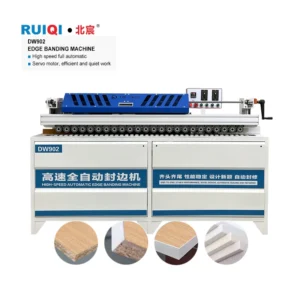
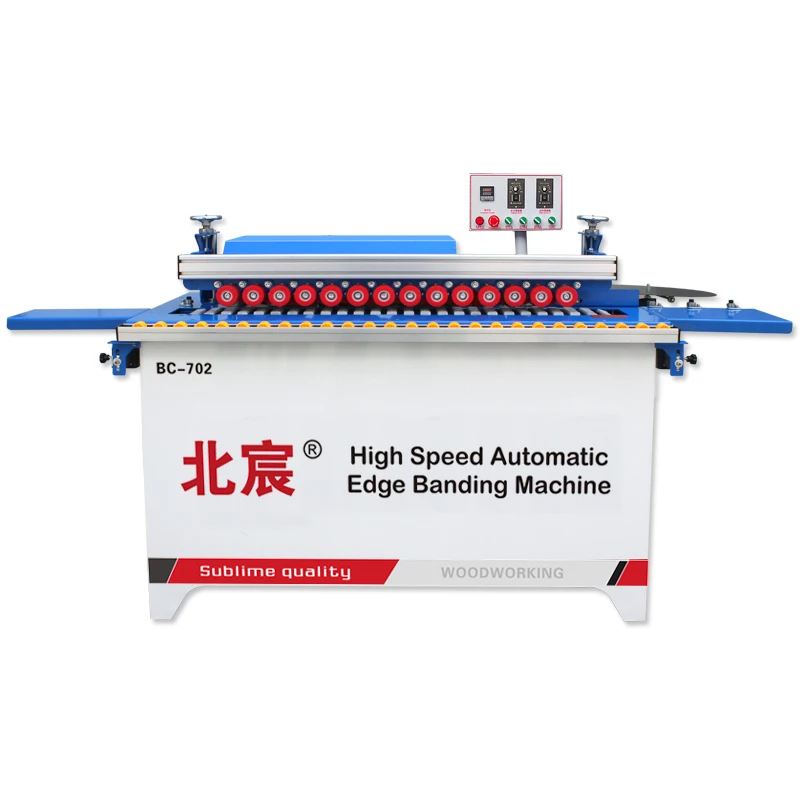
| Model | DW702 |
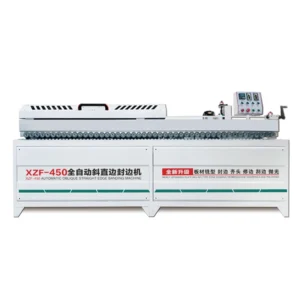
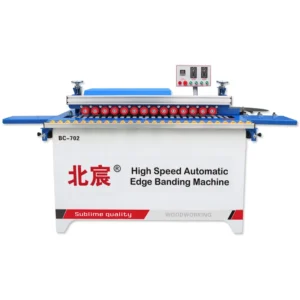
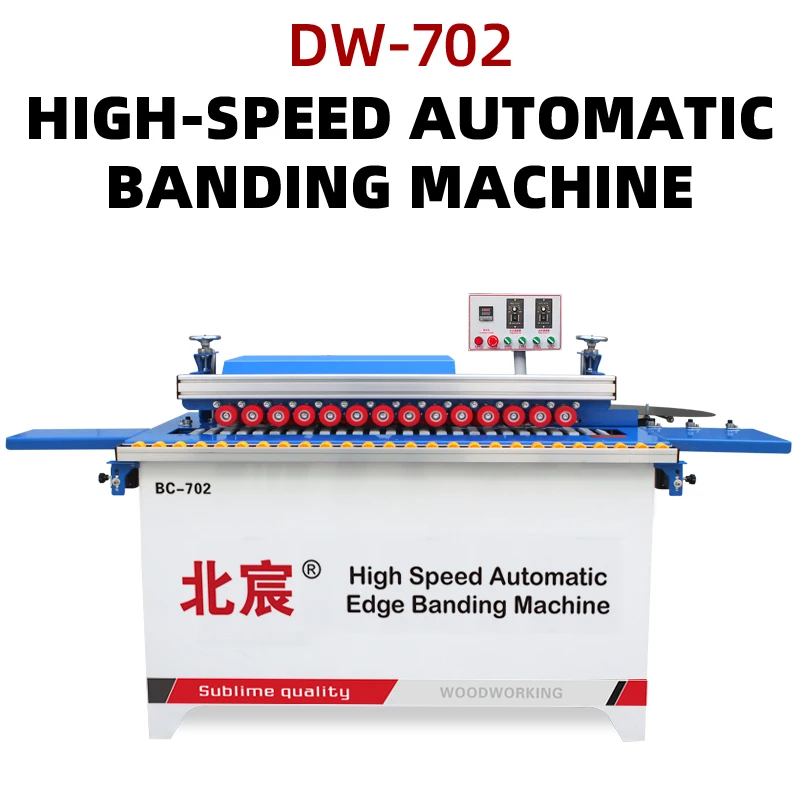
| Product Type | Automatic Edge Banding Machine |
| Total Power | 3800 W |
| Voltage & Frequency | 220 V / 380 V, configurable (50 Hz / 60 Hz to be confirmed at order) |
| Trimming Power | 800 W × 2 |
| Polishing Power | 180 W × 2 |
| Vacuum Power | 1200 W |
| Transmission Power | 140 W |
| Edge Feed Power | 20 W |
| Overall Dimensions (L × W × H) | 120 × 55 × 110 cm |
| Net Weight | 105 kg |
| Minimum Sheet Length | 25 cm |
| Minimum Sheet Width | 10 cm |
| Edge Banding Height | 0–50 mm |
| Edge Banding Thickness | 0.3–3 mm |
| Glue Pot Capacity | 1000 ml |
| Air Source Pressure | 0.4–0.8 MPa |
| Standard Functions | Edge banding, trimming, polishing, automatic head and tail cutting, vacuum hold-down |
| Language Options | Chinese, English; customization available (Spanish, French, others) |
Application Suitability
| Application | Material or Output |
|---|---|
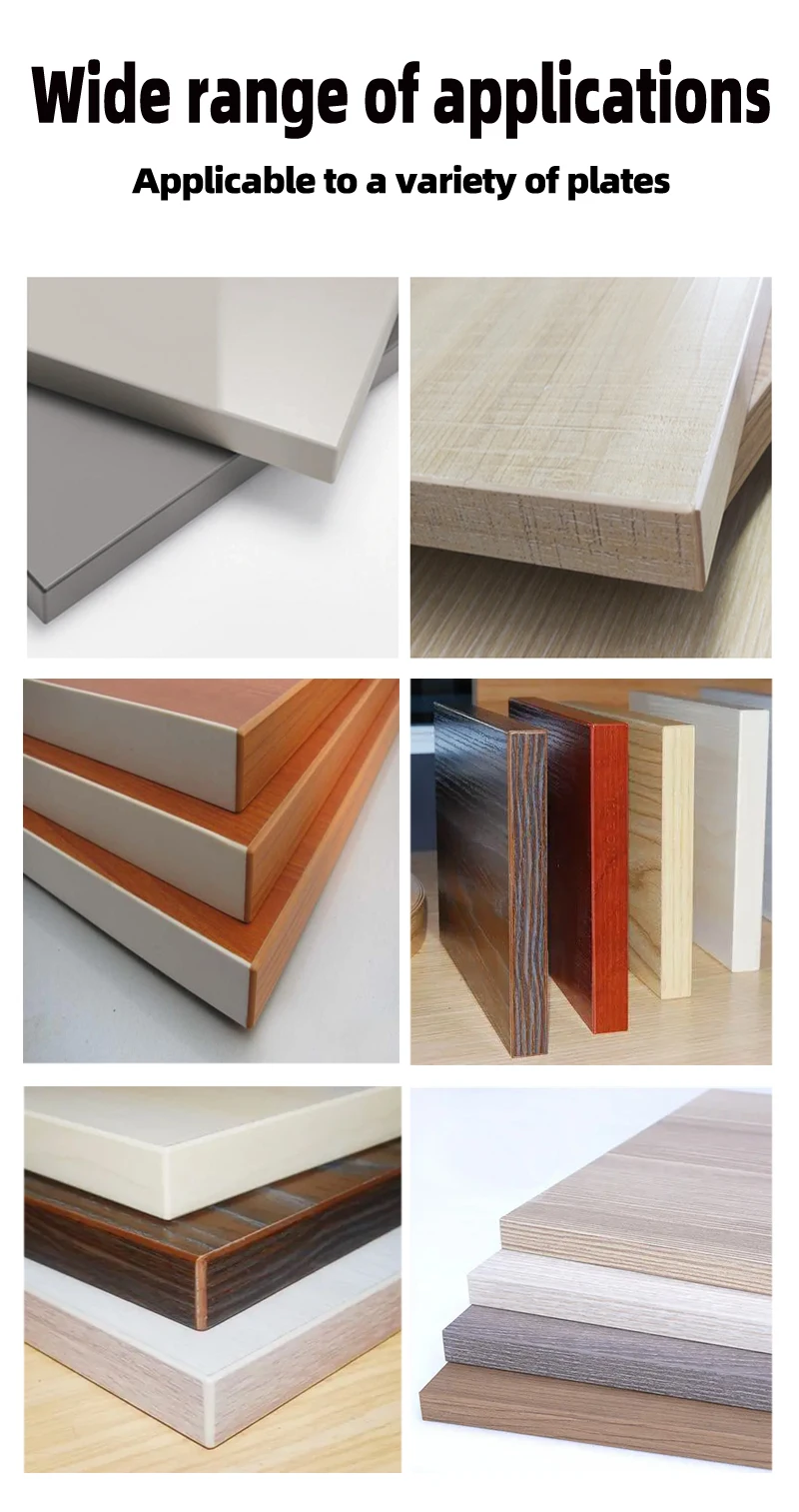
| Cabinet door and carcass edge finishing | MDF and particleboard with PVC or melamine banding |
| Plywood furniture panel edging | Plywood panels with veneer or polymer edge strips |
| Custom furniture small-batch production | Solid wood panels and blockboard up to 50 mm thickness |
| Polymer door profile banding | Polymer composite substrates with matching edge material |
| Joinery workshop automated transition | Mixed sheet materials moving from manual to machine-applied edging |
Why the Voltage Question Comes Before the Machine Price on an automatic edge banding machine manufacturer Order
Confirming voltage, frequency, and plug type at inquiry stage prevents a three-week electrical rebuild on the factory floor.
I learned this the hard way. A Southeast Asian customer ordered a bevel edge bander a few years back. The local supply was 60 Hz, but the machine was wired for 50 Hz. When it arrived, the motor ran hot and the control board tripped on startup. We had to ship a replacement contactor and reprogram the VFD, and the customer’s workshop sat idle for three weeks while we sorted it out [NEED_CITE: voltage and frequency standards by export market]. Since then, I treat electrical confirmation as a non-negotiable step. The DW702 is configurable between 220 V and 380 V, and plug options cover EU, USA, AU, and UK standards, but the right configuration only happens if both sides write it down before production starts.
Mapping the DW702 Within the Ruiqi Range
As an automatic edge banding machine manufacturer offering a full product family, Ruiqi positions the DW702 as the compact all-in-one tier. It carries edge banding, trimming, polishing, head-and-tail cutting, and vacuum hold-down in a single frame, which means a workshop can start here and scale to pre-milling or multi-station models later without changing the control ecosystem or retraining operators on an unfamiliar interface.
A Unified Product Family Eliminates Line Mismatch Risk
Workshops that buy machines piecemeal from different suppliers frequently discover that feed heights, conveyor speeds, or dust extraction port sizes do not align when they try to connect equipment into a line. Sourcing the DW702 from the same manufacturer that builds the sliding table saw upstream and the multi-boring machine downstream keeps throughput and material handling compatible from day one [NEED_CITE: production line integration challenges in small furniture factories]. This matters more as a workshop grows volume and adds shifts.
Reading the Spec Sheet Against Real Workshop Conditions
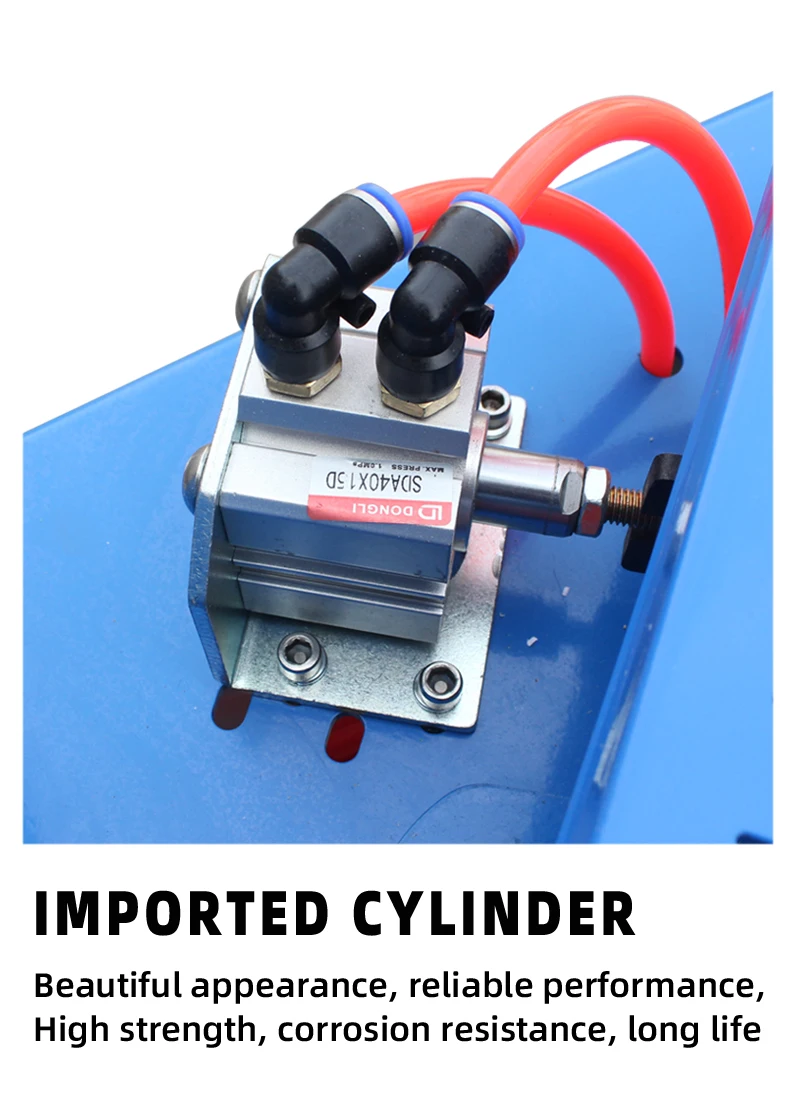
The 0.3–3 mm edge banding thickness range covers standard PVC, ABS, and veneer strips that most cabinet and furniture shops use daily. The glue pot at 1000 ml capacity suits batch production where panels are fed in groups rather than continuous high-speed runs. Trimming at 800 W per side provides adequate cutting torque for standard substrates, while the 1200 W vacuum system holds lighter MDF and particleboard sheets firmly against the fence. Air pressure between 0.4 and 0.8 MPa is standard for pneumatic clamping in this class, and buyers should confirm their compressor can sustain the upper range during peak cycling [NEED_CITE: compressed air requirements for pneumatic woodworking machinery].
The Hidden Cost of Skipping Configuration Verification
When a buyer orders an edge bander without confirming minimum sheet dimensions, the machine may arrive only to find that the workshop’s most common panel size falls below the 25 cm minimum length or the 10 cm minimum width. Small offcuts then have to be banded by hand, which defeats the purpose of the purchase [NEED_CITE: minimum workpiece dimensions for automatic edge banding machines]. Similarly, a control panel delivered in a language the operator cannot read delays commissioning by days or weeks while translated overlays are sourced locally. These are not machine defects — they are configuration gaps that a structured pre-order checklist prevents.
Why Procurement Through Ruiqi Works for This Model
The DW702 is built on the same production line as Ruiqi’s higher-tier edge banders, so component sourcing and precision grinding standards carry across the range. Four-stage quality control — incoming material, in-process, finished product, and pre-shipment verification — applies to every unit regardless of its position in the catalogue. Electrical schematics are reviewed against the buyer’s confirmed supply before the control cabinet is closed. Operation and maintenance manuals are produced in the agreed language, and a full spare parts list ships inside the crate. Factory visits are welcomed, so buyers can watch their specific DW702 run test panels before it is packed.
Documentation & Verification
- CE declaration of conformity covering the DW702 model family
- Electrical schematic confirming voltage, frequency, and plug type for your facility
- Factory test record showing edge finish on your specified substrate and banding material
- ISO 9001 certificate included in the shipping documentation package
- Operation and maintenance manual written in the agreed language
- Spare parts list with part numbers for reordering consumables
Installation, Commissioning & Support
- Requires a level floor section of approximately 120 × 55 cm with clearance for sheet infeed
- Dedicated circuit matching the confirmed 220 V or 380 V supply with appropriate breaker rating
- Machine ships assembled; connect air supply at 0.4–0.8 MPa and power before first run
- Glue pot temperature and feed alignment calibrated during initial commissioning sequence
- Operator training covers control panel navigation in the configured language
- Trimming and polishing consumables listed in the spare parts documentation for reorder planning
What to Include in Your Inquiry
Send your most common panel material, typical sheet dimensions, and the edge banding thickness you run most often so we can confirm the DW702 covers your workload. Include your workshop voltage and frequency — a photo of your main distribution board nameplate is ideal — along with your preferred control panel language. If you are planning to add further stations later, mention your expected production direction so the configuration can accommodate future expansion.
Frequently Asked Questions
Q: Where does the DW702 sit in the Ruiqi edge bander range, and how do I know it matches my volume?
A: The DW702 is the compact all-in-one tier, carrying edge banding, trimming, polishing, and head-and-tail cutting in a single frame. It suits workshops running moderate batch volumes on MDF, particleboard, and plywood. If your throughput demands continuous high-speed feeding or pre-milling, Ruiqi offers higher-tier models within the same product family that share the control ecosystem.
Q: Can I move to a higher-spec Ruiqi model later without retraining my operators?
A: Yes. Because all Ruiqi edge banders share the same control platform and panel logic, operators trained on the DW702 transition to higher-tier models with minimal additional instruction. The physical workflow and safety routines remain consistent, which protects your training investment as production volume grows.
Q: How do you confirm the correct voltage and frequency before the machine ships?
A: During the quotation stage we request your local voltage, frequency, and plug standard. We then produce an electrical schematic reflecting those values and send it for your written approval before the control cabinet is wired. This step prevents the kind of on-site electrical rework I have seen stall commissioning by weeks.
Q: Can I send sample panels for a test run before the machine is packed?
A: Yes. We run your actual substrate and edge banding material through the DW702 during the pre-shipment test and share the factory test record with you. This confirms edge finish quality, glue adhesion, and trimming accuracy on your specific material combination before the crate is closed.
Q: What documentation arrives with the machine?
A: The crate includes the CE declaration of conformity, ISO 9001 certificate, electrical schematic matching your confirmed supply, operation manual in your agreed language, spare parts list, packing photographs, and customs documentation support for the destination country.