Description
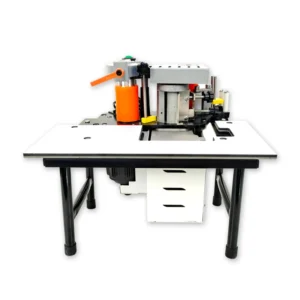
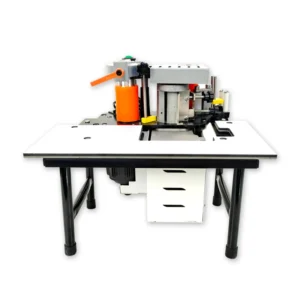
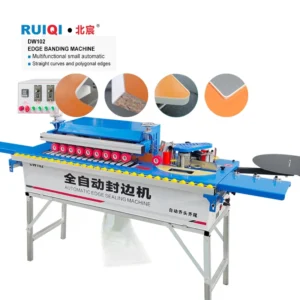
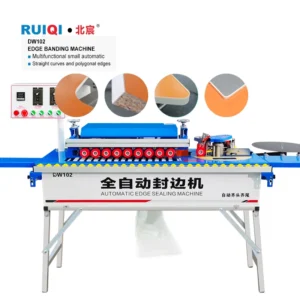
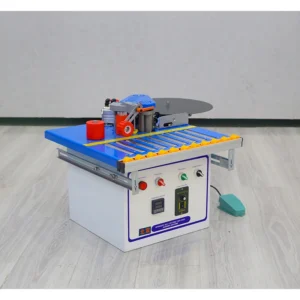
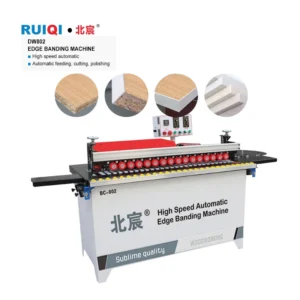
Complete Machine Range Clarity — The DW3000 sits within a tiered edge banding machine catalogue, letting workshops map each model to their production stage without switching suppliers.
Technical Specifications
| Parameter | Value |
|---|---|
| Model | DW3000 |
| Product Type | Fully Automatic Edge Banding Machine |
| Total Power | 11 kW |
| Voltage | 380V / 415V |
| Feed Speed | 0–12 m/min |
| Minimum Panel Length | 30 cm |
| Minimum Panel Width | 15 cm |
| Edge Banding Height Range | 0–50 mm |
| Edge Banding Thickness Range | 0.3–3 mm |
| Pre-milling Motor | 2.2 kW |
| Heating Power | 2.2 kW × 2 (double heat gun) |
| Trimming Motor | 2.2 kW × 2 (spindle type) |
| Polishing Motor | 0.4 kW × 2 |
| Vacuum Motor | 550 W |
| Glue Pot Capacity | 4000 ml |
| Air Source Pressure | 0.5–0.7 MPa |
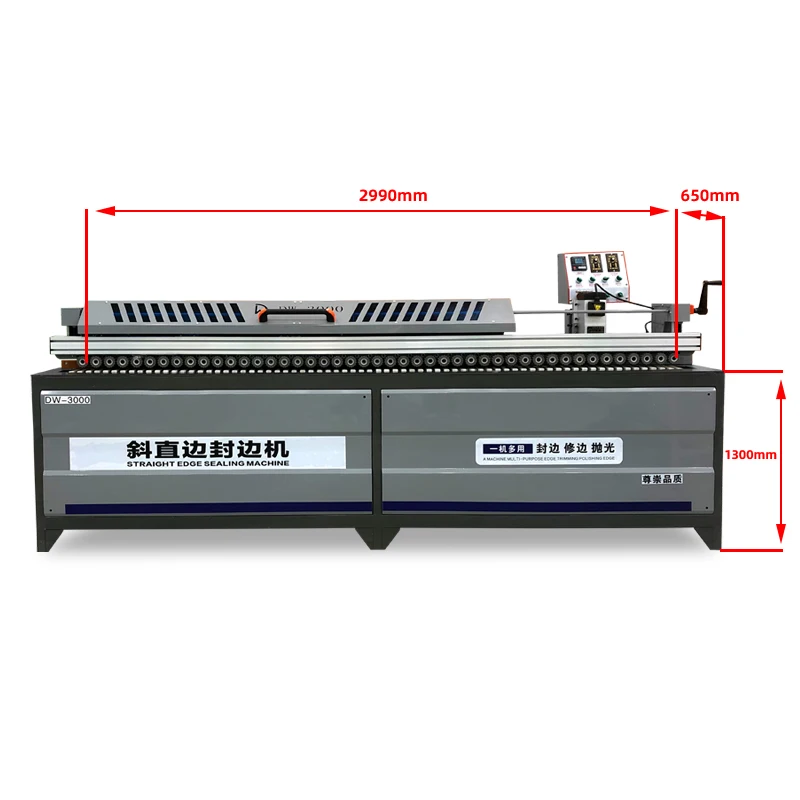
| Product Size | 299 × 65 × 130 cm |
| Product Weight | 430 kg |
| Edge Banding Angle | 30–90° (8 groups oblique pressure wheels) |
| Edge Band Slotting Device | Adjustable height |
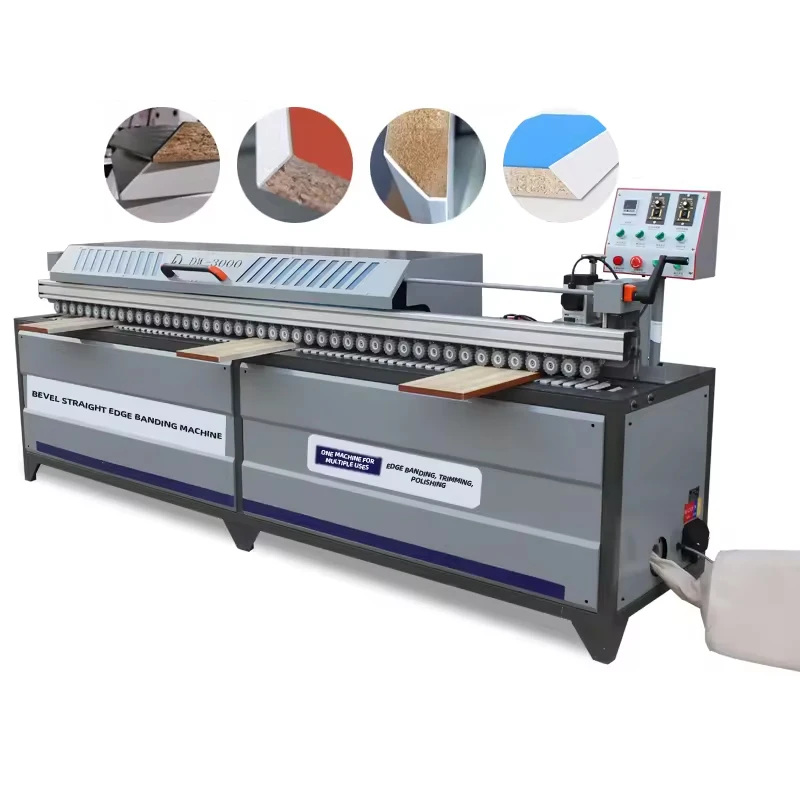
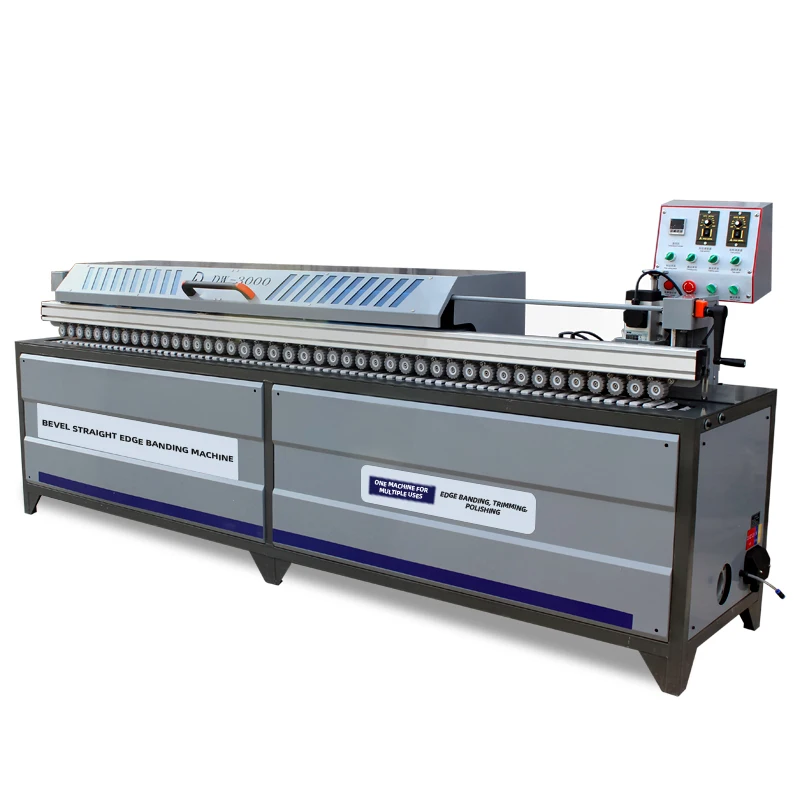
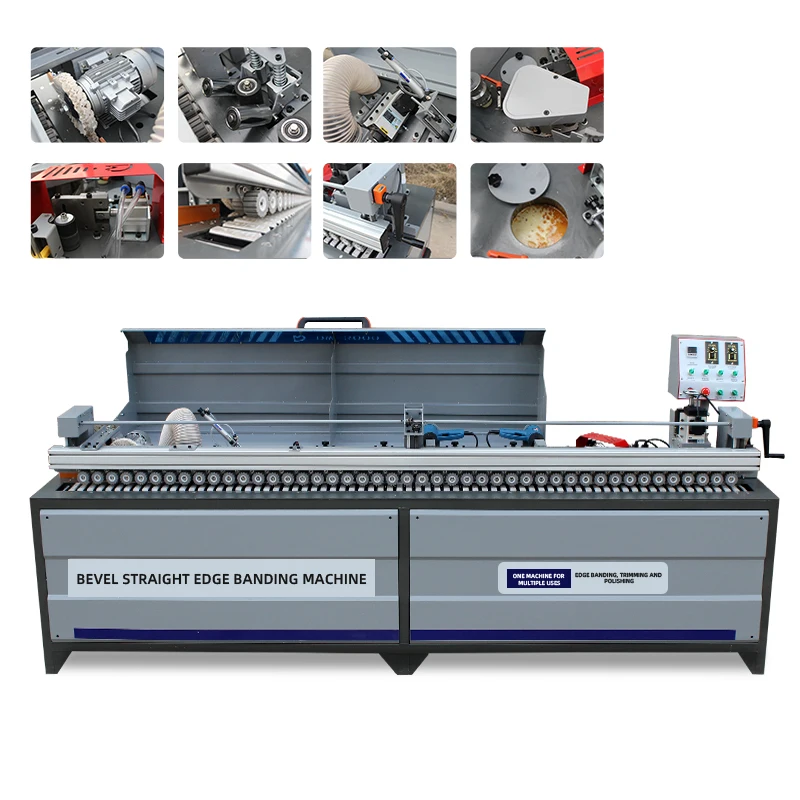
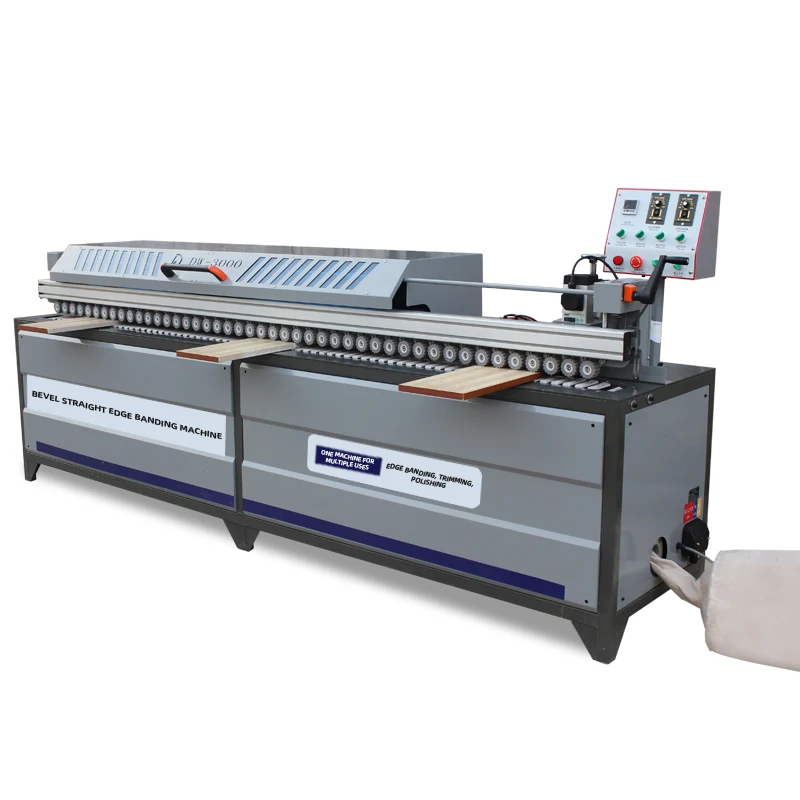
| Key Features | Plate milling, trimming, scraping, polishing, high-power vacuuming, double cylinder feeding belt, 3 spindle motors |
Application Suitability
| Application | Material or Output |
|---|---|
| Custom cabinet door edge finishing | MDF and plywood with PVC banding |
| Bevel-edge shelving and display units | Particleboard and veneer banding at 30–90° |
| Full-panel processing with pre-milling and slotting | MDF, plywood, particleboard, and solid wood panels |
| Straight and bevel edge banding in one pass | Panels from 15 cm minimum width with 0.3–3 mm edge thickness |
Why the Voltage Question Should Come Before the Price on Any Edge Bander
Confirming local voltage and frequency before quoting prevents a machine from arriving dead on the shop floor.
An edge banding machine for sale at a competitive price means nothing if the workshop runs 415V and the unit was wired for a different supply. I have walked through installations where the main contactor tripped on first start because nobody checked the three-phase frequency against local standards. The DW3000 is configurable at 380V or 415V, but that choice must happen at inquiry stage — not after the crate is opened. [NEED_CITE: voltage and frequency standards by export market]
Catalogue Tier Logic and Where the DW3000 Fits
When a workshop surveys an edge banding machine for sale, the first decision is not which single model to buy but which tier covers current output and foreseeable growth. The DW3000 occupies the mid-to-upper range with pre-milling, bevel capability, and slotting in one pass. Entry-level units in the same catalogue handle straight edges only, while full-function models above this tier add additional finishing stations. Mapping the range upfront means a growing factory adds stations or moves to the next model without changing supplier or relearning controls.
Scaling Within One Product Family
Buyers who start with a compact edge bander often face a painful transition when volume increases — new supplier, different control logic, incompatible feed heights. Keeping the DW3000 within a broader product family means the control panel layout, electrical architecture, and spare parts ecosystem remain consistent across tiers. A joinery workshop that begins with a basic straight-edge model can move to this configuration when bevel work or slotting enters the order book, and the operator training investment carries forward. [NEED_CITE: production scaling challenges in panel processing workshops]
Reading the Numbers That Actually Matter
The 11 kW total power splits across pre-milling, double heating, trimming, polishing, and vacuum motors — each station drawing what it needs without starving another. The double heat gun design at 2.2 kW each ensures consistent glue activation whether you are running thin PVC at 0.3 mm or thick veneer at 3 mm. Feed speed reaches 12 m/min, but the meaningful range depends on panel thickness and edge material; slower feed gives the pre-milling cutter and pressure wheels more engagement time on heavier substrates. The 4000 ml glue pot capacity supports longer runs without refill stops, which matters when a batch of cabinet doors needs continuous processing.
What Happens When Specifications Are Ignored at Order Stage
Piecemeal purchasing without checking feed height, throughput compatibility, or substrate behaviour leads to machines that technically work but bottleneck the line. A panel plant running particleboard at full shift will discover that an underspecified glue system leaves visible seams by midday. Operators facing a control panel in an unfamiliar language stall commissioning while they hunt for translated manuals. These are not defect complaints — they are configuration failures that surface only after the edge banding machine for sale has been installed and committed to production. [NEED_CITE: common edge banding defects caused by substrate and configuration mismatch]
Why Sourcing the DW3000 Through This Catalogue
Every model in the range shares the same electrical architecture and control logic, so moving between tiers does not mean retraining operators from scratch. Voltage is confirmed at order stage with a formal electrical schematic matching your local supply, not assumed from a default setting. The four-stage quality control process includes a factory test on your specified panel material before the machine leaves the floor. Language on the control panel is set before shipment — standard Chinese and English, or customizable to Spanish and other languages on request. Engineer-led configuration proposals arrive within 24 hours of receiving your production requirements, so the model selection is based on actual substrate and throughput data rather than catalogue position alone.
Documentation & Verification
- CE declaration of conformity covering the DW3000 and its full station configuration
- ISO 9001 certificate for the manufacturing quality management system
- Electrical schematic confirming your ordered voltage before dispatch
- Factory test record on your specified panel thickness and edge material
- Operation and maintenance manual in your chosen language with spare parts list
Installation, Commissioning & Support
- Floor space planning for the 299 cm length with clearance for panel infeed and outfeed
- Dedicated 380V/415V three-phase circuit with correct breaker rating for 11 kW total draw
- Machine ships fully assembled; position, level, and connect air supply at 0.5–0.7 MPa
- First-run parameter setting for feed speed, glue temperature, and trimming depth on your actual panels
- Operator training on the 30–90° bevel adjustment and slotting device height calibration
- Spare parts list covering trimming spindles, pressure wheel assemblies, and heating elements
Starting a Configuration Conversation
Before requesting a quotation, it helps to share the primary panel substrates you process — MDF, particleboard, plywood, or solid wood — along with the edge banding materials and thicknesses in your typical orders. Let us know your local voltage and frequency, preferred control panel language, and whether bevel edge banding or slotting is part of your current or planned workload. If you run other machines upstream or downstream, mentioning their feed height and throughput helps ensure the DW3000 integrates without creating a bottleneck.
Frequently Asked Questions
Q: How do I choose the right model tier from the catalogue for my panel material and throughput?
A: Share your primary substrate, edge banding type, and daily volume. We map your requirements against the range, identifying whether the DW3000’s pre-milling and bevel capability match your needs or whether an entry-level or higher-tier model serves your production profile better without overspending on unused stations.
Q: Can the voltage and frequency be confirmed for my specific market before ordering?
A: Yes. The DW3000 supports 380V and 415V configurations. We confirm your local supply standards at inquiry stage and include a matching electrical schematic with the order documentation, so the machine arrives ready to connect without transformers or rewiring.
Q: What control panel language options are available beyond Chinese and English?
A: Chinese and English ship as standard. The control interface can be customized to Spanish or other languages before dispatch. Specify your preferred language during the quotation stage so the panel is configured and tested before the machine leaves the factory.
Q: Which processing stations are essential for my combination of panel substrate and edge material?
A: Particleboard with PVC banding typically benefits from pre-milling and the double heat gun for reliable adhesion. Veneer on MDF may require careful trimming and polishing setup. We recommend the station combination based on your actual material samples during the configuration proposal stage.
Q: How does the DW3000 fit into future workshop expansion plans?
A: The DW3000 shares control logic and electrical architecture with other models in the catalogue. When your workshop adds new panel types or increases volume, moving to a higher-tier machine within the same product family preserves operator familiarity and spare parts compatibility.