Description
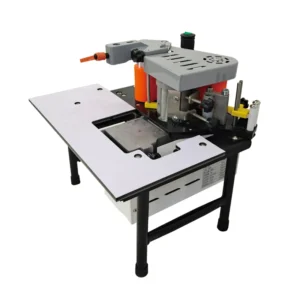
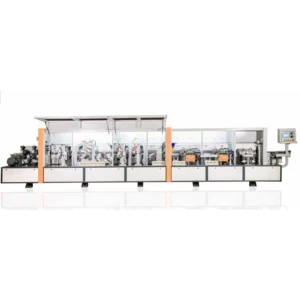
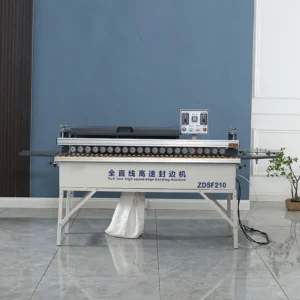
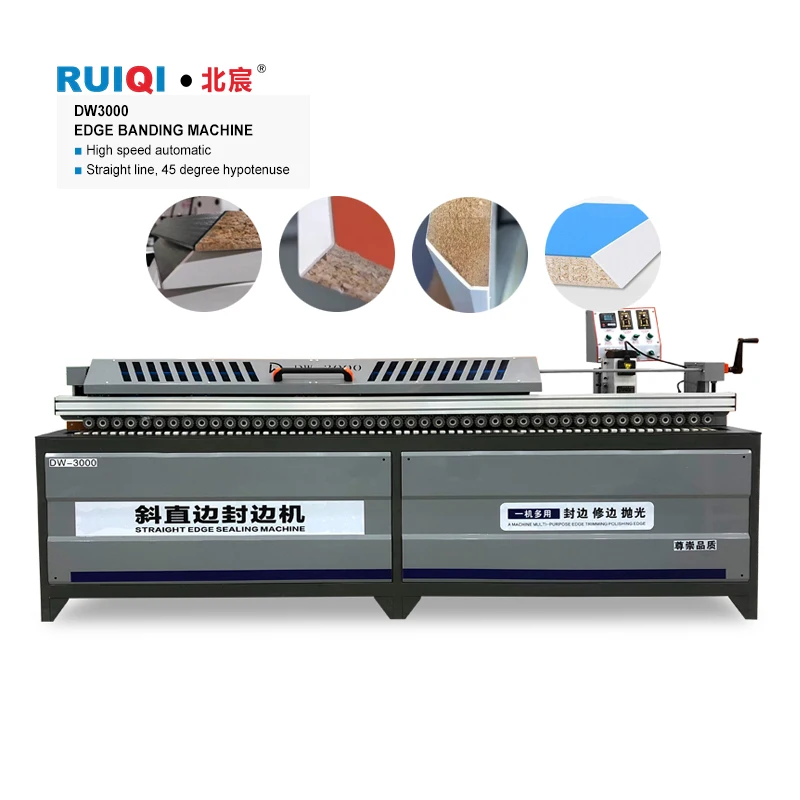
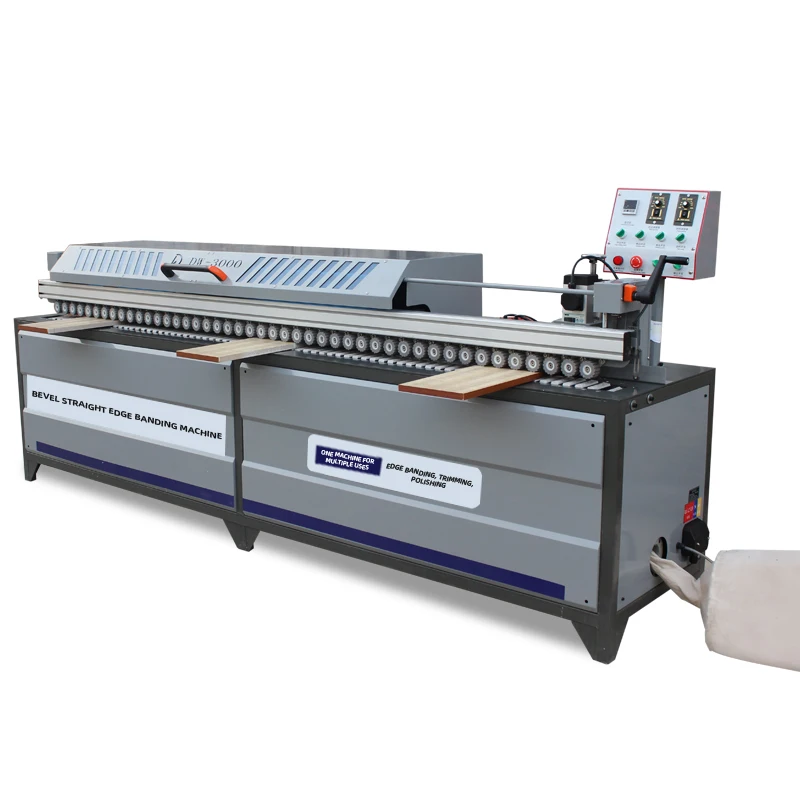
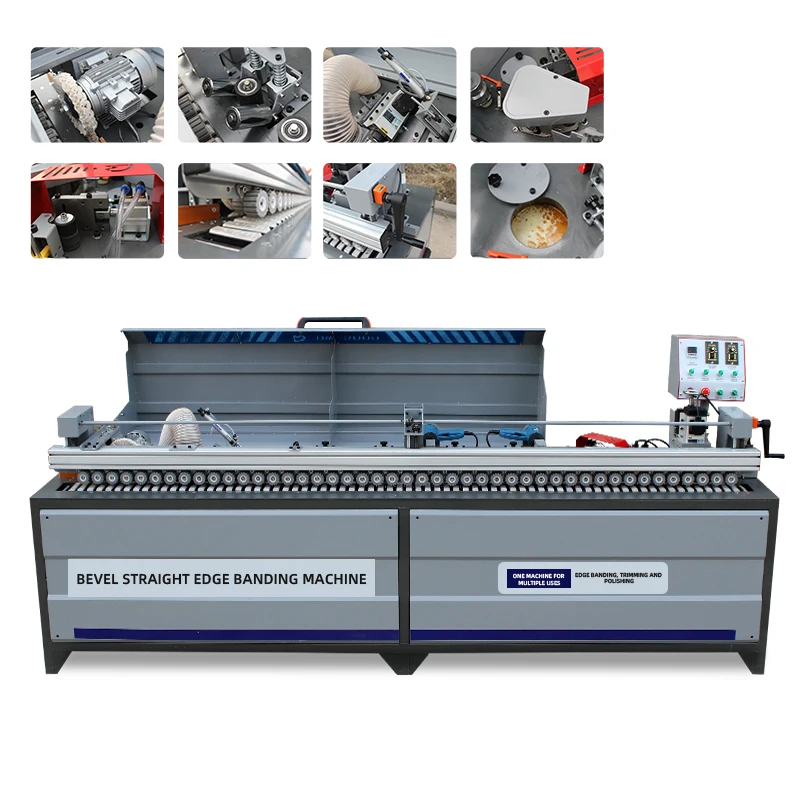
Precision-Built Pre-Milling Edge Bander — the DW3000 features a dedicated 2.2 kW pre-milling station and an 8-group adjustable pressure wheel array that prepare and finish panel edges to tight tolerances before assembly.
Technical Specifications
| Parameter | Value |
|---|---|
| Model | DW3000 |
| Product Type | Automatic Edge Banding Machine |
| Total Power | 11 kW |
| Voltage | 380V / 415V (frequency 50 Hz / 60 Hz — confirm for destination) |
| Feed Speed | 0–12 m/min |
| Pre-milling Motor | 2.2 kW |
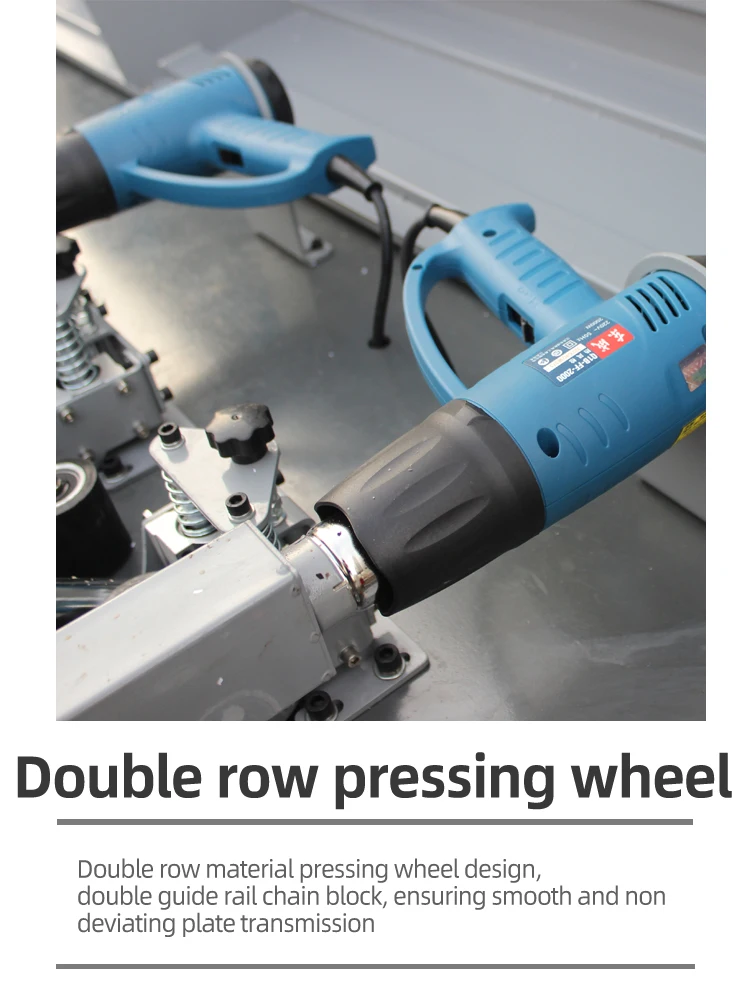
| Heating Power | 2.2 kW × 2 (double heat gun) |
| Trimming Power | 2.2 kW × 2 (3 spindle trimming motors total) |
| Polishing Power | 0.4 kW × 2 |
| Vacuum Power | 550 W |
| Transmission Power | 180 W |
| Glue Pot Capacity | 4000 ml |
| Air Source Pressure | 0.5–0.7 MPa |
| Edge Banding Thickness | 0.3–3 mm |
| Edge Banding Height | 0–50 mm |
| Minimum Sheet Length | 30 cm |
| Minimum Sheet Width | 15 cm |
| Pressure Wheel Configuration | 8 groups, angle adjustable 30–90° |
| Feed Mechanism | Double cylinder feeding belt |
| Edge Band Slotting Device | Included, height adjustable |
| Overall Dimensions (L × W × H) | 299 × 65 × 130 cm |
| Net Weight | 430 kg |
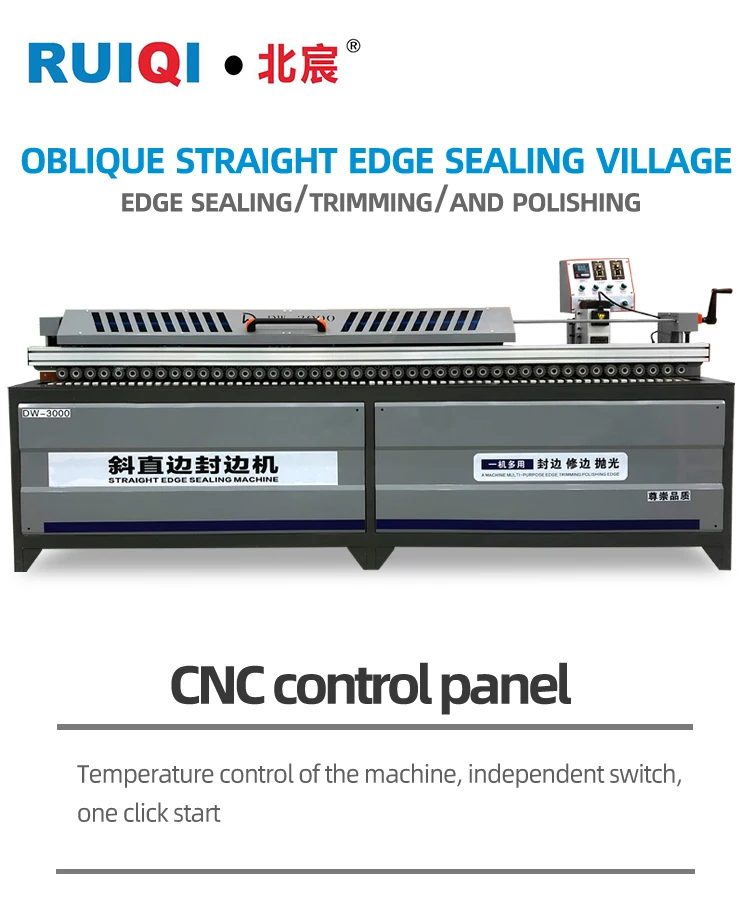
| Control Language Options | Chinese and English standard; other languages customizable |
Application Suitability
| Application | Material or Output |
|---|---|
| Cabinet door edge finishing | MDF and plywood panels with PVC or veneer edge banding (0.3–3 mm) |
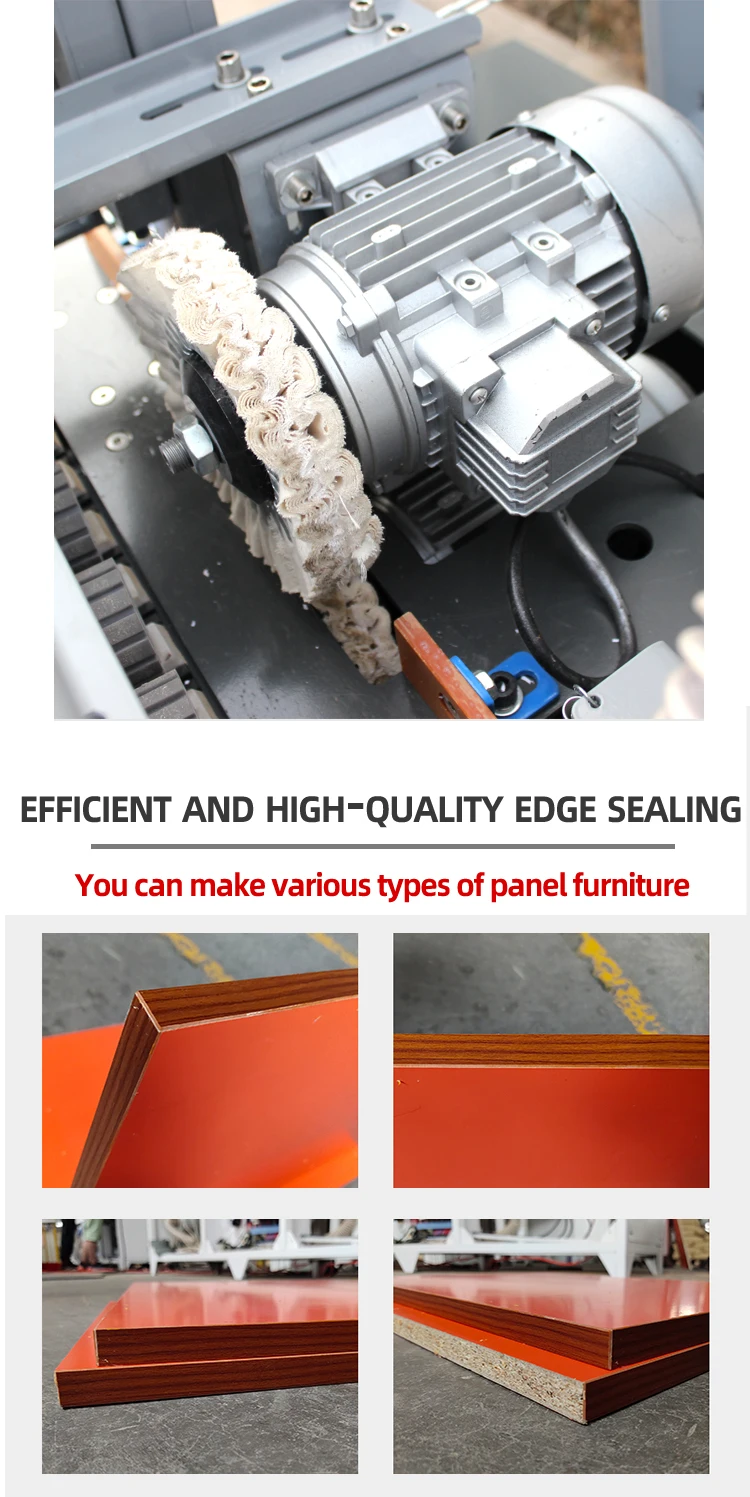
| Custom furniture panel processing | Particleboard and melamine-faced board with straight and 45° bevel edges |
| Wardrobe and shelving production | Artificial boards requiring pre-milled edges for clean glue-line adhesion |
| Workshop-scale batch runs | Panel substrates up to 50 mm edge banding height at variable feed rates |
Why the Substrate Question Must Come Before the Quotation
Every edge banding failure I have traced back to a machine setting started with a material mismatch, not a mechanical fault.
In a cabinet factory in Dubai, a pre-milling edge bander ran flawlessly on standard particleboard but began releasing edge strips on contact when the buyer switched to recycled-content board without adjusting glue temperature or pressure wheel angle. The machine was doing exactly what it was set to do; the settings no longer matched the substrate. Sourcing an Automatic Edge Banding Machine manufacturer who asks what you cut before telling you what to buy avoids this class of failure entirely [NEED_CITE: substrate adhesion variables in panel edge banding].
How the DW3000 Fits Within a Complete Edge Bander Lineup
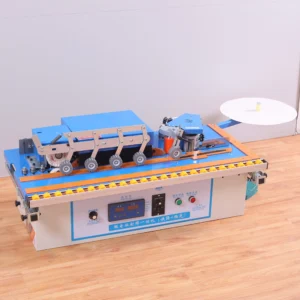
The DW3000 occupies the full-function pre-milling tier of a broader range that starts at entry-level trimming-only models and scales upward. Workshops moving from manual edge finishing to automated output begin with simpler units and add pre-milling capability as panel volume and edge-quality expectations grow. Keeping every tier within one product family means the control interface, spare parts inventory, and operator training carry forward when a factory upgrades, eliminating the relearning cost that comes with switching to a different Automatic Edge Banding Machine manufacturer mid-growth.
Pressure Wheel Geometry and the Bevel Problem
Straight-edge banding is straightforward; the challenge appears the moment a design calls for 30–90° bevel edges on cabinet fascias or decorative panels. The DW3000 uses eight independently adjustable pressure wheel groups that maintain uniform contact along the full contour of an angled edge. Inconsistent pressure on a bevel produces visible glue lines at the acute side and starved adhesion at the obtuse side, a defect that typically surfaces only after the door is hung and catches light at a low angle [NEED_CITE: bevel edge banding pressure distribution].
Reading the Numbers That Actually Matter
The 2.2 kW pre-milling motor removes a thin layer from the panel edge immediately before the glue station, eliminating saw marks and surface contamination that would otherwise trap air under the banding strip. Combined with the double heat gun design (2.2 kW × 2), the glue reaches activation temperature consistently across the full 0–12 m/min feed range, preventing cold spots that cause partial adhesion on thicker 3 mm veneer strips. Three spindle trimming motors then remove excess material in stages, which matters because a single-pass trim on 3 mm stock tends to chip the leading corner of PVC banding. The 4000 ml glue pot capacity supports sustained production runs without mid-shift refills that introduce temperature fluctuation.
What Happens When Feed Height and Throughput Are Ignored
Buying a single machine in isolation and later adding a second unit from a different supplier often results in mismatched feed heights that prevent inline conveyor linking. Panels then require manual transfer between stations, introducing edge damage and slowing throughput to the pace of the slowest handoff. Equally, specifying an entry-level bander for production volumes it was never designed to sustain accelerates wear on the feed belt and pressure bearings, producing tolerance drift that shows up as misaligned edges during cabinet assembly [NEED_CITE: edge bander throughput and component wear correlation].
What Manufacturing Depth Looks Like Here
Patented cutting mechanisms are developed and machined in-house, keeping tolerance control within the factory rather than outsourcing critical stations. The four-stage QC sequence covers incoming material inspection, in-process assembly checks, finished-product functional testing, and a pre-shipment verification run on the buyer’s specified panel thickness. Voltage and frequency are confirmed against the destination market’s electrical standard before production begins, so the machine arrives wired for the local grid. Language on the control panel is set to the operator’s working language, removing the commissioning delay of navigating an unfamiliar interface. An engineer-led configuration recommendation is provided within 24 hours of an inquiry that includes factory scale and panel requirements.
Documentation & Verification
- Machine specification sheet listing every station, motor rating, and pressure wheel count
- Electrical schematic confirming voltage, frequency, and circuit protection for the destination market
- Factory test record processed on buyer-supplied panel samples at agreed feed speed
- CE declaration of conformity (confirm applicability for this model with engineering team)
- Operation and maintenance manual in the agreed operator language with illustrated spare parts list
- Packing photographs and customs documentation support for export clearance
Installation, Commissioning & Support
- Floor space of approximately 3 m × 0.7 m with level concrete base and clearance for sheet infeed
- Dedicated 380V / 415V three-phase circuit rated for 11 kW total draw with earth protection
- Machine ships assembled; final positioning, air line connection, and pressure calibration on site
- First-run parameter setting for glue temperature matched to the specific banding material in use
- Operator training on 30–90° pressure wheel adjustment and slotting device height setting
- Spare parts list covering feed belt segments, trimming spindle consumables, and glue pot seals
- Scheduled maintenance intervals for vacuum system filter and double cylinder feed belt tension
What to Share With an Inquiry
Provide the panel substrates you run most often, the edge banding materials and thickness range you specify, and whether your designs include bevel edges. Confirm your local voltage and frequency so the electrical package is built correctly from the start. If you are integrating the DW3000 into an existing line, share the feed height and conveyor layout of the upstream and downstream stations.
Frequently Asked Questions
Q: Where does the DW3000 sit in the available edge bander range?
A: It occupies the full-function tier with pre-milling, bevel capability, and three spindle trimming motors. Entry-level models in the same family handle straight-edge trimming only, while intermediate units add some but not all of these stations. This allows a workshop to select the configuration that matches current volume and add capability later without changing supplier.
Q: How do I confirm voltage and frequency for my facility?
A: Share your country and local electrical standard during inquiry. The machine is configurable across 380V and 415V with 50 Hz or 60 Hz options. The electrical schematic and wiring are confirmed before production so the unit arrives compatible with your existing panel board.
Q: What panel and edge banding dimensions does this machine accept?
A: Sheet minimums are 30 cm long by 15 cm wide, with edge banding heights from 0 to 50 mm and strip thickness from 0.3 to 3 mm. These ranges cover standard MDF, particleboard, and plywood panels used in cabinet and furniture production with both PVC and veneer banding materials.
Q: Can the control panel be set to my operator’s language?
A: Chinese and English are standard. Additional languages are configurable as a customization option. Specifying the required language at the quotation stage ensures the control interface is ready at commissioning, avoiding the downtime of navigating menus in an unfamiliar script.
Q: Is a sample processing test possible before ordering?
A: Yes. You can send representative panel samples and edge banding stock for a factory test run on the DW3000. The test record documents edge adhesion quality, trimming finish, and feed speed settings, giving you verified output data before committing to a purchase order.