
Description
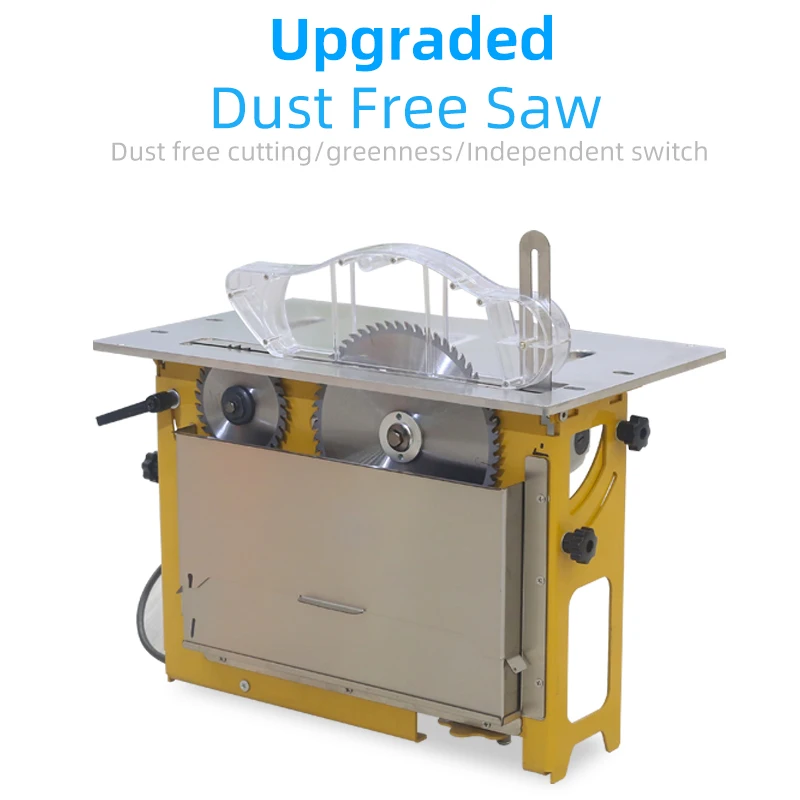
In-house manufacturing with patented cutting mechanisms — verified through a dual-saw system achieving chip-free scoring on laminated panels before the main blade engages.
Technical Specifications
| Parameter | Value |
|---|---|
| Model | JT280 / JT280 PRO |
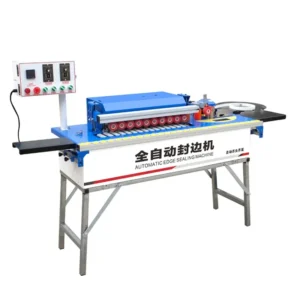
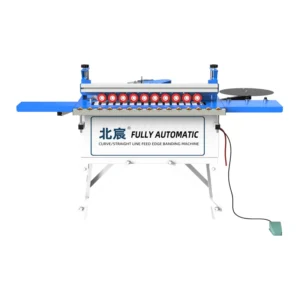
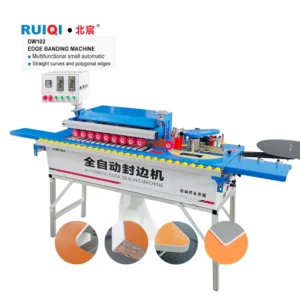
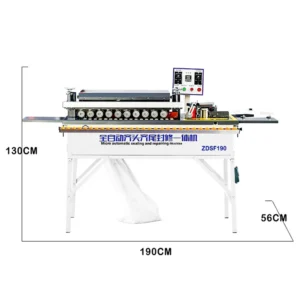
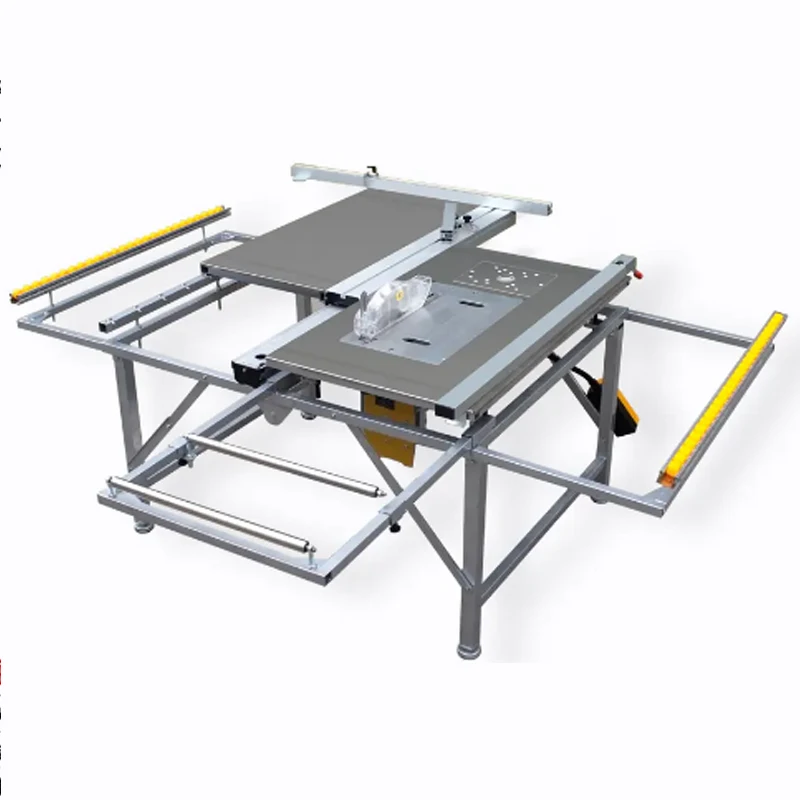
| Product Type | Multifunction Combination Edge Banding Machine and Panel Table Saw |
| Total Power | 6200W (male and female saw); JT280 PRO adds 1000W banding power |
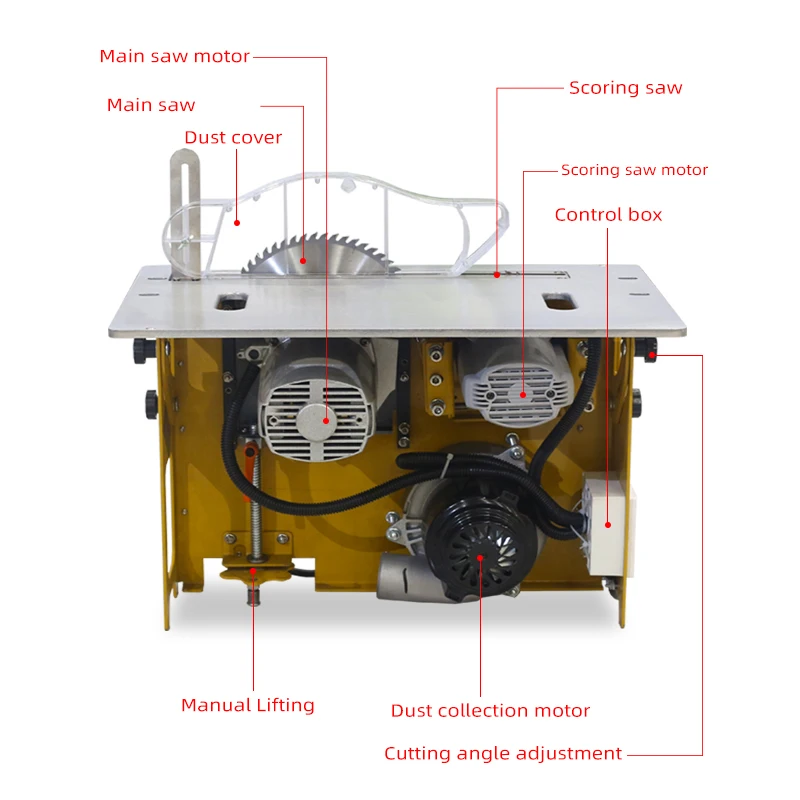
| Main Saw Power and Speed | 3000W, 3800 r/min |
| Sub Saw Power and Speed | 2000W, 13000 r/min |
| Vacuum Cleaner Power | 1200W |
| Voltage | 220V |
| Maximum Plank Cutting Length | 2.44 m |
| Maximum Plank Cutting Thickness | 4 cm |
| Main Saw Diameter | 20 cm |
| Saw Table Track Width × Length | 32 cm × 120 cm, single track |
| Product Weight | 76 kg (JT280); 91 kg (JT280 PRO) |
| Edge Banding Height | 0–50 mm (JT280 PRO) |
| Edge Banding Thickness | 0.3–3 mm (JT280 PRO) |
| Minimum Sheet Length | 25 cm (JT280 PRO) |
| Minimum Sheet Width | 5 cm (JT280 PRO) |
| Glue Pot Capacity | 1000 ml (JT280 PRO) |
| Air Source Pressure | 0.5–0.8 MPa (JT280 PRO) |
| Dust Extraction | Integrated 1200W vacuum, non-dust saw configuration |
| Plug Options | EU, USA, AU, UK |
| Language Options | Chinese and English standard; other languages customizable |
| Standards | CE (referenced for export); ISO 9001 (company-level) |
Application Suitability
| Application | Material or Output |
|---|---|
| Custom furniture panel cutting and banding | MDF, particleboard, plywood with PVC or ABS edge banding |
| Cabinet component processing | Laminated boards requiring chip-free scoring before cross-cutting |
| On-site decoration and fit-out work | Solid wood panels, wood-based panels, organic glass plates |
| Small workshop straight and curved edging | ABS panels, PVC panels, veneer banding 0.3–3 mm thick |
| Entry-level mechanized production transition | Density boards and particleboard replacing manual hand tools |
Why Voltage Confirmation Beats Price Negotiation Every Time
A Multifunction Combination Edge Banding Machine Panel Table Saw manufacturer that skips voltage verification before quoting is already signalling a problem. Machines arrive, the operator flips the switch, and nothing happens — or worse, the motor burns out within the first hour.
I have seen this pattern repeat across small workshops and job-site contractors who focused entirely on the quotation figure. The JT280 runs on 220V with plug options spanning EU, USA, AU, and UK configurations. But 220V at 50 Hz behaves differently than 220V at 60 Hz when you are pushing a 3000W main saw through dense particleboard [NEED_CITE: voltage and frequency standards by export market]. A scoring sub-saw spinning at 13000 r/min demands stable frequency to maintain cut quality on laminated surfaces. When frequency drifts, the chip-free finish degrades — and you only discover it after ruining a batch of panels.
Matching the Machine to Your Workshop Footprint
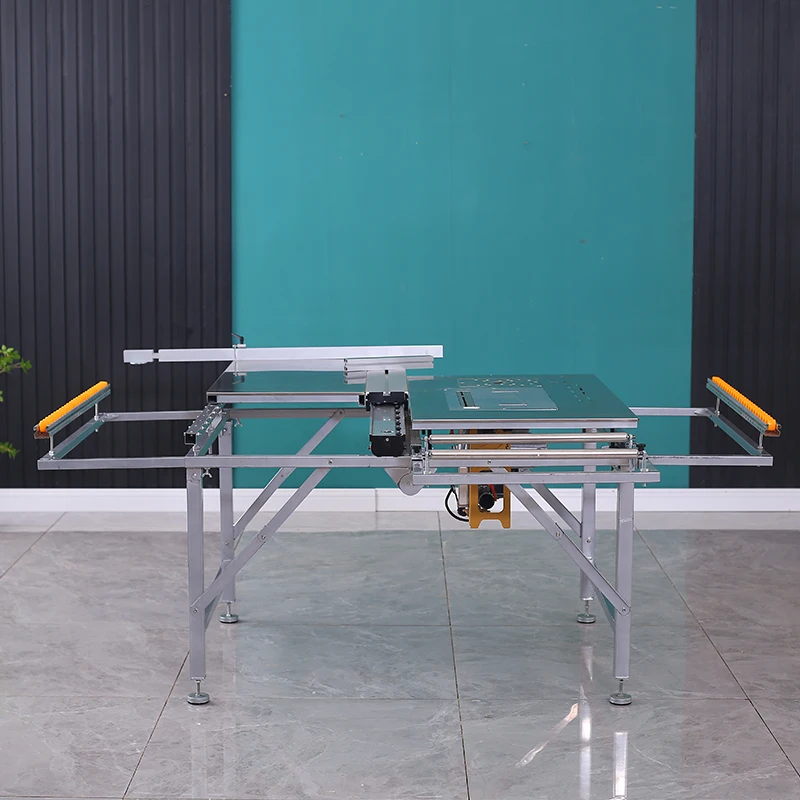
The JT280 series covers a full product range from a standalone precision table saw to a combined saw-plus-edge-banding setup, giving workshops flexibility as production requirements grow. The JT280 weighs 76 kg, while the JT280 PRO at 91 kg adds edge banding capability with a 1000W dedicated motor. This matters when you are planning floor space in a small custom furniture operation where every square meter counts.
A workshop starting with panel cutting can deploy the base JT280 with its 2.44 m cutting length and 4 cm thickness capacity. When edge banding demand increases, the PRO variant adds 0.3–3 mm banding thickness and 0–50 mm height range without requiring a second supplier relationship or incompatible feed heights. The Multifunction Combination Edge Banding Machine Panel Table Saw manufacturer designed this product family so scaling production does not mean discarding earlier equipment investments.
What the Foldable Design Actually Solves on Job Sites
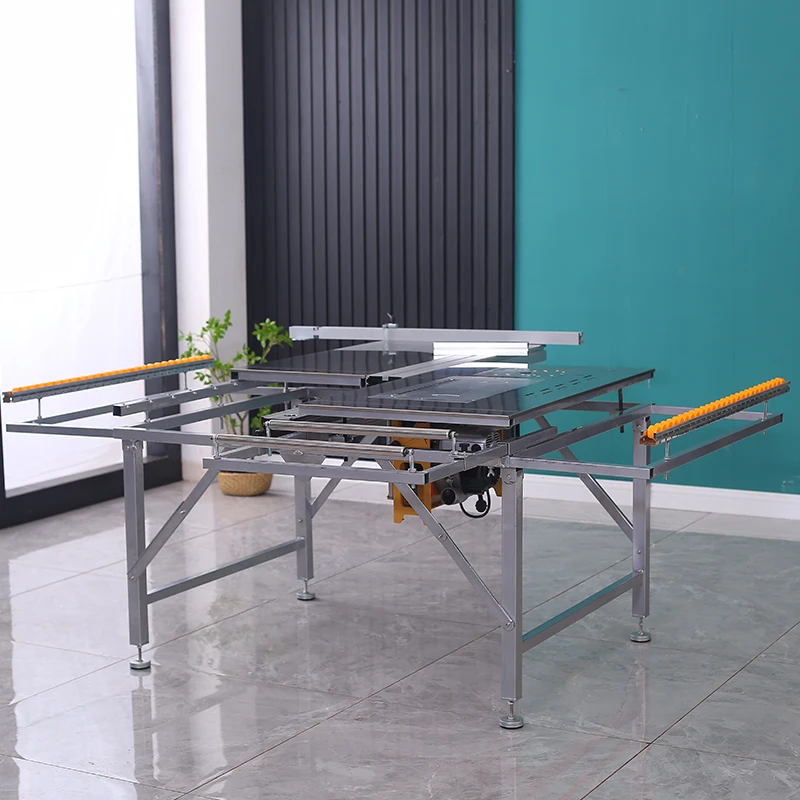
Decoration contractors working across multiple residential or commercial sites face a problem that stationary industrial machines cannot address: portability. The JT280’s foldable and adjustable configuration means it travels between sites rather than sitting idle in a single location. At 76 kg for the base model, two workers can load it onto a utility vehicle without a forklift.
The single-track sliding table at 32 cm × 120 cm provides enough guide surface for stable panel pushing on 2.44 m sheets, while the foldable design keeps the machine storable in tight site cabins. This is where a combination machine earns its keep — not by replacing a full production line, but by bringing mechanized capability to environments where a full line would never fit [NEED_CITE: practical constraints of on-site woodworking operations]. The integrated 1200W vacuum further reduces site cleanup, keeping dust away from finished interiors during renovation work.
Reading the Specs That Actually Affect Cut Quality
The main saw at 3000W and 3800 r/min handles the bulk of through-cutting on panels up to 4 cm thick. But the scoring sub-saw at 2000W and 13000 r/min is where laminated panel quality gets determined. Scoring at high RPM cuts through the bottom laminate layer before the main blade exits the top, preventing chip-out that ruins visible surfaces on melamine-faced MDF and plywood.
The 20 cm main saw diameter balances cutting depth against power consumption on a 220V supply. Pushing a larger diameter blade through dense particleboard at this voltage would cause current draw spikes that trip workshop breakers. The precision steel guide rail on the sliding table maintains straight-line accuracy across the full 2.44 m travel, preventing the tapered cuts that cause assembly gaps in cabinet carcasses. Edge banding on the JT280 PRO adds a 1000 ml glue pot, sufficient for continuous banding runs on standard furniture components without constant refilling.
The Hidden Cost of Buying Cutting and Banding Separately
When a workshop purchases a table saw from one supplier and an edge bander from another, feed height mismatches appear once both machines are running in production. Panels cut at one height arrive at the bander requiring manual adjustment, slowing throughput and introducing operator error. The JT280 PRO eliminates this by processing the same panel through matched cutting and banding stations from one manufacturer.
Another consequence I have observed involves dust management. A standalone saw without integrated extraction contaminates the edge banding glue line, causing adhesion failures that show up only after the furniture reaches the customer [NEED_CITE: glue line contamination from airborne particulates in woodworking]. The JT280’s integrated 1200W vacuum addresses this by capturing dust at the cutting stage before it migrates to the banding zone.
Why Procurement Teams Choose This Source
The JT280 series is built with proprietary cutting mechanisms that maintain tolerance across extended production runs, verified through four-stage quality control covering incoming material through pre-shipment testing. Voltage and plug customization from 220V across EU, USA, AU, and UK standards happens before production rather than as an afterthought at the packing stage.
Multilingual control panels are available so operators in different markets can read instructions in their working language, reducing commissioning delays. The complete product family from standalone saw to combination unit means a single supplier relationship covers scaling needs. Engineer-led configuration recommendations with formal quotation within 24 hours ensure the machine matches actual production requirements rather than catalog assumptions. Factory visits are welcomed for buyers who need to verify build quality before committing.
Documentation & Verification
- CE declaration of conformity for export market compliance on woodworking machinery
- Machine specification sheet confirming JT280 or JT280 PRO configuration with voltage
- Electrical schematic with confirmed plug type and frequency for your local supply
- Factory test record on your specified panel material and thickness before dispatch
- Operation and maintenance manual in your agreed language with spare parts list
Installation, Commissioning & Support
- Confirm 220V dedicated circuit with correct frequency before JT280 arrival
- Allow clearance around the 32 cm × 120 cm track for full 2.44 m panel travel
- Calibrate scoring sub-saw at 13000 r/min on your actual laminated board stock
- Test edge banding glue temperature on 0.3–3 mm banding material at first run
- Schedule air compressor at 0.5–0.8 MPa for JT280 PRO pneumatic functions
- Review integrated 1200W vacuum filter maintenance intervals with your operator
Preparing Your Inquiry
To receive a configuration recommendation that matches your actual production environment, share the panel materials you process most frequently along with typical sheet dimensions and thicknesses. Specify your local voltage and frequency, preferred plug standard, and whether operators need control panel instructions in a language beyond Chinese or English. Indicate whether you need cutting only (JT280) or combined cutting and edge banding (JT280 PRO), and mention any existing equipment the new machine must work alongside.
Frequently Asked Questions
Q: What is the difference between JT280 and JT280 PRO, and which fits my workshop?
A: The JT280 is a precision panel table saw with dual-saw scoring and 2.44 m cutting length at 76 kg. The JT280 PRO adds integrated edge banding with 0.3–3 mm banding thickness and a 1000W banding motor at 91 kg. Workshops needing only cutting start with the base model; those requiring both operations in one footprint choose the PRO.
Q: Can voltage, plug type, and control panel language be customized for my country?
A: Yes. The JT280 supports 220V with EU, USA, AU, and UK plug options confirmed before production. Control panel language defaults to Chinese and English, with additional languages available on request. Specify your requirements during the quotation stage so the machine ships configured for immediate commissioning.
Q: What panel materials and thicknesses can the JT280 handle?
A: Both models cut MDF, particleboard, plywood, solid wood panels, and organic glass plates up to 4 cm thick and 2.44 m long. The JT280 PRO additionally bands ABS, PVC, and veneer strips 0.3–3 mm thick on panel heights up to 50 mm, with minimum sheet dimensions of 25 cm length and 5 cm width.
Q: How do I verify cut accuracy and edge banding quality before ordering?
A: Request a sample processing test using your actual panel material, or arrange a factory visit to observe the machine running on representative stock. This confirms scoring quality on laminated surfaces and edge adhesion on your chosen banding material before shipment.
Q: What spare parts are included, and how is technical support handled?
A: Each shipment includes a spare parts list matched to the JT280 or JT280 PRO configuration, along with an operation manual in your agreed language. Installation guidance and after-sales technical support are provided to address commissioning questions and operational issues as they arise.