Description
Pre-Milling Precision — Factory-verified ±0.02mm edge tolerance on every unit shipped, confirmed through four-stage QC before dispatch.
Technical Specifications
| Parameter | Value |
|---|---|
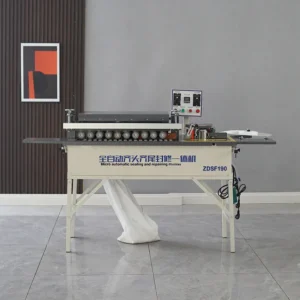
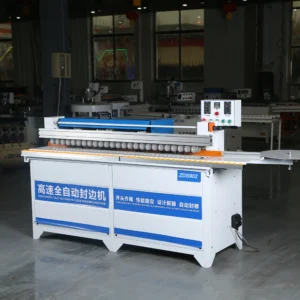
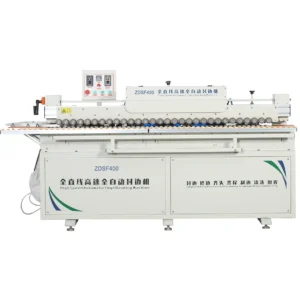
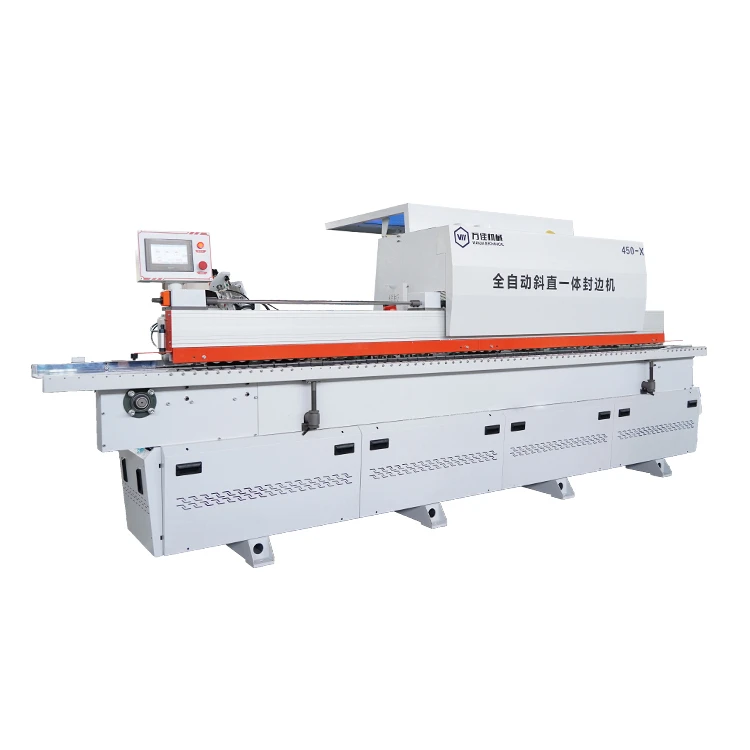
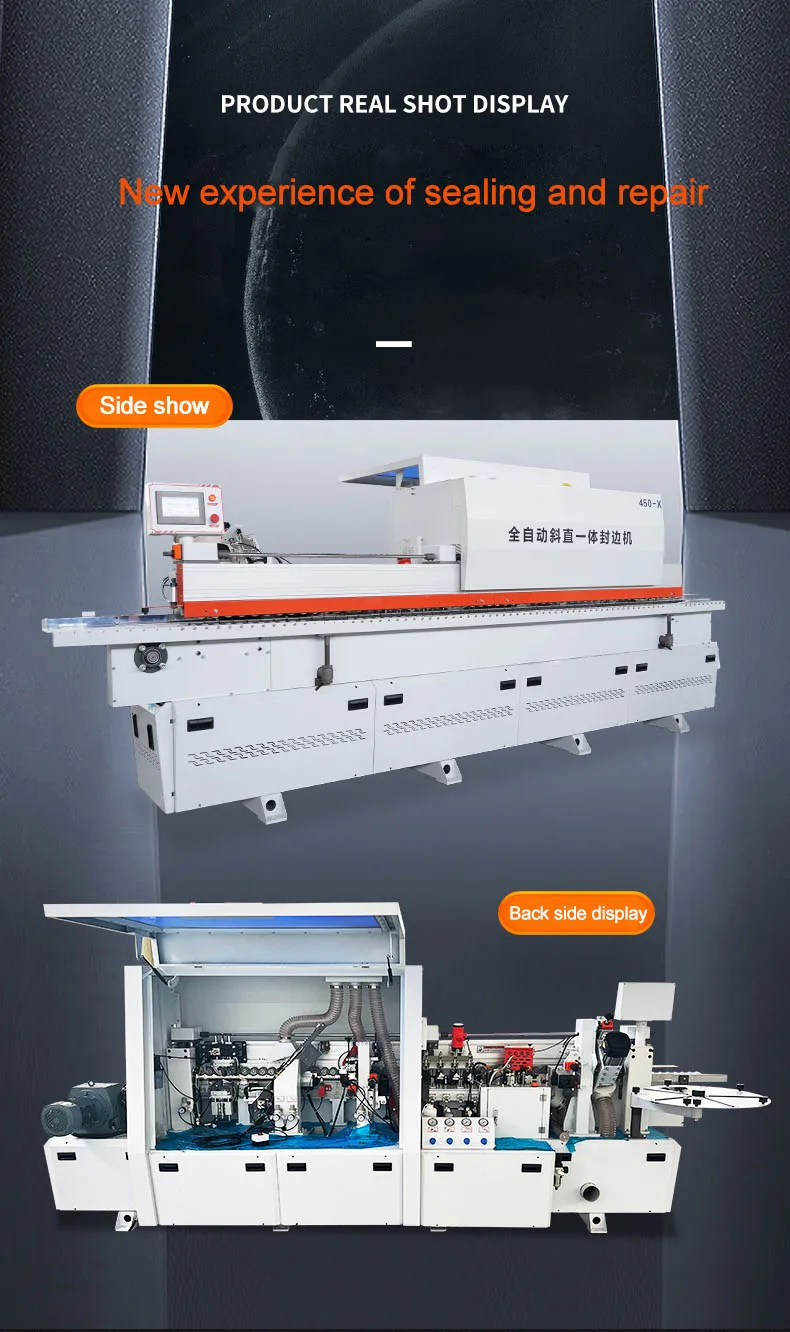
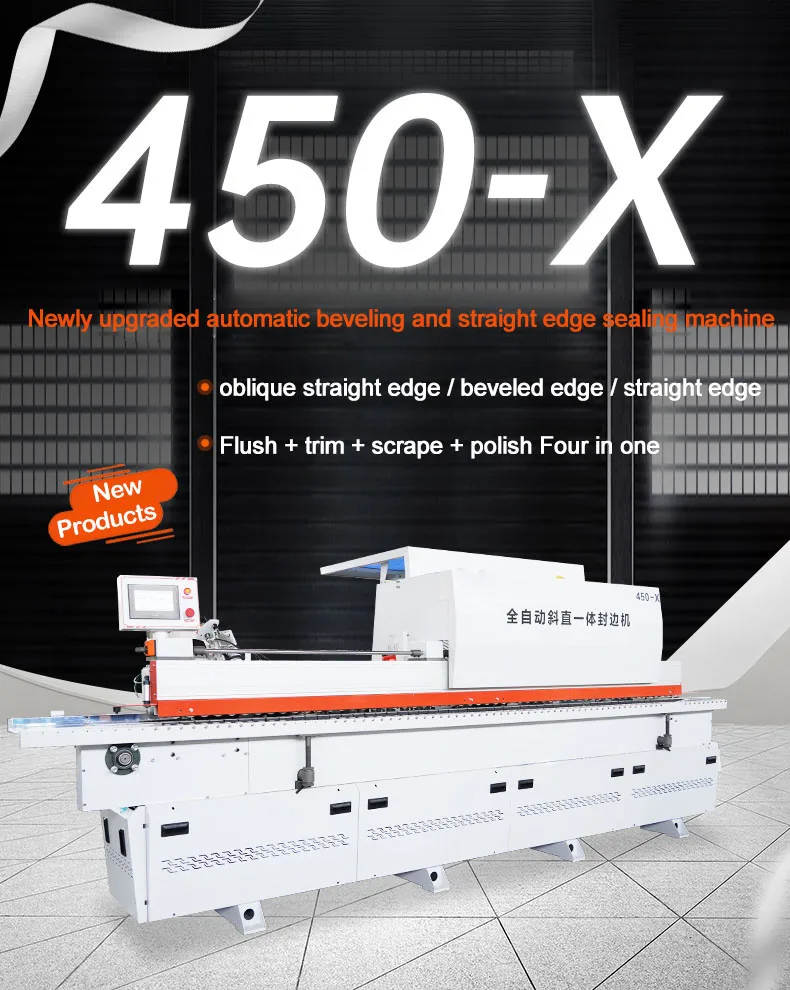
| Product Type | Automatic Edge Banding Machine with Pre-Milling |
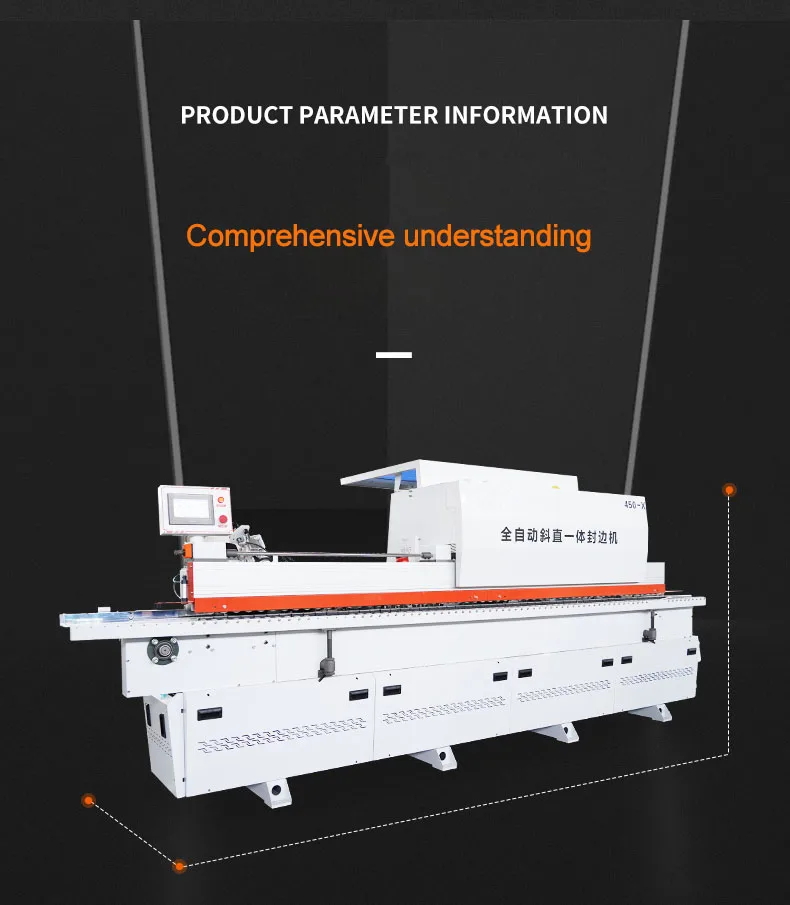
| Overall Dimensions (L×W×H) | 435 × 92 × 165 cm |
| Total Power | 17.5 kW |
| Voltage & Frequency | 380V / three-phase five-wire / 50Hz (configurable from 110V to 440V) |
| Conveying Motor | 380V 2.2 kW with frequency converter |
| Feed Speed | 0–12 m/min variable speed |
| Edge Banding Width Range | 20–50 mm |
| Edge Banding Thickness | Up to 1.2 mm (material dependent) |
| Edge Banding Material | PVC |
| Panel Thickness Range | 18 / 22 / 25 mm |
| Minimum Sheet Width | >100 mm |
| Minimum Sheet Length | >250 mm |
| Glue Pot Capacity | 2000 mL |
| Glue Pot Heating Power | 1.2 kW |
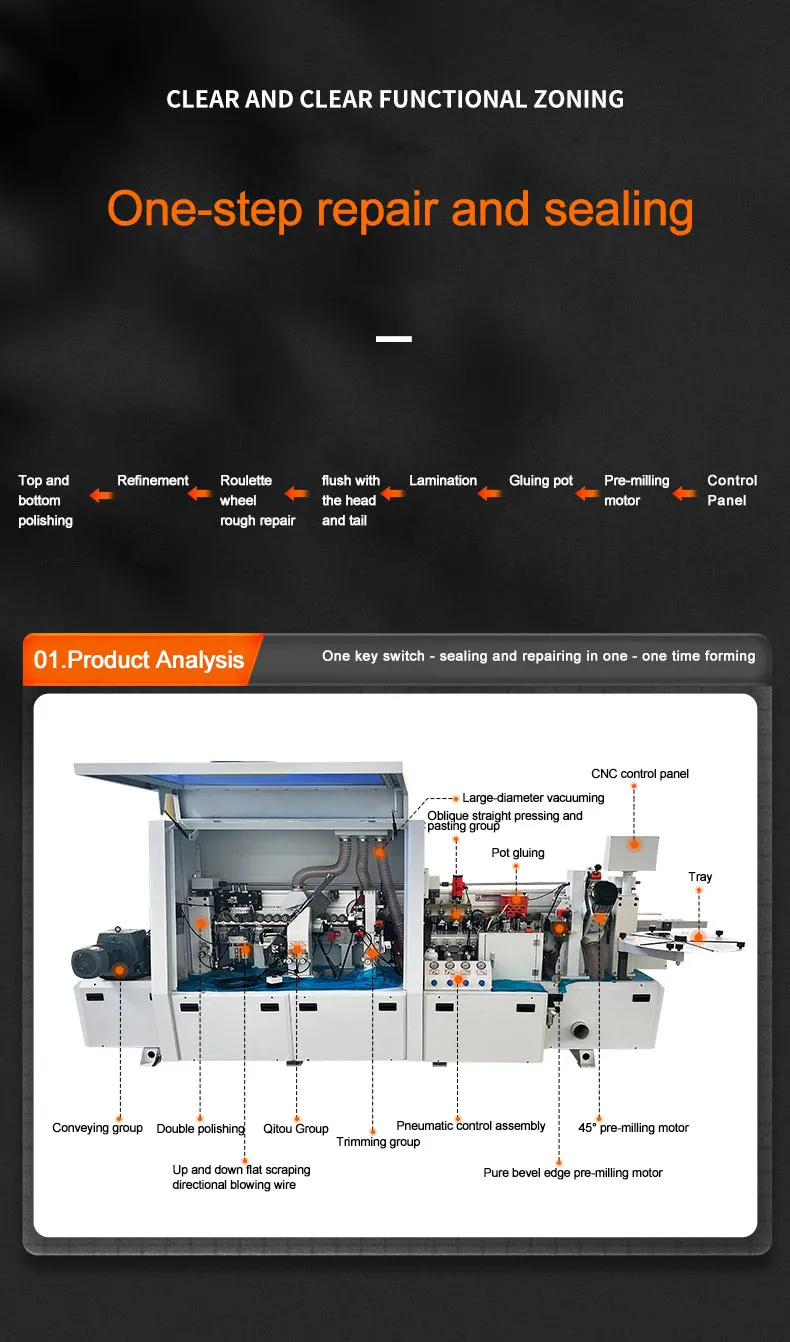
| Pre-Milling Motor | 380V 3.5 kW |
| Selection Motor | 380V 4 kW |
| Trimming Motor | 380V 0.75 kW × 2 |
| End Trimming Motor | 380V 0.37 kW × 2 |
| Polishing Motor | 380V 0.37 kW × 2 |
| Slotted Motor | 220V 0.8 kW |
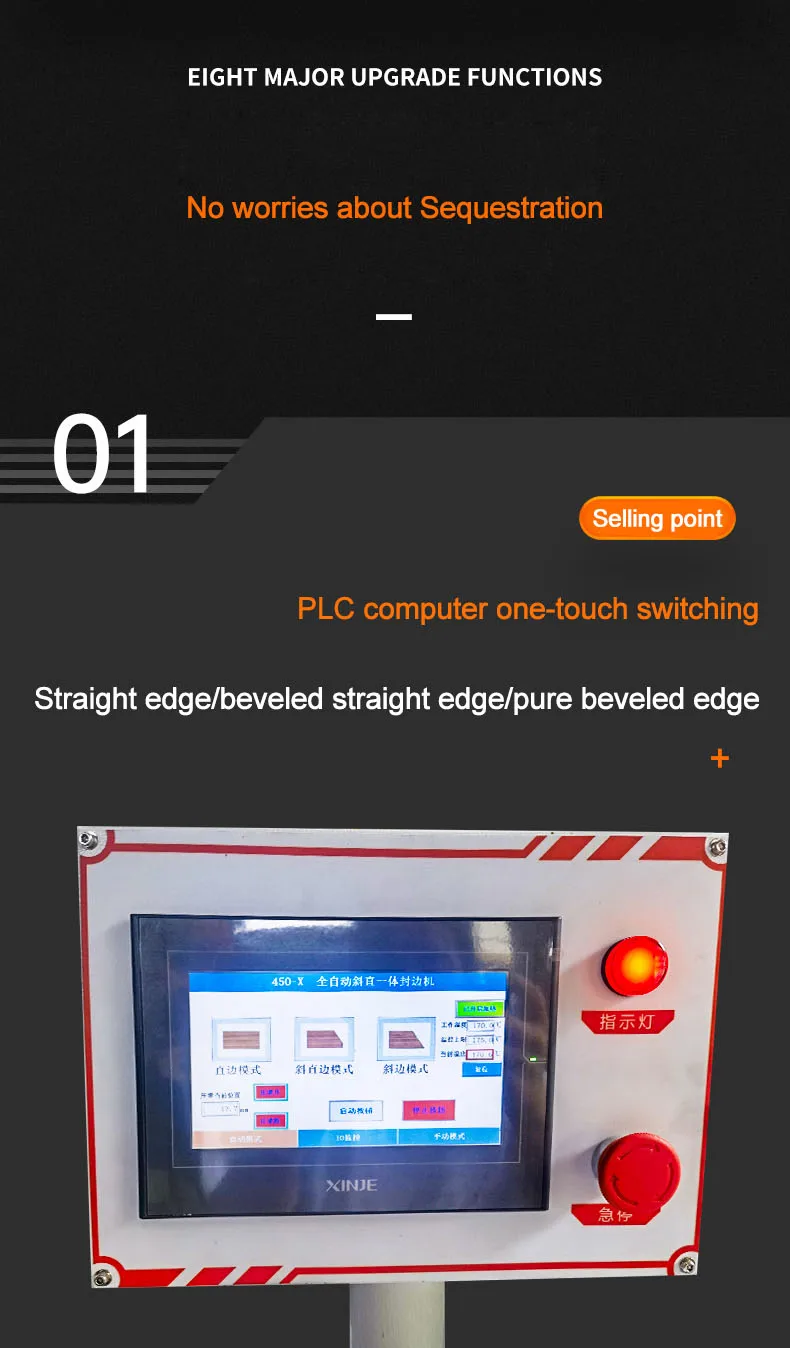
| Control System | Xinjie industrial touch screen with Xinjie industrial inverter |
| Air Supply Requirement | 0.6–0.8 MPa |
| External Dust Extraction Port | 100 mm diameter |
Application Suitability
| Application | Material or Output |
|---|---|
| Custom cabinet panel edge banding | MDF and particleboard with PVC edge banding |
| Wardrobe door and drawer front finishing | Plywood panels up to 25 mm thickness |
| Workshop-scale furniture production | Straight and curve edge profiles on board stock |
| Joinery shop panel processing | Laminated substrates requiring pre-milled edge preparation |
Why Voltage Confirmation Matters Before You Compare Automatic Edge Banding Machine Options
A machine built for 380V three-phase will not start on a 440V supply, and the transformer you order after arrival adds weeks of downtime.
I once saw a custom cabinet factory take delivery of an edge bander only to discover the workshop supply was 440V while the machine was wound for 380V. The unit sat idle for three weeks waiting on a step-down transformer, and the production schedule collapsed for the entire month. Voltage mismatch remains one of the most common reasons industrial woodworking equipment fails to commission on time [NEED_CITE: voltage and frequency standards by export market]. Every configuration we ship includes a confirmed electrical schematic matched to the buyer’s local grid before production begins.
Scaling From Entry-Level to Full-Function Within One Machine Family
Workshops that begin with basic straight-edge banding often outgrow their equipment within a year, forcing a second capital purchase and a new supplier relationship. This Automatic Edge Banding Machine manufacturer structures the product range so that a joinery shop can move from simple PVC banding to pre-milled, multi-stage finishing without leaving one equipment ecosystem. The pre-milling station on this unit removes saw marks and substrate irregularities before the glue is applied, which directly affects the visible quality of the finished edge.
How the Product Range Grows With Your Workshop
A startup cabinet maker may not need the full pre-milling and polishing configuration on day one, but the machine family is designed with compatible feed heights and throughput rates across tiers. This means downstream equipment like boring machines and panel saws remain compatible as you add stations. Planning the line with one Automatic Edge Banding Machine manufacturer avoids the mismatched infeed heights and speed bottlenecks that appear when you piece together equipment from different sources [NEED_CITE: CE machinery directive requirements for industrial equipment].
Reading the Specs That Actually Determine Edge Quality
The pre-milling motor at 3.5 kW handles the initial edge preparation that removes saw blade tear-out from panel sizing, which is essential when working with particleboard where the core is prone to chipping. Feed speed ranges from 0 to 12 m/min via frequency converter, allowing operators to slow the line for curved workpieces or thicker PVC banding without losing belt grip. The glue pot operates between 150–170°C, a range suited to standard EVA hot-melt adhesives used with PVC banding on MDF and plywood substrates. The 100 mm dust extraction port must connect to a workshop collection system capable of handling fine particleboard dust, because residual dust on the edge before glue application is a leading cause of banding delamination.
The Cost of Specifying the Wrong Configuration
Buying an entry-level machine for production volumes it was never designed for leads to premature wear on feed chains and glue pot elements, resulting in inconsistent banding adhesion across shifts. Operators who receive a control panel in a language they cannot read will default to incorrect temperature and speed settings, producing waste panels that fail downstream assembly. Machines quoted without confirmed voltage and frequency arrive at the workshop unusable until a transformer or rewinding is arranged, and that idle period is never recoverable against the original project deadline [NEED_CITE: industrial equipment commissioning failures by region].
Why Procurement Teams Source This Equipment Here
In-house manufacturing with patented cutting mechanisms means the pre-milling tolerance is verified at the factory rather than claimed on a brochure. The four-stage quality control process covers incoming material inspection, in-process assembly checks, finished product testing, and pre-shipment verification on the actual panel thickness you will run. Voltage, control panel language, and specification adjustments are handled as standard configuration options rather than special requests. An engineer reviews your workshop layout and production targets to recommend the right machine tier, with a formal quotation delivered within 24 hours. Factory visits are available so buyers can witness test runs on their own panel stock before placing an order.
Documentation & Verification
- Factory test record run on your specified panel thickness before dispatch
- Electrical schematic confirming voltage, frequency, and circuit breaker ratings for your grid
- Machine specification sheet with full motor breakdown across all stations
- Operation and maintenance manual provided in the operator’s agreed language
- Spare parts list with part numbers for consumable items like glue pot elements and trimming blades
Installation, Commissioning & Support
- Verify workshop doorway and internal passage clearance against the 435 cm machine length before delivery
- Provide a dedicated three-phase circuit rated for 17.5 kW total draw with appropriate breaker sizing
- Connect compressed air supply at 0.6–0.8 MPa with a 5 L storage tank for pneumatic actuators
- Route the 100 mm dust extraction port to a collection system before first production run
- Set Xinjie touch screen parameters and inverter feed speed to match your PVC banding thickness
- Schedule initial operator training on glue pot temperature management and pre-milling depth adjustment
What We Need To Configure Your Machine
Share your primary panel material and thickness range so the pre-milling and trimming stations can be set for your substrate. Confirm the local voltage and frequency at your workshop, along with the control panel language your operators require. Let us know whether you are running standalone or planning to integrate this unit into a line with existing saws and boring machines, so feed height and throughput can be matched.
Frequently Asked Questions
Q: How do I choose between entry-level and full-function pre-milling models for my production volume?
A: The selection depends on your daily panel count and edge quality requirements. Entry-level models suit workshops running smaller batches where basic PVC banding on standard MDF is sufficient. Full-function pre-milling configurations add edge preparation that removes saw marks before banding, which is necessary when visible edge quality matters on customer-facing cabinet doors and drawer fronts.
Q: What panel thickness and edge banding width ranges does this product family cover?
A: This machine handles panel thicknesses of 18, 22, and 25 mm with edge banding widths from 20 to 50 mm. The feed system accommodates sheet widths above 100 mm and lengths above 250 mm. If your production involves thicker panels or wider banding profiles, the range includes higher-tier models that extend these limits.
Q: How does buying from one manufacturer support future capacity upgrades?
A: Machines within the same product family share compatible feed heights and throughput rates, so adding a second edge bander or integrating with boring machines avoids mechanical mismatches. This approach prevents the bottleneck problems that arise when equipment from different sources is combined on one production floor.
Q: What voltage and control panel language options are available?
A: Voltage is configurable from 110V to 440V to match local grid standards, and frequency is confirmed at the quotation stage. The Xinjie touch screen interface is supplied in the operator’s required language, preventing commissioning delays caused by unreadable controls on the workshop floor.
Q: Can I arrange a factory visit or sample processing test before ordering?
A: Factory visits are welcome, and we run test pieces on your actual panel material when samples are provided. This lets you verify edge quality, glue adhesion, and trimming accuracy on your own substrate before committing to production specifications.