
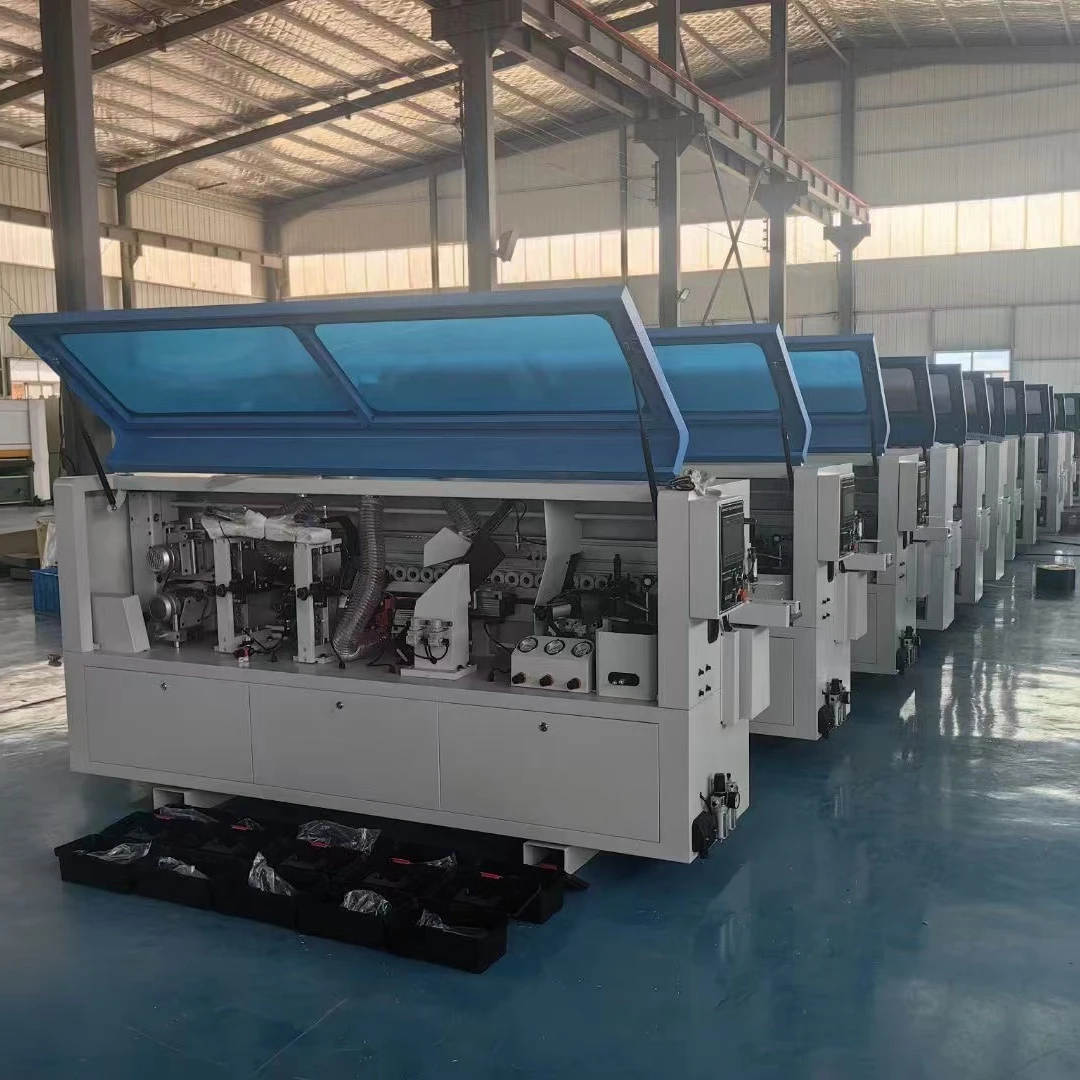
Description
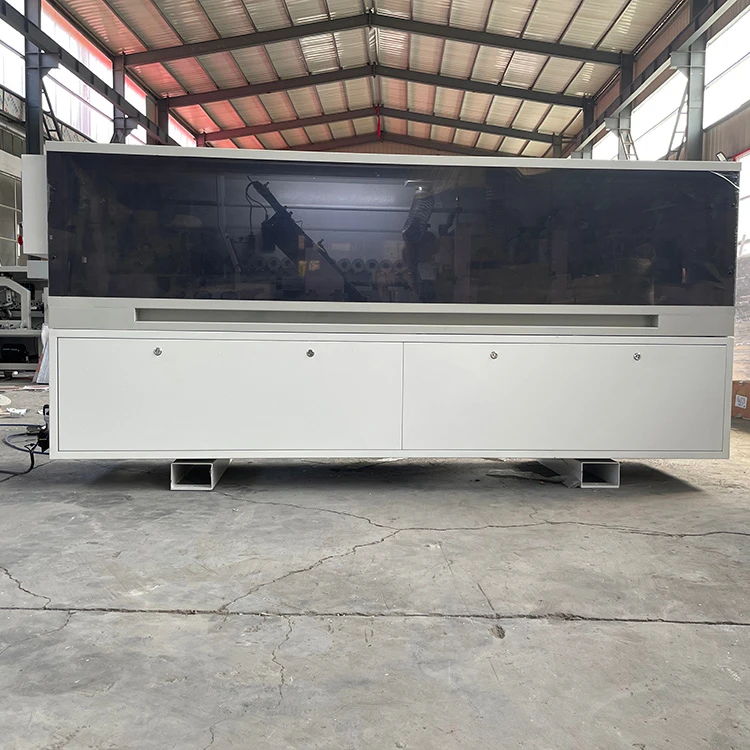
Complete model family on one platform — The ZDS280 series scales from basic gluing and trimming to full scraping and buffing within the same frame architecture, so your workshop grows without swapping out the edge bander entirely.
Technical Specifications
| Parameter | Value |
|---|---|
| Model | ZDS280B / ZDS280C |
| Product Type | Automatic Edge Banding Machine |
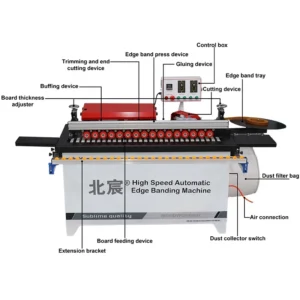
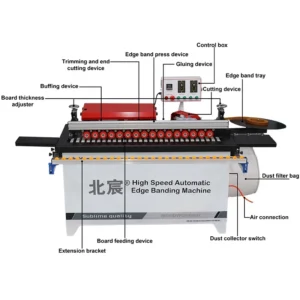
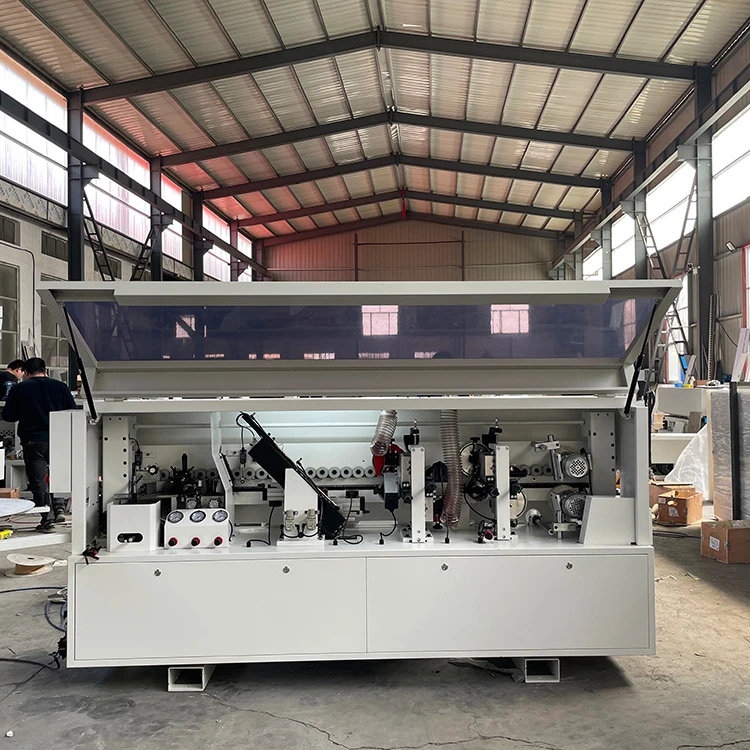
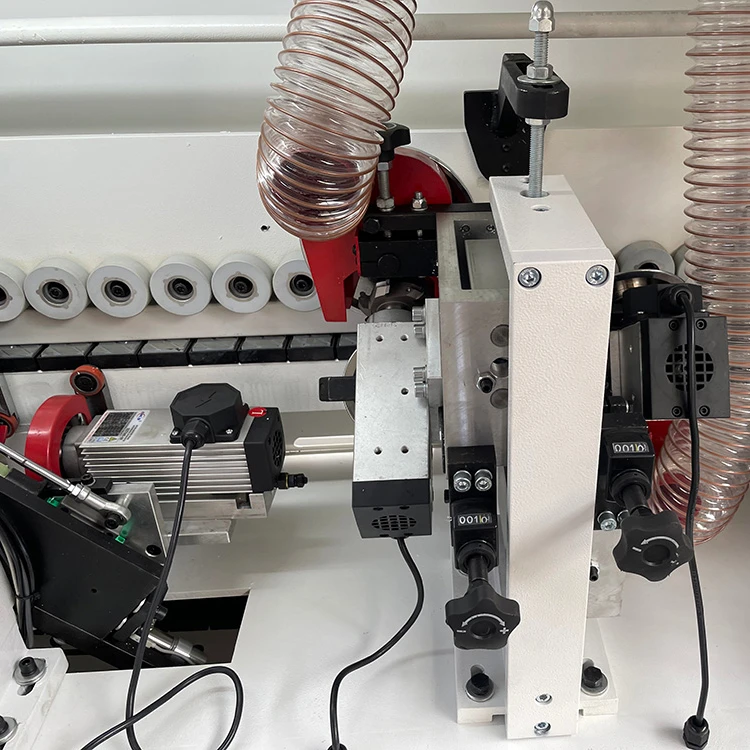
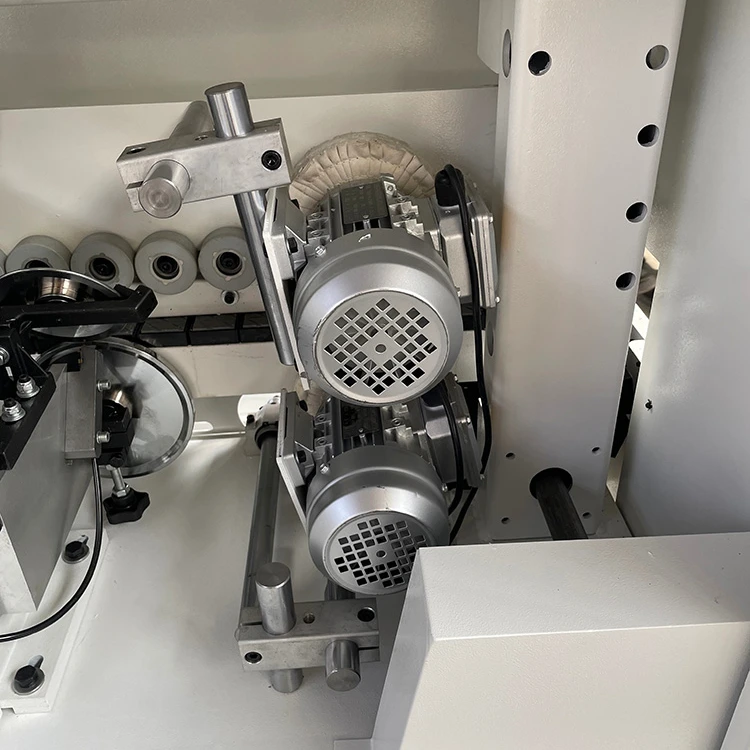
| Main Functions (ZDS280B) | Gluing, End Trimming, Fine Trimming, Buffing |
| Main Functions (ZDS280C) | Gluing, End Trimming, Fine Trimming, Scraping, Buffing |
| Panel Thickness Range | 10–55 mm |
| Edge Thickness Range | 0.4–3 mm |
| Feed Speed | 15 m/min |
| Min. Panel Width | 45 mm |
| Min. Panel Length | 80 mm |
| Working Pressure | 0.6–0.8 MPa |
| Rated Power | 7.5 kW |
| Voltage | 380V, 3-phase (configurable for local supply) |
| Net Weight (ZDS280B) | 650 kg |
| Net Weight (ZDS280C) | 800 kg |
| Overall Dimensions (ZDS280B) | 2300 × 700 × 1250 mm |
| Overall Dimensions (ZDS280C) | 2800 × 700 × 1250 mm |
| Fuselage Construction | 14 mm high-strength steel plate, frame-type with high-temperature quenching |
| Conveyor Guide Rail | HT260 cast iron |
| Conveying Motor | Taiwan brand with thermal protection |
| Pneumatic System | Festo or AirTAC cylinders, AirTAC magnetic switches |
| Electrical Components | Delixi/Chint contactors, Omron travel switches |
| Certification | CE, ISO 9001 |
Application Suitability
| Application | Material or Output |
|---|---|
| Custom cabinet door edging | MDF and particleboard with PVC or melamine banding |
| Plywood shelving edge finishing | Plywood panels with 0.4–3 mm veneer or PVC edge |
| Small-batch furniture components | Solid wood panels requiring trimming and buffing |
| Workshop automation transition | Mixed substrate runs replacing manual edge gluing |
Why Matching Model Tier to Your Substrate Matters More Than Feed Speed
The right station configuration for your board material determines edge quality far more than how fast the panel moves through.
I once spent two weeks at a cabinet factory recalibrating an edge bander that was specified for MDF but ended up running recycled-core particleboard every shift. The glue lines were visible on every panel because the pre-mill depth and feed rate had never been adjusted for the softer substrate. When a buyer focuses on feed speed numbers without confirming what the machine actually does to particleboard versus MDF, the Automatic Edge Banding Machine manufacturer receives the blame for a mismatch that should have been caught during configuration [NEED_CITE: substrate-specific edge banding configuration best practices].
The ZDS280B covers gluing, end trimming, fine trimming, and buffing — enough for workshops running consistent MDF stock with standard PVC edge banding. The ZDS280C adds a scraping station between fine trimming and buffing, which removes the slight chatter marks that fine trimming leaves on softer particleboard cores. Choosing between them is not about which is better in absolute terms; it depends on what your operators are actually feeding into the machine day after day.
What the ZDS280B Handles and Where It Reaches Its Limit
This model runs a four-station sequence that suits joinery workshops processing MDF and plywood with standard PVC or melamine edge banding up to 3 mm thick. The 15 m/min feed speed keeps pace with small-to-medium batch runs where operators load panels manually or from a simple roller table upstream. For shops that primarily cut cabinet carcasses and shelf panels from stable substrates, the trimming and buffing stations produce a clean edge ready for assembly without additional hand finishing.
When the Scraping Station on the ZDS280C Becomes Necessary
Recycled-core particleboard and lower-density MDF tend to leave micro-ridges after fine trimming — ridges that buffing alone cannot fully remove. The scraping station on the ZDS280C takes a controlled pass that levels those marks before the buffing wheel makes contact. This matters most when your downstream process includes laminating or foil-wrapping, where any surface irregularity telegraphs through the finish. Workshops running a mix of board grades across a single shift typically find the extra station eliminates the need to sort panels by substrate type before edging [NEED_CITE: edge finish requirements for laminated furniture panels].
Reading the Specs That Actually Affect Your Output
The 10–55 mm panel thickness range covers the full spectrum from thin cabinet backs to thick worktop panels, but the practical sweet spot for stable edge adhesion sits between 16 and 25 mm where most furniture production concentrates. At 15 m/min feed speed, the glue pot must maintain consistent temperature across the entire run — the 7.5 kW rated power allocates sufficient energy to both the heating element and the drive motors simultaneously without voltage sag affecting trim accuracy.
The HT260 cast iron conveyor guide rail resists wear deformation across continuous shifts, which directly affects whether your panels track straight through the trimming stations. A worn rail causes the panel to drift laterally by fractions of a millimeter, producing uneven trim depth on the top versus bottom edge. The 14 mm steel frame with high-temperature quenching treatment maintains alignment between stations even under the vibration loads of end trimming dense particleboard.
Pneumatic response time determines how quickly each station’s cylinder actuates when a panel enters or exits. The Festo or AirTAC cylinders paired with magnetic switches reduce the lag between panel detection and tool engagement, which is why the minimum panel length of 80 mm is achievable without the trailing edge missing the fine trim station.
What Happens When You Specify the Wrong Tier
Buying a buffing-only model for a workshop that runs heavy recycled particleboard means your operators will spend time hand-scraping every panel that shows trim marks. Over weeks, that labor cost accumulates beyond what the price gap between the two models would have covered. Conversely, specifying the ZDS280C for a shop that only processes clean MDF with thin melamine edge means you are paying for a scraping station that the operator will bypass or leave disengaged most shifts [NEED_CITE: cost of over-specification in woodworking machinery procurement].
The deeper issue surfaces when a single-machine purchase later needs to join a production line. If the entry unit you bought has a conveyor height or feed speed that does not match the panel saw upstream or the boring machine downstream, you face either replacing it or adding transfer tables that introduce handling damage risk. The ZDS280 series shares a common platform between both models, so upgrading within the family avoids these integration mismatches.
Why Sourcing the Complete Range from One Manufacturer Reduces Risk
Every ZDS280 unit ships with voltage confirmed against your facility supply before production begins — not after the machine is built and sitting on the factory floor. The electrical schematic and wiring diagram arrive in your documentation package so your local electrician can verify circuit requirements without guessing at terminal assignments.
Control panel language is configurable to match your operator team, eliminating the commissioning delays that occur when instruction screens display in a language the floor staff cannot read. The four-stage quality check runs from incoming material inspection through pre-shipment verification, with factory test records generated on your specific board stock and edge banding material before the machine is crated.
Engineer-led configuration means the quotation you receive accounts for your panel dimensions, edge material type, and daily throughput rather than a generic catalog price. Both models within this family are available for factory visit and sample processing tests, so you can verify edge finish quality on your own substrate before committing to an order.
Documentation & Verification
- Machine specification sheet confirming panel and edge thickness ranges against your board stock
- Electrical schematic with voltage and frequency matched to your local supply
- Factory test record demonstrating edge finish on your submitted substrate samples
- Operation and maintenance manual provided in your operator team’s language
- Spare parts list with part numbers for consumable trimming blades and buffing wheels
- Packing photographs and customs documentation for export clearance
Installation, Commissioning & Support
- Floor space planning based on ZDS280B (2300 mm) or ZDS280C (2800 mm) length plus operator clearance
- Dedicated 3-phase circuit matching confirmed voltage, rated for 7.5 kW continuous draw
- Machine arrives on pallet with conveyor and stations pre-aligned; requires leveling and pneumatic connection
- First-run parameter dial-in for glue temperature, trim depth, and feed rate on your board samples
- Operator training covering station adjustment, blade replacement, and daily conveyor rail cleaning
- Consumable spare parts package including trim blades and buffing wheels for initial production months
What to Share When Requesting a Configuration Proposal
Send the substrate types and thicknesses you run most often, along with the edge banding material and thickness range your furniture line requires. Include your local voltage and frequency so the electrical system is specified correctly before production starts. If you have existing upstream saws or downstream boring machines, note their conveyor heights and feed speeds so the edge bander integrates without transfer complications.
Frequently Asked Questions
Q: How do I decide between the ZDS280B and the ZDS280C for my production?
A: The decision comes down to your primary substrate. If you run mostly MDF and plywood with PVC or melamine edge banding, the ZDS280B’s four-station sequence handles trimming and buffing adequately. If your daily mix includes recycled-core particleboard or you require a smoother edge for laminated finishes, the ZDS280C’s added scraping station removes micro-ridges that buffing alone cannot address.
Q: What voltage options are available and how is this confirmed before production?
A: The standard configuration is 380V three-phase, but the electrical system can be configured for other voltages and frequencies to match your local supply. Before production begins, you receive an electrical schematic and voltage confirmation document. Your facility’s actual supply should be verified by a local electrician so the motor windings and control transformer are wound correctly.
Q: Can the control panel language match my operator team?
A: Yes, the control panel is configurable to the language your floor staff reads. This is confirmed during the quotation stage so the machine ships with screens and menus your operators can navigate immediately on commissioning day, avoiding the delays that occur when instructions appear in an unfamiliar language.
Q: What upstream and downstream machines pair with this edge bander in a line?
A: The ZDS280 series pairs with sliding table saws or panel saws upstream for cutting, and hinge boring or multi-boring machines downstream for drilling. The shared conveyor height across the product family helps maintain panel flow between stations. When planning a full line, feed speed and panel dimensions should be matched across all machines to prevent bottlenecks.
Q: How does the feed speed relate to my actual daily output?
A: The 15 m/min feed speed indicates how fast panels move through the stations, but actual throughput depends on panel length, loading method, and operator pace. For manual loading from a roller table, realistic output is lower than the theoretical maximum. Share your panel sizes and shift structure during the inquiry so the configuration accounts for your real production rhythm.