Description
Voltage, language and specification customization as standard — the 910H edge bander ships configured to your local power grid and operator language before leaving the factory, not after it arrives on your floor.
Technical Specifications
| Parameter | Value |
|---|---|
| Product Type | Automatic Edge Banding Machine |
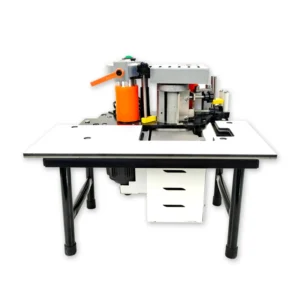
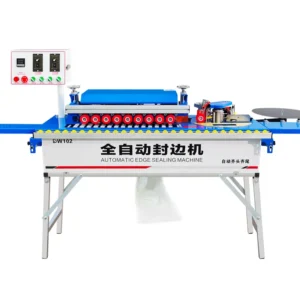
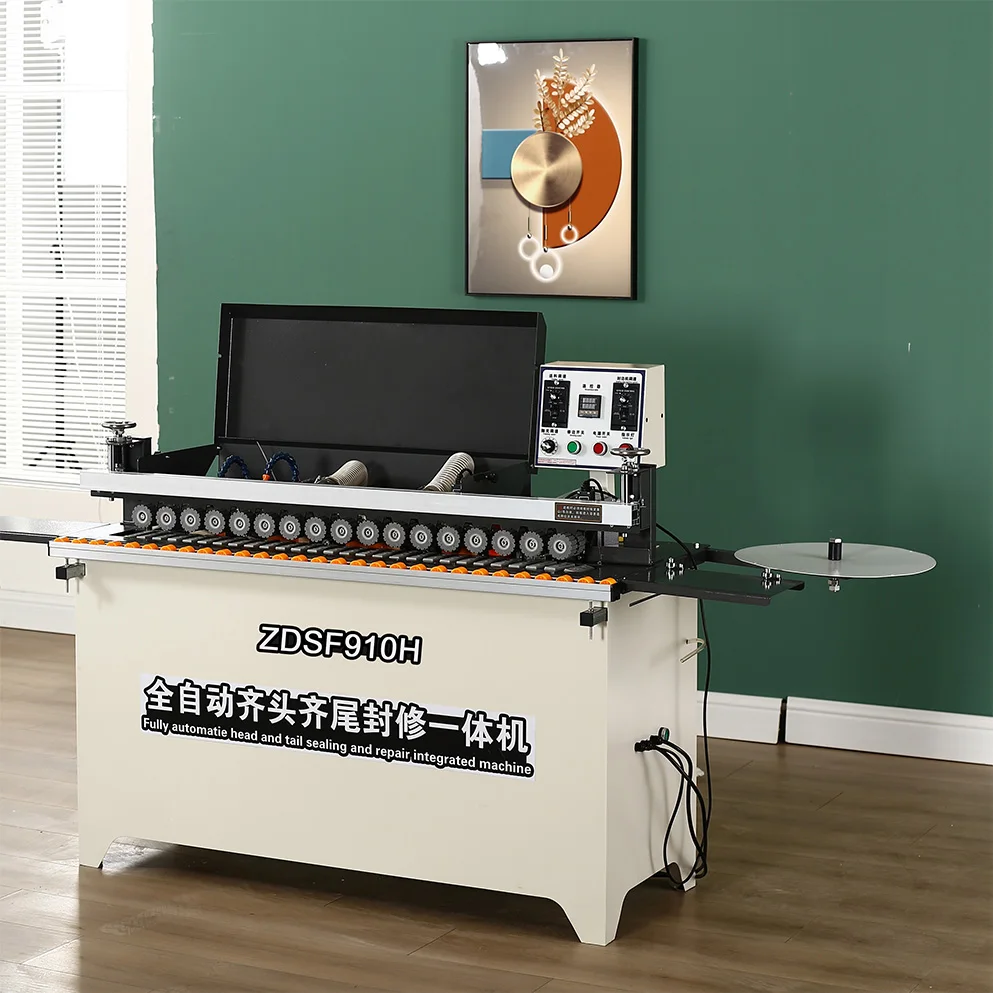
| Model | 910H Full Automatic Edge Banding Machine |
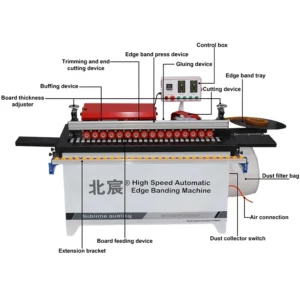
| Function Sequence | Gluing, End cutting, Trimming, Vacuuming, Cleaning, Buffing |
| Rated Power | 4 kW |
| Heating Power | 800 W |
| Feed Speed | 0–7 m/min |
| Panel Thickness Range | 10–50 mm |
| Edge Strip Thickness Range | 0.5–2.5 mm |
| Minimum Board Width | 25 mm |
| Glue Pot Capacity | 1000 ml |
| Suction Power | 1200 W |
| Polishing Power | 180 W × 2 |
| Trimming Power | 800 W × 2 |
| Rated Air Pressure | 0.6 MPa |
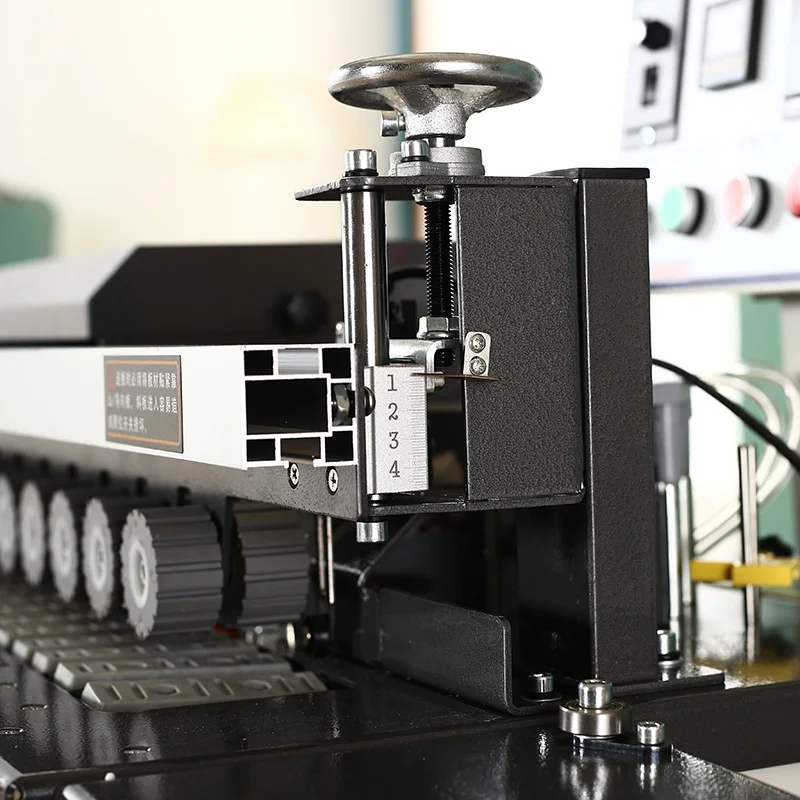
| Pressure Beam | Adjustable aluminum alloy |
| Trimming Cutter | 4-edge arc-shaped alloy cutter head |
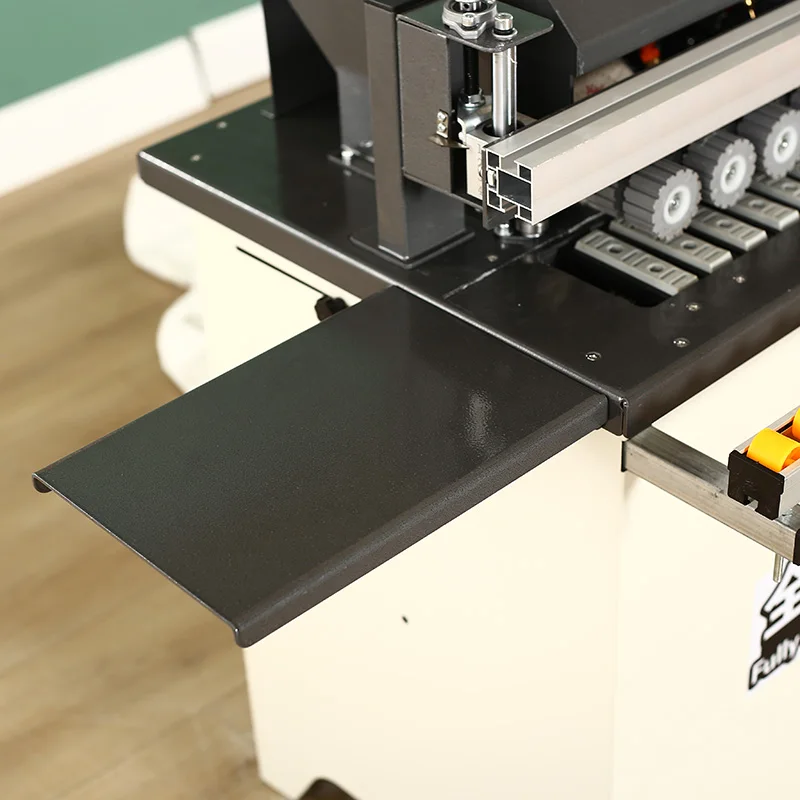
| Feed Mechanism | Double-row rubber pressure wheels, automatic plate feeding |
| Edge Banding Mode | Straight edge; curved edge banding after 180° rotation |
| Edge Strip Cutting | Pneumatically controlled |
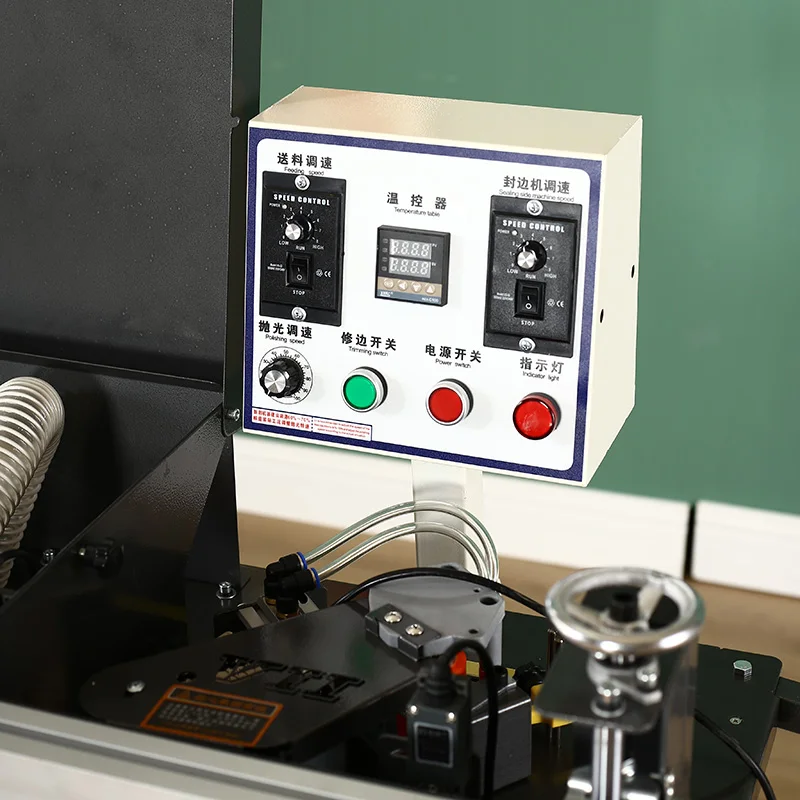
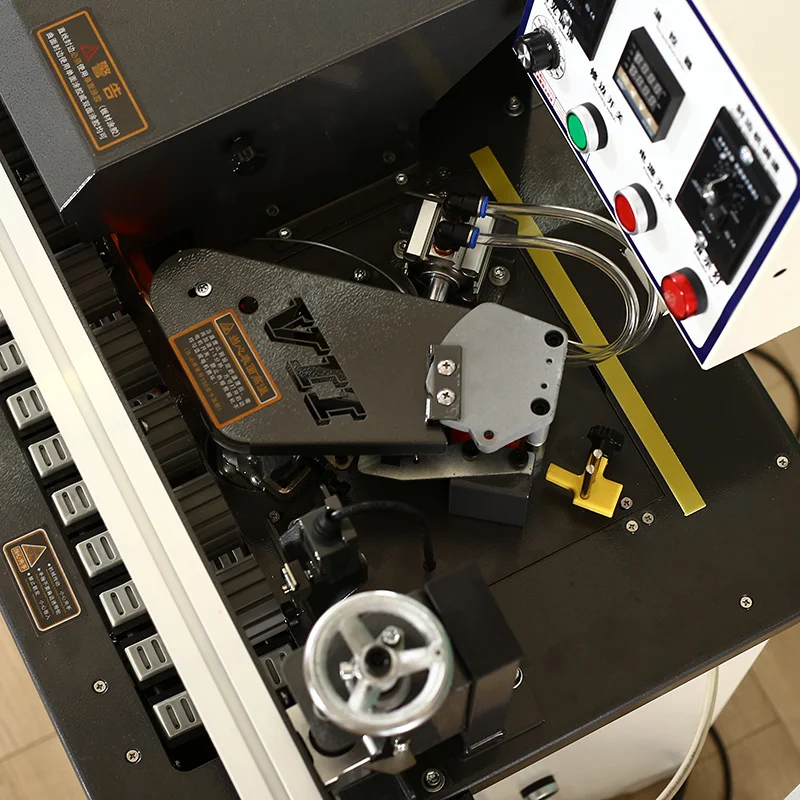
| Control System | Multi-function button operation panel |
| Voltage & Frequency | 220 V 50 Hz (configurable from 110 V to 440 V) |
| Overall Dimensions (L×W×H) | 1300 × 560 × 1090 mm |
| Net Weight | 186 kg |
| Assembly State | Requires assembly per user manual (basis to be confirmed) |
| Certification | CE, ISO 9001 |
Application Suitability
| Application | Material or Output |
|---|---|
| Cabinet and wardrobe panel edging | MDF, particleboard, plywood with PVC edge banding |
| Narrow board processing for custom joinery | Boards down to 25 mm width, 10–50 mm thickness |
| Straight profile edge banding | PVC strips 0.5–2.5 mm on flat panel edges |
| Curved profile edge banding | Shaped panels after 180° machine rotation |
| Furniture factory small-batch runs | Solid wood panels with veneer edge banding |
| Workshop transitioning from manual to machine | Mixed panel materials at moderate feed speeds |
Why the Voltage Question Should Come Before the Price on an Automatic Edge Banding Machine Manufacturer
A machine wired for 380 V three-phase will not run on a 220 V single-phase supply, no matter how good the deal looked on paper.
In my years doing after-sales repair on edge banders across the Yangtze River Delta, I opened more control cabinets than I care to count and found transformers that had been added on-site as a fix — usually after the original motor or heating element burned out within the first month. The 910H is configurable from 110 V to 440 V before shipment, but that only works if someone asks the right questions before production starts. When a buyer focuses only on the sticker price and skips the power supply conversation, the automatic edge banding machine manufacturer bears no responsibility for a unit that sits idle on arrival [NEED_CITE: voltage and frequency standards by export market].
Six Stations in One Pass
The 910H runs a complete sequence — gluing, end cutting, trimming, vacuuming, cleaning, and buffing — so panels exit ready for the next operation without secondary handling. Each station is driven by its own motor, meaning trimming and buffing run independently of the feed mechanism. For workshops producing cabinets and wardrobes from MDF or particleboard, this consolidation removes the need for separate cleaning or polishing stations downstream.
Straight and Curved Edging Without a Second Machine
Most edge banders in this class handle only straight profiles. The 910H allows curved edge banding after a 180° rotation of the workpiece, expanding what a single unit can produce. This matters for custom furniture shops handling shaped cabinet doors or rounded shelving. The pneumatically controlled edge strip cutting device keeps cut consistency across both modes, reducing the manual intervention that typically causes variation on curved runs [NEED_CITE: edge banding quality requirements for curved panel profiles].
Panel Thickness, Feed Speed, and Glue Temperature
The 10–50 mm panel thickness range covers standard MDF, particleboard, and plywood used in furniture production, but thickness directly affects how the glue pot performs. At 50 mm, the thermal mass of the board draws heat away from the glue line faster than at 10 mm, which is why the 800 W heating element is sized to maintain stable glue temperature across the full range. The 0–7 m/min feed speed should be matched to material: slower feeds on thicker boards give the glue adequate open time, while thinner panels tolerate higher speeds without cold joints. The 1000 ml glue pot capacity supports sustained runs, but on high-density substrates like moisture-resistant MDF, operators should monitor glue consumption more frequently. The adjustable aluminum alloy pressure beam and double-row rubber pressure wheels keep panels stable through all six stations, which is critical when trimming tolerances depend on consistent workpiece positioning.
What Happens When Incompatible Machines End Up on the Same Line
Buying a single edge bander that does not match the feed height or throughput of your existing panel saw or drilling machine creates a bottleneck that no amount of operator effort can fix. I have walked into workshops where the edge bander ran noticeably slower than the saw feeding it, leaving stacks of cut panels waiting and partially processed boards blocking the aisle. The 910H at 0–7 m/min is positioned for small to medium workshops rather than high-volume continuous production. If your upstream saw outputs panels faster than this feed range can absorb, the machine will become the constraint on your entire line [NEED_CITE: production line throughput matching between edge banding and cutting stations].
What You Gain by Sourcing This Automatic Edge Banding Machine Manufacturer
The 910H sits within a complete edge banding machine family from entry-level to full-function pre-milling models, so your workshop can scale production volume later without changing supplier. Voltage configuration from 110 V to 440 V and multilingual control panel options are confirmed before the unit enters production, not offered as a field modification. The patented cutting mechanism and precision-ground components hold tolerance through the trimming and buffing stations. A four-stage QC process covers incoming material, in-process assembly, finished product inspection, and pre-shipment verification. An engineer-led configuration recommendation with a formal quotation is provided within 24 hours of your inquiry, matched to your actual panel materials and production volume.
Documentation & Verification
- CE declaration of conformity specific to the 910H edge banding machine configuration shipped
- ISO 9001 certificate covering the manufacturing and QC process
- Electrical schematic with confirmed voltage and frequency for your installation site
- Factory test record using your specified panel thickness and edge strip material
- Operation and maintenance manual in the language your operators will read
- Spare parts list with part numbers matching the as-built 910H configuration
Installation, Commissioning & Support
- Requires assembly per user manual; confirm floor space for the 1300 × 560 mm footprint before delivery
- Dedicated 4 kW circuit at confirmed voltage and frequency, separate from high-draw equipment
- Pneumatic supply at 0.6 MPa with clean, dry air for the edge strip cutting and pressure systems
- First-run glue temperature calibration against your actual MDF or particleboard stock
- Operator training on multi-function button panel including straight-to-curved mode rotation
- Arc-shaped alloy trimming cutters and rubber pressure wheels as initial spare parts
Preparing Your Inquiry
To get a configuration that matches your workshop, share the panel materials you run most often, including typical thickness and whether you process boards narrower than 100 mm. Confirm your local voltage, phase, and frequency so the electrical system is built correctly from the start. If you plan to integrate the 910H with existing saws or boring machines, note their feed height and output rate so the automatic edge banding machine manufacturer can verify line compatibility.
Frequently Asked Questions
Q: How can I verify edge banding tolerance before committing to an order?
A: Request a sample processing test using your own panel material and edge strip specification. The factory runs your material through the full six-station sequence and documents trimming accuracy and glue line quality in a pre-shipment test record. You can also visit the facility to witness the test in person and inspect finished samples on site.
Q: What voltage and frequency details do I need to confirm before shipment?
A: Provide your facility’s supply voltage, phase configuration, and frequency in Hz. The 910H is configurable from 110 V to 440 V, and the electrical schematic is verified against your confirmed values before the machine leaves the factory. Incorrect voltage is one of the most common causes of commissioning failure [NEED_CITE: electrical commissioning issues in exported woodworking machinery].
Q: Where does the 910H fit if I need to expand to a full production line later?
A: The 910H is part of a complete edge banding family that scales from entry-level to full-function pre-milling models within one product range. When you are ready to add upstream panel saws or downstream boring machines, your supplier already knows your material specifications and quality baseline, avoiding compatibility gaps.
Q: Can the 910H handle narrow boards for custom joinery work?
A: Yes. The minimum board width is 25 mm and the adjustable aluminum alloy pressure beam with double-row rubber pressure wheels maintains panel stability even on narrow stock. This makes the machine suitable for cabinet component edging and small joinery pieces where wider machines struggle to hold the workpiece flat.